
Medieval clothing was more than protection from the elements—it communicated social status, occupation, wealth, and identity. Throughout the Middle Ages (roughly the 5th to 15th centuries), European fashion evolved alongside trade expansion, textile innovation, and cultural change.
Most garments were handmade and costly relative to income, meaning individuals typically owned only a few outfits. Durability mattered for peasants and laborers, while the elite prioritized fine materials, layered construction, and decorative detail.
Studying medieval fashion reveals how clothing functioned as a visual language within a rigid social hierarchy.
What Were the Most Essential Medieval Clothing Items?
The most essential medieval clothing items were practical garments worn by large parts of society for warmth, modesty, and everyday work. While fabrics and decoration varied by wealth, many people in the Middle Ages relied on the same core pieces—layered clothing that could be repaired, reused, and adjusted for the seasons.
- Tunic – The basic everyday garment for men and women, usually worn over an underlayer.
- Shift (Chemise) – A linen underdress worn next to the skin for cleanliness and comfort.
- Braies – Loose undergarments (early underwear) commonly worn by men.
- Hose – Fitted leg coverings, often tied to a belt or joined as chausses.
- Cloak – A warm outer layer for weather protection, often fastened with a brooch or tie.
- Hood – A head-and-shoulder covering used for warmth and outdoor work.
- Gown – A longer, fuller outer garment often associated with townspeople and the wealthy.
- Belt (Girdle) – Used to secure clothing and carry pouches, knives, or tools.
- Apron – Protective wear for labor, cooking, craftwork, and trade tasks.
- Shoes – Typically leather turnshoes; sturdier footwear marked higher wealth or specific work.
Most medieval outfits were built in layers: an undergarment for hygiene, a main garment for daily wear, and an outer layer for warmth or status. Wealth influenced fabric quality, dye colors, and decoration, but the core clothing items stayed similar across classes.
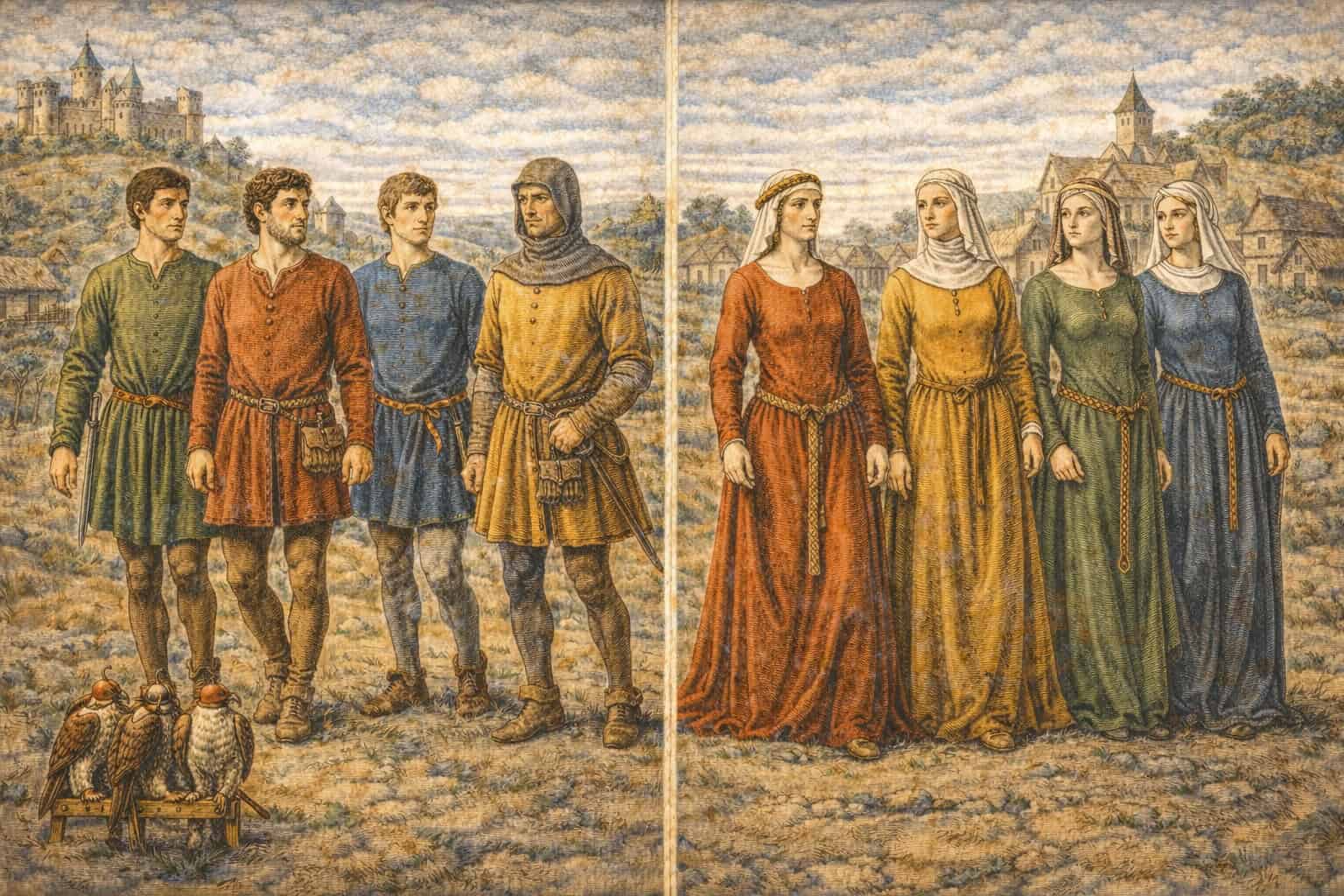
1. Tunic
The tunic was the foundational garment of medieval clothing, worn by both men and women across nearly every social class. Usually made from wool or linen, it ranged from knee-length worker styles to longer, more refined versions for the wealthy.
Among peasants, tunics emphasized practicality and longevity. Noble examples often featured dyed fabrics, embroidery, and improved tailoring—early signs of Europe’s growing textile sophistication.
2. Surcoat
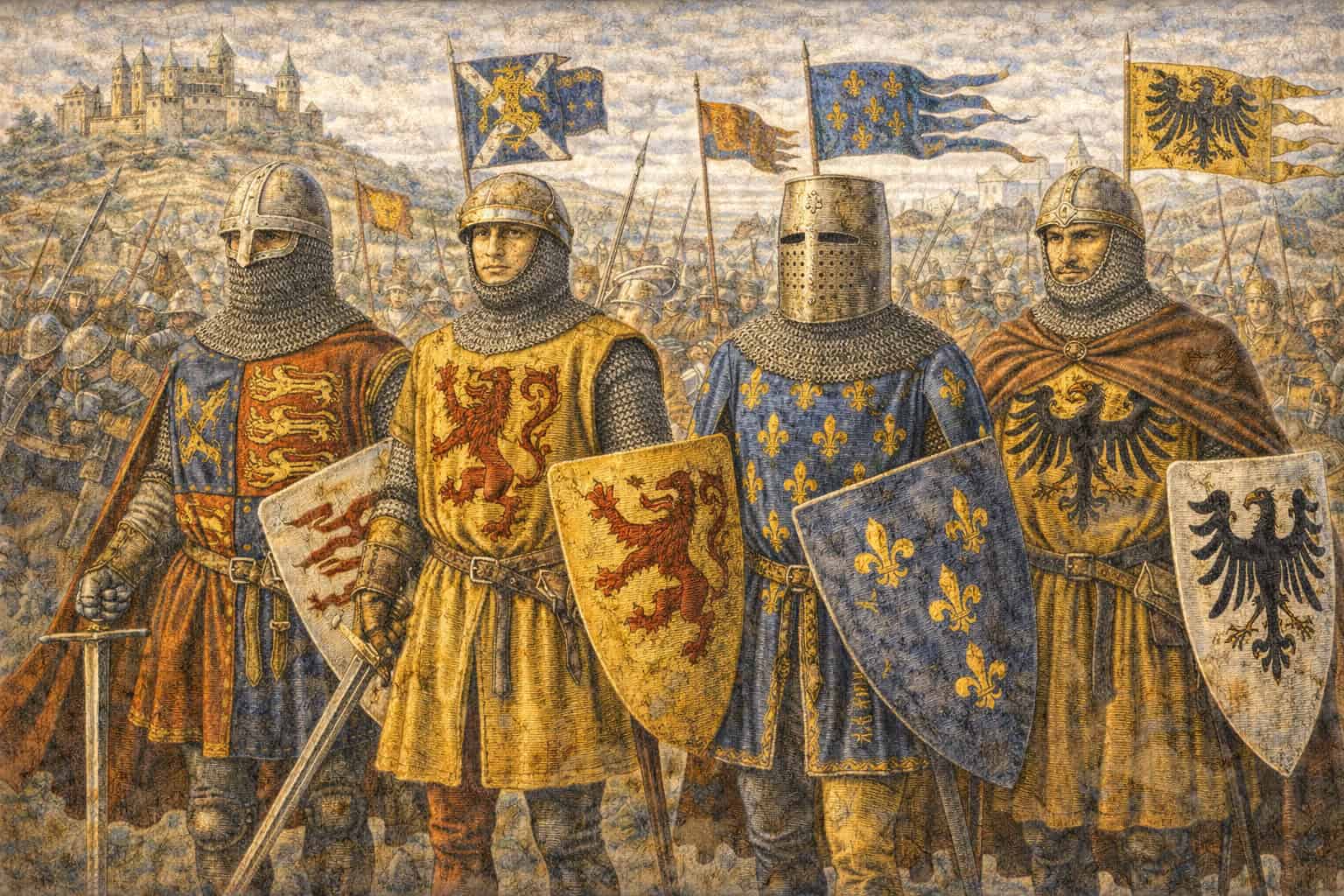
The surcoat developed as an outer garment worn over a tunic or armor and became strongly associated with knighthood during the High Middle Ages.
Many surcoats displayed heraldry, allowing warriors to be identified on the battlefield. Wealthy civilians later adopted decorative versions, transforming the garment into a symbol of lineage and prestige within medieval society.
3. Cotehardie
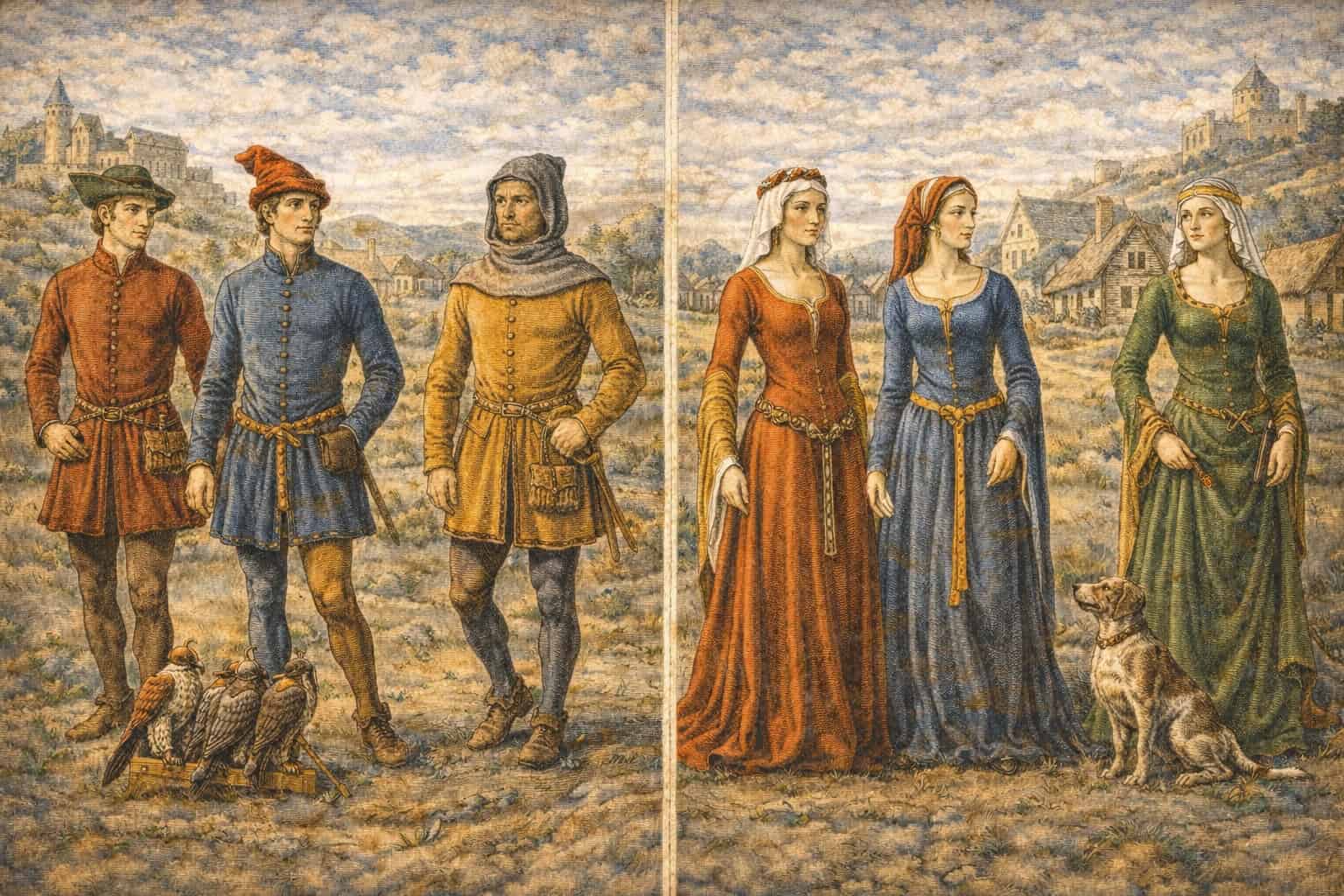
The cotehardie gained popularity in the 14th century and marked a major shift toward fitted medieval garments. Designed with buttons or lacing, it closely followed the body’s natural shape.
Its rise reflected advances in tailoring and the growing importance of fashion in urban centers. Both men and women wore the garment, though sleeve designs and skirt lengths varied.
4. Houppelande
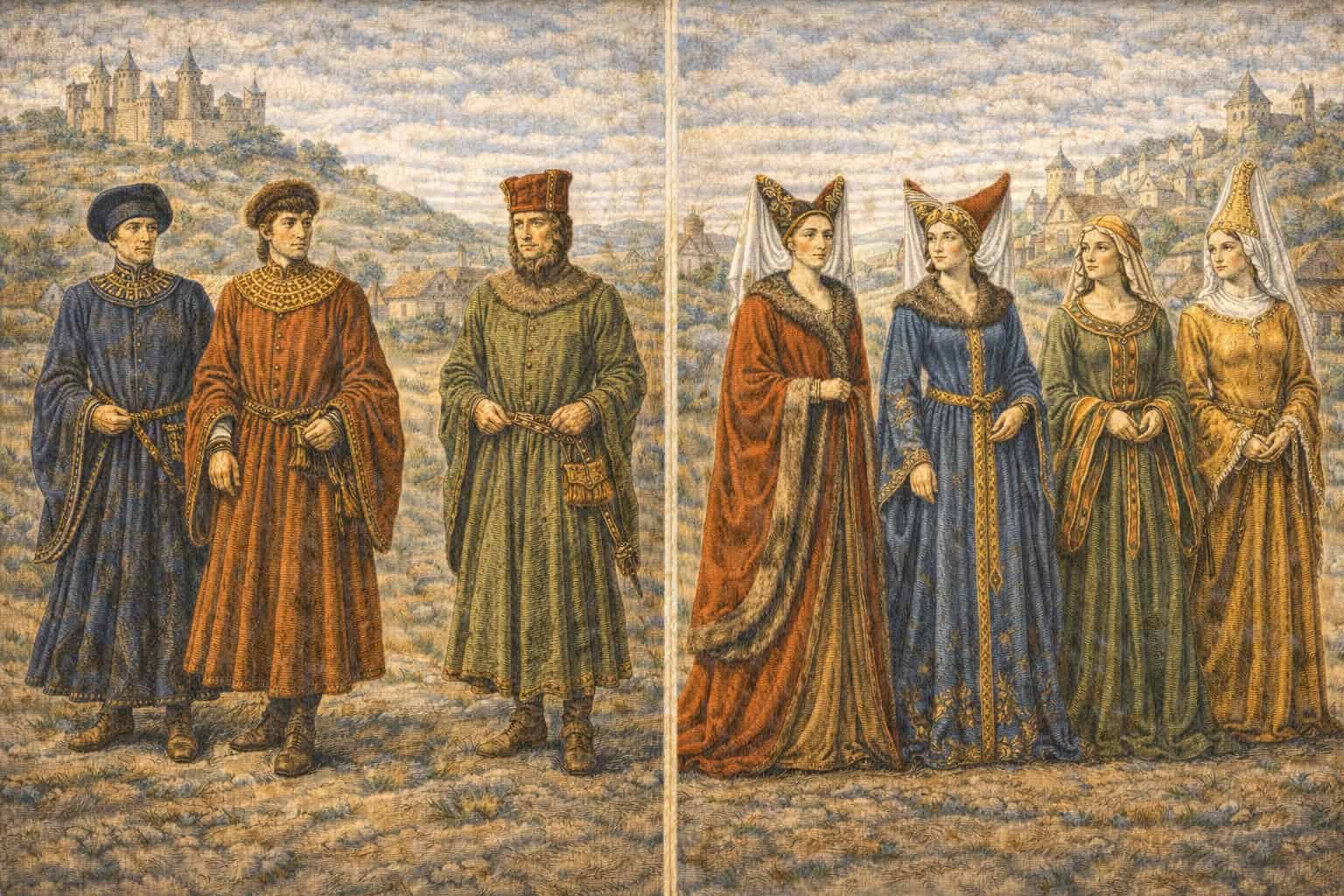
The houppelande was a voluminous robe that emerged in the late medieval period and quickly became synonymous with elite medieval fashion.
Characterized by wide sleeves and abundant fabric, it projected wealth through sheer material cost. Many were trimmed with fur and constructed from luxurious textiles such as velvet, reinforcing the garment’s association with aristocratic display.
5. Cloak
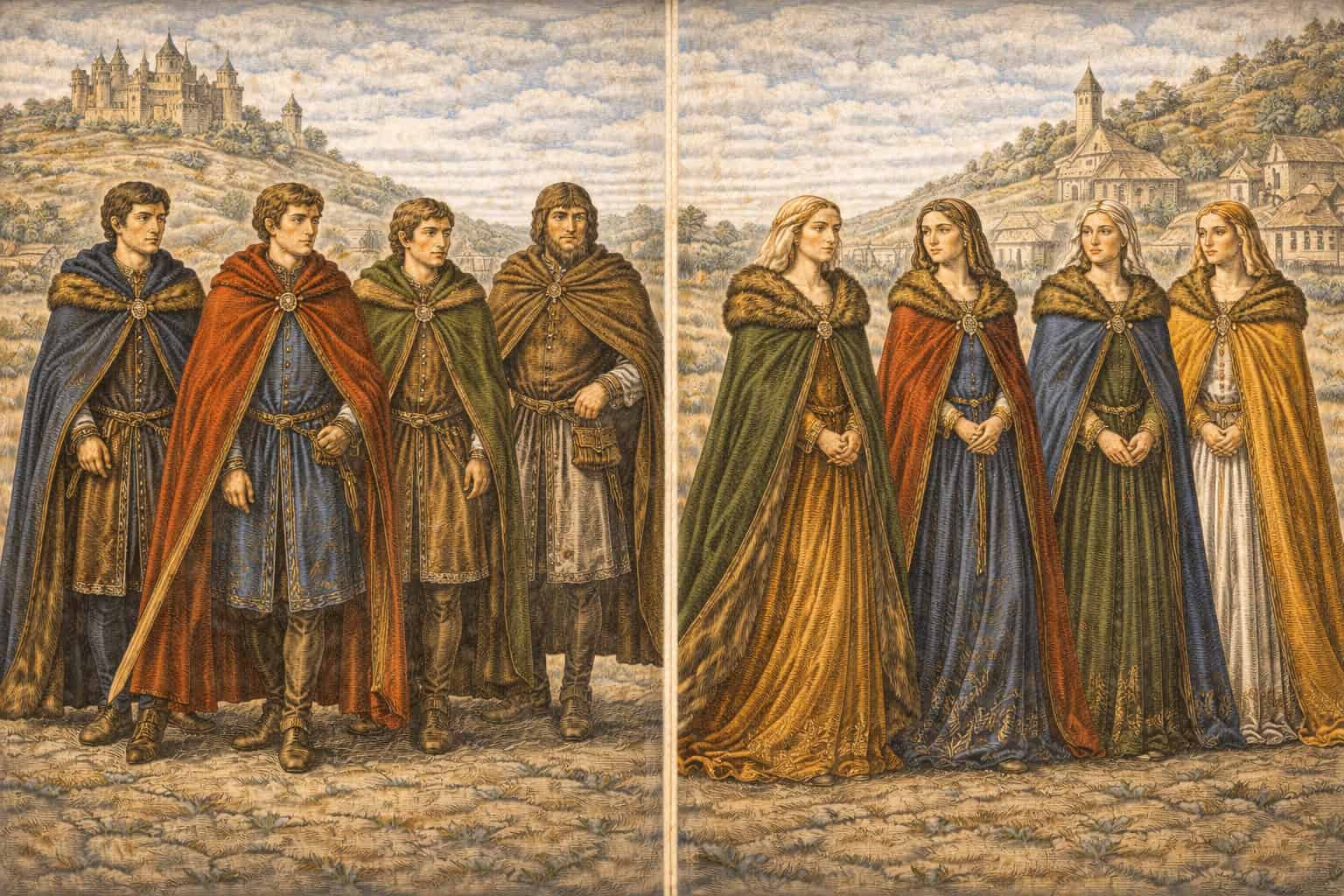
The medieval cloak served a practical purpose: warmth, protection from rain, and defense against harsh climates. Fastened with a brooch or clasp, it was worn by travelers, soldiers, merchants, and nobles alike.
Simpler versions were made from undyed wool, while high-status cloaks featured decorative borders or fur linings that signaled elevated social rank.
6. Coif
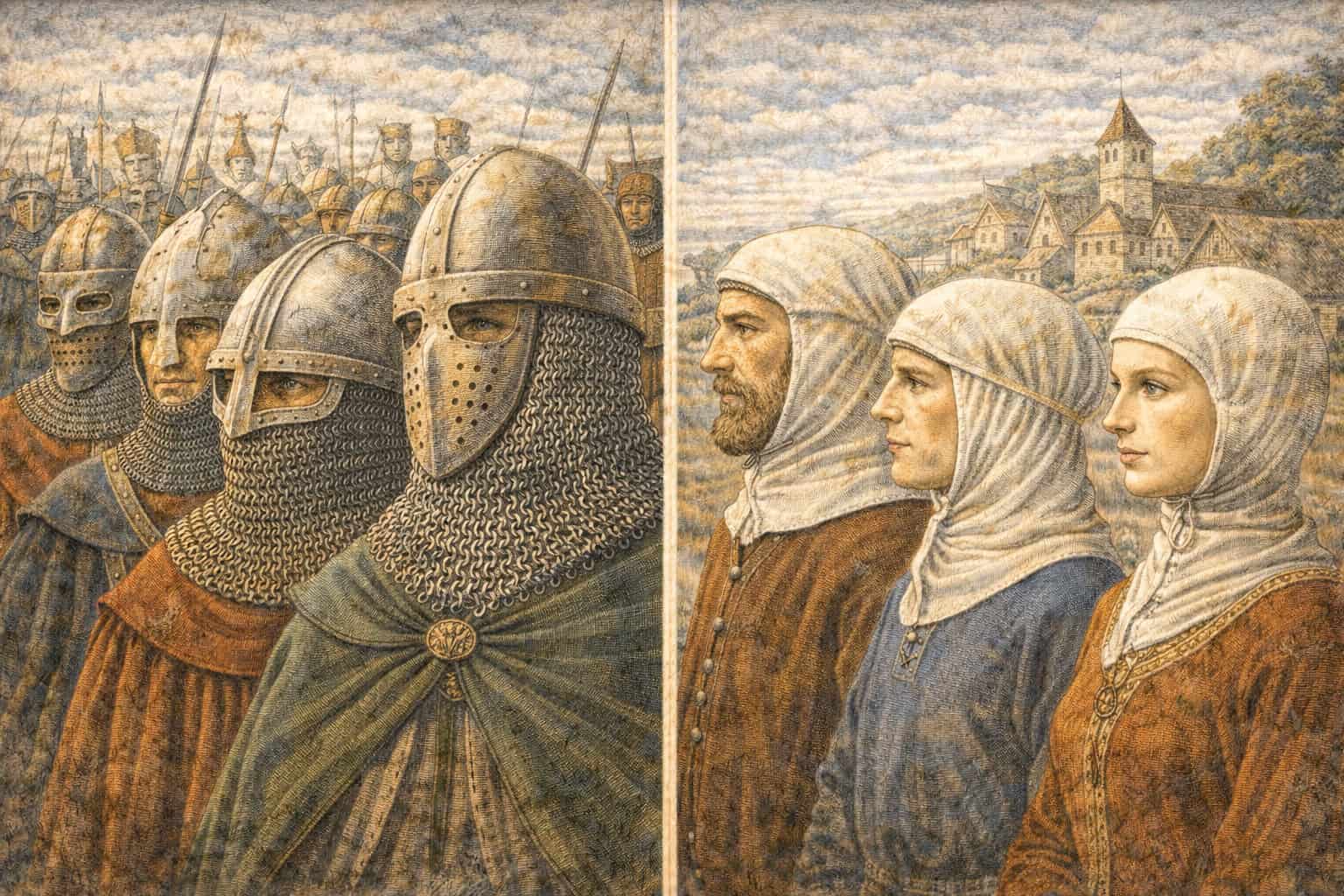
The coif was a close-fitting cap designed to protect the head. Linen versions were common among civilians, while chainmail coifs were worn beneath helmets for battlefield defense.
Beyond protection, the coif helped maintain hygiene by keeping hair contained—an important concern in crowded medieval towns.
7. Wimple
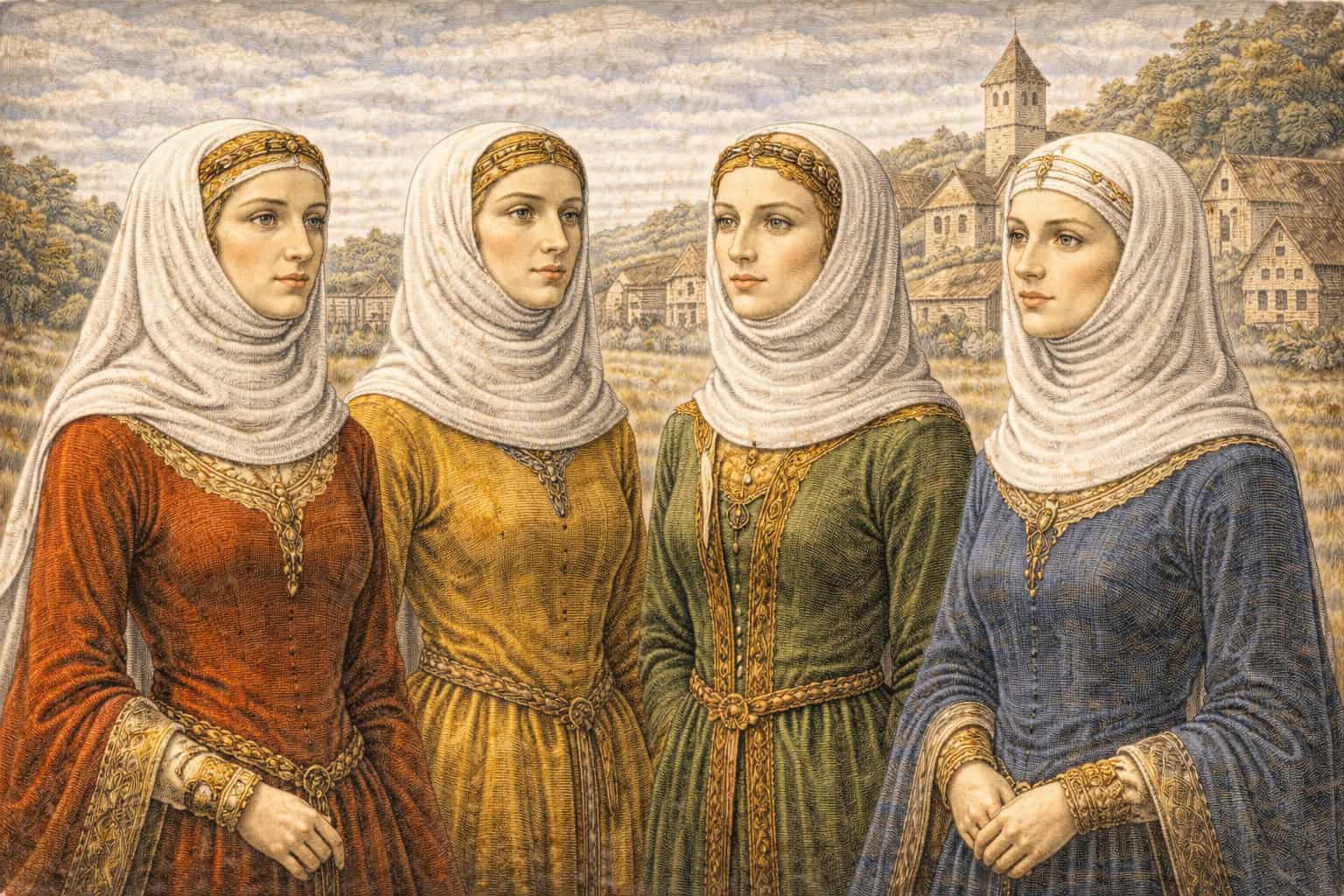
The wimple was worn primarily by women and wrapped around the neck and chin while framing the face. It reflected Christian ideals of modesty and became closely associated with married women.
Over time, the garment evolved into a marker of maturity and respectability, illustrating how medieval dress often reinforced cultural expectations.
8. Chausses
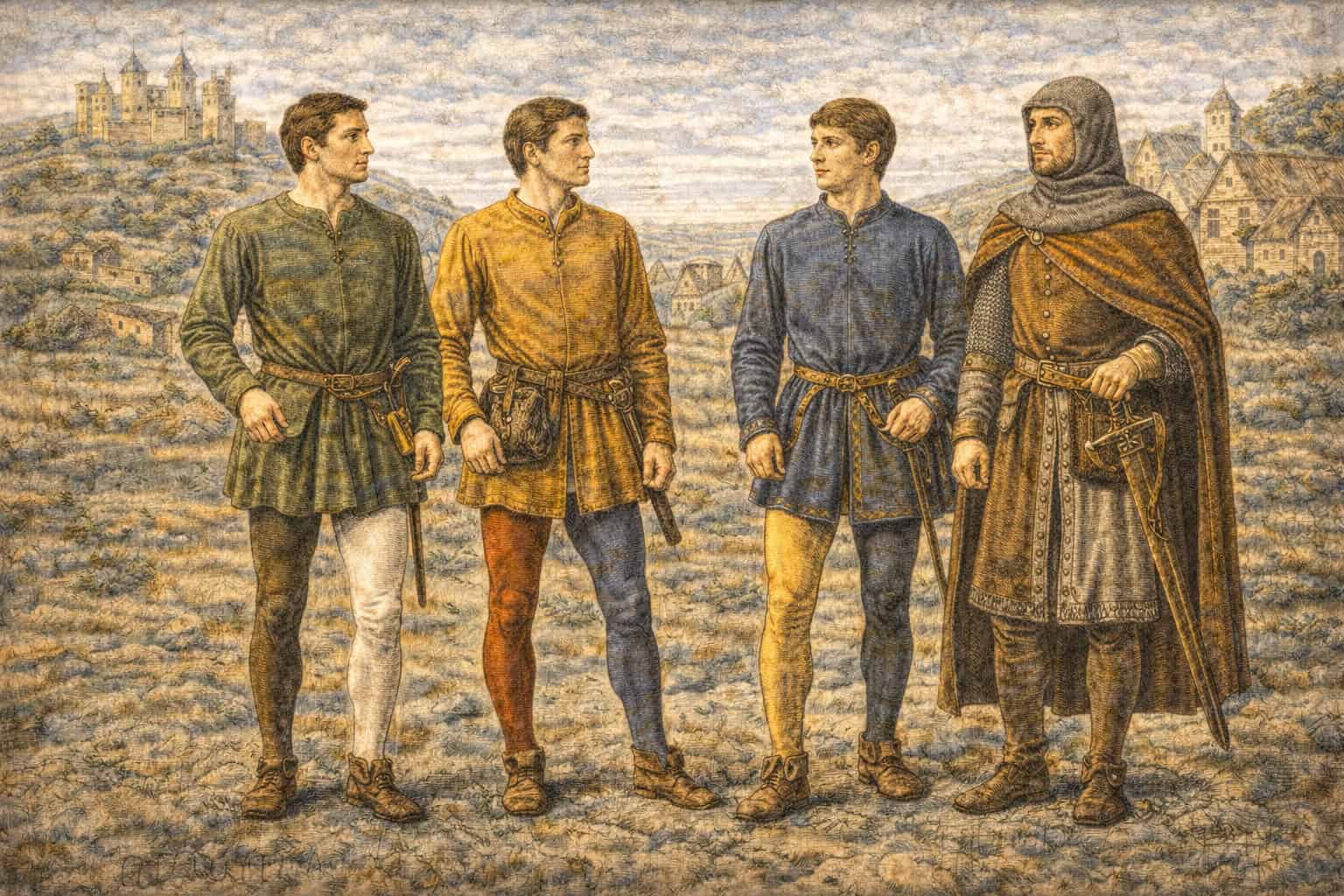
Chausses were tight-fitting leg coverings that predated modern trousers. Typically crafted from wool, they were tied to a belt or attached to a doublet for support.
The garment allowed greater mobility, making it practical for both laborers and mounted warriors.
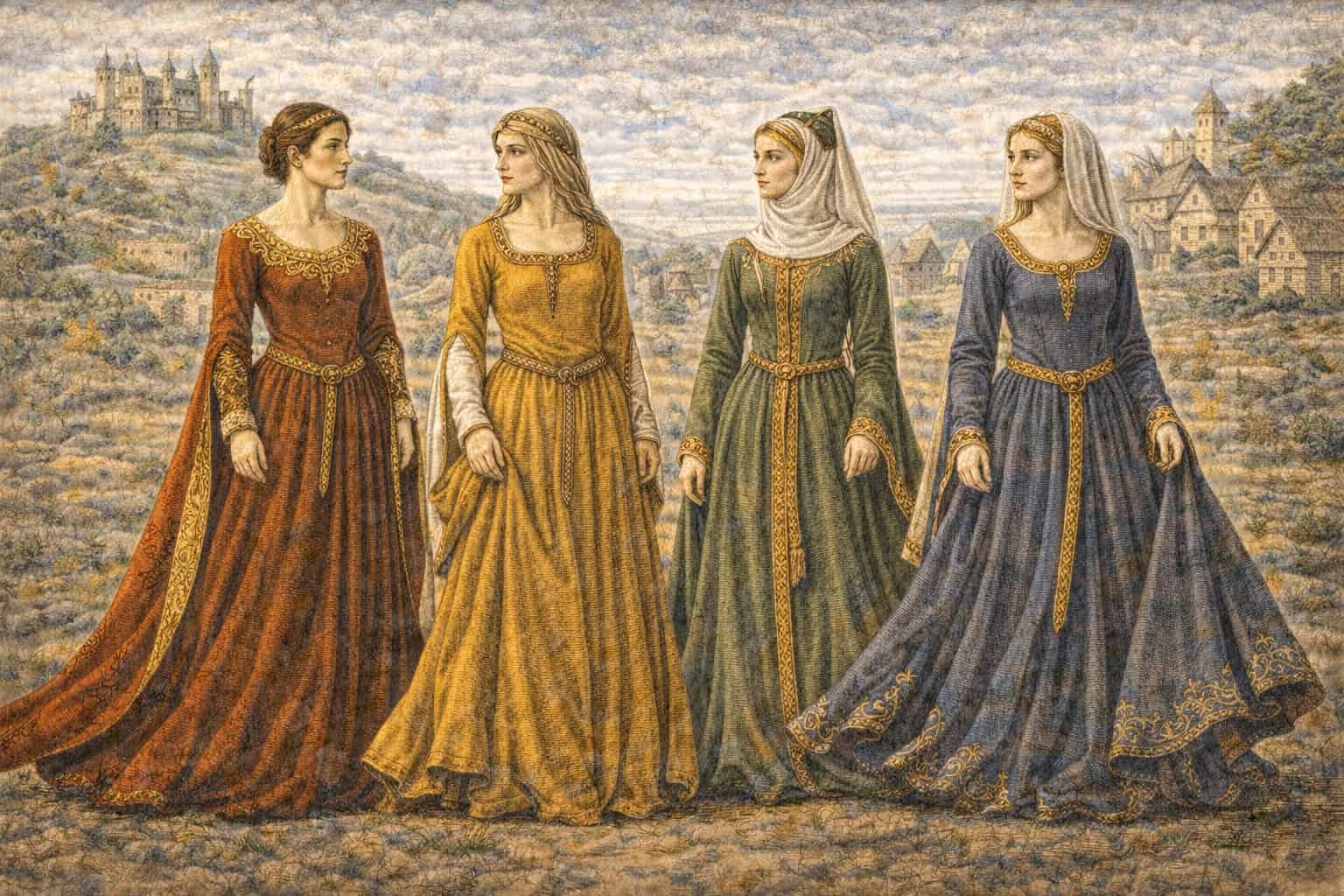
9. Gown
The medieval gown varied widely in style but was generally defined by a fitted upper section and a flowing skirt. Among the nobility, gowns showcased wealth through rich dyes, layered fabrics, and detailed ornamentation.
Court fashion increasingly favored dramatic silhouettes, demonstrating how clothing functioned as a powerful indicator of wealth and status.
10. Doublet
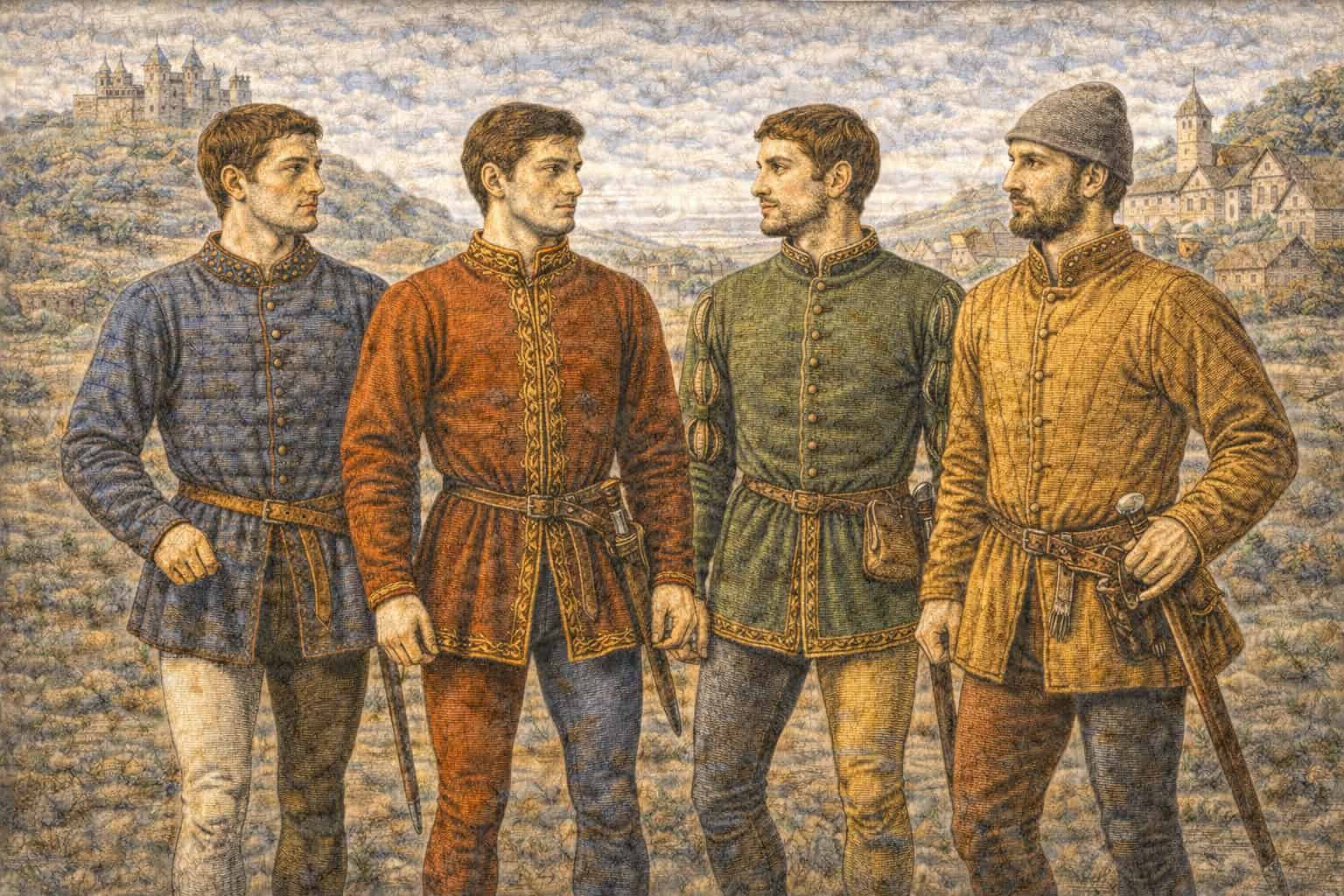
The doublet was a padded, close-fitting jacket worn by men during the later Middle Ages. Structured and supportive, it helped shape the torso and served as an anchor point for hose.
Its design influenced Renaissance fashion and represents the growing sophistication of European garment construction.
Other Important Essential Medieval Clothing
Beyond outer garments and status-driven fashion, several essential medieval clothing items formed the foundation of everyday dress. These practical pieces supported hygiene, mobility, and protection, allowing people across social classes to adapt their clothing to work, weather, and daily life in the Middle Ages.
- Shift (Chemise) – A linen underdress worn next to the skin for cleanliness and comfort.
- Braies – Loose undergarments (early underwear) commonly worn by men.
- Hood – A head-and-shoulder covering used for warmth and outdoor work.
- Belt (Girdle) – Used to secure clothing and carry pouches, knives, or tools.
- Apron – Protective wear for labor, cooking, craftwork, and trade tasks.
- Shoes – Typically leather turnshoes; sturdier footwear marked higher wealth or specific work.
Medieval clothing emphasized layering and durability. Even the simplest garments played a vital role in maintaining cleanliness, improving comfort, and extending the life of more expensive outer clothing.
Why Medieval Clothing Varied So Widely
Variation in medieval clothing was driven by several major forces:
- Expansion of long-distance trade networks
- Growth of professional textile guilds
- Advances in weaving and dyeing
- Cultural exchange through warfare and diplomacy
- Sumptuary laws restricting luxury to the upper classes
By the 14th and 15th centuries, medieval fashion trends had become increasingly dynamic, particularly within aristocratic courts.
Conclusion
Medieval clothing provides a revealing window into the structure of medieval society. From the utilitarian tunic to the refined doublet, each garment reflects the intersection of necessity, identity, and evolving taste.
Understanding what people wore in the Middle Ages helps illuminate broader themes such as economic growth, technological progress, and the enduring importance of status in everyday life.
❓ Essential Medieval Clothing – Frequently Asked Questions
What was the most common clothing item in the Middle Ages?
The tunic was the most widely worn medieval garment. Both men and women used it as a primary layer, with differences in length, fabric, and decoration reflecting social status.
What did people wear under their clothes in the Middle Ages?
Most people wore a shift (chemise) or braies beneath their outer garments. These linen underlayers helped absorb sweat, protected expensive clothing, and could be washed more frequently.
Why were belts important in medieval clothing?
A belt, often called a girdle, secured loose garments and served as a practical tool holder. People commonly attached pouches, knives, keys, and small everyday items to their belts.
Did medieval people wear hoods regularly?
Yes. The hood was a practical garment that protected the head and shoulders from rain, wind, and cold. It was worn by travelers, workers, and townspeople throughout much of the Middle Ages.
What kind of shoes did medieval people wear?
Most footwear consisted of leather turnshoes, designed for flexibility and everyday use. Wealthier individuals could afford sturdier shoes made from thicker leather or more refined craftsmanship.
Were aprons common in the Middle Ages?
Aprons were widely used by workers, artisans, and household servants to protect clothing from dirt, heat, and wear. They were especially common in kitchens, workshops, and marketplaces.
📜 Essential Medieval Clothing Glossary
A simple, long garment worn by both men and women that served as the foundation of everyday medieval dress.
A lightweight linen undergarment worn next to the skin to improve comfort, absorb sweat, and protect outer clothing.
Loose-fitting undergarments typically worn by men, functioning as early underwear during the Middle Ages.
A practical head-and-shoulder covering that protected against cold weather and rain, commonly worn by travelers and workers.
A strap worn around the waist to secure garments and carry everyday essentials such as pouches, tools, or keys.
A protective outer cloth tied at the waist, used to shield garments from dirt, spills, and damage during work.
A common type of medieval leather footwear made by stitching the shoe inside out and then turning it right-side out for a smoother finish.


