Courtly love was a romantic and poetic ideal that flourished in the medieval courts of Europe, celebrating the noble and often forbidden love between a knight and a lady. Rooted in the principles of chivalry, this tradition emphasized devotion, honor, and emotional longing, often outside the bounds of marriage. Songs, poems, and tales from troubadours romanticized this stylized love, portraying the knight as a loyal servant to his lady’s desires. While rarely physical, courtly love was emotionally intense and played a powerful role in literature, culture, and aristocratic behavior throughout the Middle Ages.
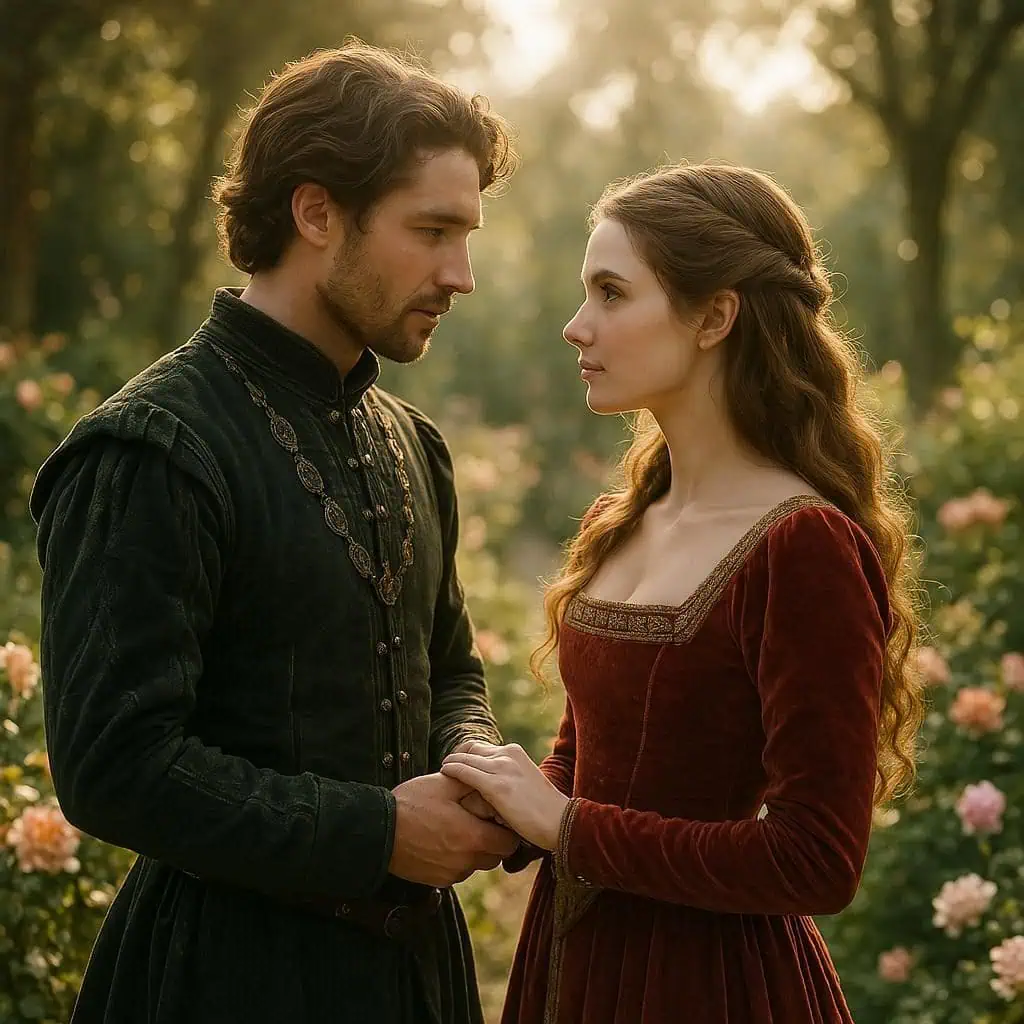
Definition of Courtly Love
Courtly love was basically a culture that prevailed in medieval times that directed the relationship between members of the court, usually a knight and a noble lady as publicized in medieval literature.

Rules were set regarding how a lady should show her admiration for a knight and how a knight should return her affections or declare his intentions of love.
Despite the rules surrounding courtly love, the moral parameters were vague. Parties could become deeply engrossed in a relationship, regardless of their civil status.

Courtly Love *History
According to historical records, courtly love was first practised in the 12th century in Aquitaine, France. The practice spread across European courts.
Eleanor of Aquitaine, who was the queen of France and later England, and her daughter, Marie, Countess of Champagne were credited for the development and influence of these romantic notions.

Eleanor’s grandfather was a troubadour so she spent most of her childhood reading poetry, listening to music, and appreciating the arts at the court of Aquitaine.
She later brought these interests to the English court. Several vernacular narratives were written for and in honour of Eleanor. In Provençal French, courtly love was referred to as fin’amors.

It was not until the 14th century that English courts started adopting the ideals of courtly love. The practice prevailed until the 16th century but around this time, marriages of convenience were rampant.
Courtly Love was no longer the goal. Families arranged their children’s marriage to increase their wealth and status in social circles. Those who sought real romance had to look elsewhere, often outside the marital bonds.
Courtly Love Rules
The rules that governed courtly love were described in detail by Andreas Capellanus in his book “Art of Courtly Love”. The rules can be summed up as follows:
- Love is not confined to marriage
- Jealousy is a manifestation of love
- A double love cannot hold a person’s ransom
- Love increases or decreases
- A lover should not take anything against the will of his beloved
- A Boy has to reach the age maturity before they can love
- The death of a lover requires two years of widowhood for the surviving half
- Everyone is entitled to love
- Everyone should love only when persuaded by love
- Love does not thrive on greed
- Love a woman whom you would be proud to marry
- Embrace only your beloved
- Love rarely endures in the face of the public
- The more difficult the attainment, the more valuable the prize
- It is natural to turn pale under the beloveds gaze
- A new love erases the old one
- Good character deems a man worthy of love
- Love does not easily revive after it decreases
- Jealousy spurs feelings of love
- A genuine lover thinks only of what is good and pleasing to his beloved
- When there is too much passion, that is not love
- A real lover relishes in the thought of his beloved
- Two men can love the same woman as two women can love the same man
The ambiguous parameters of courtly love often led to trouble within the courts. Its members were nevertheless willing participants.
Courtly Love Poems
The incidents that transpired in courtly love poems were a stark contrast to the actual practice. Andreas Capellanus wrote Art of Courtly Love towards the end of the 12th century.
Written completely in Latin and allegedly dedicated to Eleanor’s daughter, Countess Marie of Champagne, this work seriously described the rules that governed courtly love.

The Knight of the Cart, written by Chretien de Troyes and dedicated to Eleanor of Aquitaine, was the literary piece that first introduced Lancelot’s passionate love for Guenevere, King Arthur’s wife.
Unlike Capellanus’ work which seriously discussed courtly love, Troyes was critical (others say “mocking”) of the conventions of courtly romance.
Joining the ranks of these well-known poets is Geoffrey Chaucer, author of Canterbury Tales, who wrote about courtly love for a married woman in The Miller’s Tale.

Courtly Love and Knights
The feudal system and the consequent relationship between a knight and his lord had also influenced the rules of courtly love.
The knight would swear an oath of fealty to his liege lord’s lady just as he did with his lord. In literature, should a knight enter a love relationship with his courtly lady, the latter dominated the relationship and the knight had to obey and submit.

Though courtly love may not be consummated and the lady may be oblivious to the knight’s affections, the knight was propelled to do great deeds so as to feel deserving of his lady’s love if not to earn her favor.
Courtly love was one of the engines that fuelled a knight’s valour.

Courtly Love – Tradition
Courtly love was conducted through different stages. In the Medieval times, love was not love until each stage was followed:
- The initial attraction conveyed through glances or eye contact
- Discreet admiration for the lady
- Declaration of fervent affection
- Righteous rebuff by the lady
- Continuous pursuit with vows of virtue and undying loyalty
- Lamentations of impending demise brought about by unfulfilled desires (physical implications of lovesickness)
- Display of heroic deeds to earn the lady’s favor
- Declaration of mutual love (consummation of romance)
- A string of secret meetings to avoid detection
Courtly love emerged out of the need to express and show love in medieval times. Despite its strict rules and unclear boundaries, it gave knights a sensational reputation in history. The present civilization is still replete with the ideals of courtly love through a number of the rules that have changed.
💌 Frequently Asked Questions: Courtly Love
What is courtly love?
**Courtly love** was a **romantic and poetic tradition** in medieval Europe, celebrating noble, often unattainable love, usually between a knight and a lady, based on **chivalric devotion and honor**.
Where did courtly love originate?
It originated in the **courts of medieval Europe**, particularly in **France**, and spread throughout the continent through literature, poetry, and troubadour performances.
Who were the main participants in courtly love?
The main participants were **knights**, who demonstrated devotion and loyalty, and **noble ladies**, who inspired their service and valor, often remaining emotionally distant or unattainable.
Was courtly love typically physical?
No. Courtly love was mostly **emotional and symbolic**, focusing on **honor, admiration, and romantic longing** rather than physical intimacy.
How did troubadours influence courtly love?
**Troubadours and poets** composed songs and poems that celebrated courtly love, spreading its ideals, influencing **literature, music, and social behavior** in medieval courts.
Did courtly love affect medieval society?
Yes. It reinforced **chivalric ideals**, inspired **noble behavior**, and shaped **literature, art, and cultural norms**, particularly among the aristocracy.
Is courtly love still relevant today?
Many literary and cultural themes from courtly love, such as **romantic devotion, idealized love, and heroic gestures**, continue to influence modern literature, film, and storytelling.