
Anglo-Saxon Clothing — Quick Overview
Anglo-Saxon clothing (410–1066) reflected social status, occupation, and cultural identity in early medieval England. Most people wore durable wool garments suited to a cold climate, while nobles and royalty displayed wealth through fine fabrics, decorative brooches, fur, and rare imported silk. Men’s clothing typically included tunics and trousers, while women wore layered gowns with cloaks and head coverings. Over time, dress became increasingly elaborate, mirroring the political consolidation and growing sophistication of Anglo-Saxon society.
Anglo-Saxon Men’s Clothing
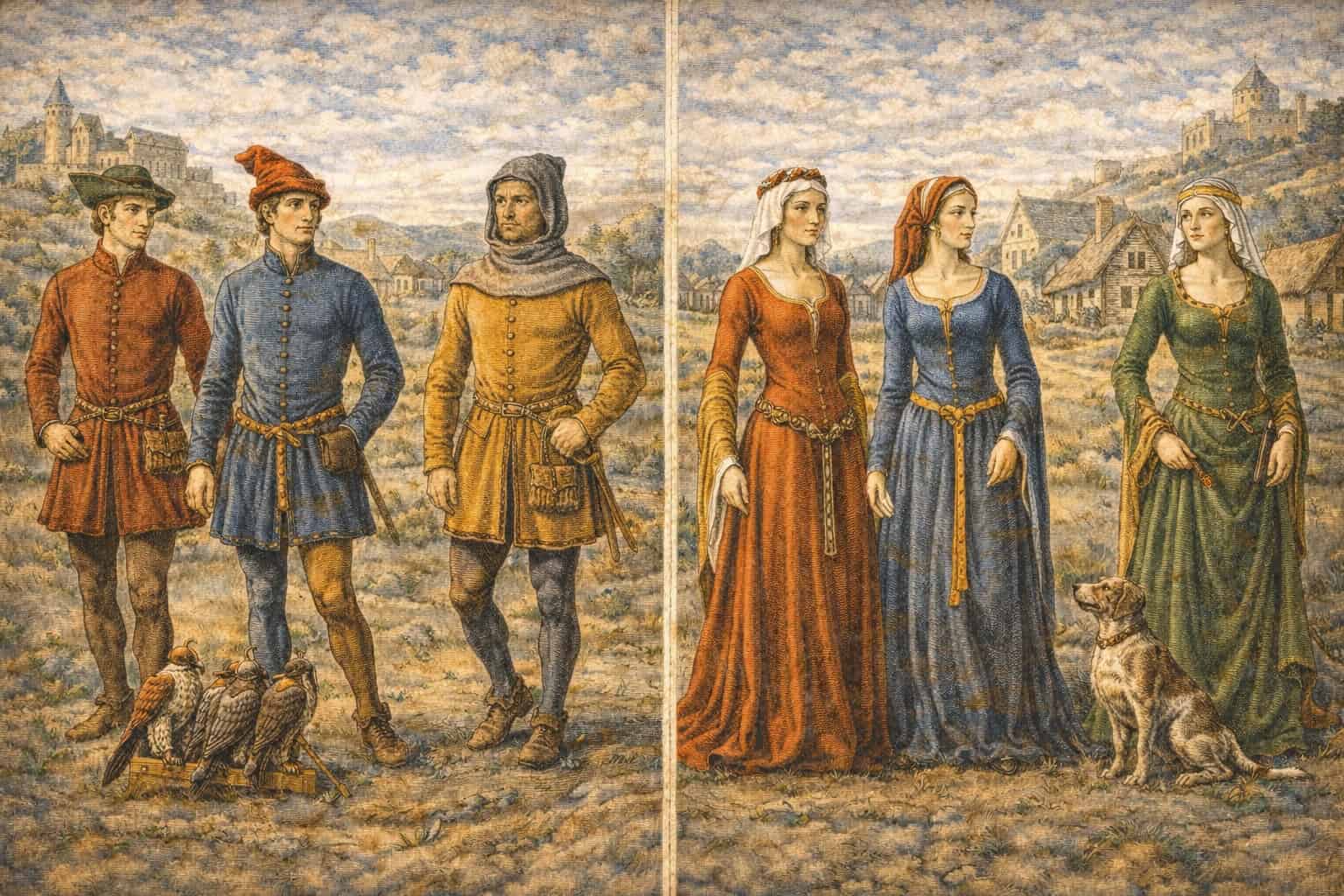
Men’s dress varied primarily according to social class, but most wardrobes followed a layered structure suited to northern Europe’s climate.
Common Men
Peasants and laborers typically wore:
- Wool tunics
- Simple trousers
- Leg bindings for warmth
- Leather belts
- Basic shoes
Wool dominated everyday clothing because it was durable, warm, and widely available.
Noblemen and Warriors
Men of higher status wore better-tailored garments made from finer wool or linen. Cloaks — often lined with fur — were secured with decorative brooches that doubled as status symbols.
Warriors frequently carried a seax, a single-edged knife worn at the belt, reinforcing the connection between clothing and readiness for conflict.
Belts, gloves, hats, and leather footwear were common across all ranks, though quality differed dramatically.

What Did Anglo-Saxon Women Wear?
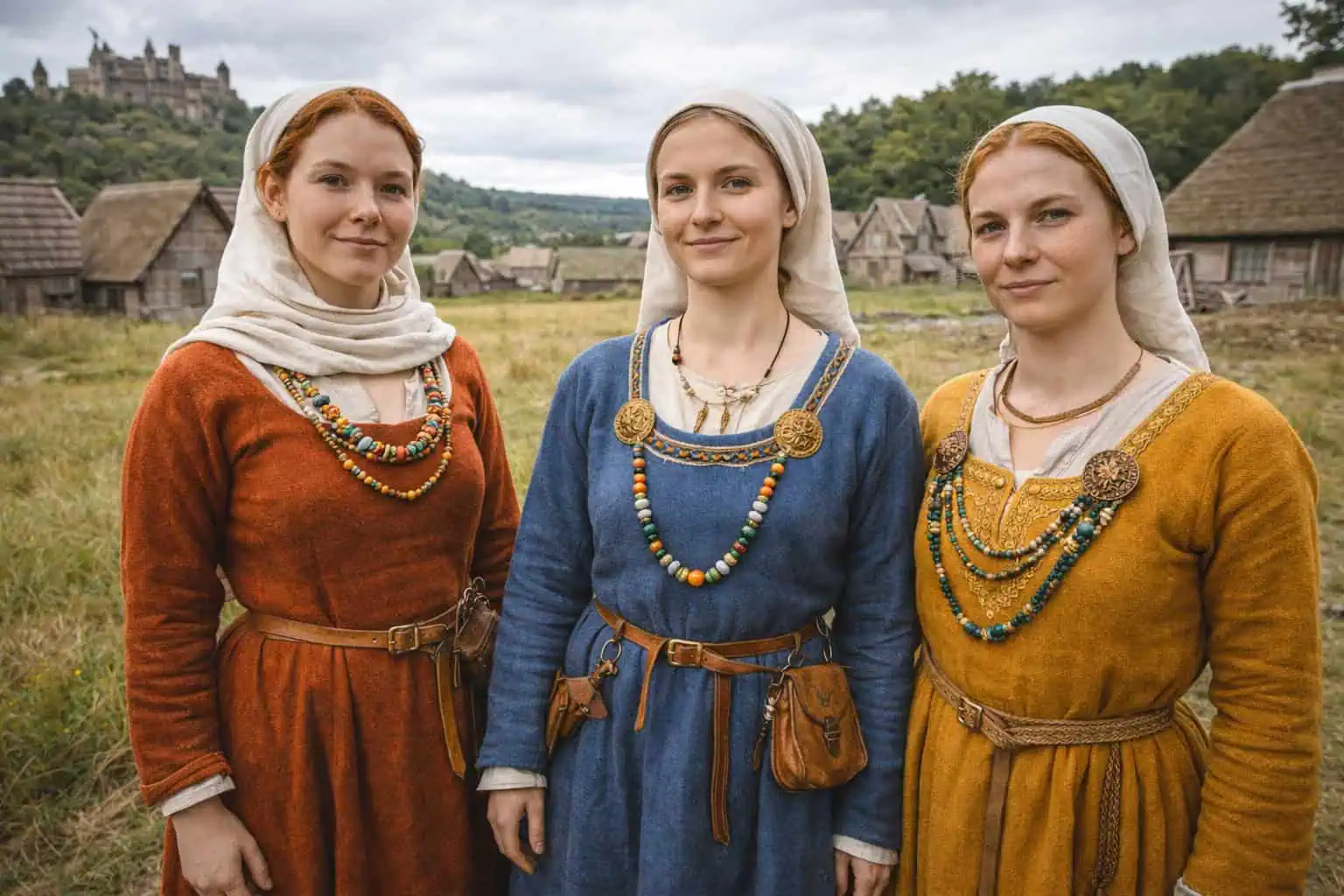
Anglo-Saxon women’s clothing emphasized modesty, layering, and practicality, while still allowing elite families to display wealth through finer fabrics, brighter dyes, and jewelry. Clothing choices often reflected both social rank and the growing cultural influence of Christianity.
Most women wore:
- A linen undergarment – Worn next to the skin for comfort and hygiene.
- A long wool gown – Typically ankle-length and suited to cooler climates.
- A mantle or cloak – Added warmth and protection against harsh weather.
Bright dyes were popular when affordable, though deeper and richer colors were usually associated with higher-status households.
Elite Women
- A long inner dress with sleeves – Served as the primary layer.
- A shorter overdress – Added structure and visual distinction.
- Jewelry and decorative fasteners – Demonstrated wealth and family standing.
After the widespread Christianization of Anglo-Saxon England, head coverings became increasingly common, reflecting evolving religious expectations around modesty. Dress therefore reveals not only social rank but also shifting cultural and spiritual values.
Clerical Clothing in Anglo-Saxon England
Early Anglo-Saxon clergy were expected to dress modestly, avoiding bright colors or excessive ornamentation.
Initial garments were simple — often short cloaks made from twill or wool.
By the 11th century, however, ecclesiastical clothing had become more formalized and recognizable. Clergymen began wearing vestments such as:
- Chasubles
- Dalmatics
- Liturgical headwear
These garments helped visually distinguish religious authority within increasingly structured church institutions.
What Materials Were Used in Anglo-Saxon Clothing?
The availability of raw materials strongly influenced Anglo-Saxon clothing, shaping everything from everyday garments to elite fashion. Durable local textiles met practical needs, while rare imported fabrics signaled wealth and status within society.
- Wool – The backbone of daily dress, valued for its insulation, durability, and suitability to colder climates.
- Linen – A lighter, more comfortable fabric, though labor-intensive to produce and therefore more costly.
- Fur – Provided excellent warmth and often served as a visible indicator of higher social standing.
- Silk – Extremely rare and usually imported, making it largely exclusive to royalty and the elite.
- Leather – Widely used for belts, shoes, gloves, and protective outer garments due to its strength.
Because textile production required enormous time and skill—from spinning fibers to weaving cloth—garments represented a significant economic investment. Clothing was carefully maintained, repaired, and reused whenever possible.
Clothing as a Symbol of Social Hierarchy
Few aspects of Anglo-Saxon life displayed social division as clearly as dress.
Commoners prioritized function.
Elites prioritized visibility.
Decorative brooches, intricate embroidery, dyed fabrics, and imported materials all signaled elevated rank.
Even weapons could function as dress accessories — reinforcing the warrior culture that underpinned Anglo-Saxon political power.
In this way, clothing operated as a language understood instantly within medieval society.
Key Facts About Anglo-Saxon Clothing
Anglo-Saxon clothing reflected social rank, cultural identity, and practical necessity. From everyday wool garments to symbolic royal attire, dress offered clear visual clues about a person’s place within early medieval society.
- Metal buckles – Widely worn to fasten belts and garments securely.
- Brooches – Served both functional and decorative purposes, often indicating status.
- Seax – Freemen commonly carried this single-edged knife at the waist as both a tool and weapon.
- Embroidered tunics – Favored by kings and elites, often paired with symbolic weaponry.
- Trousers and leg wrappings – Standard garments that provided warmth and mobility for men.
- Head coverings – Became increasingly common for women following Christian conversion, reflecting modesty norms.
- Wool – Dominated everyday clothing production due to its durability and insulation.
- Silk – Extremely rare and strongly associated with royalty and high-status households.
Clothing in Anglo-Saxon England functioned as more than protection from the elements—it communicated wealth, freedom, beliefs, and political authority at a glance.
The Evolution of Anglo-Saxon Dress
Across six centuries, Anglo-Saxon clothing gradually shifted from purely practical garments toward attire that communicated political authority, religious identity, and economic power.
As kingdoms stabilized and trade networks expanded, fashion became more differentiated — especially among the aristocracy.
Yet despite these changes, durability remained essential. Clothing had to withstand agricultural labor, warfare, and harsh weather.
This balance between function and symbolism defines Anglo-Saxon dress and helps historians better understand the structure of early medieval society.
❓ Anglo-Saxon Clothing – Frequently Asked Questions
What did Anglo-Saxons typically wear?
Most Anglo-Saxons wore practical layered clothing made from wool and linen. Common garments included tunics, gowns, cloaks, belts, and leather shoes designed for durability and warmth.
What materials were used in Anglo-Saxon clothing?
Wool dominated everyday clothing because it insulated well in cooler climates. Linen was used for undergarments, while leather served for shoes and belts. Rare materials such as silk were usually reserved for royalty.
Did clothing show social status in Anglo-Saxon England?
Yes. Higher-status individuals wore finer fabrics, brighter dyes, embroidered garments, and decorative jewelry. Simpler clothing with minimal ornamentation was typical among peasants and laborers.
Why were brooches important?
Brooches fastened cloaks and gowns while also serving as decorative items that could signal wealth, identity, or regional style.
What did Anglo-Saxon women wear?
Women typically wore a linen undergarment beneath a long wool gown, often paired with a cloak. After the spread of Christianity, head coverings became increasingly common as a sign of modesty.
What was a seax?
A seax was a single-edged knife commonly carried by freemen. It functioned as both a practical everyday tool and a weapon.
📜 Anglo-Saxon Clothing Glossary
A simple garment worn by men and sometimes women, typically belted at the waist and layered for warmth.
A long outer dress commonly worn by women, usually made of wool and extending to the ankles.
A protective outer garment fastened with a brooch, designed to shield the wearer from wind and rain.
A metal fastening used to secure garments such as cloaks, often crafted with decorative detail.
A single-edged blade carried at the belt, serving as both a tool and weapon in Anglo-Saxon society.
The primary textile used in Anglo-Saxon clothing, valued for warmth, durability, and availability.
A lighter fabric made from flax fibers, commonly used for undergarments worn next to the skin.
A rare and imported luxury fabric typically associated with royalty and elite households.


