What were the medieval clergy?
The medieval clergy were members of the Christian Church who served as priests, monks, bishops, and church officials during the Middle Ages. They led religious worship, preserved knowledge, educated society, and acted as intermediaries between ordinary people and God. The medieval clergy formed one of the most powerful and influential groups in medieval Europe. In a deeply religious society, the Church shaped daily life, law, education, and politics. Literacy, record-keeping, and learning were largely controlled by the clergy, giving them immense authority over both spiritual and worldly matters.
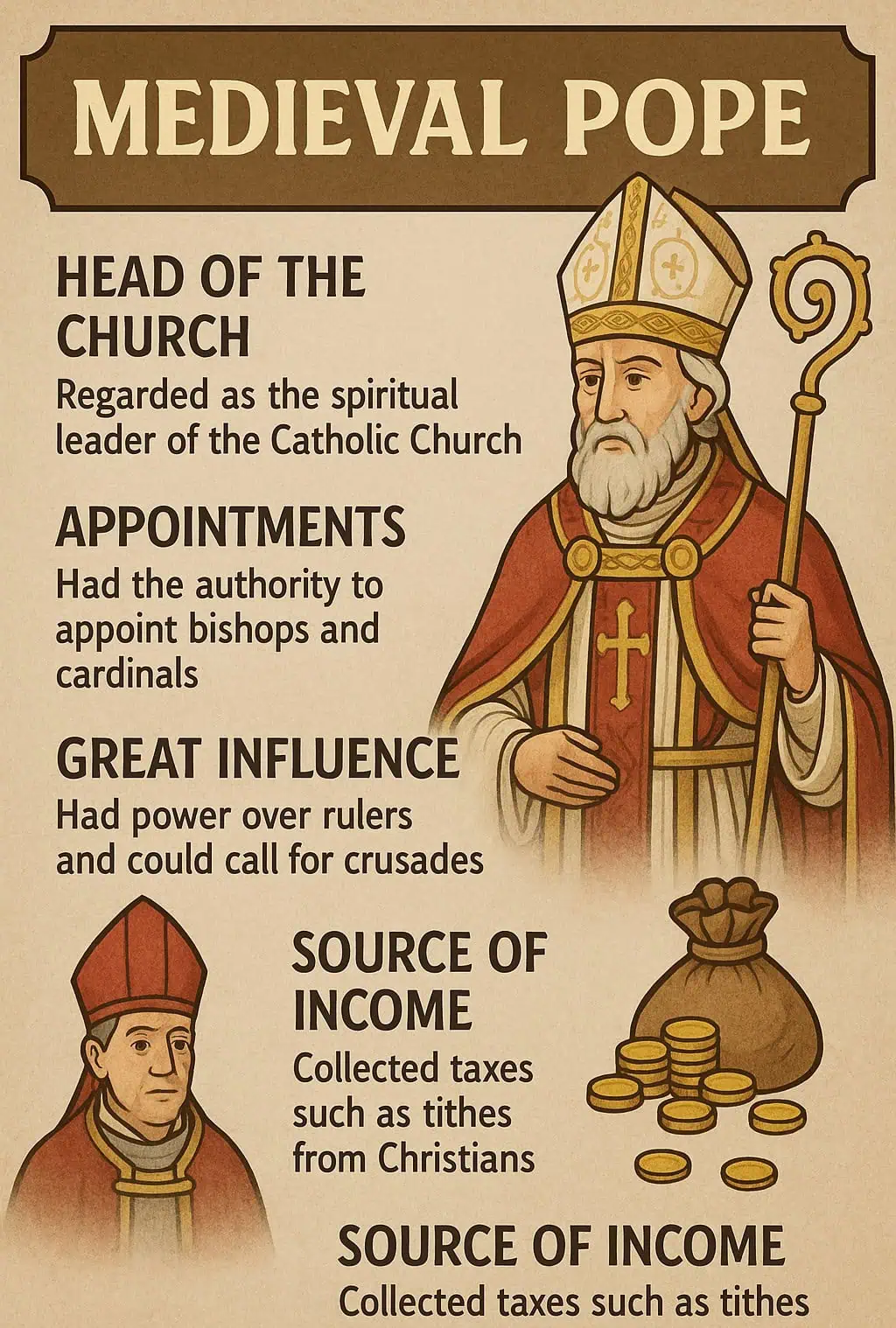
✝️ The Pope and the Crusades
Popes played a decisive role in launching and sustaining the Crusades. In 1095, Pope Urban II called for the First Crusade at the Council of Clermont, urging Christian knights to reclaim Jerusalem and promising spiritual rewards.
Later popes shaped the crusading movement by granting indulgences, raising funds, appointing leaders, and using crusades to extend religious and political authority across medieval Europe.
- Pope Urban II – Initiated the First Crusade (1095)
- Pope Innocent III – Expanded crusading beyond the Holy Land
- Papal indulgences – Promised spiritual rewards to crusaders
The Structure of the Medieval Clergy
The medieval Church was highly hierarchical, with clear ranks and responsibilities. Clergy members were divided according to their duties, lifestyle, and authority.
The medieval clergy were broadly divided into:
- High clergy – senior church officials such as popes and bishops
- Lower clergy – parish priests, vicars, and local clerics
- Regular clergy – monks and nuns living under religious rules
- Secular clergy – clergy who lived and worked among the people
⛪ Click-to-Reveal: Medieval Clergy Facts
Who Were the Medieval Clergy?
The medieval clergy were members of the Christian Church who served as priests, monks, bishops, and other church officials. They led worship, guided communities, and often held major influence in education and local government.
The Pope: Bishop of Rome
The Pope was known as the Bishop of Rome and served as head of the Roman Catholic Church. Popes shaped doctrine, appointed senior clergy, and sometimes influenced kings and rulers—though power varied by region and period.
Bishops and Church Power
Bishops governed dioceses, supervised parish priests, and administered church lands. Many were wealthy and politically connected, and some acted as diplomats, royal advisers, or even military leaders in territorial disputes.
Parish Priests and Daily Life
Most people encountered the Church through the local parish priest, who performed baptisms, weddings, and funerals, led Mass, taught basic Christian beliefs, and helped regulate community life through the calendar of holy days.
Monks and Monasteries
Monks (and nuns) belonged to the regular clergy, living under strict rules in monasteries and convents. Many communities became centres of learning, manuscript copying, charity, and hospitality for travellers.
Friars: Travelling Preachers
Friars (such as Franciscans and Dominicans) preached in towns and cities and lived on alms. Unlike monks, they were not usually cloistered and focused on teaching, preaching, and spiritual reform among the wider population.
Scribes and Preserving Knowledge
In the early Middle Ages, many scribes were monks who copied texts by hand in monastic scriptoria. Later, scribes also included trained lay professionals, but the Church remained crucial for preserving learning and maintaining records.
Why the Clergy Were So Influential
The clergy held influence because the Church controlled much of education, owned extensive land, collected tithes, and provided spiritual authority in a deeply religious society. Clergy also helped run courts, write documents, and advise rulers.
The Pope – Head of the Medieval Church
What was the role of the Pope in medieval times?
The Pope was the Bishop of Rome and the spiritual head of the Roman Catholic Church. He defined doctrine, appointed senior clergy, resolved disputes, and exercised authority that often rivalled that of kings.
The Pope held immense spiritual authority, and many medieval Christians believed his power came directly from God. Although political power varied by period and location, popes often influenced kings, emperors, and nobles throughout Europe.
The Pope’s responsibilities included:
- Defining Church teachings and doctrine
- Appointing bishops and senior clergy
- Excommunicating individuals or kingdoms
- Annuling marriages
- Acting as a mediator between rulers
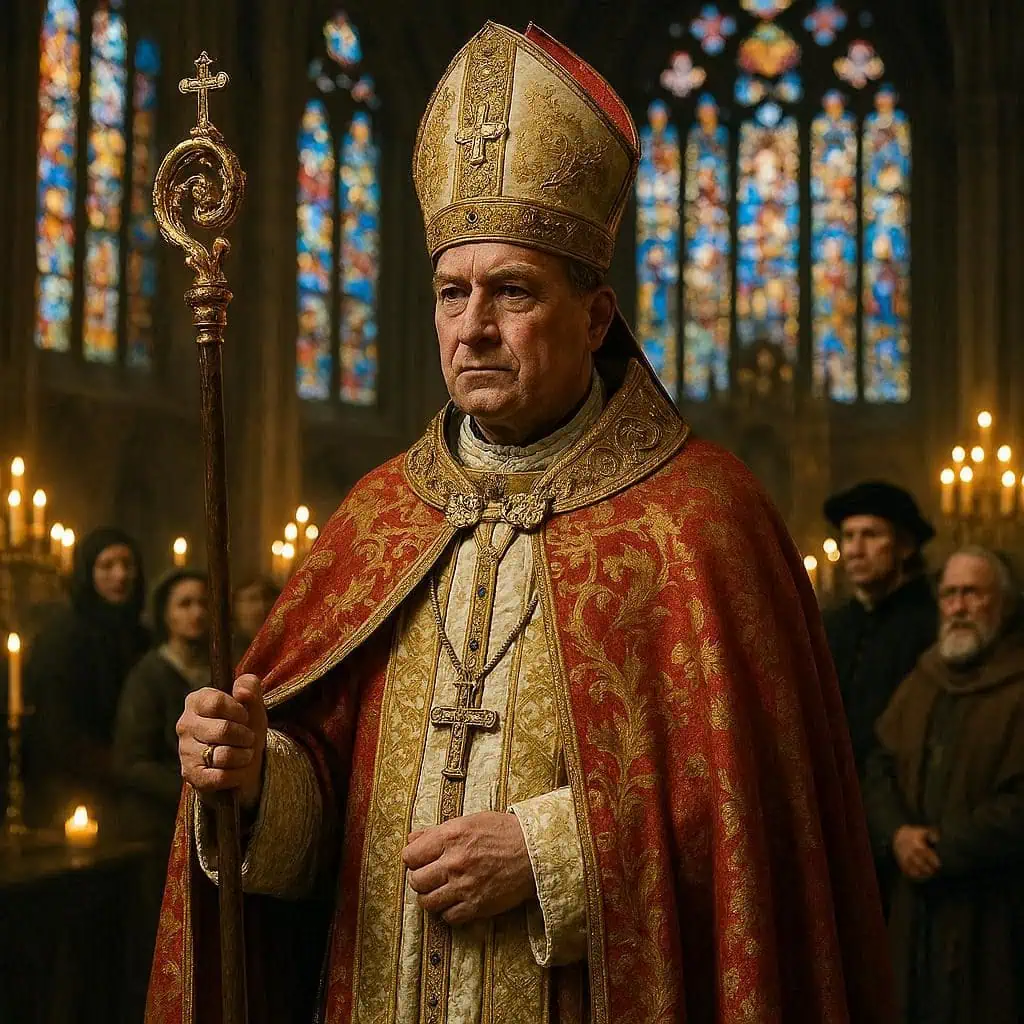
Medieval Bishops
What did medieval bishops do?
Medieval bishops governed dioceses and acted as both religious leaders and powerful landowners. They supervised priests, administered Church lands, and often advised kings and nobles.
Bishops were among the high clergy and controlled vast wealth and estates. In some regions, especially within the Holy Roman Empire, bishops even ruled territories as secular lords.
Medieval bishops:
- Oversaw parish priests within their diocese
- Administered Church lands and wealth
- Served on royal councils
- Acted as judges and diplomats
- Sometimes led troops during conflicts

📜 Archdeacons in the Middle Ages
An archdeacon was a senior church official who worked under a bishop, helping to manage the day-to-day administration of a diocese. Archdeacons often supervised local clergy, inspected parishes, and dealt with church discipline and records—acting as an important link between the bishop and the parish churches.
- Rank: Below a bishop, above many parish clergy
- Role: Oversaw parish standards and clergy discipline
- Duties: Inspections, reports, church courts, administration
Parish Priests, Vicars, and Clerics
What is a medieval cleric?
A medieval cleric was any person who had taken holy orders within the Christian Church. This included bishops, priests, deacons, monks, and nuns.
Most ordinary people encountered the lower clergy on a daily basis, especially parish priests and vicars.
Parish Priests
Parish priests were responsible for:
- Celebrating Mass
- Performing baptisms, weddings, and funerals
- Teaching Christian beliefs
- Providing moral guidance
Vicars
A vicar acted as a substitute for a parish priest or rector. Conditions varied widely; some vicars lived modestly, while others held well-funded church livings and enjoyed comfortable lifestyles.
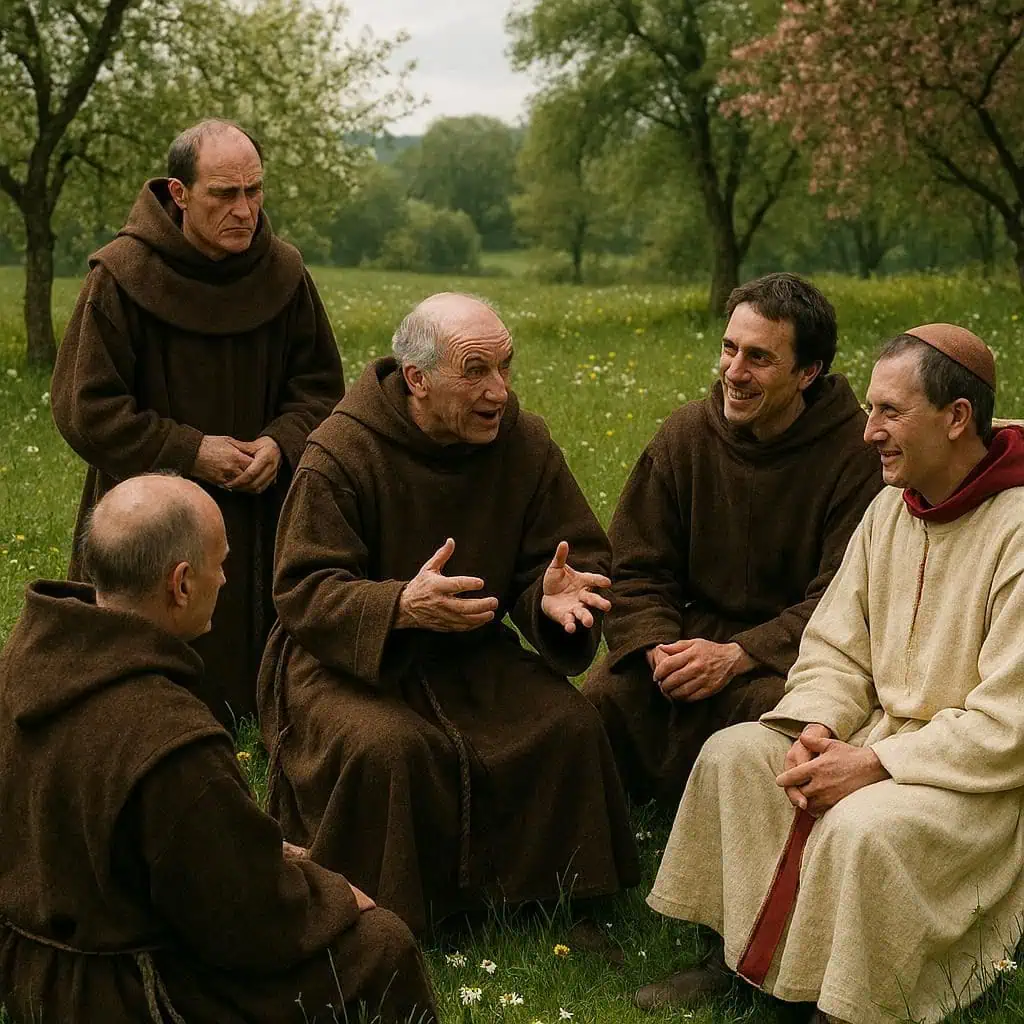
Monks and Nuns (Regular Clergy)
Who were medieval monks and nuns?
Monks and nuns were members of the regular clergy who lived in monasteries and convents under strict religious rules. Their lives focused on prayer, work, and obedience.
Monastic communities followed rules such as the Rule of St Benedict and were largely separated from everyday society.
Monks and nuns focused on:
- Prayer and religious devotion
- Manual labour
- Education and scholarship
- Charity and hospitality
- Preserving manuscripts and learning
Monasteries became major centres of education, medicine, and manuscript production.

Friars – Travelling Preachers
What were medieval friars?
Friars were members of mendicant religious orders who travelled to preach among the people. Unlike monks, they did not live permanently in monasteries.
Orders such as the Franciscans and Dominicans emphasised poverty, humility, and preaching to urban populations.
Friars:
- Travelled between towns and cities
- Preached sermons to ordinary people
- Lived on alms and donations
- Focused on moral reform and education
⛪ Chaplains in the Middle Ages
A medieval chaplain was a priest assigned to serve a specific household, castle, or chapel. Because chaplains were educated and literate, they often carried out important administrative and record-keeping duties in addition to their religious role.
Chaplains commonly:
- Conducted daily worship for noble households and garrisons
- Managed documents and correspondence due to their literacy
- Acted as clerks or secretaries within castles and courts
- Advised noble households on religious and moral matters
Confessors
What was a confessor in medieval times?
A confessor was a priest authorised to hear confessions and grant absolution for sins. Confession became a compulsory part of Christian life in the 13th century.
The term “Confessor” was also used as an honorific title for saints who lived holy lives but were not martyrs, such as Edward the Confessor, King of England.
Medieval Scribes and Record Keepers
Who were medieval scribes?
Medieval scribes were individuals responsible for copying books, records, and religious texts by hand. In the early Middle Ages, most scribes were monks.
Scribes played a vital role in:
- Preserving religious and classical texts
- Maintaining legal and financial records
- Spreading literacy within the Church
By the later Middle Ages, many scribes were lay professionals, especially in towns and universities.

The Wealth and Power of the Medieval Church
Why were the medieval clergy so powerful?
The medieval clergy were powerful because they controlled education, owned vast lands, collected tithes, and held spiritual authority in a deeply religious society.
The Church’s wealth allowed it to:
- Build cathedrals and monasteries
- Fund education and charity
- Influence kings and governments
- Shape law and moral behaviour
However, corruption and abuse of power also existed, leading to criticism and calls for reform.

Medieval Clergy: Good or Bad?
The medieval clergy cannot be judged simply as good or bad. Their influence varied greatly depending on time, place, and individual behaviour.
The clergy:
- Provided education, charity, and spiritual guidance
- Preserved knowledge and historical records
- Also included figures who abused wealth or authority
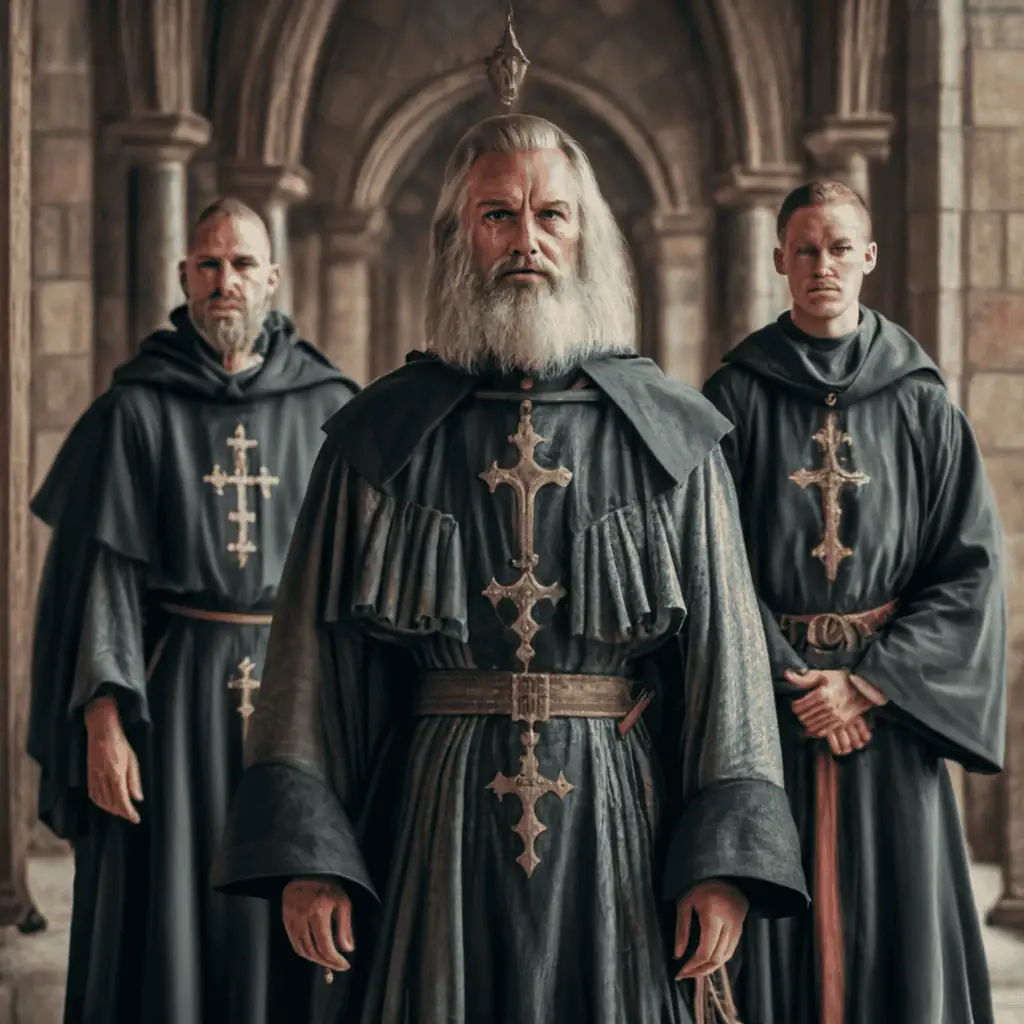
Legacy of the Medieval Clergy
The legacy of the medieval clergy can still be seen today in:
- Universities and schools
- Hospitals and charitable institutions
- Legal systems and written records
- Churches, monasteries, and cathedrals across Europe
- Western religious and cultural traditions
In Summary
The medieval clergy were central to medieval life as religious leaders, educators, administrators, and power brokers. Their influence shaped European history, culture, and institutions in ways that continue to be felt today.
❓ Medieval Clergy – Frequently Asked Questions
Who were the medieval clergy?
The medieval clergy were members of the Christian Church, including priests, monks, bishops, friars, and other church officials who guided religious life and shaped medieval society.
What was the role of the Pope in medieval times?
The Pope, known as the Bishop of Rome, was the spiritual head of the Roman Catholic Church and held authority over doctrine, senior clergy appointments, and major church decisions.
What did medieval bishops do?
Medieval bishops governed dioceses, supervised parish priests, managed Church lands, and often acted as advisers to kings and nobles.
What is the difference between monks and friars?
Monks lived in monasteries under strict religious rules, while friars travelled between towns and cities preaching and living on alms.
Were all medieval clergy wealthy?
No. While senior clergy such as bishops could be wealthy, many parish priests, monks, and friars lived modest or poor lives.
Why were medieval clergy so powerful?
The clergy were powerful because the Church controlled education, owned vast lands, collected tithes, and held spiritual authority in a deeply religious society.
What was an archdeacon?
An archdeacon was a senior church official who assisted a bishop by supervising local clergy and managing administrative affairs within a diocese.
Did the medieval Church educate people?
Yes. The Church was responsible for most medieval education, running cathedral schools, monasteries, and early universities.
🛡 Medieval Clergy Quiz
📜 Glossary of Medieval Clergy Terms
Clergy
Members of the Christian Church who performed religious, administrative, and educational duties in medieval society.
Pope
The Bishop of Rome and supreme head of the Roman Catholic Church, holding the highest spiritual authority in the Middle Ages.
Bishop
A senior church official responsible for governing a diocese and supervising parish priests.
Archdeacon
A senior cleric who assisted a bishop in managing a diocese, overseeing clergy discipline and administration.
Parish Priest
A local priest responsible for leading worship and providing spiritual care to a parish community.
Vicar
A priest who acted as a substitute for a rector, serving a parish on behalf of another cleric.
Monk
A member of the regular clergy who lived in a monastery under strict religious rules focused on prayer and work.
Friar
A travelling preacher who belonged to a mendicant order and lived on alms while preaching among the people.
Chaplain
A priest assigned to serve a specific household, castle, or institution, often combining religious and administrative duties.
Confessor
A priest authorised to hear confessions and grant absolution; also a title given to saints who lived holy lives.
Scribe
A person who copied manuscripts and maintained written records, often working in monasteries during the early Middle Ages.