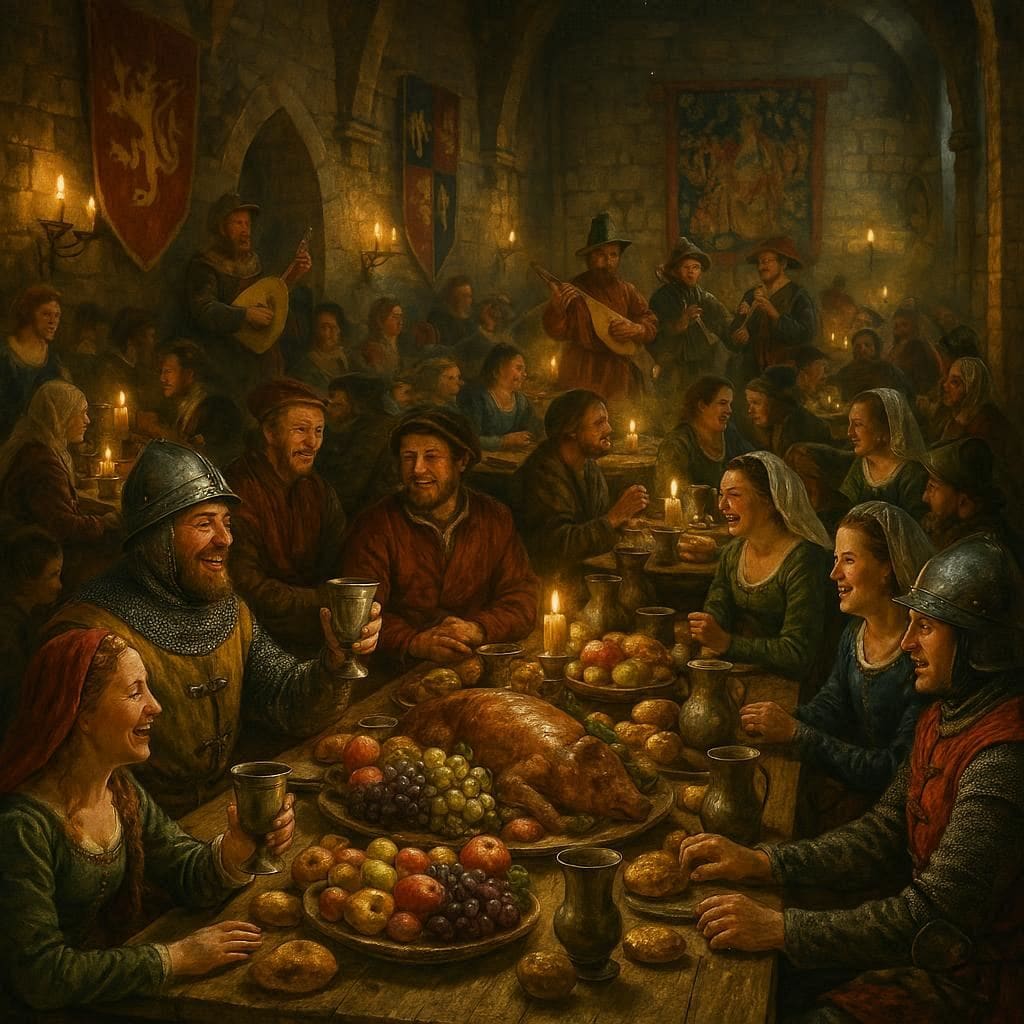
Preparing and operating a medieval banquet was no small feat—it was an elaborate and highly organized event that showcased the wealth, power, and cultural sophistication of a castle or noble household. These grand feasts required the coordinated efforts of numerous skilled individuals, from cooks and bakers in the kitchen to servers, stewards, and musicians in the great hall.
Every participant had a clearly defined role, ensuring that food, drink, and entertainment flowed seamlessly while impressing guests of high rank, including royalty, nobility, and visiting dignitaries. Medieval banquets were not only opportunities to celebrate special occasions but also stages for demonstrating social hierarchy, political alliances, and courtly etiquette, making meticulous planning and expert execution essential for success.
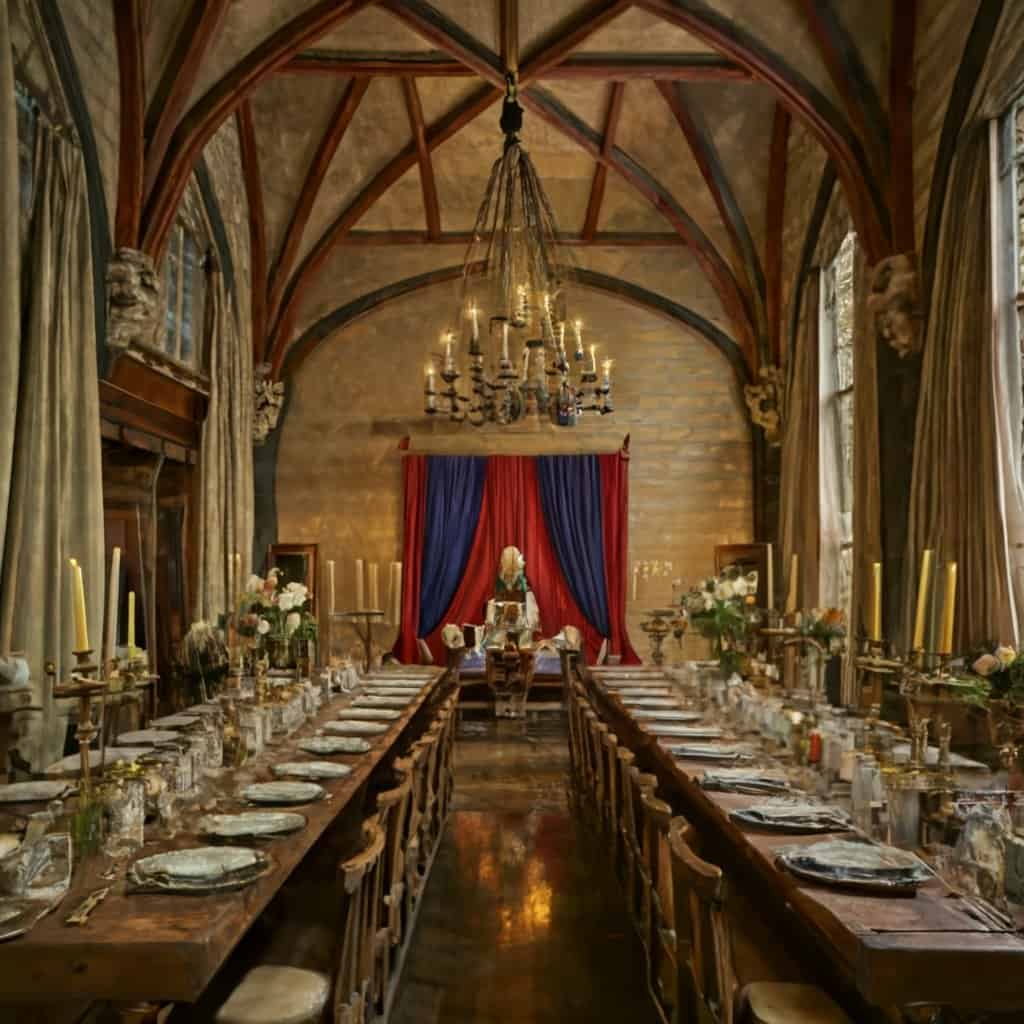
🍗 The Banquet as a Symbol of Power
Medieval banquets were not merely lavish meals but social and political performances. These grand gatherings brought together nobles, clergy, and other distinguished guests, serving as platforms for diplomacy, alliances, and displays of hierarchy. The abundance of food, the pageantry of service, and the richness of music and decoration all projected a message of power, generosity, and cultural sophistication.
Historians note that medieval feasting rituals reflected the values of the time — blending religious devotion, courtly manners, and the politics of prestige. Every dish, gesture, and performance reinforced the authority of the host and the structure of society.
🍞 Key Roles at a Medieval Banquet
Cooks – The backbone of any feast, cooks prepared vast quantities of food using a variety of medieval methods such as roasting, boiling, and baking. They were assisted by numerous helpers who chopped, stirred, and tended the fires.
Butler – The butler oversaw all beverages, including wine, ale, and mead. Responsible for the cellar, they ensured the drinks were properly stored, served at the right temperature, and worthy of the guests.
Servers – Servers carried platters to the tables, poured drinks, and ensured guests were comfortable. Their movements were choreographed to reflect the elegance of the occasion.
Bakers – Responsible for bread and pastries, bakers were essential to every medieval meal. Bread was not only a staple food but often served as trenchers, or edible plates, for the guests.
Carvers – Skilled in presentation, carvers artfully sliced and served meat before guests, often as a display of ceremony and respect.
Musicians and Jesters – Entertainment was central to a banquet’s success. Minstrels played lutes, harps, and flutes, while jesters performed tricks and told humorous stories to amuse the crowd.
Guards – Stationed near entrances and along the hall, guards ensured the safety of the guests and upheld the dignity of the event.
Stewards – Acting as the general manager, the steward coordinated all activities, liaising between the host and staff to ensure flawless execution.
Maids and Servants – After the festivities, maids and lower servants were responsible for cleaning and restoring the hall for future events.
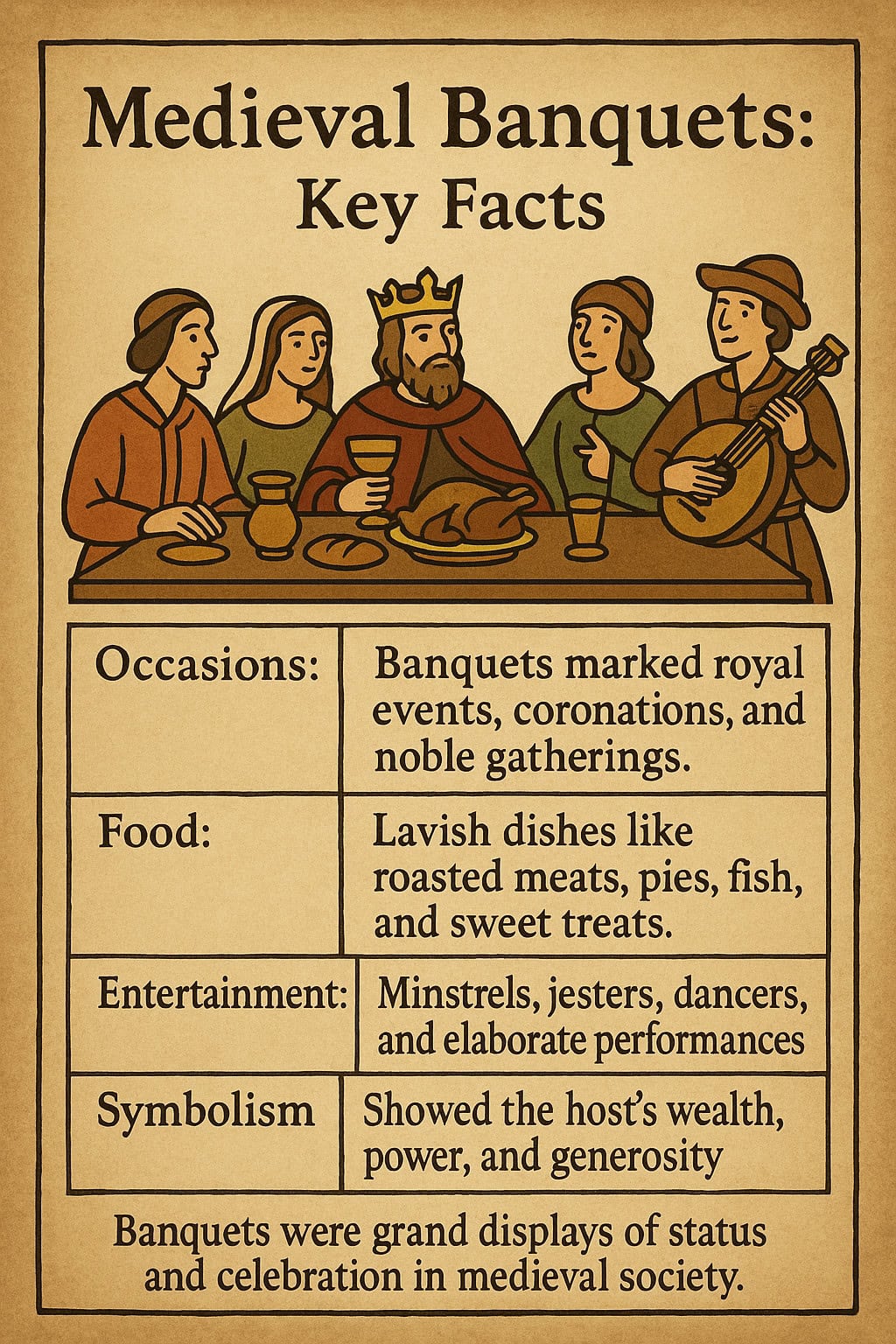
👑 The Dais – A Stage of Authority
At one end of the great hall stood the dais, a raised platform reserved for the host and honored guests. Decorated with luxurious fabrics, heraldic banners, and fine tableware, the dais symbolized status and command. Seated above the crowd, the lord and his closest allies could oversee the entire hall — a literal representation of their elevated position in medieval society.
🎺 Trumpeters and Ceremony
Trumpeters were important ceremonial figures who announced the arrival of guests, the beginning of courses, or toasts to the host’s health. Their fanfares added splendor to the proceedings, signaling transitions throughout the banquet. Trumpeters were often part of the noble household and considered skilled professionals, vital to the sense of grandeur and order.
🎌 Flags and Banners
Flags and banners played an important decorative and symbolic role in medieval banquets:
- Royal Banners – Displayed to represent the monarch’s authority and presence.
- Family Banners – Denoted noble families attending, often hung near their assigned tables.
- Heraldic Banners – Showed coats of arms to identify individuals and their lineage.
- Religious Banners – Reflected devotion, with Christian symbols or saints depicted.
- Decorative Banners – Added color and vibrancy to the hall, often crafted from rich fabrics.
These visual symbols reinforced rank, lineage, and religious devotion while transforming the banquet hall into a vivid display of pageantry.

🍷 Beyond Feasting – The Social Meaning of Banquets
Medieval banquets were more than culinary events — they were expressions of power, faith, and unity. Feasts celebrated marriages, military victories, religious festivals, or royal visits. They allowed hosts to demonstrate wealth and generosity, essential virtues in medieval nobility.
Banquets also served a diplomatic function, strengthening bonds between rulers, allies, and the church. Every guest list, seating arrangement, and ceremonial toast was carefully planned to maintain order and express social balance.
🕯️ Summary
A medieval banquet was both a culinary triumph and a social spectacle. It required organization, artistry, and devotion to ritual. From the bustling kitchens to the musicians’ final note, every detail was designed to honor the host and awe the guests.
🍽️ Frequently Asked Questions: Medieval Banquets
What was the primary purpose of a medieval banquet?
Banquets celebrated important events (marriages, victories, religious festivals) and served as public displays of wealth, status, and political power.
Who planned and ran a medieval banquet?
Stewards coordinated the event, working with cooks, bakers, butlers, carvers, musicians, and numerous servants to execute the feast.
What is a dais and why was it important?
The dais is a raised platform reserved for the host and honoured guests; its elevation symbolised rank and allowed the lord to be seen by the entire hall.
What kinds of food were typically served?
Roasted meats, pies, stews, fish, sweetmeats, fruits, and spiced dishes were common — often presented in multiple courses with elaborate garnishes.
How was the banquet served?
Service followed strict etiquette: dishes were brought in sequence, carvers presented meat ceremonially, and servers and cupbearers followed choreographed roles.
Were ordinary people invited to these banquets?
Mostly nobles, clergy, and distinguished guests attended the high table; servants and entertainers supported the event but usually did not dine with the high-ranking guests.
What entertainment accompanied medieval banquets?
Minstrels, instrumentalists, jesters, jongleurs, dancers and trumpeters provided music, comedy, and spectacle between courses and during key moments.
🍷 Quiz: Medieval Banquets — Test Your Knowledge
📜 Resources & Historical References
Trusted resources for further reading on medieval feasting, court culture, and banquet practice:
- British Museum – Medieval Daily Life & Material Culture
- Historic Royal Palaces – Royal Feasts & Court Life
- HistoryExtra – Articles on Medieval Food and Feasts
These organizations and publications provide accessible, reliable information backed by museum collections and academic research.
📘 Glossary: Medieval Banquet Terms
Dais
A raised platform at the end of the great hall reserved for the host and honoured guests.
Trencher
A thick slice of bread used as an edible plate during medieval meals.
Steward
The senior household officer who organised the feast and coordinated staff.
Carver
The servant skilled in slicing and presenting roasted meats to guests during the feast.
Butler
Officer responsible for drinks and the management of the cellar.
Minstrel
A musician or entertainer who performed songs and music at the feast.
Great Books About Medieval Feasts and the People Behind the Banquet Table
"Feasts and Festivities: A Glimpse into Medieval Banquets" by Dr. Emily Thompson
Dr. Thompson delves into the captivating world of medieval banquets, exploring their significance, rituals, and culinary delights. This book takes readers on a sensory journey through the extravagant feasts of the era, unraveling the social, cultural, and political dimensions of these lavish events.
"Banquet Tales: Stories and Secrets of Medieval Feasting" by Professor Alexander Davis
Professor Davis offers a collection of fascinating narratives and anecdotes surrounding medieval banquets. From the sumptuous dishes and exotic ingredients to the extravagant decorations and entertainment, this book brings the banquet experience to life, shedding light on the customs, traditions, and intrigues of the medieval dining table.
"The Art of Feasting: Culinary Delights and Banquet Etiquette in Medieval Europe" by Dr. Isabella Martinez
Dr. Martinez explores the art of feasting in medieval Europe, focusing on banquets as a reflection of social and cultural values. This book examines the elaborate menus, table settings, and etiquette that shaped the banquet experience, providing insights into the gastronomic practices and refinement of medieval dining.
"Banquets of Power: Politics and Prestige at Medieval Feasts" by Professor Robert Thompson
Professor Thompson investigates the role of banquets as instruments of power and diplomacy in the medieval world. From royal feasts to diplomatic gatherings, this book analyzes the political motivations, alliances, and rivalries that were often at play during these extravagant events, offering a unique perspective on the intersections of food, politics, and symbolism.
"Gastronomic Spectacle: A Cultural History of Medieval Banquets" by Dr. Sophia Johnson
Dr. Johnson provides a comprehensive cultural history of medieval banquets, exploring their evolution and significance over time. This book examines the social dynamics, religious influences, and artistic elements that shaped banquets, shedding light on the complex interplay between food, symbolism, and identity in medieval society.
Medieval Banquets | Heraldry, Banners & Flags
At a medieval banquet, various flags and banners were displayed to signify different things. Here are a few examples:
Royal Banner
The banner of the king or queen was usually displayed prominently in the banquet hall to signify their presence and authority.
Family Banners
The banners of noble families attending the banquet were also displayed, often hung over their respective tables.
Heraldic Banners
These banners displayed the heraldic devices or coats of arms of different families or individuals, and were used to identify their respective owners.
Religious Banners
Banners displaying religious symbols or images were also common in medieval banquets, as religion played an important role in daily life.
Decorative Banners
Finally, some banners were purely decorative in nature, featuring intricate designs or patterns that added to the overall ambiance of the banquet hall.
In great halls, banners were typically hung from rafters or wall hooks and sometimes lined the upper galleries.
Color and symbolism were highly intentional — for example, gold denoted wealth and power, blue suggested loyalty, and red evoked courage or status.
Major feasts sometimes combined banners with trumpet fanfares and heraldic announcements, creating a full sensory display of hierarchy and celebration.
Overall, banners and flags were an important aspect of medieval banquets, as they helped to signify the presence and identity of different individuals and families, as well as add to the visual spectacle of the event.