Iberia, the peninsula comprising modern-day Spain and Portugal, was one of the most important regions of medieval Europe.
Throughout the Middle Ages, the region was marked by political turmoil and military conflict between Christian and Muslim forces.
Joseph F. O’Callaghan, Renowned scholar in medieval Spanish history and author of “The Last Crusade in the West: Castile and the Conquest of Granada.”
“The Reconquista was not just a military campaign; it was a cultural and ideological transformation that shaped the identity of Christian Spain and left an indelible mark on the history of the Iberian Peninsula.”
The period from 850 to 1492, known as the Reconquista, saw the gradual reconquest of Iberia by Christian kingdoms from Muslim rule. This article explores the history of Iberia and the Reconquista, including the key events and figures that shaped this fascinating period.
The Emergence of Muslim Spain
In the early 8th century, Muslim armies from North Africa invaded the Iberian Peninsula and quickly established a powerful presence in the region. They established the Umayyad Caliphate of Cordoba, which became one of the most important political and cultural centers in medieval Europe.
Muslim Spain, or Al-Andalus, was known for its wealth, art, and scientific achievements, and its rulers encouraged religious tolerance and intellectual exchange.

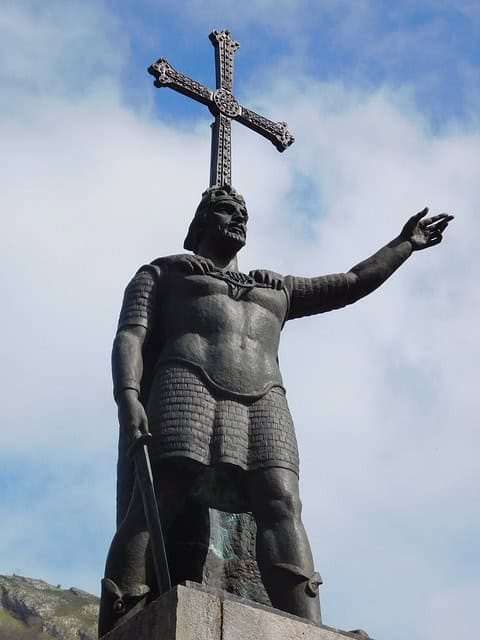
However, the Christian kingdoms in the north of the peninsula resisted Muslim rule and gradually began to launch counter-attacks against their southern neighbors. In 722, the Battle of Covadonga saw the Christian forces of Asturias achieve a crucial victory over the Muslims, establishing a foothold for Christian resistance in the north.
The Rise of the Christian Kingdoms
Over the following centuries, the Christian kingdoms of Leon, Castile, Aragon, and Portugal gradually emerged as major players in the region. They were able to establish strongholds in the mountains and gradually expand their territories through military conquest and diplomacy.

The 11th century saw a major turning point in the Reconquista, as the Christian kingdoms began to launch coordinated offensives against the Muslim-ruled cities and territories in the south.

One of the most famous events of this period was the capture of Toledo by Alfonso VI of Castile in 1085. This event marked a major turning point in the Reconquista, as it saw the capture of one of the most important cities in Muslim Spain.

“The Reconquista stands as one of the most remarkable and enduring struggles in European history, a testament to the resilience, determination, and religious fervor of Christian Spain.”
Roger Collins, Historian specializing in medieval Spain and author of “The Arab Conquest of Spain, 710-797.”
Roger Collins, Historian specializing in medieval Spain and author of “The Arab Conquest of Spain, 710-797.”
Over the following centuries, the Christian kingdoms continued to expand their territories and gradually weaken Muslim rule in the region.
The Fall of Muslim Spain
Despite the relative success of Muslim Spain in the early centuries of the Reconquista, the Muslim kingdoms gradually began to fracture and lose territory to the Christian kingdoms. In the 13th century, the Kingdom of Granada emerged as the last remaining Muslim kingdom in Iberia.

However, even this kingdom was eventually conquered by the Christian forces of Castile and Aragon in 1492, ending more than 700 years of Muslim rule in the region.

The Reconquista had a profound impact on the history of Iberia and Europe as a whole. It established Christian rule in the region and created a distinct cultural identity for the Christian kingdoms of Spain and Portugal.
The region became known for its artistic and intellectual achievements, including the Gothic and Renaissance architecture that can still be seen in many of the region’s cities.
Conclusion
The Reconquista was a complex and fascinating period in the history of Iberia and Europe. It saw the gradual emergence of Christian kingdoms in the region and the eventual conquest of Muslim Spain.
The legacy of this period can still be seen in the cultural and artistic achievements of the region, and it remains a significant chapter in the history of both Spain and Portugal.

Reconquista of Spain | Top 10 Events
The Reconquista, a long and complex period spanning several centuries, witnessed numerous significant events. While it is challenging to select just ten, here are ten notable events that played a crucial role in the Reconquista
Battle of Covadonga (718)
The victory of Christian forces led by Pelayo against the Umayyad Caliphate marked the beginning of the Christian resistance in the Iberian Peninsula.
Battle of Las Navas de Tolosa (1212
A decisive Christian victory against the Almohad Caliphate, which halted their expansion and weakened Muslim control over Iberia.
Conquest of Toledo (1085)
Alfonso VI of Castile captured Toledo, a major cultural and religious center, opening the path for further Christian advances into Muslim-controlled territories.
Battle of Alarcos (1195)
A significant defeat for the Christian forces against the Almohad Caliphate, which temporarily halted Christian momentum and highlighted the challenges they faced.
Siege of Lisbon (1147)
A joint effort by Portuguese and crusader forces to recapture Lisbon from Muslim control, demonstrating the growing power and ambition of the Portuguese kingdom.
Battle of Salado (1340)
An important victory for Christian forces, primarily Castile and Portugal, against the Marinid Sultanate of Morocco, consolidating Christian control in southern Iberia.
Fall of Granada (1492)
The final event of the Reconquista, when the last Muslim stronghold in the Iberian Peninsula, the Emirate of Granada, fell to the Catholic Monarchs, Ferdinand and Isabella.
Battle of Simancas (939)
A significant Christian victory over the Caliphate of Cordoba, which marked a turning point in pushing back Muslim advances and stabilizing Christian territories.
Battle of Higueruela (1431)
A crucial battle between Castilian forces and the Nasrid Kingdom of Granada, illustrating the ongoing conflict and territorial disputes during the later stages of the Reconquista.
Treaty of Alcaçovas (1479)
A diplomatic agreement between Castile and Portugal that defined their respective spheres of influence and solidified their control over the territories gained from the Reconquista.
These events, among many others, shaped the course of the Reconquista and influenced the political, cultural, and religious landscape of the Iberian Peninsula.