
Byzantine clothing reflected one of the most sophisticated cultures of the medieval world. Drawing upon the legacy of the Roman Empire while incorporating influences from the East and Mediterranean regions, Byzantine fashion emphasized luxury, symbolism, and social hierarchy.
Unlike earlier Roman dress, which favored simplicity, Byzantine garments were known for their ornamentation, rich dyes, intricate embroidery, and precious materials. Silk, gold thread, pearls, and gemstones were frequently used in elite clothing, transforming dress into a visible display of political authority and wealth.
High-quality footwear, elaborate headwear, and finely woven textiles further distinguished Byzantine society from much of medieval Europe, where clothing was often more practical than decorative.
What Did People Wear in the Byzantine Empire?
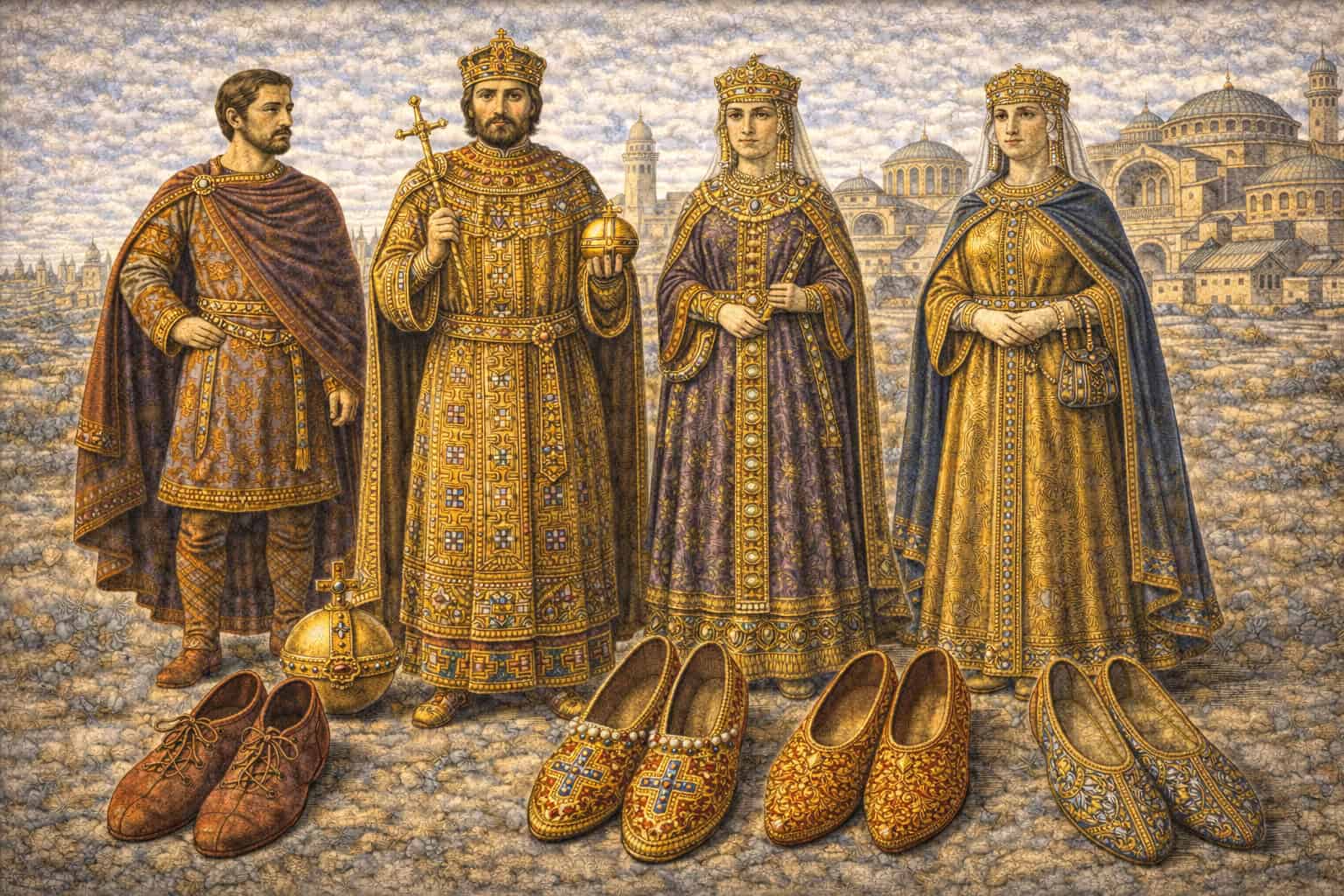
Byzantine clothing blended Roman heritage with eastern influences, creating a style known for luxurious fabrics, symbolic colors, and detailed decoration. Garments often reflected social rank, with elites wearing silk and embroidered attire while ordinary people relied on practical wool and linen.
- Silk garments — The most prestigious clothing, strongly associated with imperial and aristocratic status.
- The loros — A ceremonial garment symbolizing imperial authority and continuity with Rome.
- Layered attire — Women typically dressed modestly with layered garments and head coverings.
- Roman-inspired military wear — Armor and uniforms retained strong classical influences.
- Color-coded footwear — Shoe colors often indicated rank, with red reserved for the emperor.
- Jewelry and embroidery — Central features of aristocratic fashion used to display wealth.
- Luxury textiles — Trade networks provided access to rare dyes and high-quality materials.
In Byzantine society, clothing served as a powerful visual marker of authority, wealth, and cultural identity, reinforcing the empire’s structured social hierarchy.
Imperial and Royal Clothing
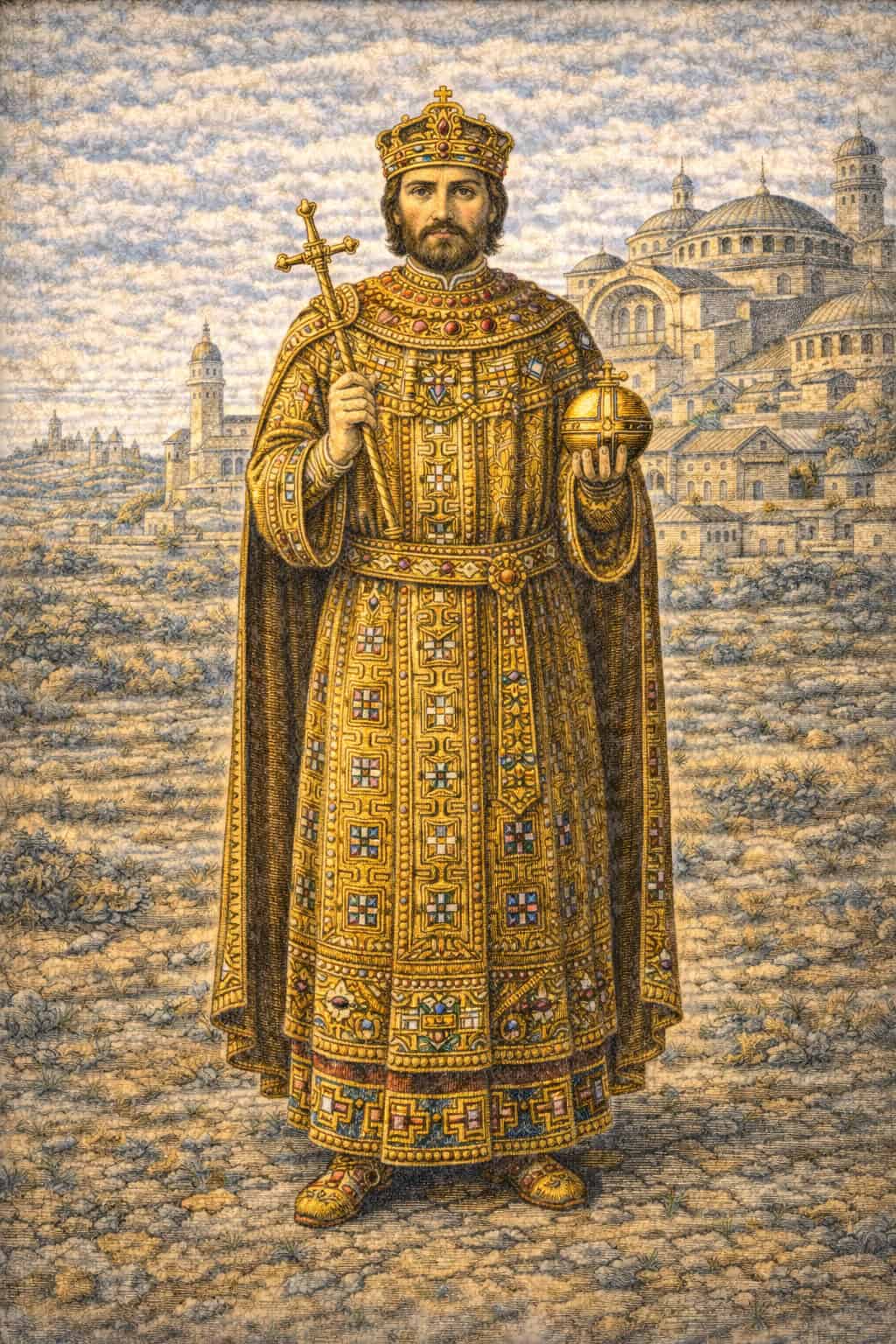
The clothing of the Byzantine emperor was carefully designed to communicate divine authority and imperial power.
One of the most recognizable garments was the loros, a ceremonial costume derived from Roman tradition but infused with Christian symbolism. Made from richly decorated fabric, the loros wrapped around the torso and draped elegantly to the feet. The trailing portion was often folded over the arm, creating a formal and unmistakable silhouette.
Empresses wore a similar garment, though later versions became increasingly elaborate. Wide sleeves, jeweled collars, embroidered panels, and layered fabrics turned imperial dress into a spectacle of prestige.
Jewelry played an essential role in court fashion. Rings, necklaces, crowns, and gem-studded accessories reinforced the sacred status of the ruling family.
By the height of the empire, court dress had become so regulated that specific garments were reserved exclusively for imperial use.
Military Clothing
Despite the empire’s evolution, Byzantine military dress retained strong connections to Roman tradition.
Officers typically wore short tunics paired with protective armor such as breastplates or scale armor. Leather strips often decorated the edges of garments, providing both flexibility and protection.
Footwear was particularly important for soldiers expected to march long distances. Durable boots and reinforced sandals were standard equipment.
Beneath their helmets, soldiers commonly wore padded head cloths to reduce friction and absorb shock during combat.
Elite units such as the Varangian Guard became known not only for their battlefield effectiveness but also for their distinctive and imposing appearance.

Women’s Clothing in the Byzantine Empire
Christianity deeply influenced Byzantine society, and women’s clothing reflected ideals of modesty and dignity.
Most women wore long dresses reaching the ankles, typically featuring high necklines and loose sleeves. Layering was common, both for warmth and propriety.
Public attire almost always included head coverings. Popular styles ranged from veils and caps to wrapped cloths resembling turbans.
Color choices could be vibrant, but garments were designed to maintain elegance rather than attract excessive attention.
Footwear varied widely and included sandals, slippers, and mid-calf boots. Red became a particularly fashionable color for women’s shoes.
Among the aristocracy, fabrics grew increasingly luxurious, incorporating imported silk and detailed embroidery.

Byzantine Shoes and Status Symbols
Shoes held unusual importance in Byzantine fashion.
While much of medieval Europe prioritized durability over style, Byzantines produced footwear that was both practical and decorative.
Colors often indicated social rank:
- Red shoes were traditionally reserved for the emperor.
- Nobles wore gilded footwear, sometimes adorned with pearls or gemstones.
- Decorative stitching and patterned leather added further refinement.
The craftsmanship behind Byzantine footwear demonstrates the empire’s broader commitment to artistry and visual distinction.

Textiles and Materials in Byzantine Clothing
The Byzantine Empire benefited from vast trade networks that provided access to some of the finest textiles in the medieval world. Clothing materials reflected both economic power and cultural exchange, with luxurious fabrics signaling prestige while durable textiles supported everyday life.
Common textiles included:
- Silk — The ultimate symbol of prestige, strongly associated with imperial authority and elite status.
- Wool — Widely used for everyday garments due to its durability and warmth.
- Linen — Favored for lighter clothing, particularly in warmer climates.
- Patterned and dyed fabrics — Often reflected eastern artistic influence and demonstrated wealth.
Silk production became so valuable that the empire closely guarded its manufacturing techniques, helping preserve a powerful economic advantage for centuries.
Clothing as a Marker of Social Rank
Dress in Byzantine society was rarely just personal — it was political.
Sumptuary traditions regulated what individuals could wear, ensuring that clothing reinforced the empire’s strict social hierarchy.
Elaborate garments signaled authority, wealth, and proximity to the imperial court, while simpler clothing identified merchants, artisans, and laborers.
In this way, fashion functioned as a visual language understood across the empire.
Byzantine Clothing Fast Facts
Byzantine clothing reflected a fusion of Roman tradition and eastern artistic influence, creating a distinctive style that communicated rank, authority, and cultural identity throughout the empire.
- Roman and eastern influences — Byzantine fashion blended classical heritage with rich decorative traditions.
- Silk — The most prestigious fabric, often restricted to elites and closely tied to imperial power.
- The loros — A ceremonial garment that symbolized imperial authority.
- Layered modest dress — Women typically wore layered garments with head coverings.
- Roman-inspired military attire — Armor and uniforms remained heavily influenced by earlier Roman designs.
- Shoe colors — Often indicated rank, with red famously reserved for the emperor.
- Jewelry and embroidery — Essential elements of aristocratic fashion and status display.
- Luxury trade goods — Extensive trade networks provided access to rare dyes and high-value materials.
In Byzantine society, clothing functioned as a powerful visual marker of social hierarchy, reinforcing political authority and long-standing cultural traditions.
❓ Byzantine Clothing – Frequently Asked Questions
What made Byzantine clothing unique?
Byzantine clothing combined Roman traditions with eastern decorative styles, resulting in garments known for rich fabrics, detailed embroidery, and strong visual symbolism tied to social rank.
Why was silk important in Byzantine fashion?
Silk was the most prestigious textile in the empire and often regulated by the state. It signaled wealth, political influence, and proximity to imperial authority.
What was the loros?
The loros was a long, embroidered ceremonial garment worn by emperors and high-ranking officials, symbolizing imperial power and continuity with Roman traditions.
Did clothing indicate social status in the Byzantine Empire?
Yes. Colors, fabrics, jewelry, and embroidery were carefully associated with rank. Certain shades—such as imperial red or purple—were restricted to the highest levels of society.
What did Byzantine women typically wear?
Women usually dressed in layered garments designed for modesty, often paired with head coverings. Elite women favored luxurious fabrics and ornate decoration.
How did trade influence Byzantine clothing?
Extensive trade networks brought rare dyes, fine textiles, and luxury materials into the empire, helping shape a fashion culture closely linked to wealth and international commerce.
📜 Byzantine Clothing Glossary
A richly embroidered ceremonial garment wrapped around the body, worn by emperors and senior officials as a symbol of authority.
The most prized Byzantine fabric, associated with wealth, imperial control, and high social status.
A long garment worn by both men and women, often decorated with patterned bands or embroidery.
A rare dye color strongly linked to the emperor and ruling family, symbolizing sovereignty and prestige.
A cloak fastened at one shoulder, commonly worn by military officers and members of the court.
Decorative stitching that enhanced garments with intricate patterns, often signaling wealth.
High-value coloring agents obtained through trade, used to create vivid fabrics associated with elite fashion.
Garments worn for modesty, protection, and status, especially common among Byzantine women.


