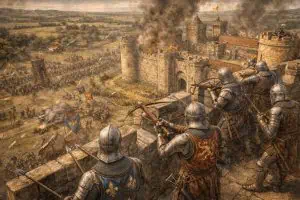
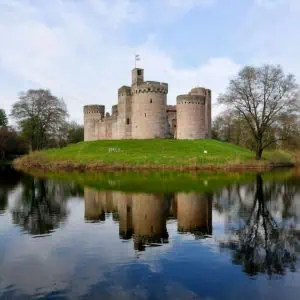
The gatehouse was one of the most vital defensive features of a medieval castle, protecting the castle’s most vulnerable area — the main entrance. Over time, these structures evolved from simple fortified gates into complex defensive fortresses complete with portcullises, drawbridges, arrow slits, and murder holes.
Far more than just a doorway, the gatehouse became a powerful symbol of strength, authority, and royal prestige, designed to impress as well as defend.
⚔️ What Was a Medieval Gatehouse?
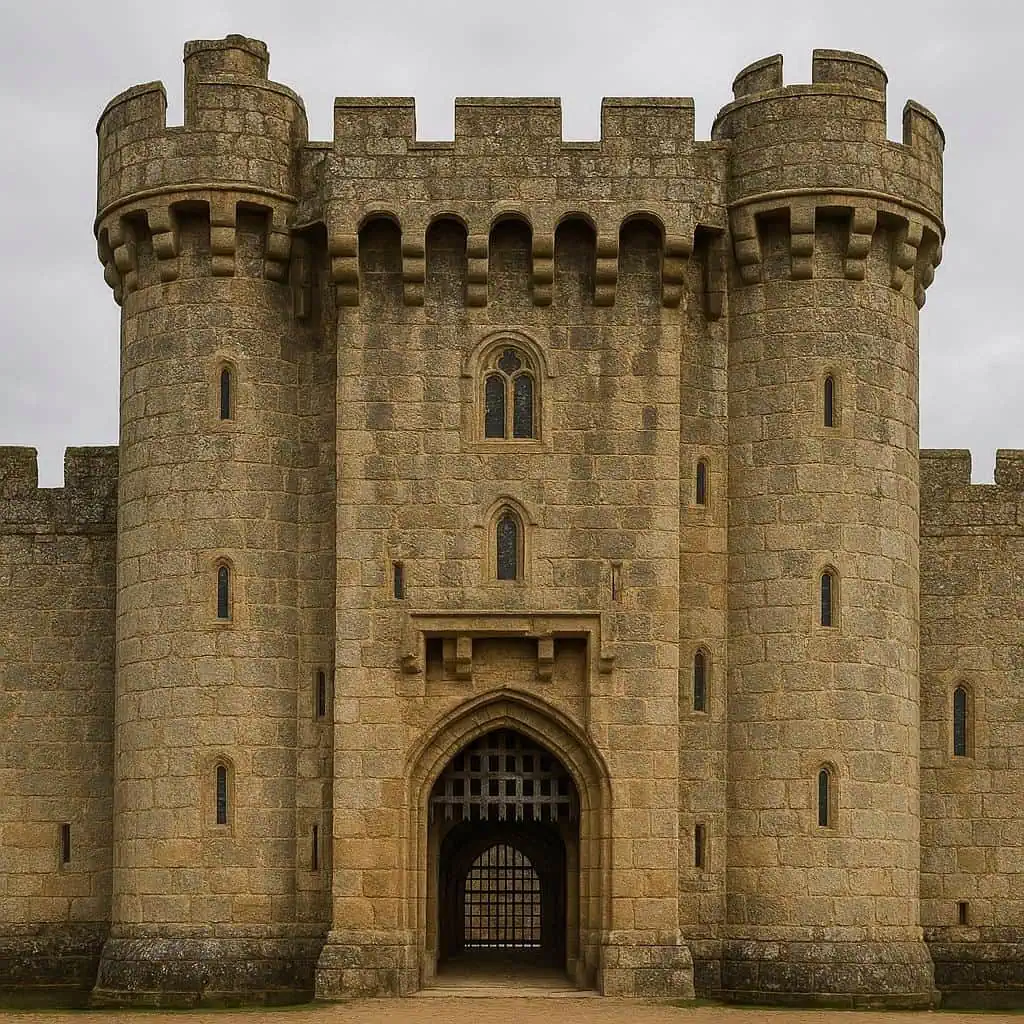
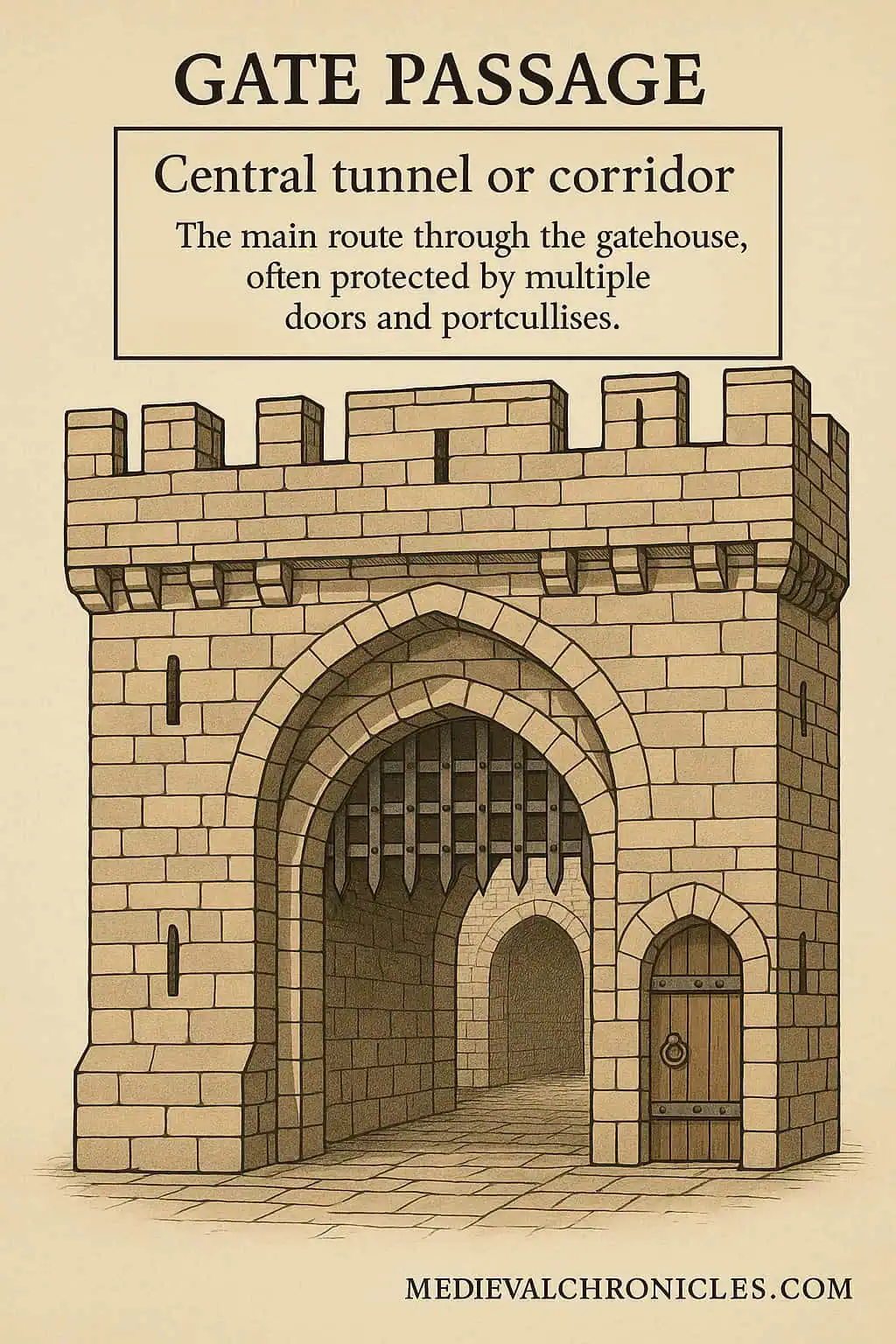
A gatehouse was a fortified structure built around or above the main entrance to a castle, town, or walled city. It often included:
- Heavy wooden or iron portcullises that could be dropped instantly.
- Drawbridges crossing moats to control access.
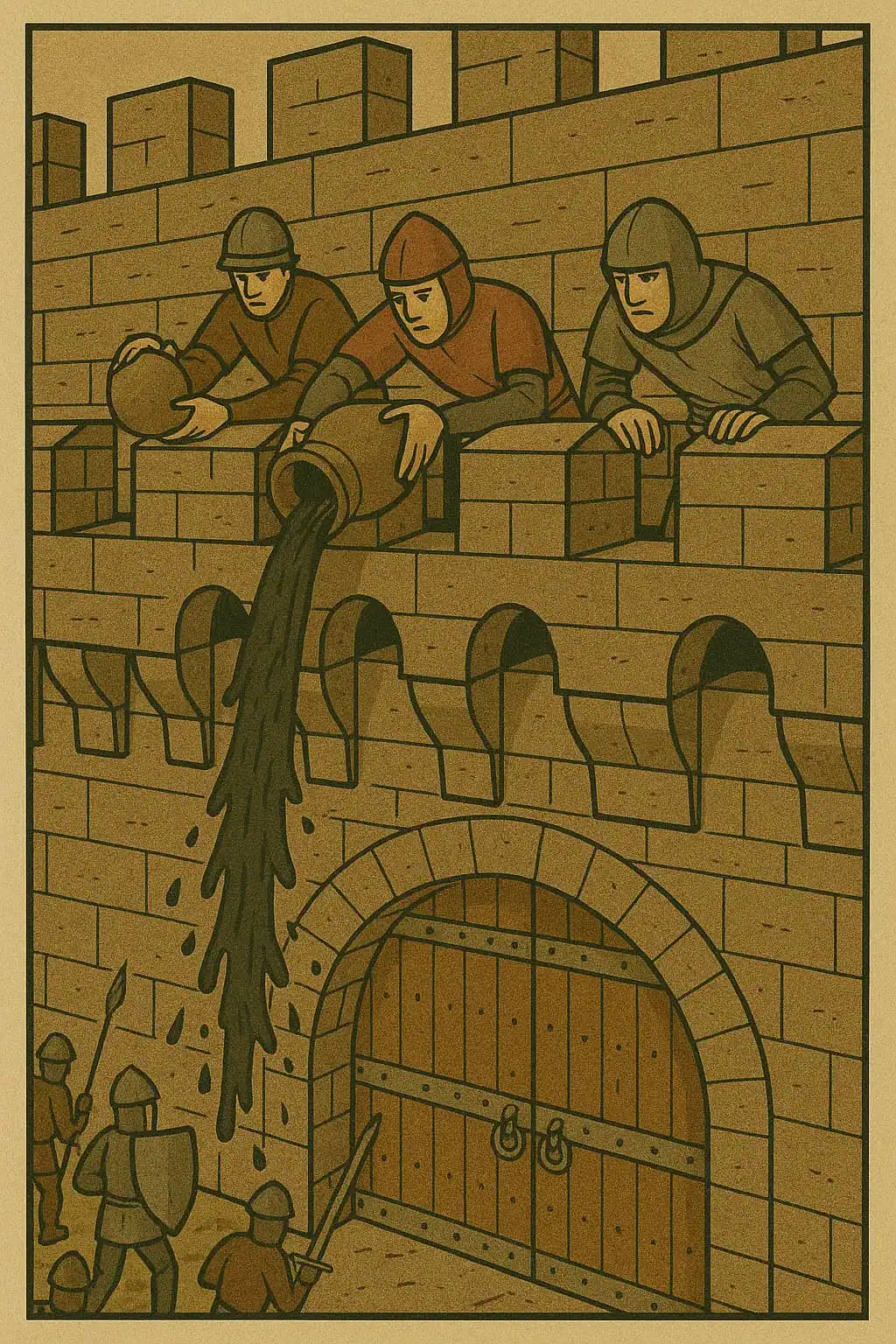
- Murder holes through which defenders poured boiling liquids or dropped stones.
- Arrow slits (loops) allowing archers to fire at trapped enemies.
These features turned the castle’s weakest point — the entrance — into one of its strongest defensive zones.
🧱 How the Gatehouse Worked
Enemy soldiers who ventured into a gatehouse were in serious danger. If attackers breached the first door, defenders could:
- Drop portcullises behind them, trapping them inside.
- Pour boiling oil or scalding water through murder holes above.
- Fire crossbows and longbows through arrow slits from both sides.
- Drop stones or logs from the upper gallery to crush trapped soldiers.
The result was a deadly trap where attackers found themselves surrounded on all sides.
In many castles, the passageway had an open top or fighting platform above it, giving archers a clear shot at enemies below. Others used stone vaulting with hidden openings for the same purpose.
🏗️ The Design and Evolution of Castle Gatehouses
Early medieval gatehouses (11th–12th centuries) were relatively simple, consisting of a gate tower or timber frame protecting the main entrance. As castle architecture advanced, especially from the 13th to 15th centuries, gatehouses became multi-storey stone buildings equipped with:
- Multiple portcullises and iron-reinforced gates
- Flanking towers for better line of sight
- Drawbridges leading across moats or ditches
- Residential chambers for guards or gatekeepers
By the late medieval period, gatehouses such as those at Raglan Castle and Bodiam Castle were not just defensive strongholds — they were architectural showpieces that showcased a lord’s wealth and power.
🕰️ A Brief History of Gatehouses
The concept of defending a gate predates the medieval period. Roman forts and Iron Age hillforts often had fortified entrances with gates, towers, and guardrooms.
However, the true castle gatehouse — as part of a stone castle complex — first appeared after the Norman Conquest (11th century). The Normans refined existing defenses, adding barbicans, twin towers, and drawbridges.
By the 13th and 14th centuries, the gatehouse had evolved into an independent defensive structure — sometimes as formidable as the castle keep itself.
🧱 Gatehouse Features and Defenses
Common defensive elements included:
- Portcullis: A heavy, latticed grille made of oak and iron, dropped vertically to block entry.
- Murder holes: Openings in the ceiling of the gateway for dropping hot oil, sand, or stones.
- Arrow loops: Narrow slits allowing archers to shoot without exposure.
- Drawbridge: Raised or lowered using chains to cross moats.
- Battlements and machicolations: Parapets for defenders to attack enemies below.
These combined features created a layered defense, ensuring any attacker faced multiple obstacles before breaching the castle.

🛡️ Gatehouses and Symbolism
In addition to their defensive capabilities, gatehouses were also powerful symbols of authority and control. The grandeur of a gatehouse, especially those built during the high Middle Ages, was a visual representation of the wealth and military prowess of the lord or king who controlled the castle. A well-designed gatehouse could serve as a statement of the lord’s importance, signaling to visitors and enemies alike that they were entering a place of immense power.
The gatehouse was often the first part of the castle that visitors would encounter, making it a key area for projecting the strength and authority of the ruler. This symbolic function continued into the Renaissance period, where castles began to adopt more decorative architectural elements, further emphasizing the status of their owners.

⚔️ The Decline of the Gatehouse
With the advent of gunpowder and cannons in the 16th and 17th centuries, the traditional medieval gatehouse began to lose its effectiveness as a primary line of defense. Castles that had once relied on the fortifications of gatehouses found themselves vulnerable to artillery fire, and as a result, many gatehouses were modified or abandoned.
The introduction of artillery required a shift in castle design, with more emphasis placed on thicker, lower walls and less focus on the traditional vertical defenses of portcullises and drawbridges. As warfare and siege tactics evolved, gatehouses were no longer as essential to a castle’s defenses as they had once been.
However, the gatehouse continued to be an iconic feature in the landscape of medieval architecture, and its design left a lasting legacy in the world of military fortifications. Many surviving gatehouses were preserved or restored as historic monuments, allowing modern visitors to appreciate their complexity and beauty.
🌟 Summary
The gatehouse was far more than just a simple entrance — it was a fortress in its own right, a key component of medieval castle defense that combined practicality with symbolism. Over centuries, it evolved into an intricate structure designed to protect the castle’s most vulnerable point and to project the power and prestige.
Famous Castles Featuring Impressive Gatehouses
Warwick Castle (England)
One of the best-preserved examples, with an impressive gatehouse that dates back to the 14th century. The gatehouse at Warwick Castle features a stunning combination of defensive elements, including a large portcullis, a drawbridge, and a powerful barbican to protect the entrance. The structure was designed not just for defense but also to project authority, showcasing the wealth and power of the castle’s owners, the Earls of Warwick.
👉 Visit Warwick CastleBodiam Castle (England)
Built in the late 14th century, Bodiam Castle’s gatehouse is one of the most iconic examples of a medieval fortress. Located in the southeast of England, this gatehouse includes a drawbridge, twin towers, and a deep moat, all adding to its formidable defenses. The gatehouse was also positioned to control access to the main part of the castle, and its strategic design reflects the importance of controlling entry points during the turbulent medieval period.
👉 Visit Bodiam CastleChâteau de Vincennes (France)
Located just outside Paris, the Château de Vincennes is a well-preserved medieval fortress that includes one of the most imposing gatehouses in Europe. The gatehouse was part of a larger system of defenses, with multiple concentric layers of walls and moats protecting the castle. The gatehouse at Vincennes is especially notable for its large, fortified towers, which acted as both defensive positions and a symbol of royal power.
👉 Visit Château de VincennesRaglan Castle (Wales)
Raglan Castle is a prime example of late medieval castle design, with a gatehouse that blends functionality and grandeur. The gatehouse here features a distinctive design, with large round towers flanking the entrance and a sophisticated system of drawbridges and portcullises. Raglan Castle’s gatehouse was also equipped with living quarters for the gatekeeper and his family, demonstrating how these structures could serve as both defensive fortifications and residential spaces.
👉 Visit Raglan Castle🏰 Frequently Asked Questions: Medieval Castle Gatehouses
What is a gatehouse in a castle?
A gatehouse is a fortified structure at the castle’s main entrance designed to control access, defend against attackers, and integrate defensive features like portcullises, murder holes and drawbridges.
Why was a portcullis important?
A portcullis was a heavy grilled gate that could be dropped quickly to seal off the entrance. It could trap attackers inside the gate passage and allow defenders to attack from above or from arrow loops.
What role did murder holes play in a gatehouse?
Murder holes were openings in the ceiling of the gate passage. Defenders could drop boiling liquid, stones or other projectiles on attackers trapped under the portcullis or inside the gateway.
Were all gatehouses purely defensive?
No — while their primary purpose was defence, many late-medieval gatehouses also served as impressive show structures, lodging quarters, or status symbols for the castle’s owner.
🏰 Quiz: Medieval Castle Gatehouses
📚 References & Historical Sources
Here are a couple of reliable resources to explore more about castle gatehouses and medieval fortifications:
- The Gatehouse Gazetteer – Comprehensive Listing of Medieval Castles & Gatehouses in England & Wales
- Castle Studies Group – Research, Journals & Resources on Castle Architecture
All sources listed have been reviewed for historical accuracy and relevance to medieval architecture and defence systems. For academic use, consult original publications listed on the above sites.