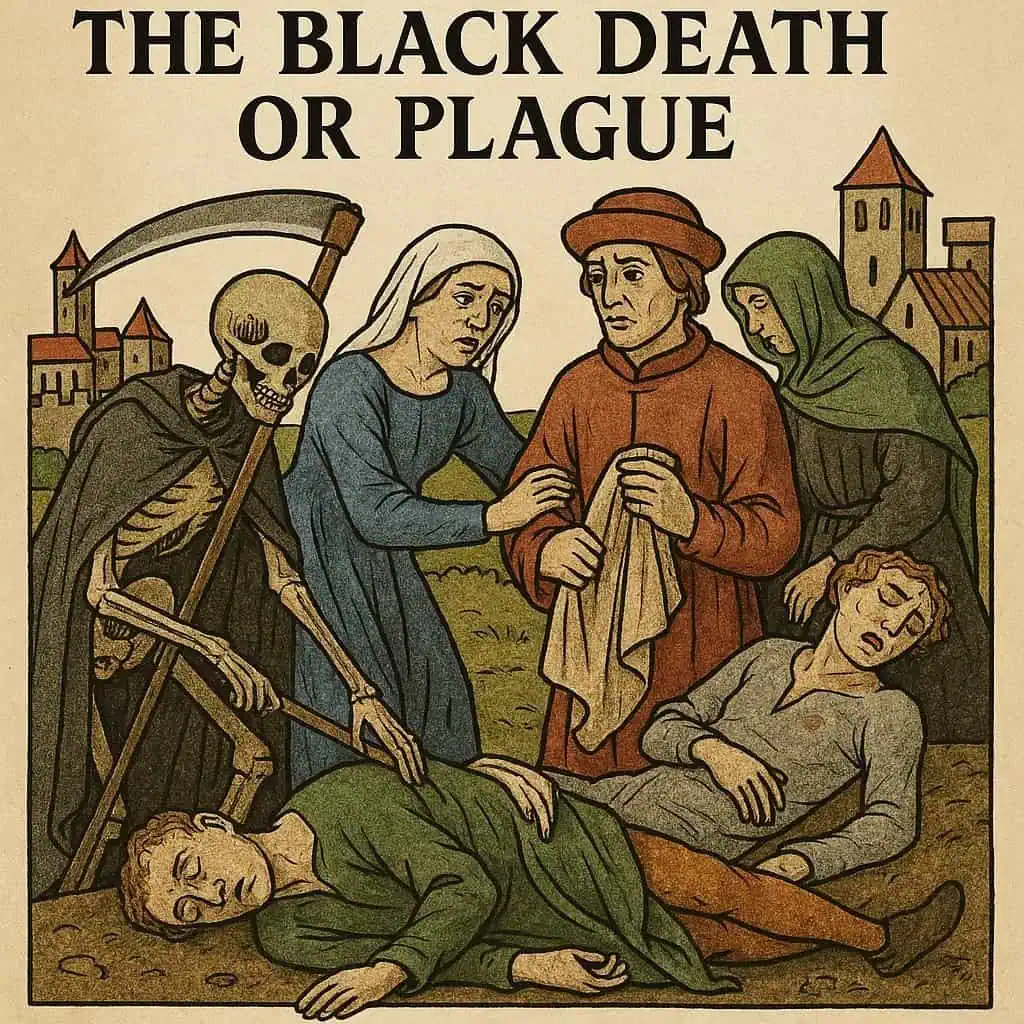
The Black Plague, also called the Black Death or Bubonic Plague, was one of the deadliest pandemics in human history. Sweeping across 14th-century Europe, it killed tens of millions of people, wiped out entire communities, and caused massive social and economic upheaval. Transmitted primarily through fleas carried by rats, the plague caused terrifying symptoms, from fever and painful swelling to blackened limbs, and there was no effective cure in medieval times.
1. Cause of the Black Plague
The Black Death was caused by the bacterium Yersinia pestis, which lived inside fleas. These fleas infested rats, a common presence in crowded medieval towns and cities. When infected fleas bit humans, the bacteria were transmitted, leading to infection.
2. How Fleas Spread the Disease
Fleas would jump from dying or dead rats to humans. Poor hygiene, overflowing waste, and densely packed living conditions made towns the perfect breeding ground for both rats and fleas, allowing the disease to spread rapidly.
3. Symptoms of the Plague
Early symptoms included fever, chills, headaches, and weakness. As the disease progressed, victims developed painful, swollen lymph nodes called buboes, often in the armpits, neck, or groin. Limbs and skin could darken, leading to the term “Black Death.”
The Black Plague killed up to 65% of the population in some European regions, drastically reshaping the social and economic landscape of the Middle Ages.
4. Mortality Rate
The plague was devastating. Estimates suggest 25–50% of Europe’s population died during the pandemic, roughly 25–50 million people. Some cities were completely depopulated, and entire communities vanished.
5. Plague Doctors
Specialists known as plague doctors wore distinctive masks filled with aromatic herbs. They attempted treatments such as bloodletting or herbal remedies, but these were largely ineffective. Plague doctors were in high demand, and some were even kidnapped or ransomed.

6. Impact on Towns and Cities
Cities suffered the most due to crowded conditions and poor sanitation. The rapid spread of disease caused fear, chaos, and massive disruption to trade, agriculture, and daily life.
7. Measures and Misconceptions
Medieval people attempted quarantine, but medical knowledge was limited. Scapegoating occurred; for example, Jewish communities were falsely accused of causing the plague, leading to massacres.
Plague doctors wore distinctive beaked masks filled with herbs and spices, believing it would protect them from the “bad air” thought to spread the disease.
8. Burial Practices
Victims were often buried in mass graves. Houses with infected inhabitants were sometimes marked with red or black crosses to warn others. Workers tasked with removing the dead were highly vulnerable to infection.
9. Economic Consequences
Labor shortages caused by massive mortality disrupted farming, trade, and craft production. Wages rose in some areas, but widespread famine and poverty followed, reshaping the European economy.
Homes of those infected with the plague were marked with red or black crosses to warn neighbors and enforce isolation practices.
10. Cultural and Social Impact
The Black Plague left a lasting mark on European society. Art, literature, and religion reflected themes of death, morality, and divine judgment. Social hierarchies shifted as survivors demanded better wages and conditions.
Summary
The Black Plague was not just a disease but a transformative event in medieval Europe. It shaped demographics, economies, social structures, and cultural expression, leaving a legacy that influenced centuries of European history.
🦠 Black Plague FAQ
What was the Black Plague?
The Black Plague, also known as the Black Death or Bubonic Plague, was a devastating pandemic that struck Europe in the 14th century, killing millions of people and altering society and economies.
How did the plague spread?
The plague was primarily spread by fleas that lived on rats. When infected fleas bit humans, the bacteria Yersinia pestis was transmitted.
Were there cures for the Black Plague?
No, there was no effective cure at the time. Treatments by plague doctors, including bloodletting and herbal remedies, were largely ineffective.
Who were plague doctors?
Plague doctors were specialists hired to care for the sick and document the spread of the disease. They wore masks with long beaks filled with herbs, believed to protect them from the “bad air.”
Why were homes marked with crosses?
Homes of infected people were marked with red or black crosses to warn others and enforce isolation to prevent the spread of the disease.
🦠 Black Plague Quiz
🦠 Black Plague Glossary
Bubonic Plague
A deadly disease caused by the bacterium Yersinia pestis, characterized by swollen lymph nodes (buboes), fever, and blackened skin.
Yersinia pestis
The bacterium responsible for the Black Plague, transmitted to humans by infected fleas from rodents.
Plague Doctor
A physician hired during plague outbreaks, often wearing a distinctive mask filled with herbs, believed to protect against disease.
Buboes
Swollen, painful lymph nodes that were one of the most visible and terrifying symptoms of the Black Plague.
Flea Vector
Fleas carried the plague bacterium from infected rats to humans, acting as the primary means of transmission.
Quarantine
The practice of isolating ships, people, or goods to prevent the spread of plague, first widely implemented in Italian ports.
Epidemic
A widespread outbreak of a contagious disease, such as the Black Plague, affecting large numbers of people in a region.
Pandemic
An epidemic that spreads across countries or continents, like the Black Death in 14th-century Europe.
Mortality Rate
The percentage of people who die from a disease; the Black Plague had an estimated 25–65% mortality rate in affected regions.
Flag of Quarantine
Red or black crosses painted on houses indicated that the inhabitants were infected or had died from the plague.