
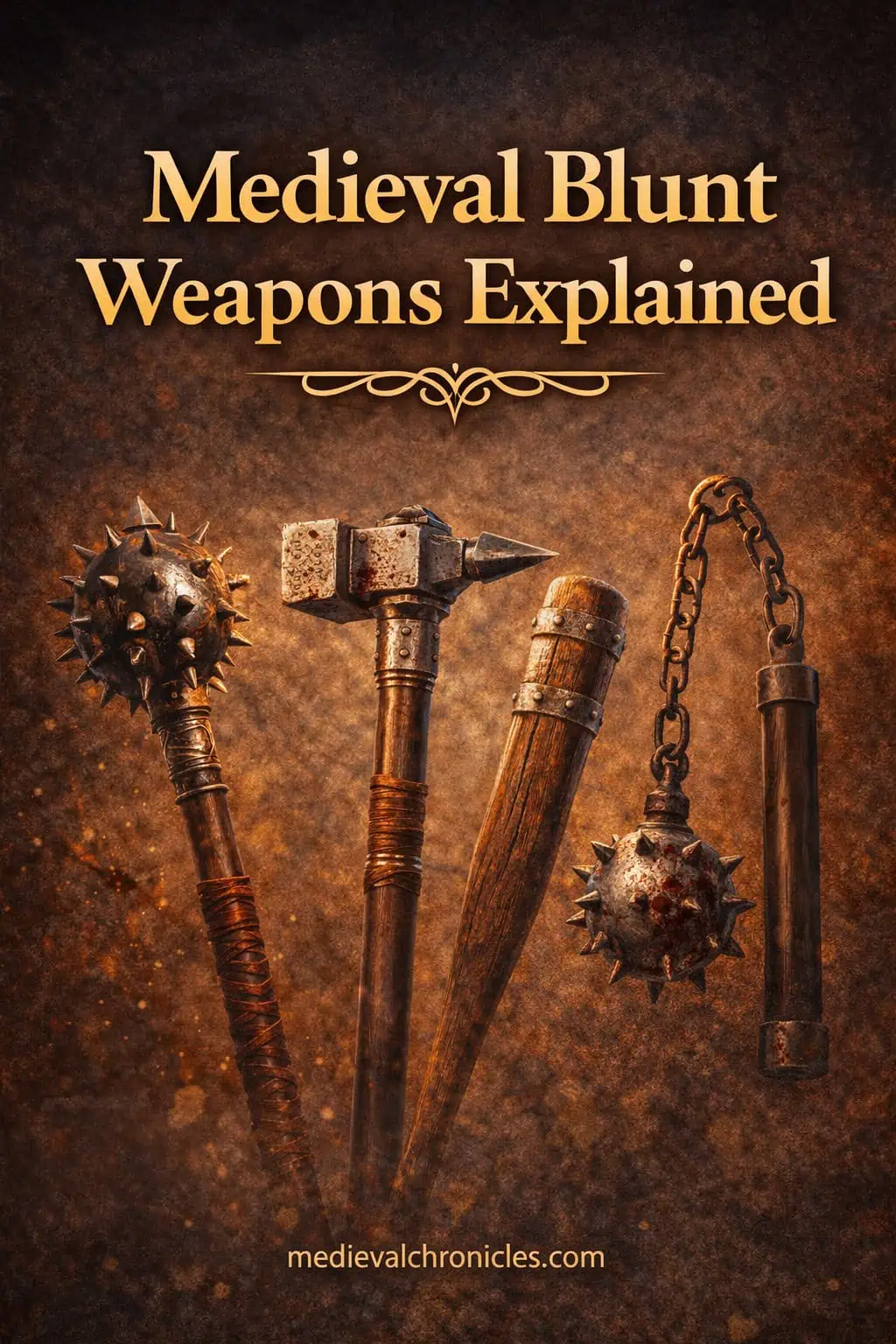
A wide range of weapons was used in medieval warfare, shaped by changing armour, tactics, and battlefield conditions. While swords, spears, and polearms remained central throughout the Middle Ages, blunt weapons played an increasingly important role as defensive equipment improved.
As warriors adopted better mail and plate armour, defeating an enemy no longer depended solely on cutting or stabbing through metal. Instead, many weapons were designed to deliver powerful concussive force, capable of injuring, disabling, or killing an opponent even when armour prevented penetration. Blunt weapons complemented edged and thrusting arms, forming a crucial part of medieval close combat.
⚔️ Click-to-Reveal: Blunt Weapons in Medieval Warfare
Why Blunt Weapons Emerged
As armour improved during the Middle Ages, edged weapons became less effective. Blunt weapons emerged to deliver crushing force capable of injuring armored opponents without piercing their protection.
The Purpose of the Mace
The mace was designed to transfer maximum kinetic energy through armour, breaking bones and causing internal trauma even when metal plates remained intact.
War Hammers vs. Plate Armour
War hammers concentrated force into a small area, denting or deforming plate armour and making them especially effective against heavily armored knights.
How Flails Increased Impact
The chain of a flail allowed its weighted head to build momentum, enabling strikes around shields and increasing the force delivered on impact.
Who Carried Blunt Weapons
Knights, men-at-arms, and even some members of the clergy favored blunt weapons, valuing their effectiveness against armour and their durability in close combat.
What Blunt Weapons Reveal About Warfare
The widespread use of blunt weapons reflects the medieval arms race, where weapon design continually evolved to counter advances in defensive technology.
Comparative Table: Blunt Weapons in Medieval Warfare
A quick reference guide comparing the war hammer, mace, and flail across use, strengths, and typical contexts.
| Weapon | Best against | Strengths | Limitations | Who used it | Commonness |
|---|---|---|---|---|---|
| War Hammer | armour (mail/plate) | Concentrates force; can cause fractures and concussions through armour. Many designs include a beak/spike for focused impact. | Requires control and timing; less reach than polearms; best at close range. | Infantry and cavalry; often professional soldiers. | Common (late medieval) |
| Mace | armour + helmets | Durable, simple, powerful impact; effective in formation fighting; reliable against armoured opponents. | Limited finesse; effectiveness depends on delivering solid blows. | Widely used (foot and mounted); broad social range. | Very common |
| Flail (military forms) | unarmoured / lightly armoured | Can strike around shields in some situations; intimidating; some regional/irregular use. | Harder to control; risky in tight formations; true chain flails are not well-supported as standard battlefield weapons. | Irregular troops; later medieval Central Europe; uprisings in some contexts. |
Rare / disputed (especially chain flails) |
| Club / Cudgel | light armour | Easy to make; effective blunt force at close range; common as a basic weapon. | Limited against high-quality plate; short reach. | Lower-status troops; militia; irregular forces. | Common (basic) |
Why Blunt Weapons Were Effective Against Armour
By the High and Late Middle Ages, high-quality plate armour could resist most sword cuts and many spear strikes. However, armour could not fully absorb kinetic energy. A heavy impact could:
- Cause concussions or internal injuries
- Break bones beneath armour
- Daze or incapacitate an opponent long enough for capture or a finishing blow
- Damage armour plates, joints, or fastenings
As a result, blunt and impact-focused weapons became increasingly common on medieval battlefields, particularly among professional soldiers.
War Hammer
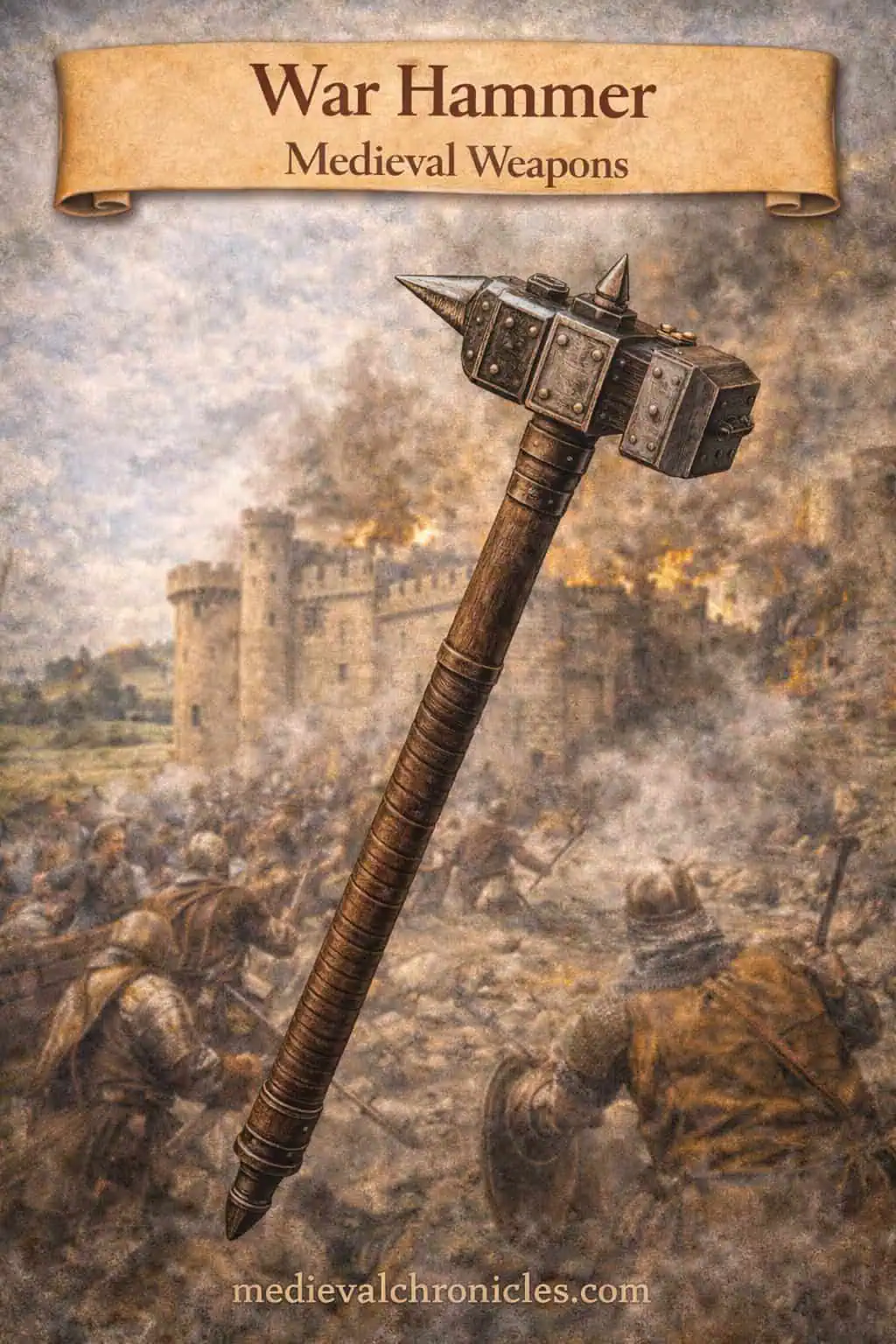
The war hammer developed as a specialised response to armoured opponents, particularly from the 14th century onward.
Unlike a carpenter’s hammer, a medieval war hammer was a combat weapon, often featuring:
- A flat hammer face for delivering crushing blows
- A narrow spike or beak on the reverse side for concentrating force
- A reinforced haft designed for one- or two-handed use
War hammers were effective because they transferred force directly through armour, causing fractures, concussions, and internal trauma. The spike was especially useful against weaker points such as joints, visors, or thinner plates.
Contrary to popular belief, the spike was not primarily designed to trip horses. Its main purpose was to focus impact on a small surface area or to hook armour, shields, or limbs during close combat.
War hammers were widely used by infantry and cavalry alike and often paired with grappling and wrestling techniques once opponents closed distance.
Maces
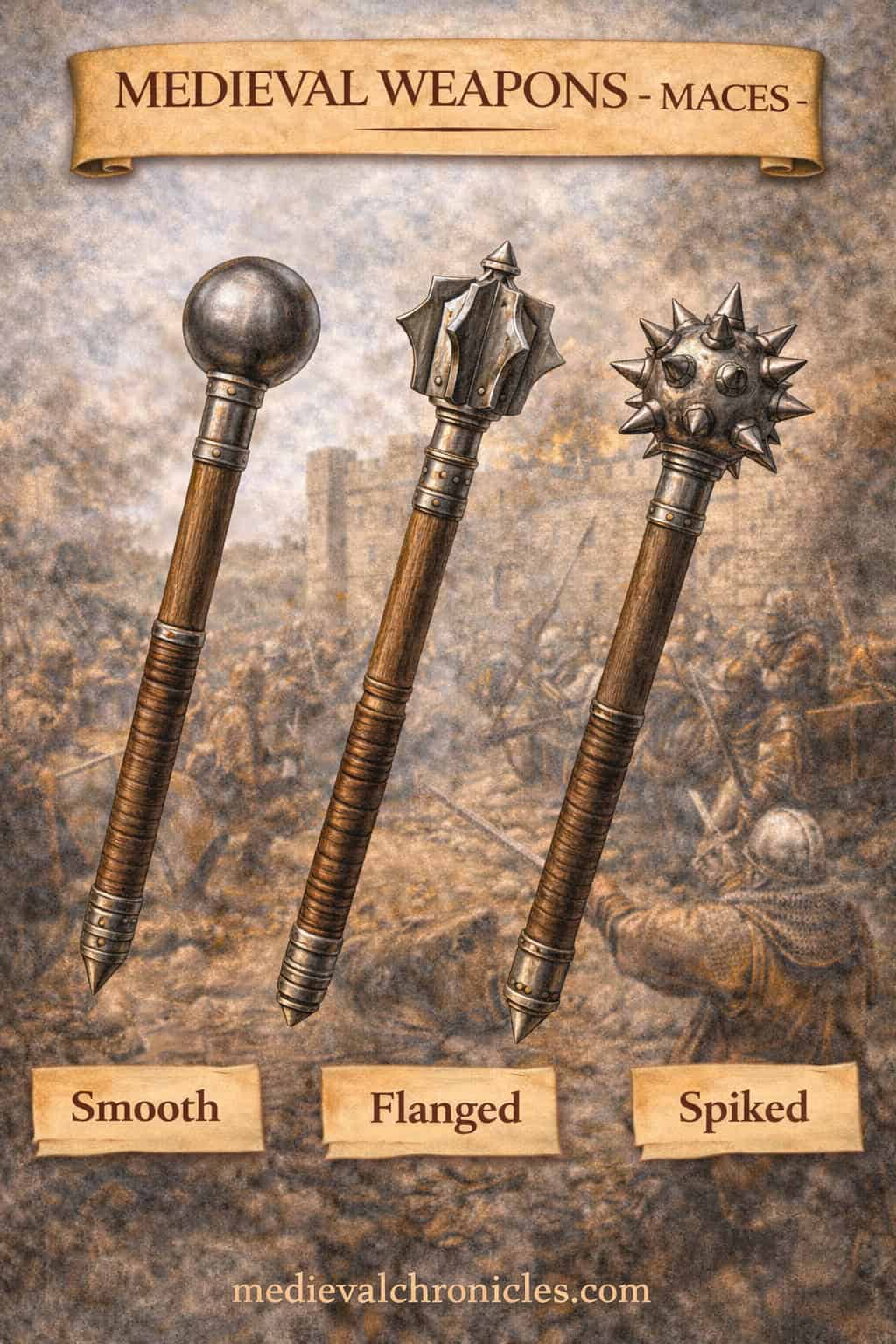
The mace was one of the most widespread and enduring blunt weapons of the medieval period. It consisted of a solid head mounted on a shaft of wood or metal, designed to maximise impact.
Mace heads evolved over time and could be:
- Smooth
- Flanged
- Spiked
These shapes improved the weapon’s ability to damage armour and transmit force. Maces were valued for their durability, simplicity, and effectiveness, making them popular with both foot soldiers and mounted warriors.
While often associated with Eastern Europe and the 12th century onward, maces were used across Europe and the Near East much earlier and remained in service well into the late Middle Ages. Their continued use reflects their reliability against increasingly sophisticated armour.
Flails
The flail is one of the most misunderstood medieval weapons.
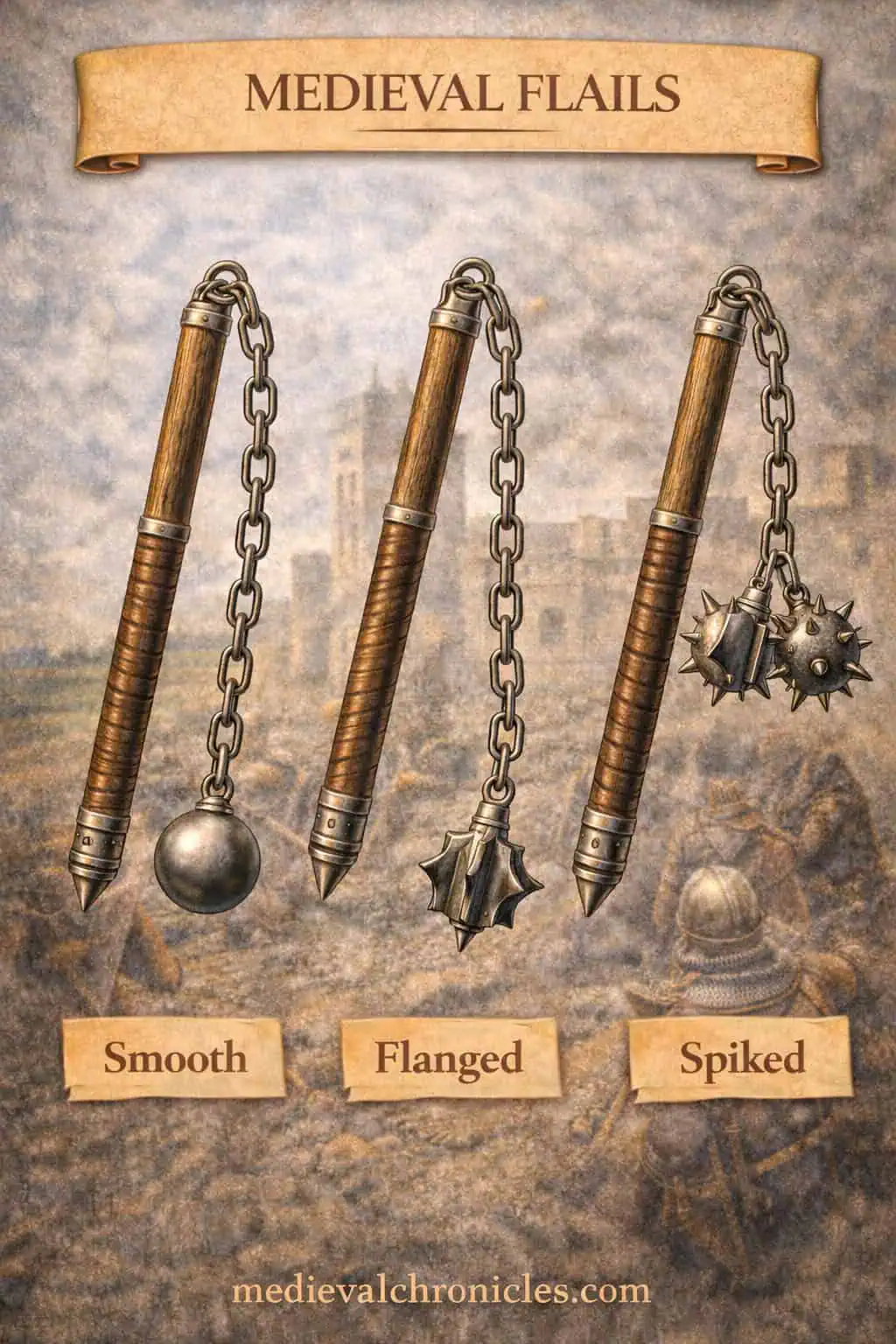
While agricultural flails inspired certain military designs, chain flails (ball-and-chain weapons) were rare on medieval battlefields and far less common than popular imagery suggests. Most historical evidence points to the use of staff flails, which featured:
- A rigid or hinged striking head
- Limited flexibility rather than a long swinging chain
True chain flails were difficult to control, dangerous to the user, and unsuitable for disciplined formations. As a result, they were not standard military weapons for professional armies.
Flails were more commonly associated with peasant uprisings and irregular forces, particularly in Central Europe. Notable examples include their use by the Bohemian Hussites and during the German Peasants’ War of the 15th and early 16th centuries.
Myth vs Reality: Medieval Blunt Weapons
Blunt weapons are often misunderstood. This comparison separates popular myths from what medieval evidence actually supports.
Popular beliefs
- Sharp weapons became useless once plate armour appeared
- Flails were common standard battlefield weapons
- Warhammer spikes were mainly used to trip horses
- Defeating armour always required piercing metal
Historical reality
- Armour encouraged targeting weak points, grappling, and impact force
- Maces and war hammers were practical and widely used
- True chain flails were rare and hard to control
- Concussive force could injure without penetrating armour
Medieval weapons evolved for control, reliability, and effectiveness against armour — not theatrical spectacle.
Blunt Weapons in Context
Blunt weapons did not replace swords or spears. Instead, they formed part of a combined approach to medieval combat, which included:
- Thrusting attacks aimed at weak points in armour
- Grappling and wrestling techniques
- Daggers for close-range finishing blows
- Polearms for reach and formation fighting
Against armoured opponents, success often depended less on cutting power and more on control, precision, and force.
Blunt Weapons in Context
Blunt weapons did not replace swords or spears. Instead, they formed part of a combined approach to medieval combat, which included:
- Thrusting attacks aimed at weak points in armour
- Grappling and wrestling techniques
- Daggers for close-range finishing blows
- Polearms for reach and formation fighting
Blunt weapons were a vital component of medieval warfare, especially as armour technology advanced. Weapons such as war hammers and maces allowed warriors to defeat heavily armoured opponents without needing to pierce metal directly. While some weapons like the flail have been exaggerated in popular culture, historical evidence shows that effective blunt weapons were practical, controlled, and closely tied to professional battlefield tactics.
Understanding these weapons helps dispel common myths and highlights the sophistication of medieval combat, where technology, training, and tactics evolved together over centuries.
❓ Blunt Weapons in Medieval Warfare – Frequently Asked Questions
What are blunt weapons in medieval warfare?
Blunt weapons were arms designed to deliver crushing force rather than cutting or piercing. Common examples included maces, war hammers, clubs, and flails, all intended to injure opponents through impact, even when armour was worn.
Why were blunt weapons effective against armour?
Unlike swords or axes, blunt weapons did not rely on sharp edges. Their heavy heads transferred force through armour, causing broken bones, internal injuries, and concussions, making them highly effective against mail and plate armour.
What types of blunt weapons were most commonly used?
The most common blunt weapons were the mace, war hammer, and flail. Each varied in design, but all emphasized weight and leverage to deliver devastating blows on the medieval battlefield.
Who typically used blunt weapons?
Blunt weapons were favored by knights, men-at-arms, and heavily armored soldiers. Clerics also sometimes carried maces, as they were considered weapons that shed less blood while still being effective in combat.
Did blunt weapons replace swords in medieval warfare?
No, blunt weapons did not replace swords but complemented them. As armour improved, warriors increasingly carried blunt weapons alongside swords to adapt to different combat situations.
Why are blunt weapons important to medieval military history?
Blunt weapons highlight the ongoing arms race between weapons and armour during the Middle Ages. Their development reflects how medieval warfare evolved to overcome technological advances in personal protection.
🧠 Blunt Weapons in Medieval Warfare Knowledge Quiz
📚 Glossary: Blunt Weapons in Medieval Warfare
Mace
A blunt weapon consisting of a heavy metal head on a short shaft, designed to crush armour and cause internal injuries.
War Hammer
A weapon featuring a hammer head or spike used to concentrate force against plate armour and reinforced mail.
Flail
A striking weapon with a spiked or weighted head attached to a handle by a chain, increasing momentum and impact.
Plate Armour
Interlocking metal plates worn by knights to protect the body from cutting and piercing attacks.
Concussive Force
The transfer of kinetic energy through impact, causing injury without breaking the skin or armour.
Men-at-Arms
Professional soldiers of the Middle Ages, often heavily armored and trained in the use of blunt and edged weapons.

