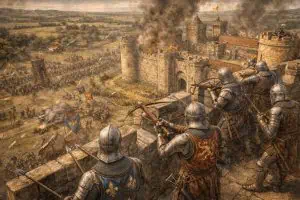
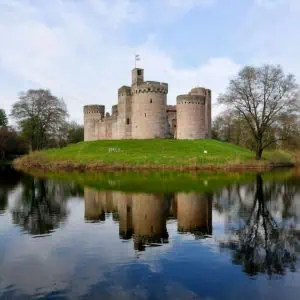
As the Middle Ages progressed, medieval castles became far more than noble residences — they were purpose-built stone fortresses designed to survive siege warfare. Massive castle walls (known as curtain walls) formed the castle’s first and most important defensive barrier, reinforced by towers, topped with battlements, and lined with arrow loops for archers and crossbowmen. In war, these walls controlled access, slowed enemy assaults, and gave defenders the high ground advantage, turning the castle into a brutal, highly engineered stronghold of medieval defence.
Part of the Medieval Castle Parts Guide
Castle walls were the primary defensive barrier of medieval fortifications. Explore the full Medieval Castle Parts Guide to learn about towers, drawbridges, moats, dungeons, and other essential castle features.

Purpose of Castle Walls
The primary purpose of castle walls was defence. A high wall made it difficult for attackers to climb, break through, or force entry, while giving defenders a protected position to fight from above.
During a siege, soldiers could move along the wall-walks and towers to reach threatened areas quickly. From behind battlements, defenders could fire arrows and crossbow bolts down onto attackers, forcing enemy troops to fight while exposed.
How Were Castle Walls Built?
Medieval castle walls were built to survive heavy pressure. Most stone walls were made using two strong outer faces of stone, with rubble and mortar packed into the middle. This created a thick, shock-absorbing structure that could withstand repeated impacts.
Castle builders also designed walls with defence in mind. Many were thicker at the base to increase stability and reduce the effectiveness of undermining. Walls were often paired with ditches or moats to keep attackers at a distance and make siege work harder.

Early Wooden Castles to Stone Curtain Walls
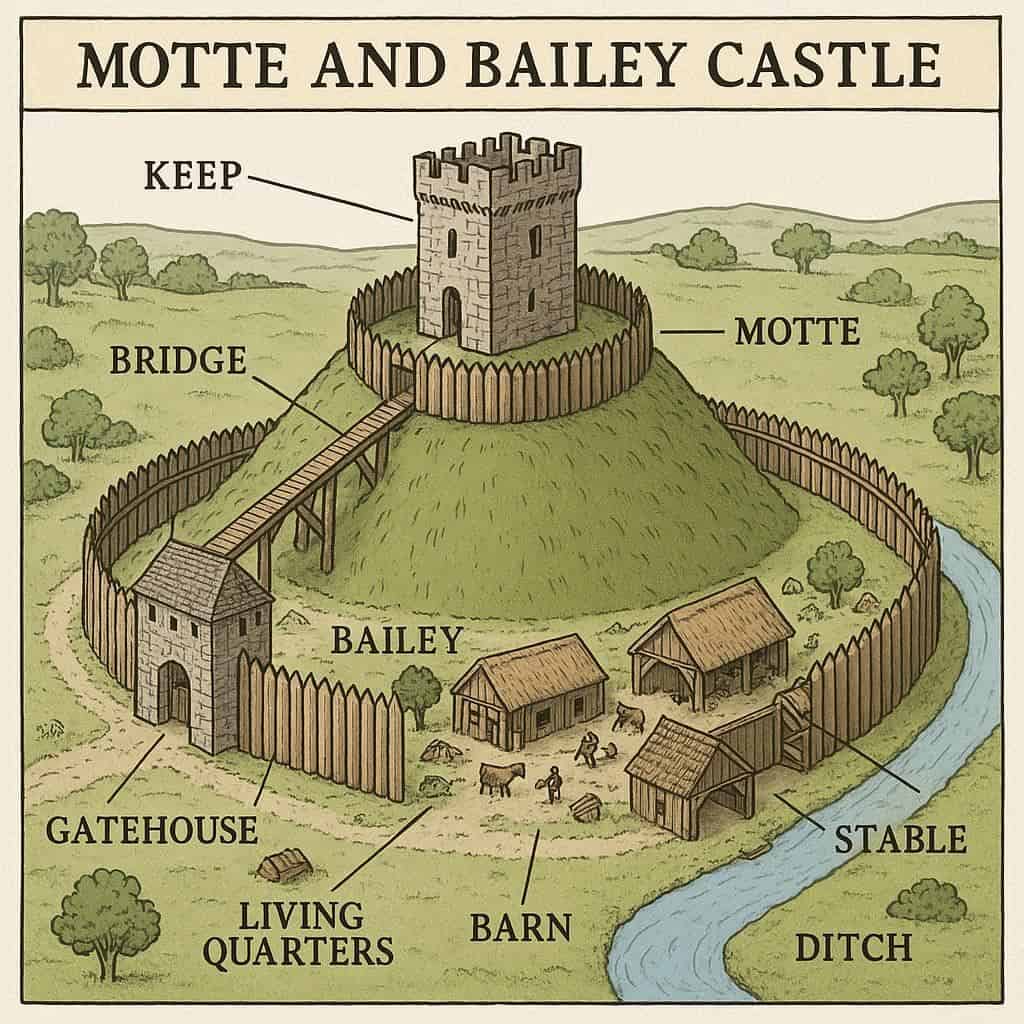
In the early medieval period—especially after the Norman Conquest—many castles began as motte-and-bailey fortifications. These used earthworks and wooden palisades, which were quicker and cheaper to build but vulnerable to fire and sustained attack.
Over time, wooden defences were replaced by stone, and many castles developed strong outer curtain walls supported by towers. This shift marked the rise of the classic medieval stone fortress.
Castle Wall Size (Thickness vs Height)
How Thick Were Castle Walls?
Castle walls were built to be extremely strong and difficult to breach. Thickness varied widely depending on the castle’s age, location, and importance, but walls were often several metres thick—especially at key defensive points such as gatehouses and towers.
How Tall Were Castle Walls?
Height also varied, but many curtain walls stood around 30 feet (9 metres) or more—sometimes much higher. Tall walls improved visibility and made scaling difficult, while also increasing the advantage of defenders firing downward from the battlements.
Advantages of Stone Walls
Stone walls had major advantages over wooden defences. They were far less vulnerable to fire, harder to break apart, and better able to resist siege weapons such as trebuchets and battering techniques.
Even when a wall could not be shattered outright, stone defences slowed attackers and bought time—often the most important factor in surviving a siege.
How Were Castle Walls Protected?
Castle walls were strengthened with multiple defensive features, including:
- Battlements (crenellations) for cover along the wall top
- Arrow loops (loopholes) for protected archery and crossbow fire
- Towers to provide flanking fire along the wall face
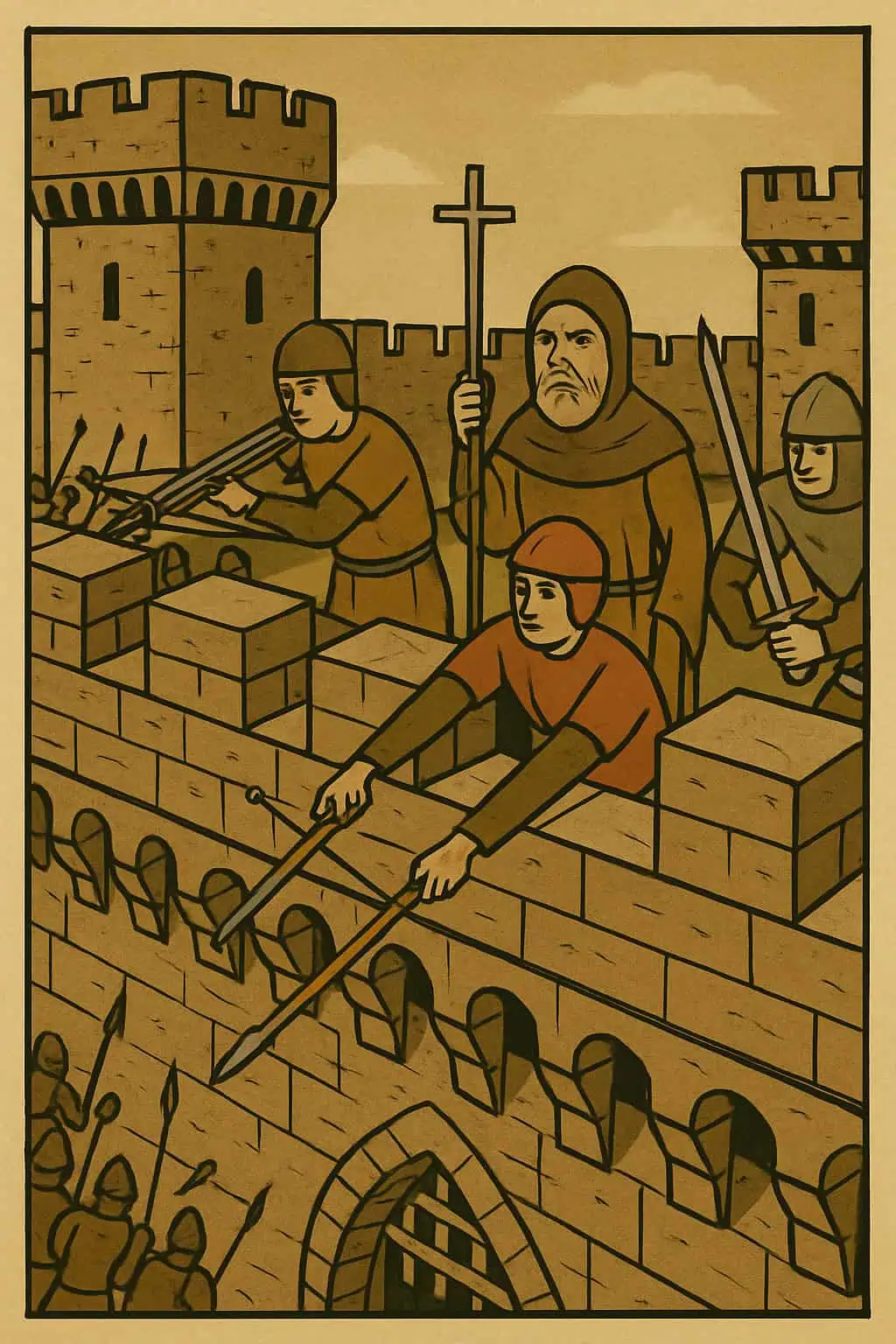
- Machicolations and murder holes above key entrances
During an attack, defenders most commonly dropped stones, heavy objects, and missiles onto enemies below. Popular stories about boiling oil exist, but it was not the standard defensive method.

Moats and Defensive Ditches
One of the most effective ways to protect castle walls was to keep attackers away from them. Moats and ditches made it harder to use ladders, siege towers, or rams against the walls and gates. They also made mining and close assault far more dangerous, because attackers had to work under constant fire from above.
Cannons and Concentric Castles
By the late medieval period, castle design reached its peak with the development of concentric castles—fortresses with multiple layers of walls. The outer wall was often lower than the inner wall, allowing defenders to fire over it while forcing attackers into deadly enclosed spaces.
However, the rise of gunpowder weapons, especially cannons, gradually changed warfare. Tall, thin walls became easier targets for artillery, and castles evolved into new forms of fortification with lower, thicker defences designed to resist cannon fire.
Castle Walls FAQ
What were castle walls mainly built for?
The main purpose of castle walls was defence. They protected the castle’s buildings and people, slowed attackers, and created strong firing positions for defenders.
What is a curtain wall?
A curtain wall is the main outer wall of a castle. It formed a defensive ring around the inner buildings and was often strengthened with towers, battlements, and arrow loops.
How thick were medieval castle walls?
Wall thickness varied by location and time period. Many stone walls were several metres thick at key points like gatehouses and towers, with thinner stretches along less vulnerable sections.
How did defenders fight from the walls?
Defenders used battlements for cover, fired arrows or bolts through arrow loops, and used towers for flanking fire. Missiles such as stones and heavy objects could also be dropped onto attackers below.
Did cannons end the age of castle walls?
Gunpowder artillery made tall medieval walls less effective over time. Castles evolved into lower, thicker fortifications and later defensive styles better suited to cannon warfare.
Castle Walls Quiz
Choose an answer for each question, then press Submit.