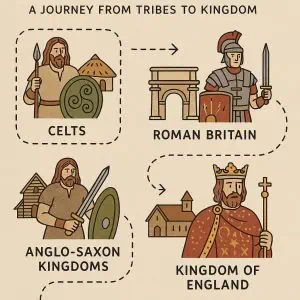
Understanding the rankings of knights is key to understanding how medieval society organized warfare, loyalty, and honor. Rather than following a single, universal hierarchy, knights’ rankings developed through a combination of training, battlefield service, feudal obligation, and royal favor. From the early stages of a young page to the elevated status of seasoned warriors, the many knights’ ranks reveal how individuals advanced through discipline, courage, and proven loyalty, shaping the structure of knighthood across medieval Europe.

Quick Look: What This Page Covers
This page explains how medieval knighthood worked, from early training to elite titles, without assuming a single universal ranking system.
- Early training – how boys became pages and squires
- The dubbing ceremony – how knighthood was officially granted
- Knight Bachelor – the most common and foundational knight
- Knight Banneret – a battlefield honor for leadership and valor
- Orders of knighthood – structured ranks within military and religious orders
- Ceremonial titles – honorary and symbolic knightly roles
- Historical reality – why medieval knighthood was a path, not a rigid hierarchy
Each section expands on these topics with historical context, examples, and images.

MonoBeach Princess Tent – Large Playhouse Kids Castle Play Tent
Perfect for indoor and outdoor fun; 55” x 53” with star lights; a magical castle playhouse for children to enjoy imaginative play.
Buy on AmazonBy using this link, you’re helping support our site at no extra cost to you – thank you!
The Page: The First Step on the Path of Knighthood
For many aspiring knights—particularly those of noble birth—the journey to knighthood often began at a young age, sometimes as early as seven years old. These boys might be sent to serve as pages in the households of lords or knights, where they received training in the skills, discipline, and values associated with knighthood. However, this path was common rather than universal, and practices varied by region, period, and family status.
Pages were responsible for performing various tasks, such as running errands, assisting with armor and weapons, and learning basic combat techniques. They were also expected to learn courtly manners, etiquette, and religious instruction.
As pages, young boys would receive guidance from knights and squires, learning about the virtues of knighthood, such as courage, loyalty, and humility. They were also required to serve their lords and obey their orders without question.
Pages were essentially apprentices, preparing themselves for the next step in their journey towards becoming knights.

The Squire: The Dutiful Companion of the Knight
After serving as a page for several years, a young boy would then become a squire, a crucial step in the path to knighthood. Squires were expected to assist knights in battle, accompanying them to tournaments, and serving as their personal attendants.
They would learn advanced combat skills, such as riding, jousting, and swordsmanship, as well as the art of war strategy and tactics.
Squires were responsible for caring for the knight’s armor, weapons, and horses, and were expected to be well-versed in the code of chivalry. They would also learn about heraldry, the system of identifying knights through their coats of arms and emblems.
Squires were considered the right-hand men of knights, and their duties often included guarding their lords, accompanying them on quests, and even acting as messengers or diplomats on their behalf.

The Dubbing: The Ceremony of Knighthood
Upon reaching maturity and completing their training as squires, aspiring knights would undergo a ceremony known as dubbing, where they would be officially knighted.
The dubbing ceremony varied depending on the region and time period, but it typically involved the young knight taking vows of loyalty, courage, and humility, and receiving a knighthood accolade, which could be a sword, a blow with a sword on the shoulder or neck, or a tap on the shoulder with a sword.
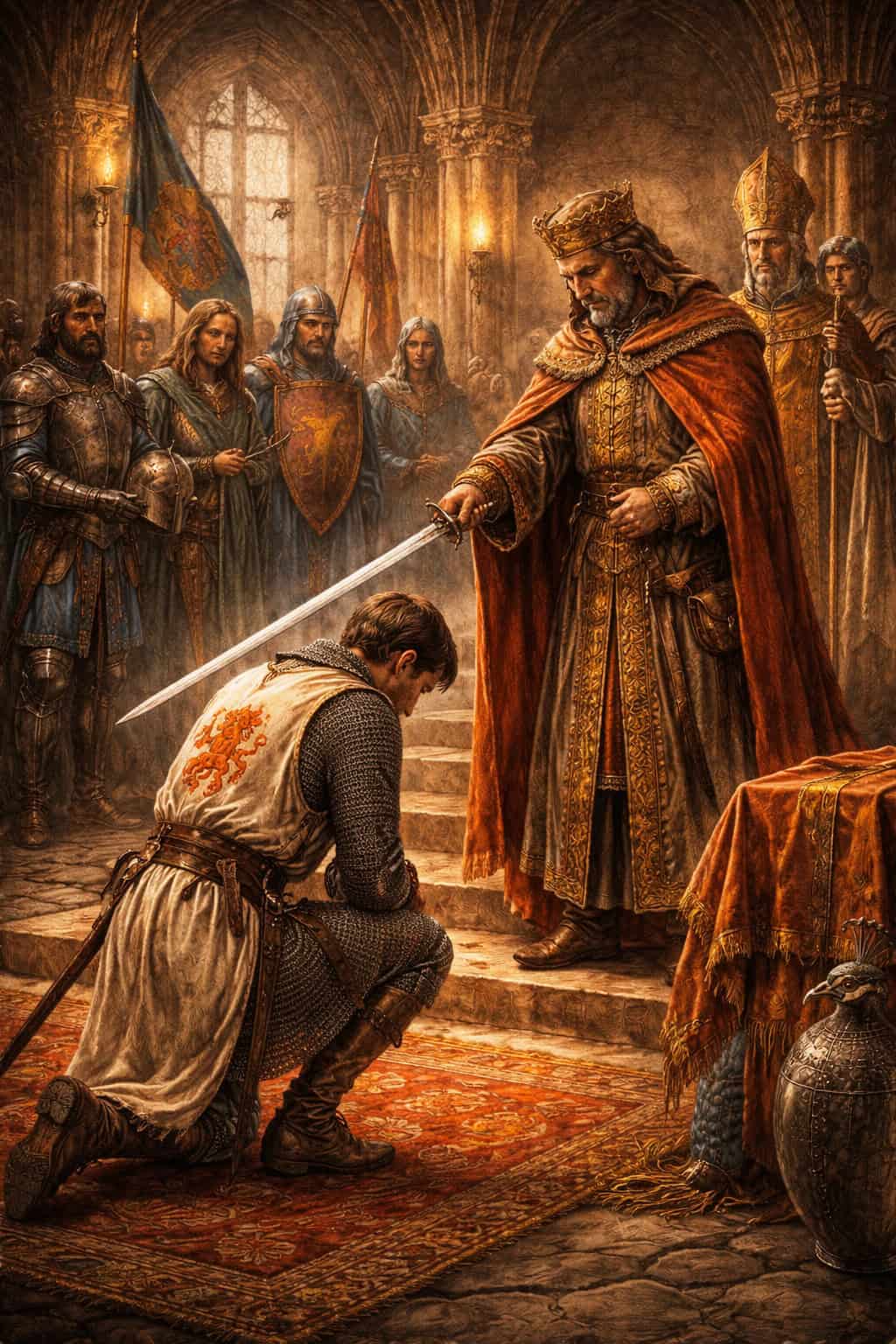
The newly dubbed knight would then swear oaths associated with the ideals of chivalry, including loyalty, courage, and service to the church or lord. While these values formed an important moral framework for knighthood, they were ideals rather than guarantees of behavior. In practice, knights varied widely in how closely they lived up to these expectations, and chivalry often reflected aspiration as much as everyday reality.
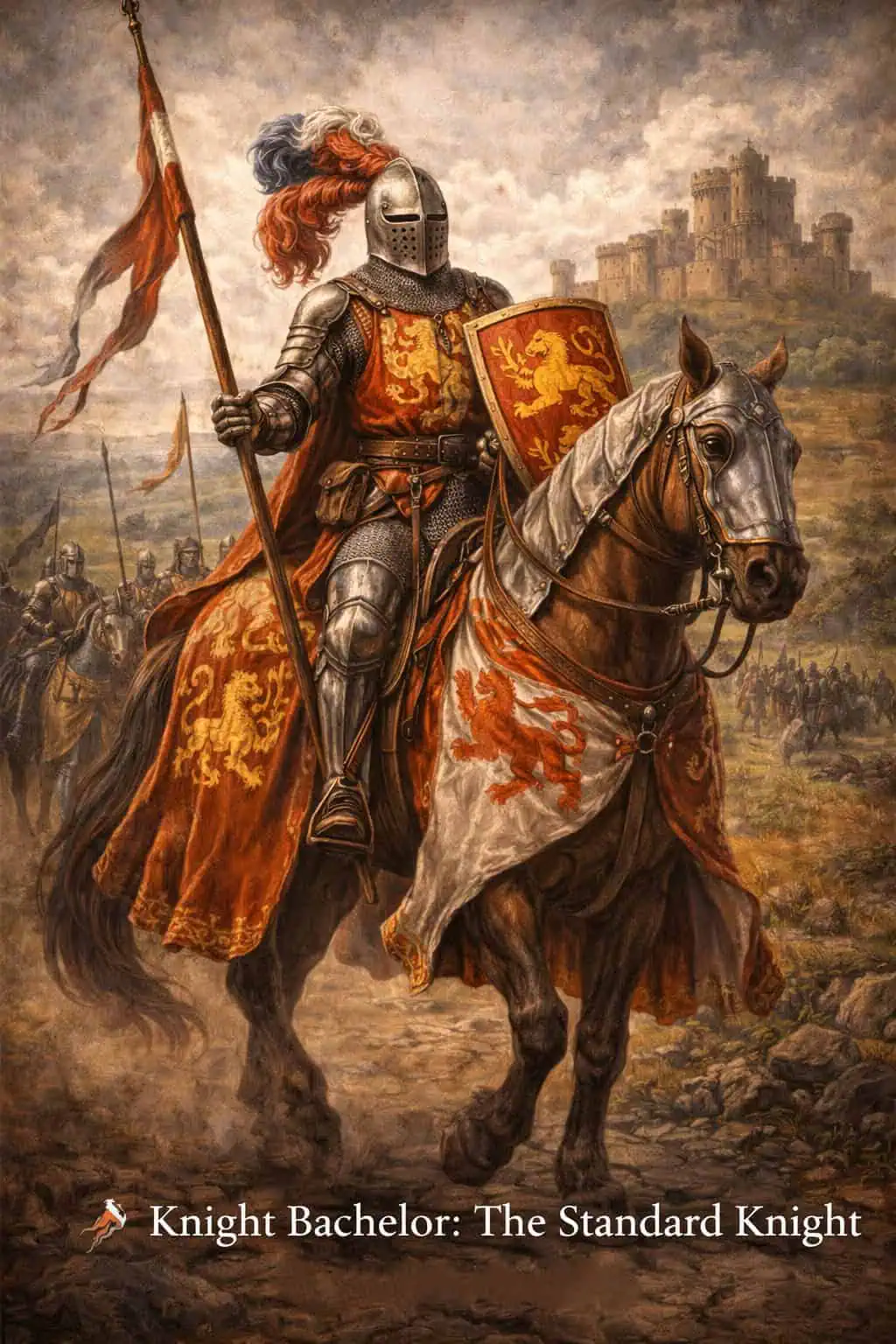
🏇 Knight Bachelor: The Standard Knight
A newly dubbed knight typically became a Knight Bachelor, the most common and foundational form of knighthood in medieval Europe.
- Served lords in warfare and military campaigns
- Participated in tournaments and quests
- Could be rewarded with land or minor titles
Knight Bachelors formed the backbone of feudal military forces.
As Knight Bachelors, knights fought in battles and tournaments to demonstrate their skill and courage. In return for loyal service, many were granted estates or lands, which they were expected to manage, defend, and administer on behalf of their liege lords.

🏰 Orders of Knighthood: Structured Ranks Within Religious and Chivalric Orders
Knights who joined military or religious orders had access to structured hierarchies and missions. These orders included:
- The Knights Templar
- The Knights Hospitaller
- The Teutonic Order
- The Order of the Garter (England)
Common ranks within these orders:
- Knight (or Knight Brother)
- Knight Commander – A regional leader
- Grand Master – The head of the entire order
These ranks applied only within the specific order—not to general knighthood across Europe.

👑 Ceremonial and Honorary Titles
In royal courts, some knights held honorary or ceremonial positions:
- Knight Champion – Symbolic protector of the realm (e.g., the King’s Champion of England)
- Marshal or Commander – Administrative or military appointments, not formal ranks
These titles added prestige but weren’t part of a formal knightly hierarchy.
🧭 Final Thoughts: More Path Than Pyramid
Unlike modern military systems, medieval knighthood had no rigid or universal ranking system. While there were recognized titles like Knight Bachelor and Knight Banneret, many roles depended on:
- Feudal allegiance
- Membership in a specific order
- Recognition by a lord or king
The journey from page to knight was a personal and noble one—defined by service, discipline, and the timeless ideals of chivalry.

5 Great Books about Medieval Knights
“The Knight in History” by Frances Gies
This book provides a comprehensive overview of the historical development of knighthood, including the various ranks, roles, and responsibilities of medieval knights.
“The Order of the Hospital: Knights of Malta and Cistercians, 1099-1798” by Peter Partner
This book delves into the history and organization of the Order of the Hospital, one of the most renowned chivalric orders of the medieval era, and discusses the ranks and hierarchy within the order.
“The Knights Templar: The History and Myths of the Legendary Military Order” by Sean Martin
This book explores the rise and fall of the Knights Templar, one of the most famous medieval chivalric orders, and delves into their ranks, structure, and legendary reputation.
“Knighthood in the Morte Darthur” by Thomas Malory
This classic work of Arthurian literature provides insights into the ideals, customs, and codes of knighthood through the tales of King Arthur and his knights, including their ranks, challenges, and quests.
“Knights and Knighthood in the Middle Ages” by C.G. Coulton
This scholarly work delves into the historical and cultural aspects of knighthood in the Middle Ages, including the ranks, roles, and social significance of knights in medieval society.
These books offer valuable insights into the ranks and roles of medieval knights, their historical context, and their cultural significance. They are highly recommended for those interested in delving deeper into the fascinating world of knighthood and chivalry during the Middle Ages.
Frequently Asked Questions About the Rankings of Knights
Medieval knighthood followed traditions rather than a single formal ranking system. These answers clarify how knightly ranks and titles actually worked.
Was there a universal ranking system for medieval knights?
No. Medieval Europe had no single, universal ranking system for knights. While the training path from page to squire to knight was common among the nobility, formal titles beyond knighthood depended on feudal allegiance, battlefield distinction, or membership in a specific order.
What was the most common type of knight?
The most common type was the Knight Bachelor. These knights served feudal lords, fought in battles and tournaments, and formed the backbone of medieval military forces.
What made a Knight Banneret different from other knights?
A Knight Banneret was a knight promoted on the battlefield for exceptional leadership and valor. This honor allowed the knight to lead troops under their own banner and was rare rather than routine.
Did all knights belong to knightly orders?
No. Many knights served directly under feudal lords and never joined a religious or military order. Orders such as the Knights Templar or Hospitallers represented only a portion of medieval knighthood.
Were chivalric ideals always followed by knights?
Chivalry represented an ideal code of conduct emphasizing loyalty, courage, and honor. In practice, knights varied widely in how closely they followed these ideals, which often reflected aspiration rather than everyday reality.
Could someone become a knight without being a page or squire?
Yes. While the page-to-squire path was common among noble families, it was not universal. Some knights were knighted later in life due to military service, wealth, or royal favor.
What was the highest rank a knight could achieve?
Outside of knightly orders, there was no single “highest” rank. Within orders, the Grand Master was the highest authority, while in secular knighthood, prestige came from land, command, and royal recognition.
Test Your Knowledge: Rankings of Medieval Knights
🏇 Knight Bachelor
Glossary TermDefinition
A Knight Bachelor was the most common and foundational form of knighthood in medieval Europe, typically granted after the dubbing ceremony.
Primary Duties
- Served lords in warfare and military campaigns
- Participated in tournaments and quests
- Provided military service as feudal vassals
Social Role
Knight Bachelors formed the backbone of feudal military forces, supplying the majority of mounted warriors in medieval armies.
Land and Rewards
In return for loyal service, many Knight Bachelors were granted lands or estates. These holdings came with responsibilities, including administration, defense, and loyalty to a liege lord.