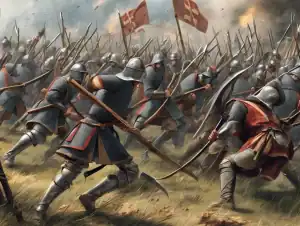
The medieval period was shaped by frequent warfare, shifting political power, and constant innovation in weapons and armour. As medieval armour evolved from chainmail to full plate armour, warriors required weapons capable of defeating heavy protection. One of the most effective answers to this challenge was the medieval mace, a blunt weapon designed to deliver devastating concussive force rather than cutting or piercing blows.
Simple in construction yet devastating in use, the mace became a defining blunt weapon of medieval warfare. Rather than slicing through armour, it relied on raw impact to incapacitate armoured opponents, making it especially effective against knights and men-at-arms.
History of the Mace
The mace has ancient origins, appearing as early as the Bronze Age in the Near East. Early versions were basic clubs with stone or metal heads, used long before the Middle Ages. Its continued development across centuries reflects the enduring effectiveness of blunt force weapons.
In medieval Europe, the mace rose to prominence between the 11th and 15th centuries. As armour technology advanced, especially with the widespread adoption of mail armour and later plate armour, blunt weapons became increasingly valuable. Knights, foot soldiers, and men-at-arms relied on maces because they could transmit force through armour without piercing it.
Over time, the design of the mace evolved. Simple wooden shafts were replaced by reinforced metal handles, while mace heads became more complex, incorporating flanges, knobs, and spikes to focus impact and increase battlefield effectiveness.
⚔️ Types of Medieval Maces
Several forms of medieval maces developed, each adapted to different combat roles:
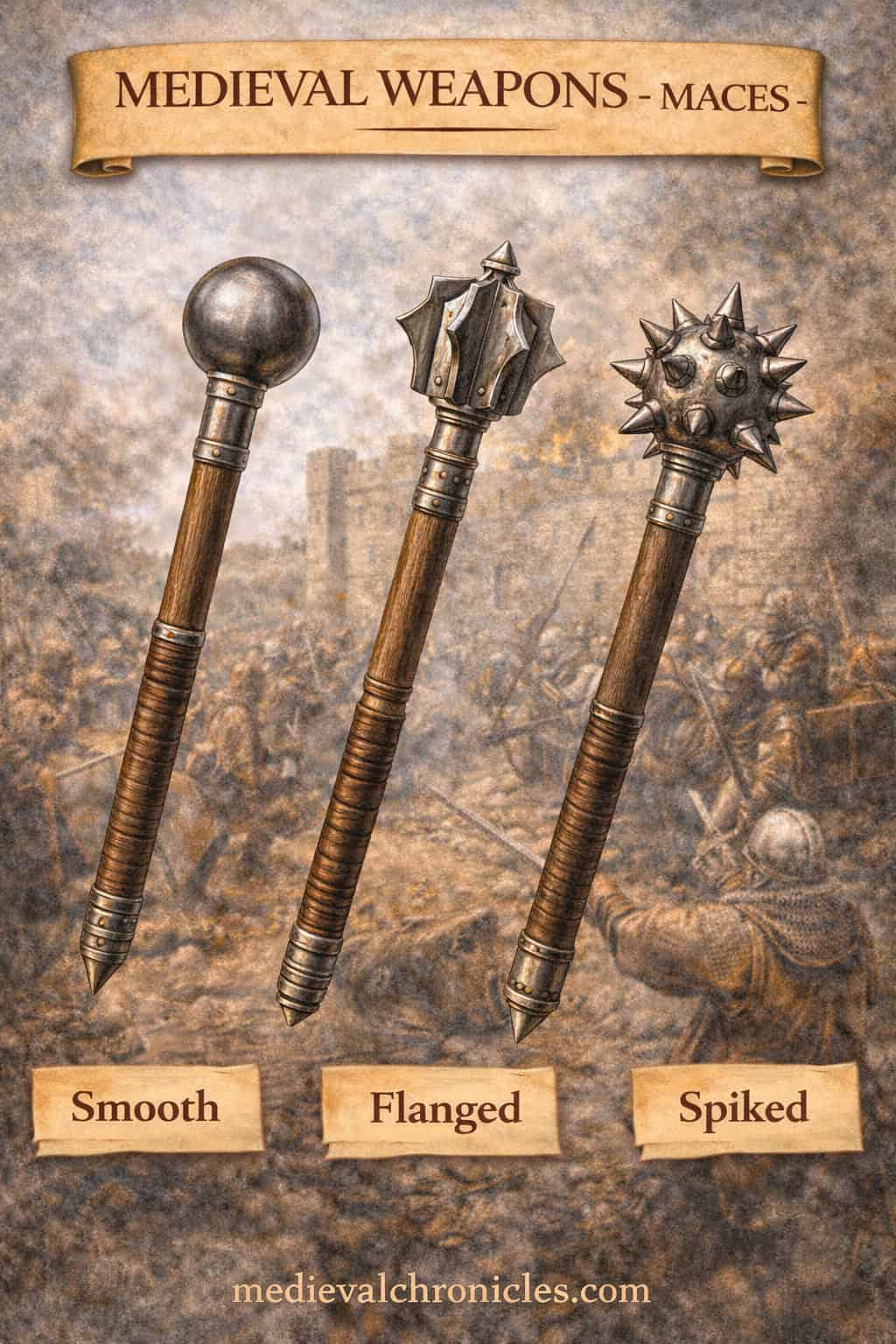
- Ball maces were among the simplest designs, featuring a solid metal head capable of delivering powerful blows.
- Flanged maces used ridged metal protrusions to concentrate force, making them especially effective against plate armour.
- Knobbed and spiked maces reduced surface area, increasing trauma and bone damage.
- Morning stars were closely related weapons, often spiked, though chained versions are more accurately classified as flails.
- War hammers, while technically distinct, served a similar function and often combined blunt and piercing elements.
These variations reflect the ongoing arms race between weapons and armour during the Middle Ages.
Effectiveness in Battle
The battlefield effectiveness of the medieval mace lay in its ability to deliver concussive force. While it rarely penetrated plate armour, a well-placed blow could fracture bones, cause internal injuries, and leave opponents stunned or incapacitated. Even helmets offered limited protection against repeated blunt impacts.
Maces were widely used by mounted knights and infantry soldiers alike. Compared to swords, they required less precision in blade alignment, but still demanded strength, timing, and battlefield awareness. Their durability made them reliable in prolonged engagements where bladed weapons might fail.
Because of these advantages, the mace excelled in close-quarters combat, siege warfare, and encounters dominated by heavily armoured opponents.
The Legacy of the Mace
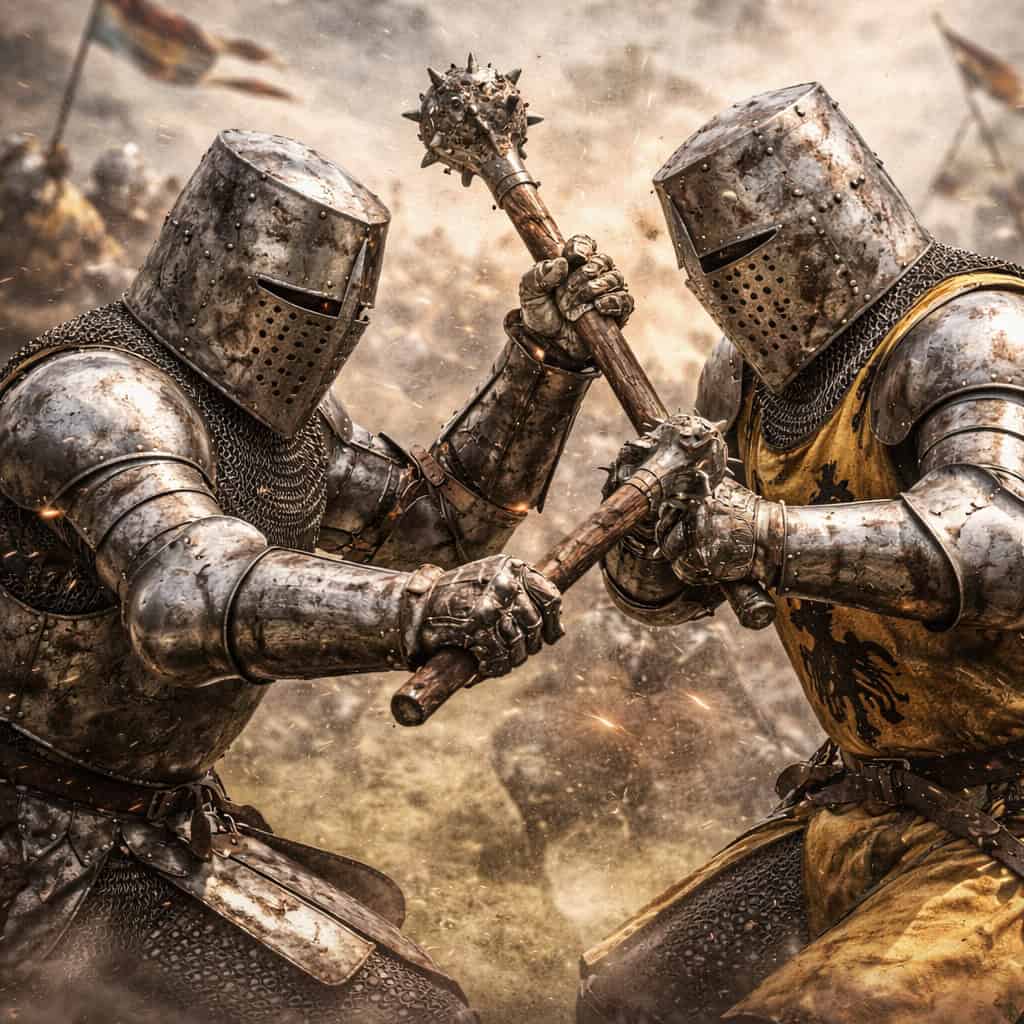
Although the mace disappeared from the battlefield with the rise of gunpowder weapons and firearms, its influence endured. Ceremonial maces remain symbols of authority and governance in parliaments, universities, and civic institutions.
From a military perspective, the medieval mace represents a crucial stage in military technology, illustrating how weapon design evolved to counter advances in armour. Its continued study helps historians understand the realities of medieval combat and armoured warfare.
The medieval mace was one of the most effective blunt weapons of the Middle Ages. Designed to overcome armour through sheer force, it played a vital role in hand-to-hand combat and reflects the broader evolution of medieval warfare. Though no longer used in battle, the mace remains an enduring symbol of power, authority, and martial adaptation.
❓ Medieval Mace – Frequently Asked Questions
What is a medieval mace?
A medieval mace is a blunt weapon consisting of a shaft topped with a heavy metal head. It was designed to deliver powerful concussive blows capable of injuring armored opponents without cutting or piercing their armour.
Why were maces effective against armour?
Maces were effective because they transferred force through armour. Even when plate armour was not penetrated, the impact could break bones, cause internal injuries, and leave enemies stunned or incapacitated.
Who used maces in the Middle Ages?
Maces were used by knights, men-at-arms, and infantry soldiers. They were also favored by some members of the clergy, as blunt weapons were sometimes viewed as causing less bloodshed than bladed arms.
Did maces replace swords in medieval warfare?
No. Maces did not replace swords but complemented them. Warriors often carried multiple weapons to adapt to different combat situations, especially when facing heavily armoured opponents.
What is the difference between a mace and a war hammer?
A mace relies purely on blunt force, while a war hammer often combines a flat striking surface with a pointed spike designed to focus force or puncture weaker points in armour.
🧠 The Medieval Mace Knowledge Quiz
📚 Glossary: The Medieval Mace
Mace
A blunt medieval weapon with a heavy head designed to deliver concussive force against armoured opponents.
Blunt Weapon
A weapon that inflicts damage through impact rather than cutting or piercing, relying on force and momentum.
Flanged Mace
A mace with ridged metal flanges designed to concentrate force and improve effectiveness against plate armour.
Morning Star
A spiked mace-like weapon, sometimes fixed and sometimes chained, used to increase trauma on impact.
War Hammer
A weapon related to the mace, featuring a blunt hammer face and often a spike for concentrating force on armour.
Plate Armour
Interlocking metal plates worn by medieval warriors to protect against cutting and piercing attacks.
Concussive Force
The transfer of kinetic energy through impact, causing injury without penetrating armour.
Men-at-Arms
Professional medieval soldiers, often heavily armoured and trained in close-combat weapons such as maces.