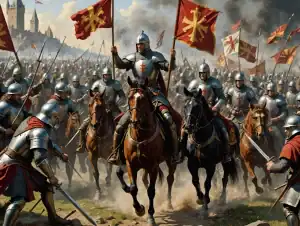
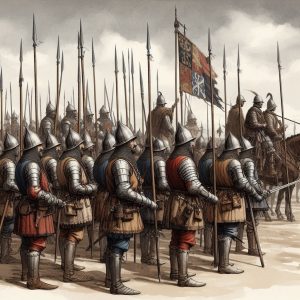
Medieval crossbowmen were feared and respected on the battlefield for their ability to deliver powerful, accurate shots that could penetrate armor. Unlike traditional archers, crossbowmen required less physical strength but intense skill and precision. Their weapons, the crossbows, revolutionized medieval warfare by offering greater range and stopping power. This article explores the history, equipment, and tactics of medieval crossbowmen, highlighting their crucial role in shaping the outcomes of countless battles throughout the Middle Ages.
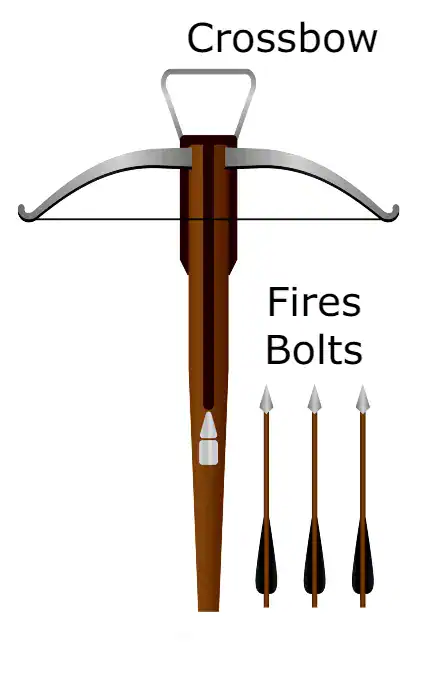
Earlier crossbows were loaded manual using the hands and feet, later crossbows used loading mechanism that over time were improved upon, making the crossbow easier to load and use compared to the another famous weapon called the longbow, which required great strength and skill.

Crossbowmen History
While medieval crossbowmen were an essential part of medieval warfare, the use of crossbows was also common in the ancient world.
According to historian Sir Joseph Needham, the crossbow was invented in ancient China and its use soon spread to other parts of the world such as India, Persia, Greece, and Rome. All these ancient kingdoms made extensive use of crossbows.

Crossbowmen Weapons
Various weapons and accessories were used by medieval crossbowmen. The crossbow itself had wooden stock made from a variety of materials such as yew ash, hazel, or elm, and in later medieval times a metal bow of iron or steel was added which made the crossbow even more deadly.
Crossbow Range
The Range of the earlier wooden crossbow was around 300-400 yards. Later versions with added steel bows had a range of 400-500 yards.
Medieval crossbowmen used the large shield called Pavise which provided them the cover to load the weapons during combat.

Types of Crossbowmen
Various types of medieval crossbowmen were experts in a variety of different crossbow variants. One such variant was called the recurve crossbow which consisted of tips curving away from the archer.
This resulted in less hand shock and more acceleration of the arrow. Other types of crossbows used by medieval crossbowmen included the stirrup, pull lever, push lever, and cranequin versions.

Medieval Crossbowmen Training
A medieval crossbow, compared to a longbow, was easier to use and thus did not require extensive training. It could be operated successfully and accurately after a week of training and thus a lot of medieval crossbowmen were simple peasants and not expert soldiers.

Medieval Crossbowmen Formations
Medieval crossbowmen had important positions in the battle formations. This included mounted as well as un-mounted medieval crossbowmen. Their primary purposes were to indulge in offensive skirmishes before the actual assault by the mounted knights and to launch counter-attacks in order to protect the infantry.

Medieval crossbowmen were also effectively used with formations of pikemen which proved to be lethal against the mounted knights since the crossbows bolt could penetrate a knights’ armour.
Famous Medieval Crossbowmen Battles
Medieval crossbowmen were extensively used by medieval armies during battles because it was easier to train crossbowmen compared to longbowmen. One of the most important battles employing crossbowmen was the Battle of Hastings.
In medieval China, crossbowmen played a decisive role in the Battle of Shanzhou in 1004.

Medieval Crossbowmen Summary
During the medieval times, the use of medieval crossbowmen became increasingly common in Europe, although crossbows had a long history that extended to ancient China. A central advantage of the crossbow was that it was powerful enough to penetrate the armour of the knight and thus could be very successfully used against the cavalry.

Besides, compared to the longbow, it required very little training and medieval crossbowmen could be procured at a short notice. These advantages made the use of crossbows increasingly common during the late medieval times.