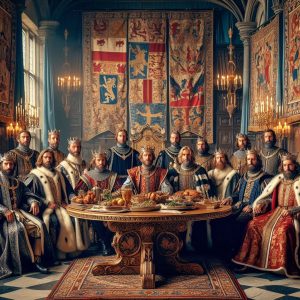
While medieval kings often dominate history books, women behind the throne played a critical role in shaping their reigns. From queens and mothers to influential advisors, these women wielded political, social, and diplomatic influence, sometimes guiding major decisions, securing alliances, or even defending the kingdom. This article explores the remarkable women who shaped medieval kings and left a lasting legacy in history.
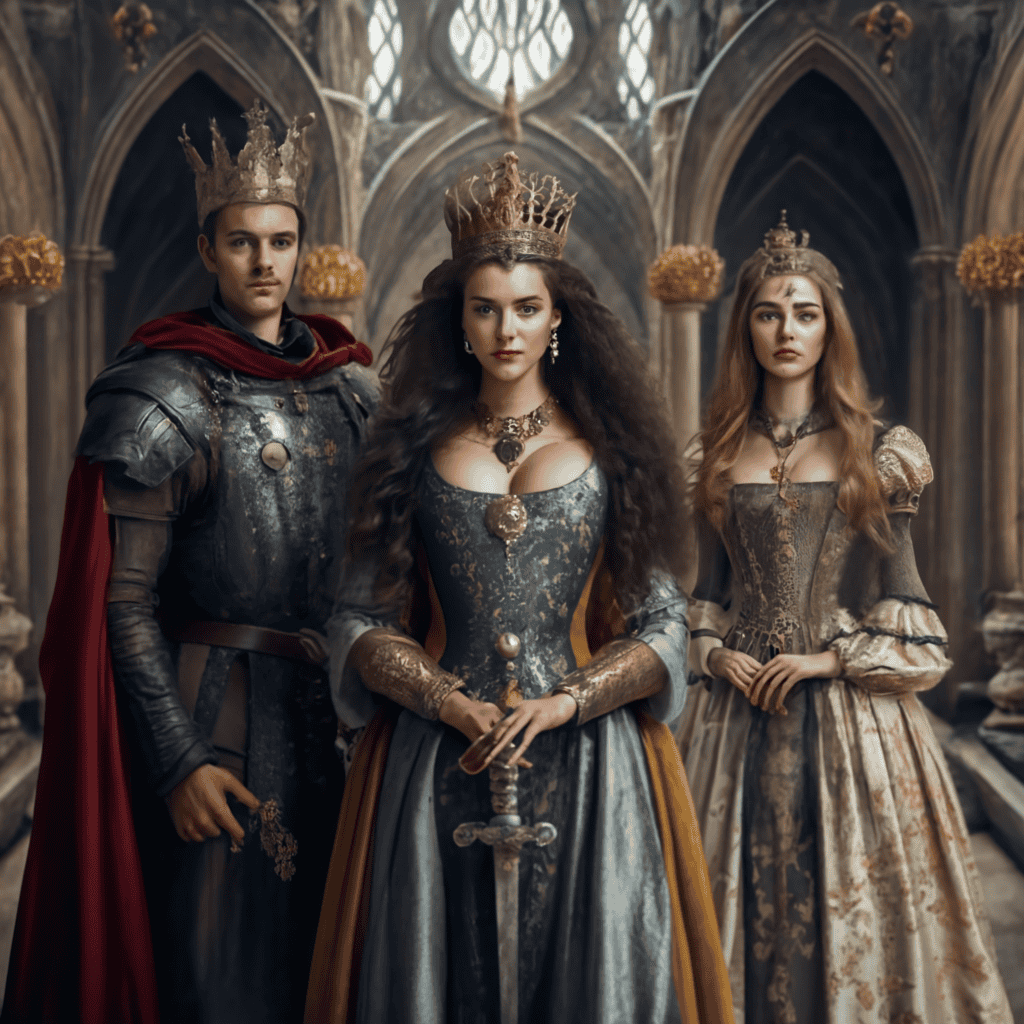
Queens and Consorts
The most obvious women who shaped medieval kings were their queens and consorts. These women were often chosen for their political connections, and their marriages were seen as a way to forge alliances between kingdoms.
However, queens and consorts were much more than just political pawns. They often had significant influence over their husbands, and in some cases, they were even able to rule in their own right.
Eleanor of Aquitaine
One example of a powerful medieval queen was Eleanor of Aquitaine, who was married first to King Louis VII of France and later to King Henry II of England.

Eleanor was a skilled politician and diplomat, and she played an important role in negotiating the Treaty of Wallingford, which brought an end to the civil war known as the Anarchy in England.
Eleanor also helped to rule the kingdom of England during her husband’s absence on crusade, and she played a key role in securing the succession of her son, King Richard the Lionheart.
Isabella of France
Another example of a powerful queen was Isabella of France, who was married to King Edward II of England. Isabella was known for her beauty and her intelligence, and she used these qualities to great effect in her political dealings.
She was able to secure the support of the English barons in her efforts to depose her husband, and she went on to rule as regent for her son, King Edward III, during his minority.

Mistresses
While queens and consorts were officially recognized as the partners of medieval kings, there were also women who exerted influence behind the scenes as mistresses. These women were often less visible than queens and consorts, but they could still have a significant impact on their partners’ decision-making.
Rosamund Clifford
One famous example of a mistress who shaped a medieval king was Rosamund Clifford, who was the lover of King Henry II of England. Henry was famously unfaithful to his wife, Eleanor of Aquitaine, and he had a number of mistresses over the course of his reign.

However, Rosamund was perhaps the most famous of these mistresses, and her beauty and charm were said to have captivated the king. According to legend, Rosamund was hidden away in a labyrinthine bower at Woodstock Palace, and she was ultimately poisoned by Queen Eleanor in revenge for her husband’s infidelity.
Advisors
In addition to queens, consorts, and mistresses, there were also women who played important roles as advisors to medieval kings. These women were often highly educated and well-connected, and they were able to use their skills and influence to shape the policies of their partners.
Hildegard of Bingen
One notable example of a female advisor was Hildegard of Bingen, who was a German abbess and mystic. Hildegard was a close advisor to Emperor Frederick I of the Holy Roman Empire, and she used her influence to promote peace and reconciliation between the emperor and the pope.
Hildegard was also a prolific writer and composer, and her works on theology and medicine are still studied today.

Christine de Pizan
Another example of a female advisor was Christine de Pizan, who was a French writer and intellectual. Christine served as a royal courtier and advisor to King Charles VI of France, and she was known for her progressive views on women’s rights and education.
Christine’s most famous work, “The Book of the City of Ladies,” is considered a landmark feminist text and is often cited as an early example of women’s literature. She was also a prolific letter writer, and her correspondence with other notable figures of the time provides valuable insights into the political and social landscape of the medieval period.

Eleanor of Aquitaine
Another influential woman of the medieval era was Eleanor of Aquitaine, queen consort of both France and England. Eleanor was known for her intelligence and strong personality, and she played a significant role in the politics of both countries.

She accompanied her husband, King Louis VII of France, on the Second Crusade and later went on to marry King Henry II of England.
As queen consort of England, she was a patron of the arts and a supporter of courtly love. However, she also played a key role in the rebellion against her husband, which was led by her sons.
Isabella of France, queen consort of England during the reign of her husband, King Edward II, was another influential woman of the medieval period.
Isabella was known for her beauty and charm, but she was also a shrewd political operator. She became a key player in the events leading up to her husband’s downfall, leading a rebellion against him with the support of her lover, Roger Mortimer.
After her husband’s abdication, Isabella and Mortimer effectively ruled England on behalf of her son, King Edward III.
While queens and consorts often had significant influence on the politics of the medieval period, other women also played important roles behind the scenes. Mistresses, for example, could exert a great deal of power over their royal lovers.
One notable example is Alice Perrers, mistress of King Edward III. Perrers was widely disliked by the English nobility and accused of corruption, but she was able to maintain her influence over the king until his death.
Advisors were another important group of women in the lives of medieval monarchs. Catherine of Siena, for example, was a mystic and theologian who became a trusted advisor to Pope Gregory XI. She played a key role in convincing the pope to return the papacy from Avignon to Rome, which helped to restore the authority of the papacy in the eyes of many.
Conclusion
In conclusion, while the medieval period is often thought of as a time dominated by powerful men, women also played important roles in shaping the political and social landscape of the time.
From queens and consorts to mistresses and advisors, these women were able to exert significant influence on the actions and legacies of medieval kings.
Their stories provide a valuable window into the complex power dynamics of the era and remind us of the important contributions that women have made throughout history.
Exploring the Women Who Shaped Medieval Kings Great Books!
1. “Queenship in Medieval Europe” by Theresa Earenfight – This book examines the various ways in which medieval queens wielded power and influence, both in their own right and as advisors to their husbands.
2. “The Lioness in Winter: Writing an Old Woman’s Life” by Ann Burack-Weiss – While not specifically focused on medieval women, this book is a fascinating exploration of how society views and values the lives of older women.
3. “Medieval Women: A Social History of Women in England 450-1500” by Henrietta Leyser – This book provides a comprehensive look at the lives of women in medieval England, including their roles in the royal court and as advisors to kings.
4. “Eleanor of Aquitaine: A Life” by Alison Weir – This biography delves into the life of one of the most famous women of the medieval period, Eleanor of Aquitaine, who was queen consort of both France and England and played a significant role in the politics of both countries.
5. “She-Wolves: The Women Who Ruled England Before Elizabeth” by Helen Castor – This book explores the lives of four powerful women who held the throne of England in the medieval period: Matilda, Eleanor of Aquitaine, Isabella of France, and Margaret of Anjou.
📜 Frequently Asked Questions
Who were the most influential women in medieval courts?
Queens, noblewomen, and mothers of kings often played pivotal roles in **politics, diplomacy**, and succession planning.
Did women have political power in the Middle Ages?
Yes, many women exercised **indirect power** through counsel, marriage alliances, regency, or direct influence over kings and courtiers.
Can you give an example of a woman who influenced a king?
Women like **Eleanor of Aquitaine** and **Matilda of Tuscany** impacted military campaigns, diplomacy, and governance through **strategic counsel and leadership**.
Did these women face challenges in wielding influence?
Yes, societal expectations and gender norms often **limited formal authority**, but many navigated these restrictions with intelligence and diplomacy.
Why is studying these women important?
Examining these women provides insight into **medieval politics, power dynamics**, and the **social roles** that shaped kingdoms.
⚔️ Test Your Knowledge: Women Who Shaped Medieval Kings