Medieval Italy was one of the most dynamic and culturally influential regions of the Middle Ages, shaped by Roman legacy, Byzantine administration, Germanic kingdoms, and powerful city-states. Unlike many parts of medieval Europe, Italy never formed a single unified kingdom, instead developing a fragmented but vibrant political and cultural landscape that ultimately laid the foundations for the Italian Renaissance.

The Beginning of Medieval Italy (5th–7th Centuries)
The medieval period in Italy began in the 5th century, following the collapse of the Western Roman Empire in 476. After the deposition of the last Roman emperor, Odoacer ruled as King of Italy, marking the transition from Roman imperial authority to early medieval rule.
Italy then passed through several phases of control:
- The Ostrogothic Kingdom (late 5th–6th century)
- A partial Byzantine reconquest under Emperor Justinian
- The invasion of the Lombards from 568 onward
By the 7th century, Italy was politically fragmented, with Byzantine territories, Lombard kingdoms, and independent regions existing side by side.
🏰 Click to Reveal: Understanding Medieval Italy
Political Fragmentation
Unlike many medieval kingdoms, medieval Italy never unified under a single ruler. Power was divided among city-states, emperors, the Papacy, and regional lords.
Role of the Papacy
The Papacy wielded both spiritual and political authority, ruling the Papal States and frequently clashing with emperors and local rulers.
Rise of City-States
From the 11th century onward, powerful city-states such as Florence, Venice, and Genoa dominated politics, trade, and culture.
Trade & Wealth
Italy’s position in the Mediterranean made it a hub of medieval trade, enriching merchants and funding art, architecture, and military expansion.
Warfare & Condottieri
By the late Middle Ages, Italian warfare relied heavily on condottieri—professional mercenary captains hired by rival city-states.
Bridge to the Renaissance
Economic prosperity, classical learning, and artistic innovation made medieval Italy the direct precursor to the Italian Renaissance.
Charlemagne, the Papacy, and Imperial Claims
In 774, Charlemagne invaded northern Italy and defeated the Lombards, assuming the title King of the Lombards. While this strengthened Frankish influence, it did not unify Italy.
From the 9th century onward, the Papacy emerged as a major political force, particularly in central Italy. The Papal States exercised both spiritual and temporal authority, often competing with emperors and local rulers.
Later rulers of the Holy Roman Empire, beginning with Otto I, claimed the title King of Italy, though imperial control was often symbolic and heavily contested by local powers.

👑 Italian Kings, Emperors, and Political Fragmentation
Unlike England or France, medieval Italy had no continuous native monarchy. Instead, authority often shifted between competing powers, and control could vary widely by region and century.
⚔️ Who Held Power in Medieval Italy?
- Kings (including Ostrogothic and Lombard rulers)
- Frankish and German emperors claiming the Italian crown
- The Papacy, especially through the Papal States
- Autonomous city-states with their own governments and armies
🗺️ A Patchwork of City-States (From the 11th Century)
By the 11th century, Italy had become a mosaic of powerful independent polities, including:
These Italian city-states were commonly governed by councils, merchant elites, or princely families—rather than hereditary kings—helping to shape Italy’s distinctive medieval political landscape.

🌾 Medieval Italy: Peasants, Serfs, and Slavery
👨🌾 Peasant Life
Most Italians in the Middle Ages were peasants, living in rural villages and working agricultural land. Unlike much of northern Europe, serfdom in Italy was often less rigid, especially in central and northern regions, where many peasants retained limited land rights.
Peasants were typically required to:
- Pay rents or taxes to landlords or city authorities
- Provide labour services on estates or public works
- Support local lords or communal governments
⛓️ Slavery in Medieval Italy
Slavery did exist in medieval Italy, particularly in major trading centres such as Venice and Genoa, which were deeply embedded in Mediterranean trade networks.
Slaves were most commonly employed as:
- Domestic servants within urban households
- Craftsmen working in workshops
- Agricultural labourers on estates and plantations
The sale of Christian slaves to Muslims was officially prohibited by religious authorities, though historical records indicate that such bans were sometimes violated.
Knights, Armies, and Warfare in Medieval Italy
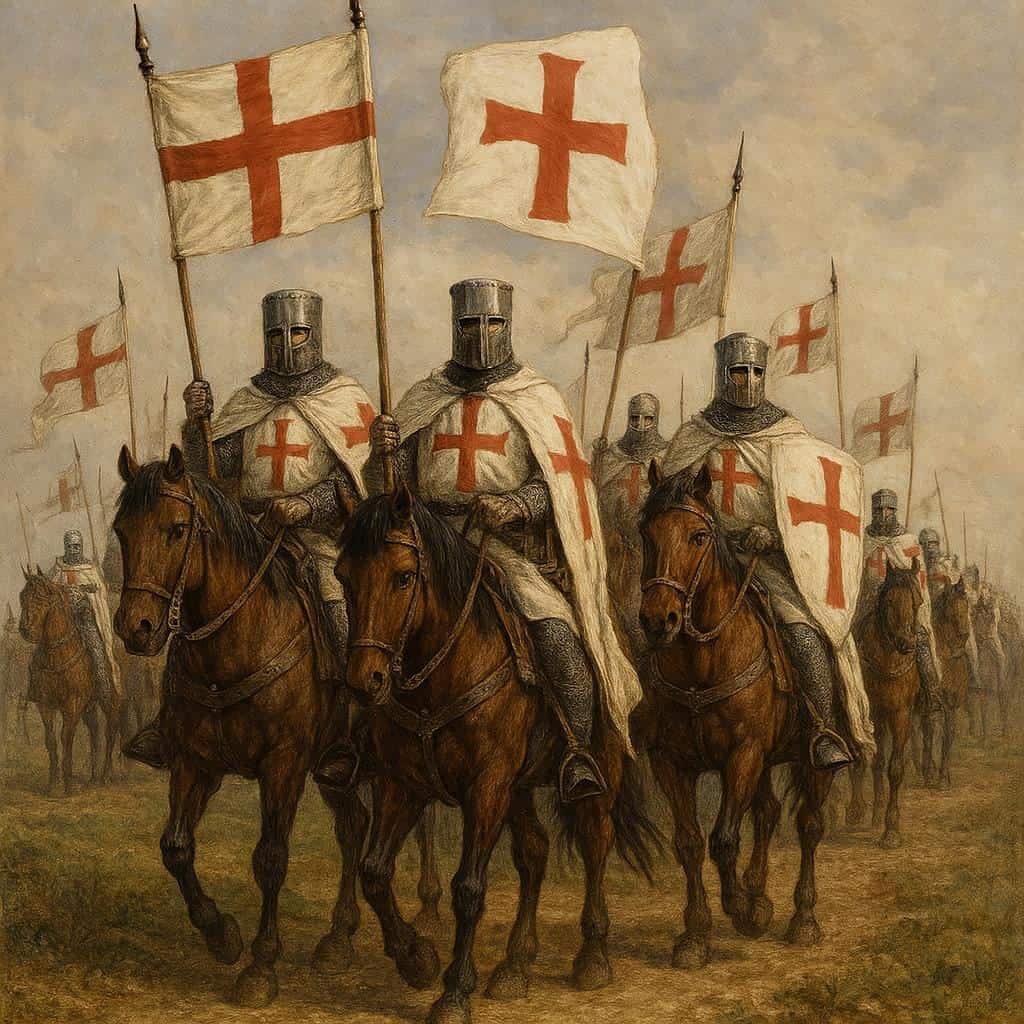
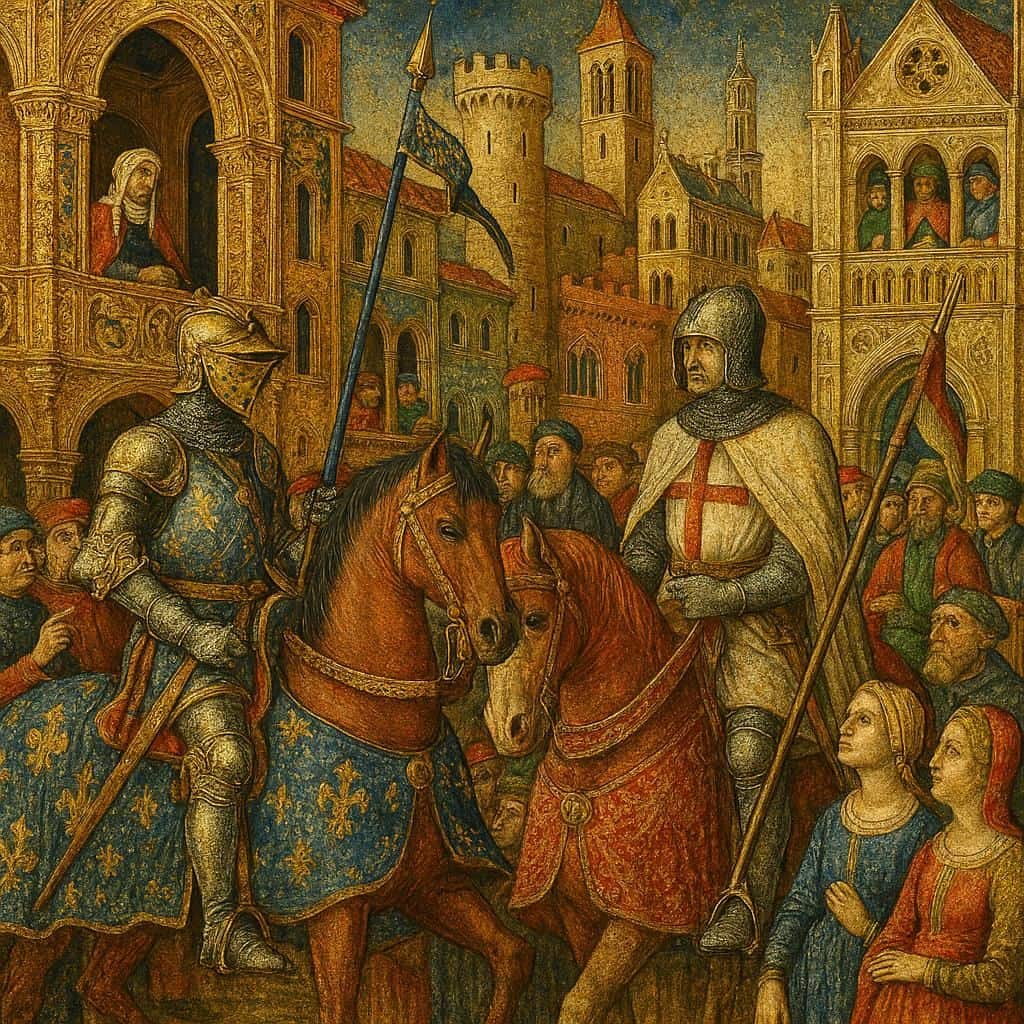
Early medieval Italian armies consisted largely of noble cavalry and local militias. Religious military orders such as the Templars, Hospitallers, and Teutonic Knights maintained properties throughout Italy.
By the late Middle Ages, warfare was increasingly dominated by condottieri—professional mercenary commanders hired by city-states. This system reflected Italy’s wealth, political fragmentation, and frequent internal conflicts.
Medieval Italian Castles and Fortifications
Castles in medieval Italy varied by region:
- Southern Italy: Norman-built castles blending Western and Islamic influences
- Central and Northern Italy: Fortified residences of aristocrats and city rulers
- City-states: Defensive walls, towers, and citadels rather than traditional feudal castles
These fortifications were essential during periods of inter-city warfare and factional conflict.

Medieval Italian Art
Medieval Italian art was deeply influenced by Byzantine traditions, particularly in mosaics, frescoes, and religious iconography. Art focused on:
- Spiritual symbolism
- Biblical themes
- Hieratic composition
From the 13th century, artists such as Giotto di Bondone began introducing:
- Greater realism
- Emotional expression
- Spatial depth
These innovations marked the transition toward Renaissance art.
Medieval Italy Architecture
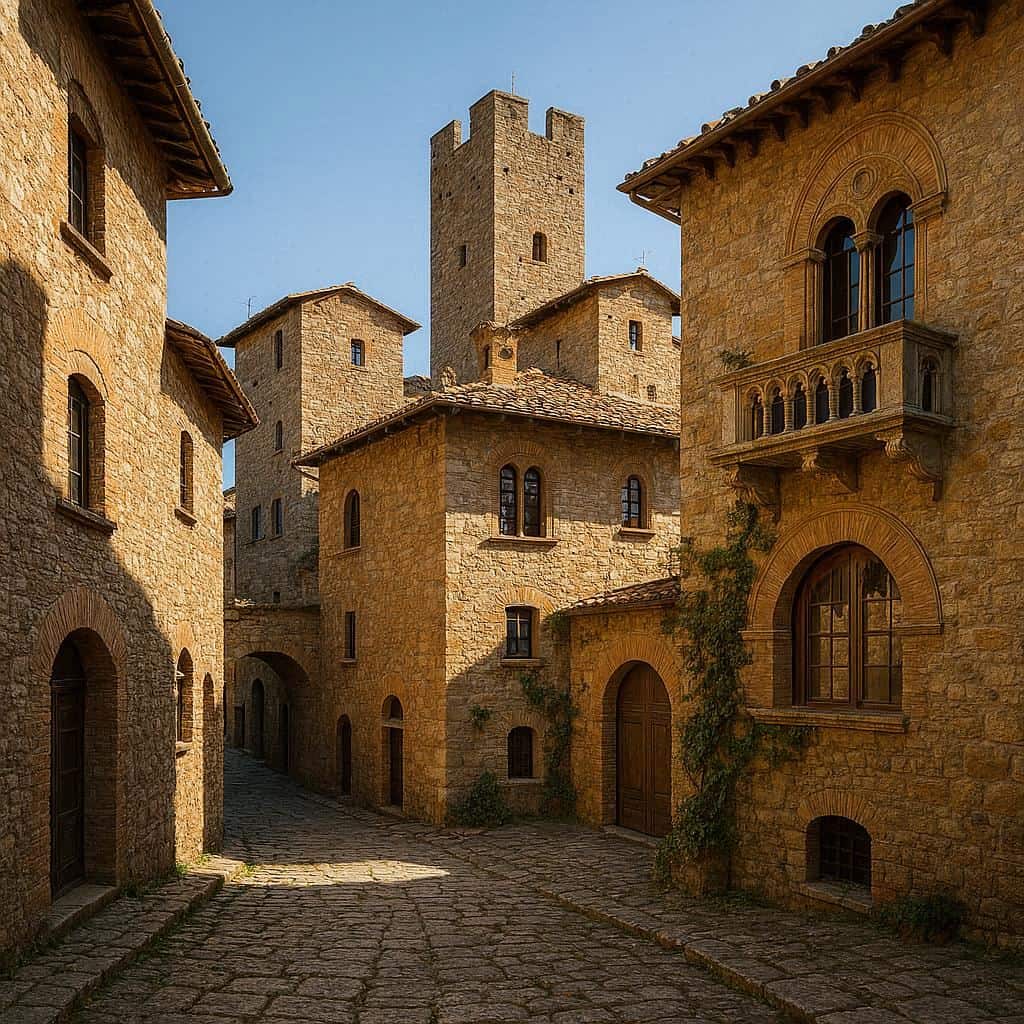
Romanesque Architecture (9th–11th centuries)
- Thick walls
- Rounded arches
- Vaulted ceilings
- Examples include Pisa’s cathedral complex
Gothic Architecture (12th–14th centuries)
- Pointed arches
- Ribbed vaults
- Greater vertical emphasis
- Seen in churches, palaces, and civic buildings
Italian Gothic was generally more restrained than its northern European counterpart.
Medieval Italian Music
Italian medieval music flourished during the late Middle Ages, particularly in the Trecento (14th century).
Key musical forms included:
- Madrigal – polyphonic secular songs
- Caccia – lively, canon-style compositions
- Ballata – lyrical songs with refrains
Music was performed in courts, cities, and religious settings, often accompanying poetry.
🍞 Medieval Italian Food and Diet
Medieval Italian food was highly regional and diverse, shaped by long-distance trade, migration, and cultural exchange across the Mediterranean world.
🥖 Common Foods in Medieval Italy
- Bread and pasta, widely eaten by the 13th century
- Olive oil as the primary cooking fat
- Cheese and eggs, common protein sources
- Sausages and preserved meats, especially in urban centres
🌍 Cultural Influences on Italian Cuisine
Muslim rule in Sicily introduced ingredients such as rice, citrus fruits, almonds, and sugar. Later Norman influence expanded the use of preserved fish, including salt cod and stockfish.
The term “pizza” in medieval Italy referred broadly to pies or flatbreads, rather than the modern dish associated with later periods.
Medieval Italy and the Road to the Renaissance
By the late Middle Ages, Italy’s wealth from trade, banking, and manufacturing created a powerful merchant class and an educated elite. These social and economic conditions directly enabled the Italian Renaissance, making medieval Italy one of the most influential regions in European history.
Summary: Why Medieval Italy Was Unique
- Politically fragmented rather than unified
- Dominated by powerful city-states
- Strong Roman and Byzantine legacy
- Center of trade, art, and innovation
- Bridge between the Middle Ages and the Renaissance
❓ Medieval Italy – Frequently Asked Questions
When did the medieval period begin in Italy?
The medieval period in Italy began in the 5th century after the fall of the Western Roman Empire in 476, marking the transition from Roman to early medieval rule.
Was medieval Italy a unified kingdom?
No. Medieval Italy was politically fragmented, divided among emperors, the Papacy, regional rulers, and independent city-states such as Florence and Venice.
What were the most powerful Italian city-states?
Major Italian city-states included Florence, Venice, Genoa, Milan, and Pisa, each dominating trade, politics, or military power in different periods.
How did the Church influence medieval Italy?
The Papacy wielded immense religious and political authority, governing the Papal States and shaping Italian diplomacy, warfare, and culture.
What was daily life like in medieval Italy?
Daily life varied by class and region, but most people were peasants, while urban populations included merchants, artisans, clergy, and nobles.
Why was medieval Italy important to European history?
Italy’s trade networks, wealth, and cultural innovation made it the birthplace of the Italian Renaissance and a bridge between the Middle Ages and early modern Europe.
🧠 Medieval Italy Knowledge Quiz
📜 Glossary of Medieval Italy Terms
Byzantine Empire
The eastern continuation of the Roman Empire, which ruled parts of Italy after the fall of the West.
City-State
An independent city with its own government, common in medieval Italy.
Condottieri
Professional mercenary leaders hired by Italian city-states during the late Middle Ages.
Holy Roman Empire
A loose federation of territories whose emperors claimed authority over northern Italy.
Lombards
A Germanic people who established a kingdom in Italy after the 6th century.
Papal States
Territories in central Italy ruled directly by the pope.
Romanesque Architecture
An architectural style using rounded arches and heavy stone construction.
Renaissance
A cultural revival beginning in Italy that followed the medieval period.
Serfdom
A system tying peasants to land, generally less rigid in Italy than in northern Europe.
The medieval age of Italy began during the last days of the Western Roman Empire in the 5th century.
After the collapse of the Western Roman Empire, Italy fell under the rule of the Byzantine Empire.

This rule was taken away by Charlemagne who invaded Italy in the 8th century. Subsequently, the Papacy came to assert immense influence in Italy between the 9th and 11th centuries.

From the 11th century onwards, a number of powerful city-states emerged in Italy, notable among these was Florence. These states ultimately led the way to the Italian Renaissance.

Italian Kings & Queens
The first person to proclaim kingship in Italy during the medieval ages was Odoacer. The next significant king was Charlemagne who defeated the Lombards and became King of Italy, while also assuming the title of the King of the Lombards.

Eventually, Italy came under the reign of the Holy Roman Empire, and Emperor Otto I and his subsequent heirs used the title for themselves.
Medieval Italy Peasants & Slaves
During medieval times, Italy was known for a number of slavery hubs. Notable among these was Venice which sold slaves to territories all over the Roman Empire and Italy as well as to the Moors.
Slaves of different ethnicities and faith were sold although the sale of Christian slaves to Muslims was banned under the Eastern Roman Empire.
Peasants lived poorly in medieval Italy, although they usually had land, and peasants’ populations often clustered together as villages. They were required to pay a certain part of their annual incomes to the powerful lords.

Medieval Italy Knights & Army
Armies in medieval Italy generally comprised of associations of knights who usually came together to defend a cause defined by the Church.
All the major knight orders such as Templars, Hospitallers, and the Teutonic Knights had presence and properties in Italy.

Minor orders within Italy were also established, mostly by the religious clergy, to combat religious transgressions. Examples of these include the Militia of Jesus Christ and the Order of the Blessed Virgin Mary.

Medieval Italy Castles
Medieval castles in southern Italy were mostly constructed by the Normans. These castles incorporated a wide variety of architectural elements, blending the Norman and Islamic-oriental design.
Castles in other parts of medieval Italy, especially the city-states, were usually constructed by members of the rich aristocracy, often the princes of the city-states.
These castles also served as bulwarks of protection during the internecine warring. Such castles can be found in the Italian regions of Florence and Volterra.

Medieval Italy Art
Medieval Italian art was heavily influenced by Byzantine art and its major manifestations were either architectural, such as decorative frescoes, or religious (examples of which are the illustrated bibles of the era).
The decorative element gave birth to innovations in calligraphy and creative uses of colour. During the later medieval period, Italian architecture was heavily influenced by Gothic art which also came to influence Italian art.
In contrast to the later Renaissance-era realistic art, medieval art in Italy tried to realise a spiritual meaning.
This led to the shades of mysticism and the supernatural found in medieval Italian art. In the 13th and 14th centuries, painters such as Giotto pioneered realism in painting.
Medieval Italy Music
Music in Italy during the late Middle Ages had a melodic quality. Among the prevalent forms was Trecento Madrigal, which comprised of a verse/refrain format with three-line stanzas and a recurring two-line passage.
Another music form that existed in medieval Italy was caccio in which two persons sang in unison, usually about exploits and activities such as hunting. Ballata was another form of music that existed during this period.
Medieval Italian Food
Medieval Italian food was very rich in its ingredients and highly diverse, borrowing cuisine elements from many different cultures. The 9th-century invasion of Sicily by Muslims, for instance, brought elements such as almonds and rice to the Sicilian cuisine.
Subsequent Norman influence incorporated salt cod and stockfish into this cuisine. Olive oil was the primary choice for all uses of oil in food preparations. Eggs were used as a regular part of the diet.
Pasta was a popular food in Italy by the 13th century. Pies were a part of the cuisine and they came with a diverse range of topping choices ranging from meats to lentils.
The term “Pizza” was used to signify “pie” in medieval Italy. Among other highly popular staple, food items were sausage and cheese. Cheese of various types and qualities was used.

Medieval Italy Architecture
From the 9th until the 11th century, there was a period of Romanesque architecture in Italy that borrowed Roman elements such as Roman arches and columns. A number of architectural masterpieces were erected during this period, including the famed Tower of Pisa.
One of the key innovations of this era was the use of vaults. From the 12th century onwards, Gothic architecture became popular in Italy. This type of architecture was marked by a more somber and formal aesthetic approach. The most popular feature of Gothic architecture was the groin vault.
Gothic influence on architecture continued through the 12th century to the end of the 14th century. An example of medieval Gothic architecture in Italy is Palazzo Vecchio situated in Venice.
Medieval Italy Summary
Medieval Italy was influenced by a number of cultures including Roman, Byzantine, and Norman.
While Italy continued to be invaded by different forces during the early medieval period, in the later periods many different city-states emerged which enjoyed extraordinary independence and were able to become commercial hubs of trade.
Trade and the subsequent prosperity lead to a rich aristocracy and a prosperous middle class. Both played a very significant role in the Italian Renaissance.