The royal clothing of medieval Europe was far more than personal fashion—it served as a powerful symbol of authority, lineage, wealth, and political legitimacy. From the practical clothing of early warrior rulers to the elaborate velvet, silk, and jewel-encrusted garments of later courts, royal dress evolved dramatically over the Middle Ages. This evolution reflected broader shifts in politics, economy, culture, and the growing ceremonial life of medieval kingdoms.

As medieval monarchies became more stable and hierarchical, clothing also became a visual language: kings expressed their dominance through regalia and heraldic motifs, queens displayed dynastic prestige through luxurious fabrics, and heirs—whether a medieval prince or a young medieval princess—wore clothing designed to signal continuity, purity, or future authority. Members of royal families set the fashion standards for the nobility and influenced the wider culture of European courts.
This expanded guide explores how kings, queens, princes, and princesses dressed, how their styles evolved over the centuries, and why royal clothing became one of the most important markers of medieval power.
⚔️ Click to Reveal: What Medieval Royals Really Wore
Royal Clothing in the Medieval Period: A Quick Overview
Medieval royal clothing was designed to showcase authority, wealth, and legitimacy. Early medieval rulers wore simpler, military-influenced garments, while High and Late Medieval monarchs adopted silk gowns, brocaded tunics, ermine-lined cloaks, and jewel-studded accessories influenced by Byzantine, Italian, and Eastern fashion.
- Kings displayed power through gold-thread tunics, heraldic surcoats, and ceremonial regalia.
- Queens set the trends for noblewomen with fur-trimmed gowns, veils, and elaborate headpieces.
- Princes wore clothing marked by heraldry and fine fabrics to emphasise their status as heirs.
- Princesses dressed in silk gowns, pearls, embroidery, and luxurious veils symbolising dynastic prestige.
As medieval Europe became wealthier and more interconnected through trade, royal fashion evolved into an elaborate system of political theatre, visual symbolism, and strict hierarchy.
Royal Clothing of the King
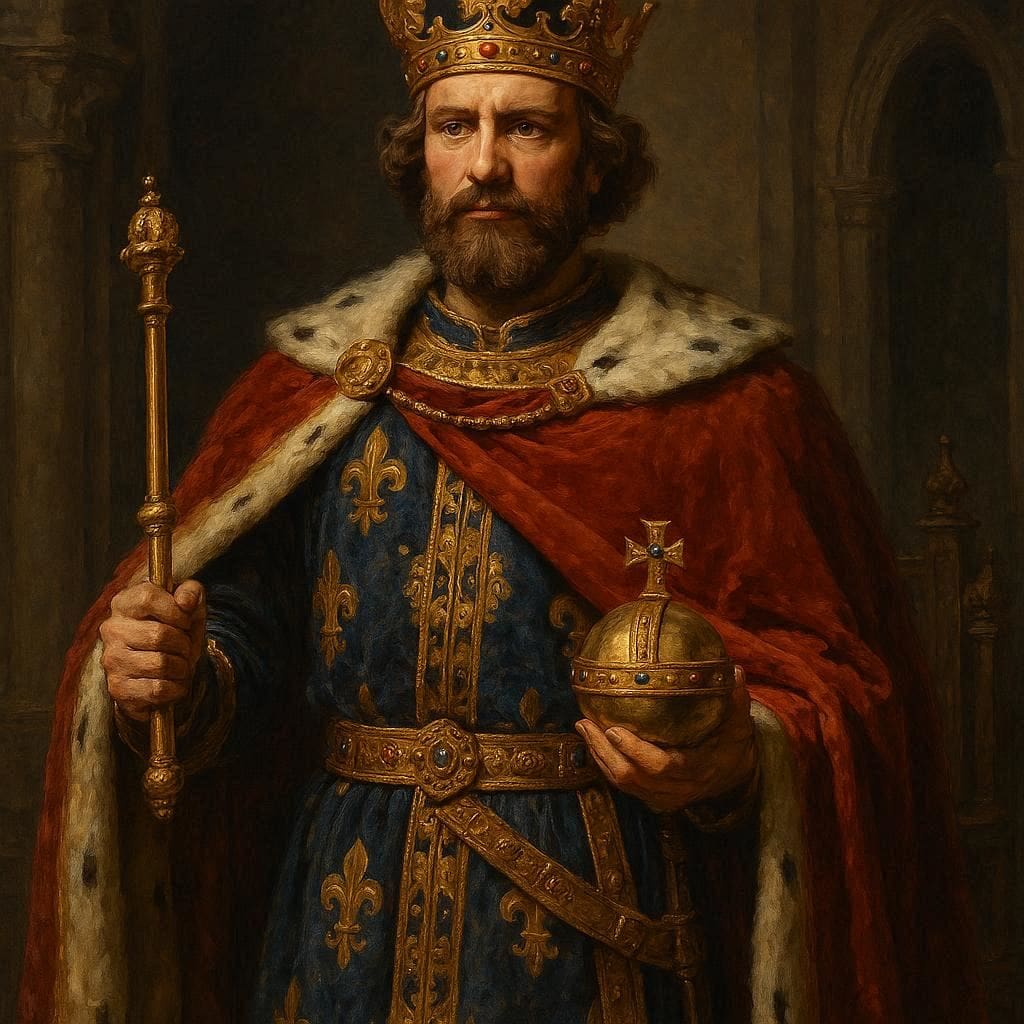
The royal clothing of a reigning medieval king varied widely depending on the occasion. Kings who hunted or travelled wore simpler—but still finely crafted—tunics and cloaks. However, at court or on ceremonial occasions, they appeared in full regalia, displaying authority through clothing.
Typical elements included:
- A richly embroidered tunic often stitched with gold or silver thread
- A surcoat displaying heraldic emblems of the royal house
- Long robes made of silk, velvet, ermine, or sable
- Ornamental accessories such as jeweled belts, gloves, brooches, and rings
- Weapons worn symbolically—swords, daggers, or ceremonial armour
- Royal regalia including sceptres, orbs, and crowns
These garments were not merely decorative; they communicated rulership, legitimacy, and divine favour. No noble—regardless of wealth—was permitted to outshine the king through clothing.
Evolution of the King’s Clothing
During the early Middle Ages, rulers across Europe dressed more like military commanders than ceremonial monarchs. Their clothing reflected:
- A need for mobility in constant warfare
- A close connection with warrior elites
- Simpler court cultures without rigid ceremonial structures
By the High Middle Ages, the situation changed. Stable kingdoms emerged, dynasties strengthened, and wealth increased. Influences from the Byzantine Empire, the Islamic world, and Mediterranean trade introduced:
- Silks and brocades
- Jewel work embroidery
- Long, flowing robes inspired by imperial court dress
By the late medieval period, kings used clothing strategically to emphasize grandeur, especially during coronations, feast days, and diplomatic receptions.

Royal Clothing of the Queen
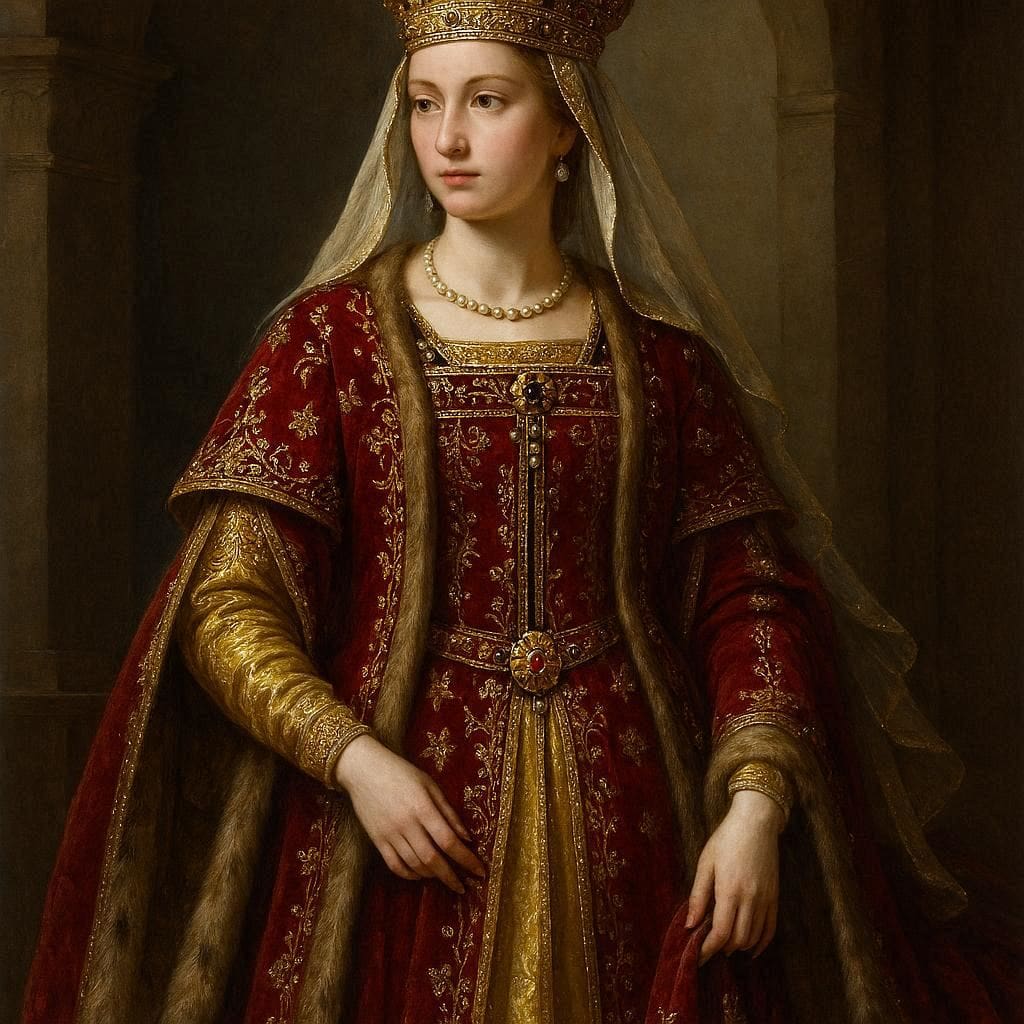
The clothing of a medieval queen set the standard for noblewomen throughout Europe. Queens were expected to embody dignity, purity, and majesty—and their dresses reflected this ideal.
Typical queenly garments included:
- Long silk gowns lined with fur
- Velvet overgowns decorated with pearls, gold thread, and gemstones
- Tunics layered over gowns to create depth and richness
- Elaborate sleeves, trains, and veils
- Jewelled crowns, circlets, brooches, and girdles
Sumptuary laws often forbade noblewomen from wearing the most exclusive materials, ensuring the queen’s wardrobe remained unmatched in splendour.
Evolution of the Queen’s Clothing
Early medieval queens dressed more simply, reflecting cultural inheritance from the late Roman Empire. Their clothing emphasized modesty and practicality.
As trade expanded and courts became wealthier, the influences of:
- Byzantine embroidery
- Middle Eastern fabrics
- Moorish and Levantine fashions
- Crusader-era cultural exchange
transformed queenly dress into something spectacular. By the 14th and 15th centuries, queens were the fashion leaders of Europe, wearing style-defining gowns with complex tailoring, fitted bodices, trailing sleeves, and elaborate headdresses.

👑 Royal Clothing in the Medieval Period
Learn more about the world of medieval queens, their power, roles, and influence throughout history.
Royal Clothing of a Prince
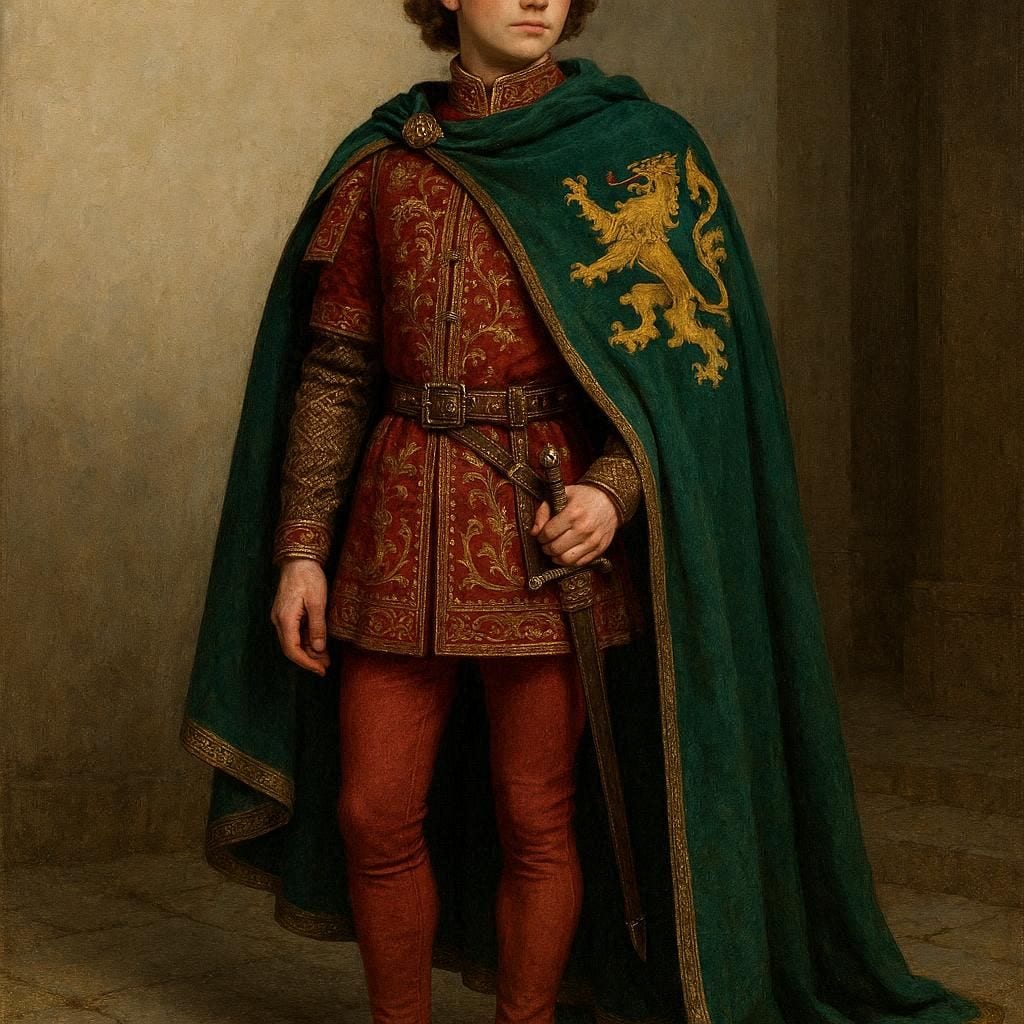
The clothing of a medieval prince was designed to convey rank, inheritance, and political significance. As the future king, a prince had to be instantly identifiable in any gathering.
Typical clothing included:
- Embroidered tunics and doublets
- Leggings, hose, and tailored trousers
- Cloaks with heraldic colours identifying the royal house
- Decorative belts, clasps, and miniature weapons
- Fine shoes or riding boots
Although less extravagant than a king’s regalia, a prince’s clothing was still richer than anything worn by the nobility.
👑 Royal Clothing of a Prince
Explore how medieval princes dressed to reflect their status, wealth, and future role as rulers. From embroidered tunics and heraldic cloaks to rich fabrics and ceremonial accessories.
Evolution of the Prince’s Clothing
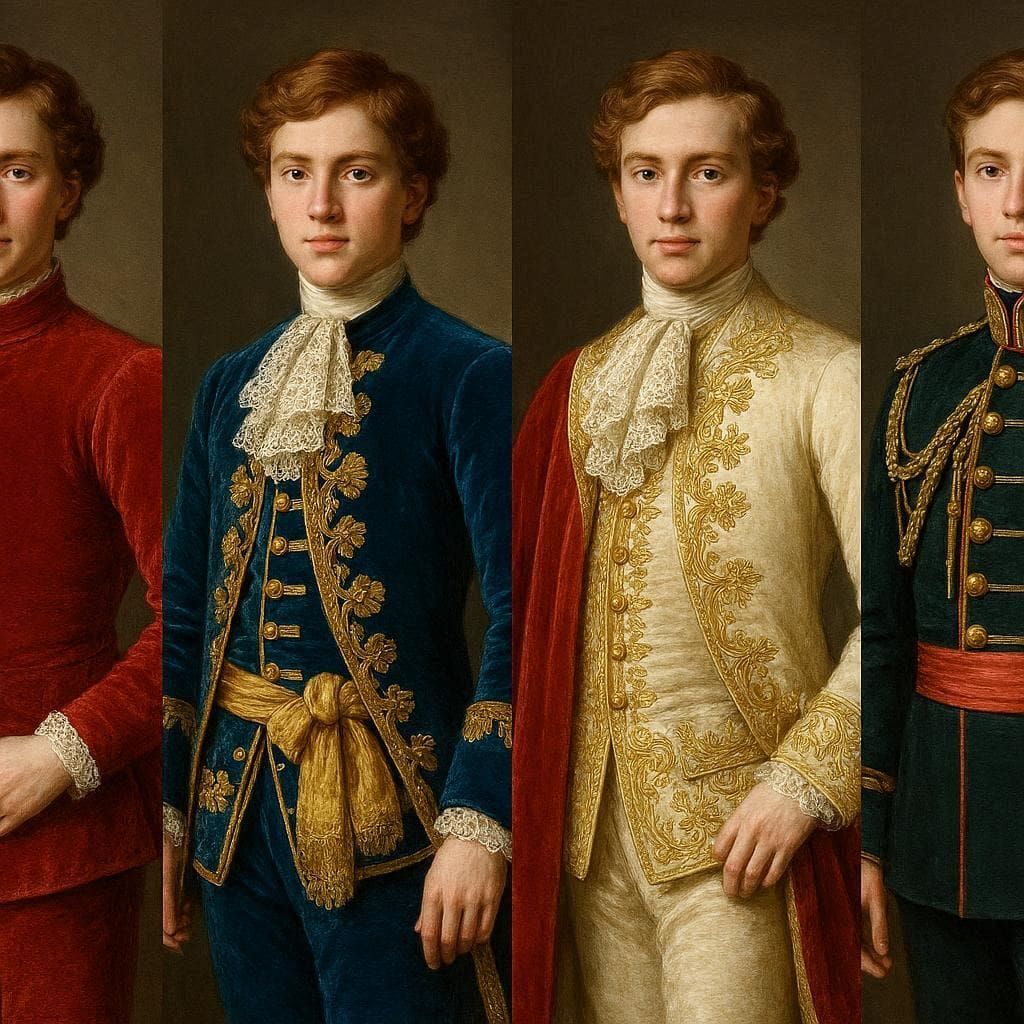
Young princes in the early Middle Ages often wore clothing similar to noble boys. But by the 12th century, court culture distinguished princes through:
- Tailored garments
- Distinct colours reserved for heirs
- Luxurious trims and lacing
- Formal court dress for ceremonies
- Military attire that symbolised future leadership
By the late Middle Ages, princes were often dressed in fashions similar to adult monarchs, reinforcing dynastic continuity.
Royal Clothing of a Princess
The clothing of a medieval princess evolved from modest, draped dresses to sophisticated gowns rivaling those of queen consorts. Princesses were often central to diplomacy through marriage, so their clothing projected:
- Wealth
- Cultural refinement
- Dynastic prestige
- Virtue and femininity
Common features included:
- Silk and velvet gowns
- Embroidered tunics
- Jewelled belts and brooches
- Decorative veils, caps, or elaborate hairstyles
- Fur-lined cloaks for ceremonies
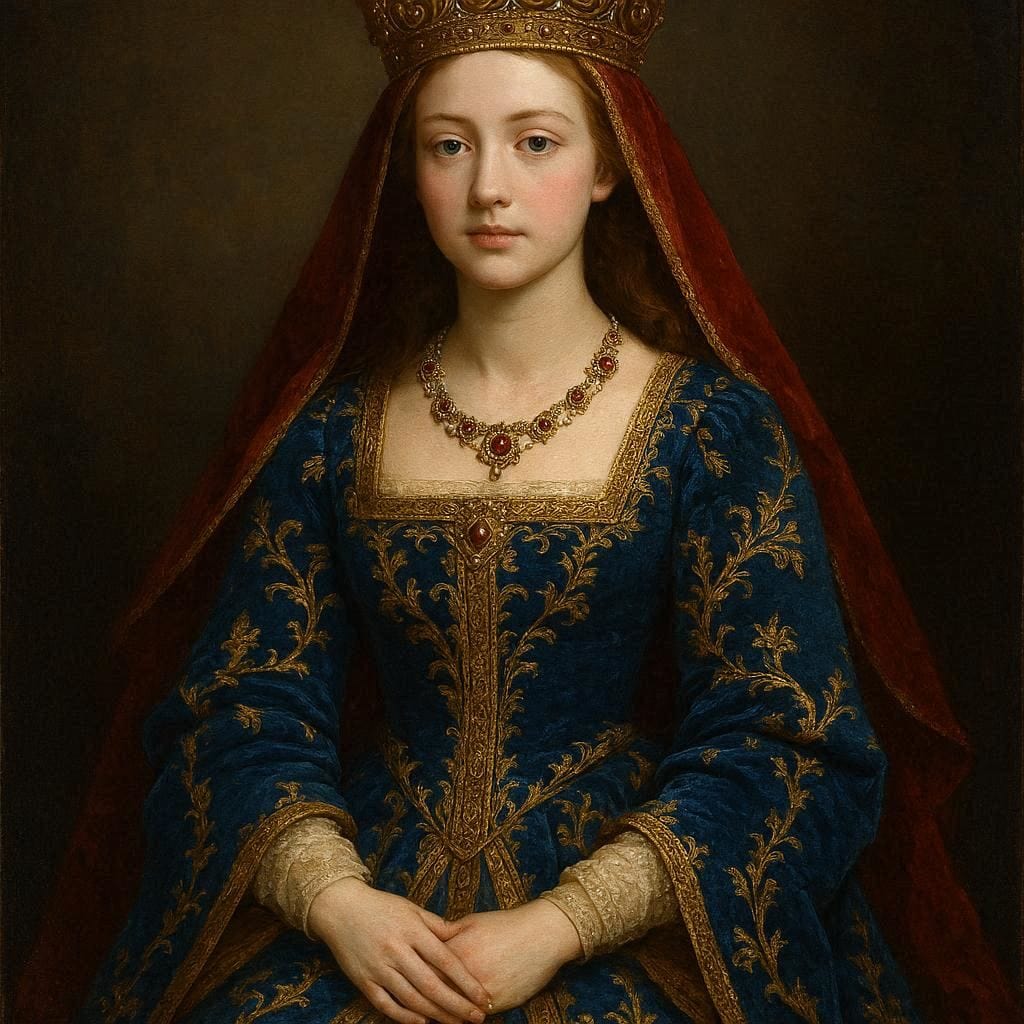
👑 Medieval Princess Clothing
Discover how medieval princesses dressed, the luxurious fabrics they wore, and the symbolism behind their elaborate royal attire.
Evolution of the Princess’s Clothing
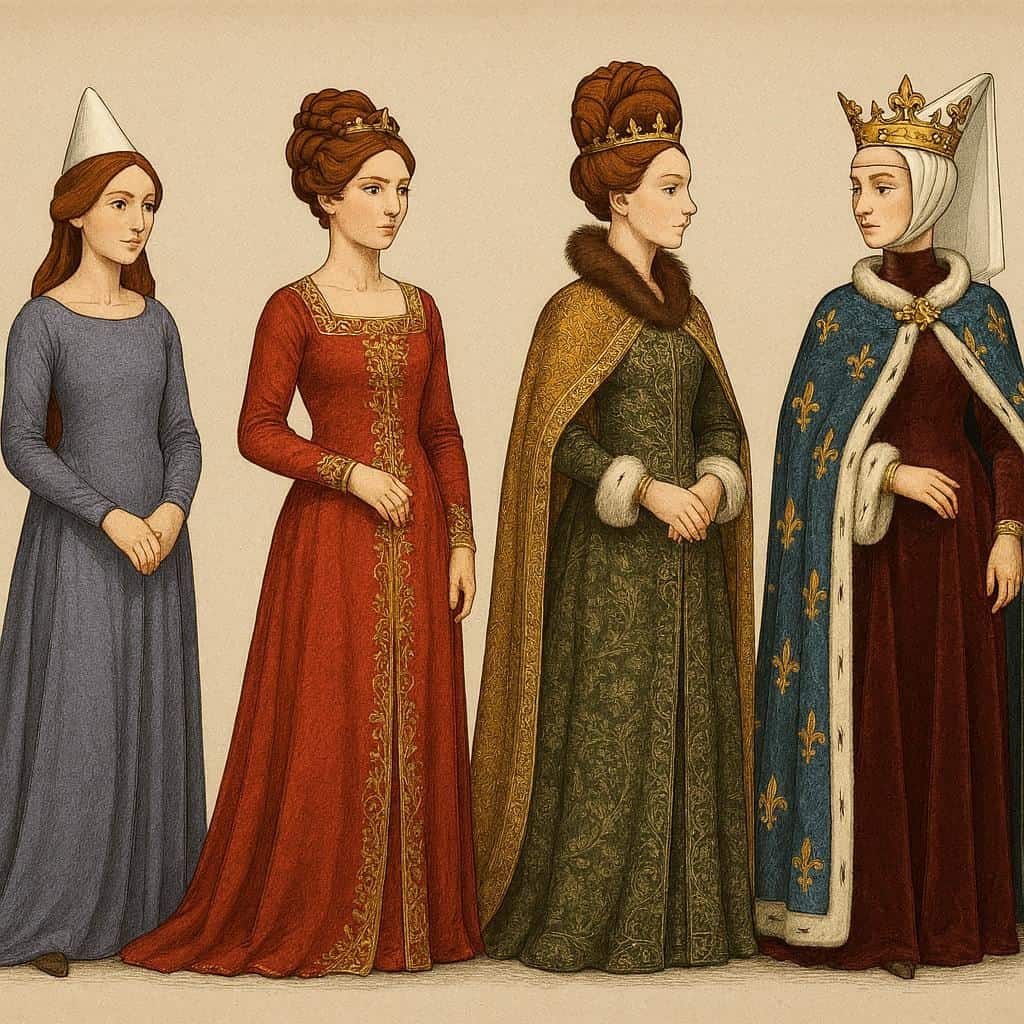
Early medieval princesses dressed simply, often wearing loose gowns and modest veils influenced by Christian modesty. Over time, as courts became wealthier and more cosmopolitan:
- Dresses became fitted and richly decorated
- Hairstyles grew more elaborate
- Silks, furs, and imported brocades became common
- Distinctive cloaks and headwear marked royal status
By the late medieval period, princesses wore attire nearly as elaborate as queens—especially for marriage negotiations or diplomatic events.
🌟 Did You Know? Why Royal Clothing Became So Ornate
Medieval royal clothing did far more than display wealth — it acted as a powerful political tool. As European courts grew more sophisticated, kings and queens relied on increasingly elaborate garments to communicate legitimacy, divine favour, and dominance over rivals.
- Expanding trade routes brought luxury fabrics from Byzantium, Italy, and the Silk Road.
- Stronger monarchies created formal court cultures where visual splendour signalled authority.
- Wealth from taxation, feudal revenues, and crusades allowed rulers to display immense prestige.
- Royal clothing became a form of political theatre, reinforcing power through visual symbolism.
- Competition between dynasties encouraged even more elaborate embroidery, jewels, and regalia.
Clothing as a Window Into Medieval Royal Power
Royal clothing in the medieval world was far more than decoration—it was a carefully crafted language of power, communicating legitimacy, hierarchy, and cultural identity at a glance. The evolving garments of kings, queens, princes, and princesses reflected the political transformations of the Middle Ages, from warrior-led tribal kingdoms to sophisticated courts connected by global trade.
Through silks, velvets, furs, jewels, and heraldry, medieval rulers projected authority, wealth, and divine favour, shaping the appearance of aristocratic society for centuries to come. Today, these garments offer an invaluable window into the social order, values, and ambitions of medieval Europe’s ruling elite—reminding us how deeply clothing was woven into the fabric of power.

❓ Frequently Asked Questions: Medieval Royal Clothing
How did royalty obtain luxury fabrics?
Medieval kings and queens imported silk, brocade, and fine wools through Italian traders, Byzantine workshops, and even Silk Road merchants. These materials were extremely expensive and legally restricted to elites.
Why were sumptuary laws created?
Sumptuary laws prevented commoners from imitating the nobility. Clothing was a strict social marker, and monarchs enforced it to maintain hierarchy and control.
Were medieval crowns worn daily?
No — crowns were ceremonial. Kings usually wore richly embroidered caps or circlets for daily court life, reserving heavy crowns for coronations, feasts, and state events.
What colours were associated with royalty?
Purple, deep crimson, and gold were classic royal colours — all extremely costly. Dyes like Tyrian purple were so rare only kings could legally wear them.
🧠 Medieval Royal Clothing Knowledge Quiz
Choose the best answer for each question, then click Submit to see your score.
📜 Glossary of Medieval Royal Clothing
Surcoat – A long outer garment worn over a tunic, often displaying heraldic symbols.
Regalia – Royal ceremonial objects such as crowns, sceptres, orbs, and jewelled swords.
Bodice – A fitted upper garment worn by noblewomen, often richly decorated.
Kirtle – A medieval gown worn under a surcoat; used by queens and noblewomen.
Ermine – Luxurious white fur with black-tipped tails; reserved for kings and queens.
Houppelande – A voluminous robe with long, flowing sleeves, fashionable among royalty.
Sumptuary Laws – Regulations controlling who could wear certain fabrics, colours, or jewellery.
Circlet – A light, crown-like headpiece worn for daily court duties.
📚 References & Further Reading
Primary sources, scholarly studies, and authoritative history references used in this article.
- Barber, Richard — The Knight and Chivalry (Boydell Press). Provides insight into aristocratic fashion, court culture, and ceremonial dress.
- Newton, Stella Mary — Fashion in the Age of the Black Prince (The Boydell Press). A detailed analysis of 14th-century clothing including royal garments.
- Frances & Joseph Gies — Life in a Medieval Castle / Life in a Medieval City. Explores clothing, fabrics, materials, and social distinctions in medieval dress.
- Owen-Crocker, Gale R. — Dress in Anglo-Saxon England. An authoritative source on early medieval clothing and textile culture.
- Medieval Chronicles Online
- British Library – Medieval Manuscripts Collection. Offers visual references to royal garments, coronation robes, and heraldic surcoats.
- Victoria & Albert Museum — Textile and Costume Archive. A major source for surviving medieval fabrics, embroidery, and tailoring methods.
- National Archives UK — Sumptuary Law Records. Documents defining legally restricted materials and colours in royal clothing.