
Medieval chronicles remain some of the most important historical records ever created. Written by monks, scholars, and court historians, these works documented wars, royal successions, political upheavals, religious change, and everyday fears about the unknown.
Without them, much of what we understand about the Middle Ages would be lost.
While hundreds of chronicles were produced across Europe, a handful stand out for their depth, influence, and historical value. These texts not only recorded history — they helped shape it.
If you are new to the subject, consider starting with our complete guide to medieval chronicles, which explains how these records were written and why historians still rely on them today.
Some of the most important medieval chronicles include the Anglo-Saxon Chronicle, Bede’s Ecclesiastical History of the English People, the Chronicles of Froissart, and the Chronicle of Matthew Paris. These works provide firsthand insight into major events, rulers, wars, and religious life during the Middle Ages and remain essential sources for modern historians.
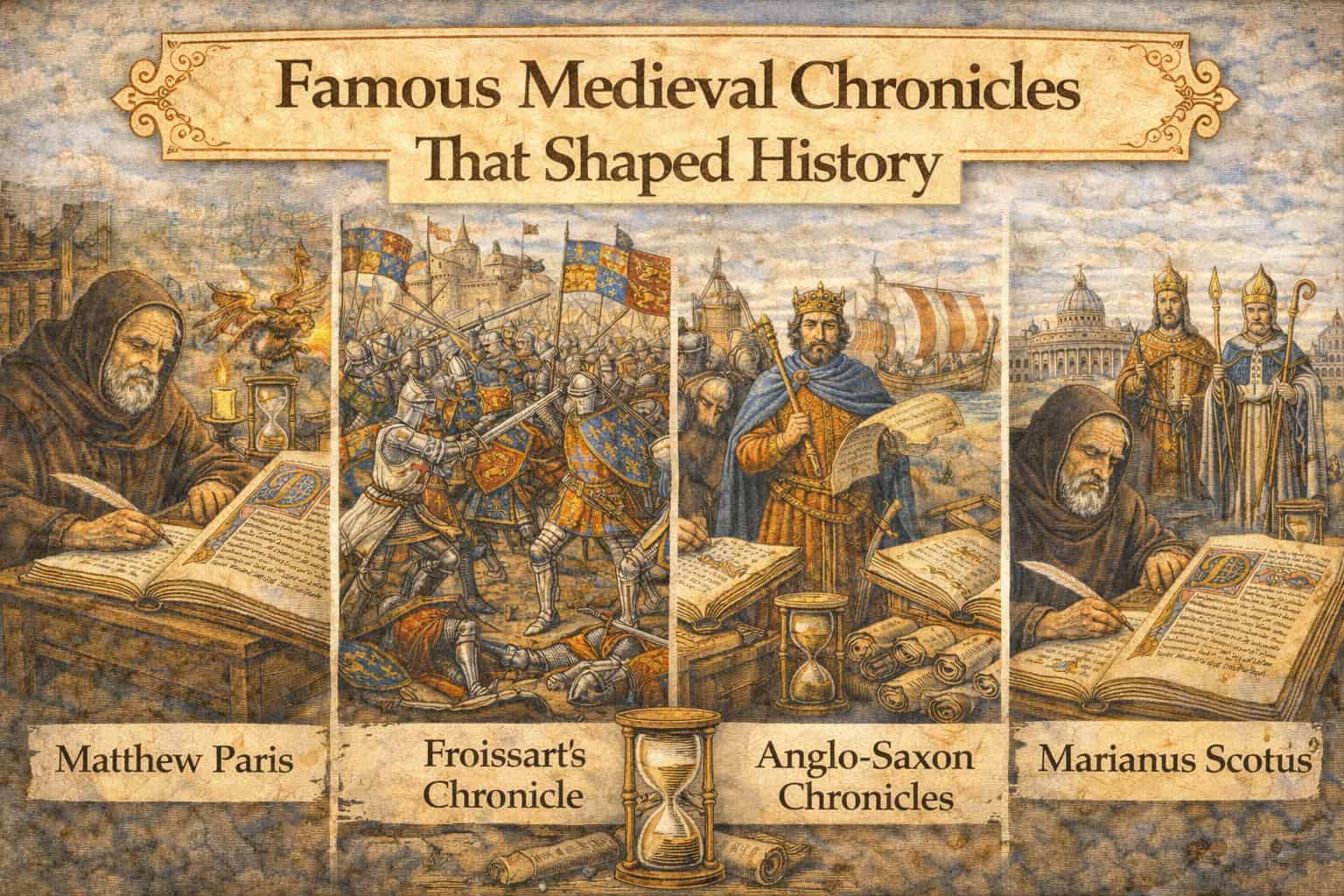
What Makes a Chronicle “Famous”?
Not every medieval chronicle survived the passage of time. Those that did often earned recognition because they:
- documented major turning points
- covered long periods
- offered unusual detail
- influenced later historians
- preserved perspectives unavailable elsewhere
Fame, in this context, is less about popularity and more about historical importance.
Many of these works became foundational sources for entire regions.
Start with our complete guide to medieval chronicles to learn what they are, who wrote them, how reliable they are, and why these historical records remain essential for understanding the medieval world.
Read: Medieval Chronicles — Definition, History, and ImportanceThe Anglo-Saxon Chronicle
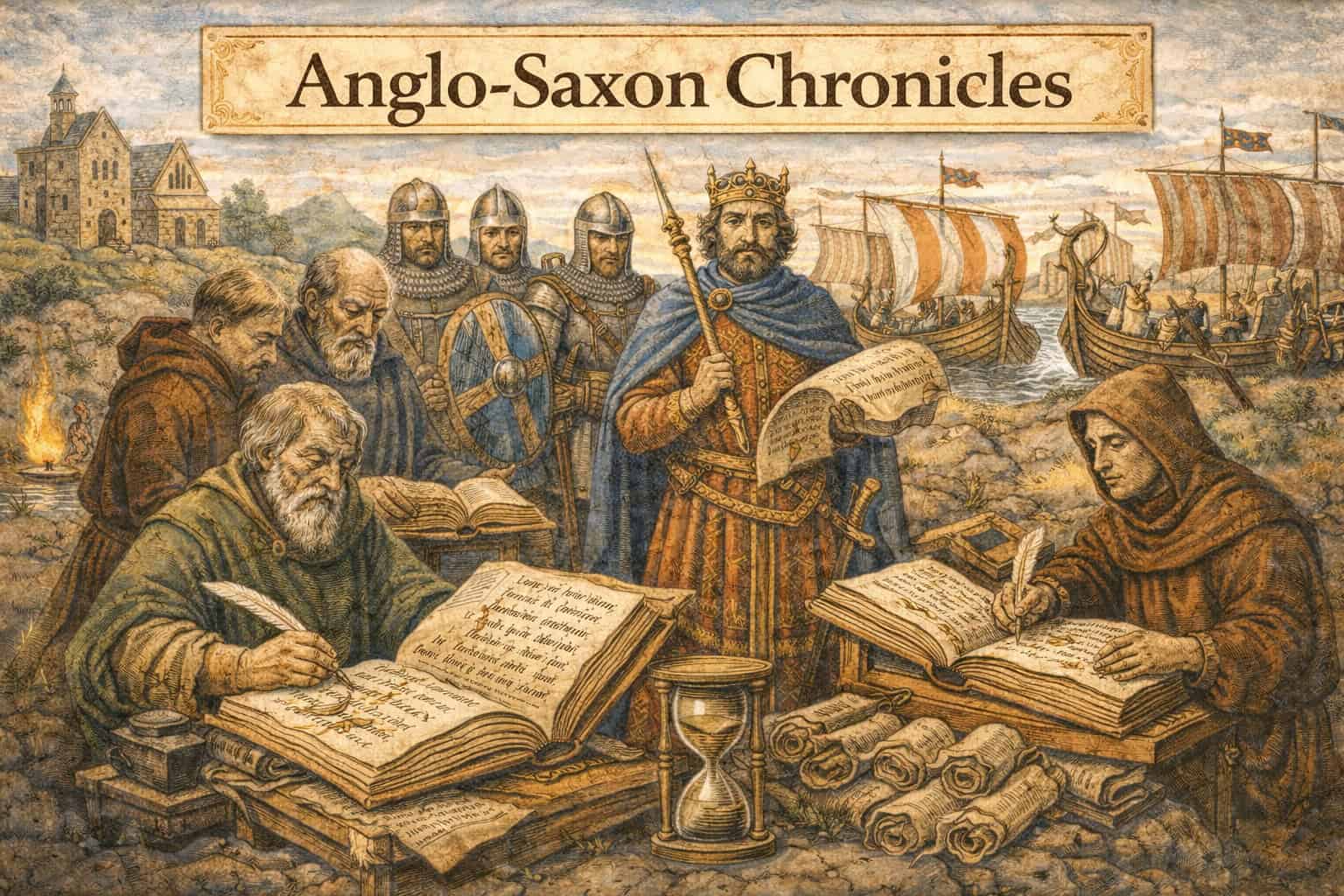
Few historical texts have shaped our understanding of early England more profoundly than the Anglo-Saxon Chronicle.
Begun in the late 9th century, likely during the reign of Alfred the Great, the chronicle was expanded by multiple scribes over generations. Rather than existing as a single document, it survives in several manuscripts — each with its own variations.
This layered authorship provides historians with rare insight into how medieval history was recorded and interpreted over time.
The chronicle documents major events such as:
- Viking invasions
- shifting kingdoms
- royal successions
- battles for territorial control
It also preserves one of the most important accounts of the Norman Conquest in 1066.
Without this text, early English history would be dramatically less clear.
🛡️ Froissart’s Chronicles
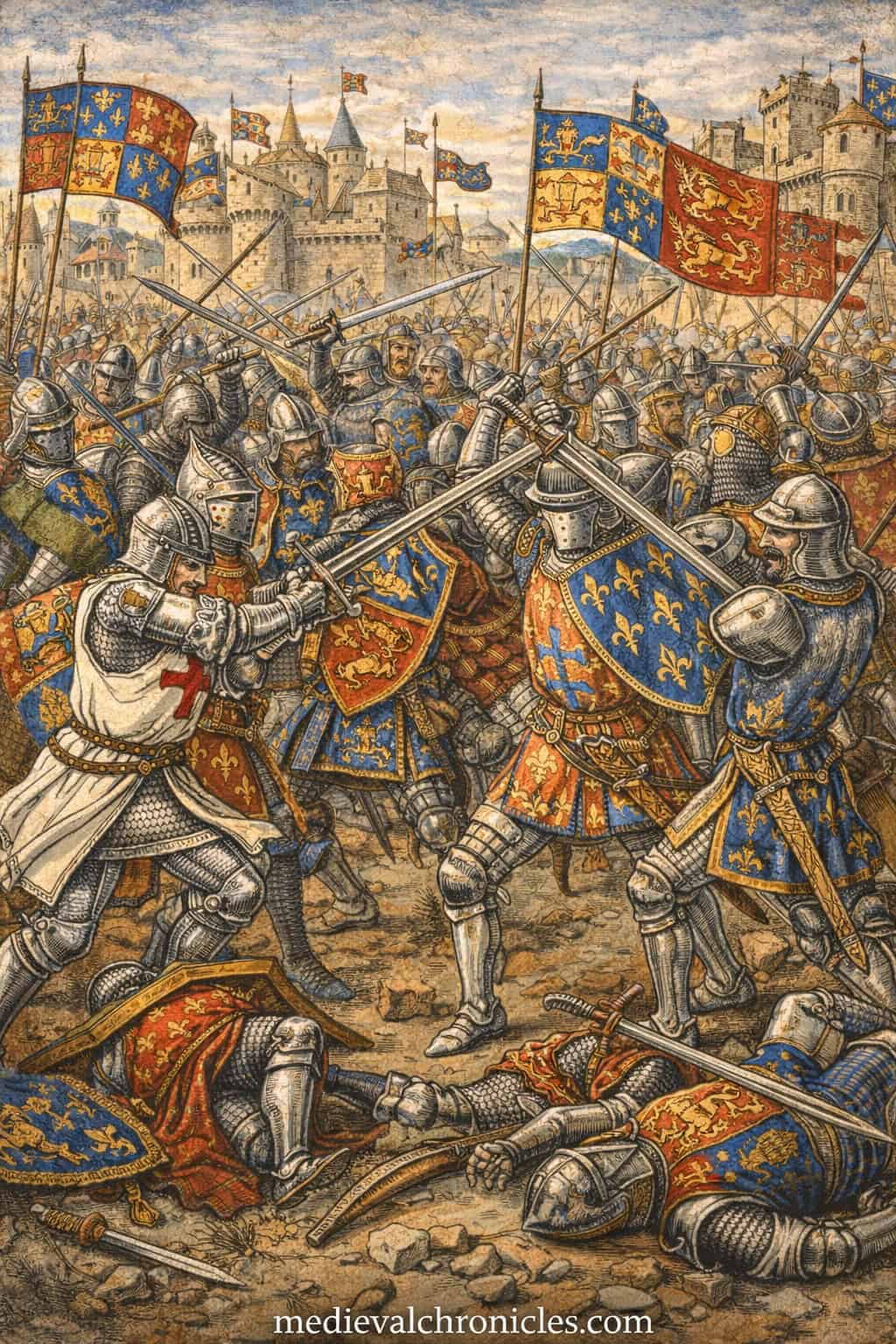
Jean Froissart’s writings are among the most vivid narrative sources from the later Middle Ages. Composed during the 14th century, his chronicles focus heavily on the Hundred Years’ War, capturing the political tensions and battlefield drama between England and France.
What makes Froissart especially valuable is his storytelling style. Unlike many earlier chroniclers who wrote brief yearly entries, he crafted detailed narratives filled with personalities, motives, and moments of tension — bringing medieval warfare and aristocratic life into sharp focus.
However, historians approach Froissart with measured caution. Because he often relied on noble patrons, his accounts can reflect the worldview of the medieval elite. Even so, the richness of his descriptions makes his chronicle indispensable for understanding the political and cultural landscape of the late Middle Ages.
The Chronicle of Matthew Paris
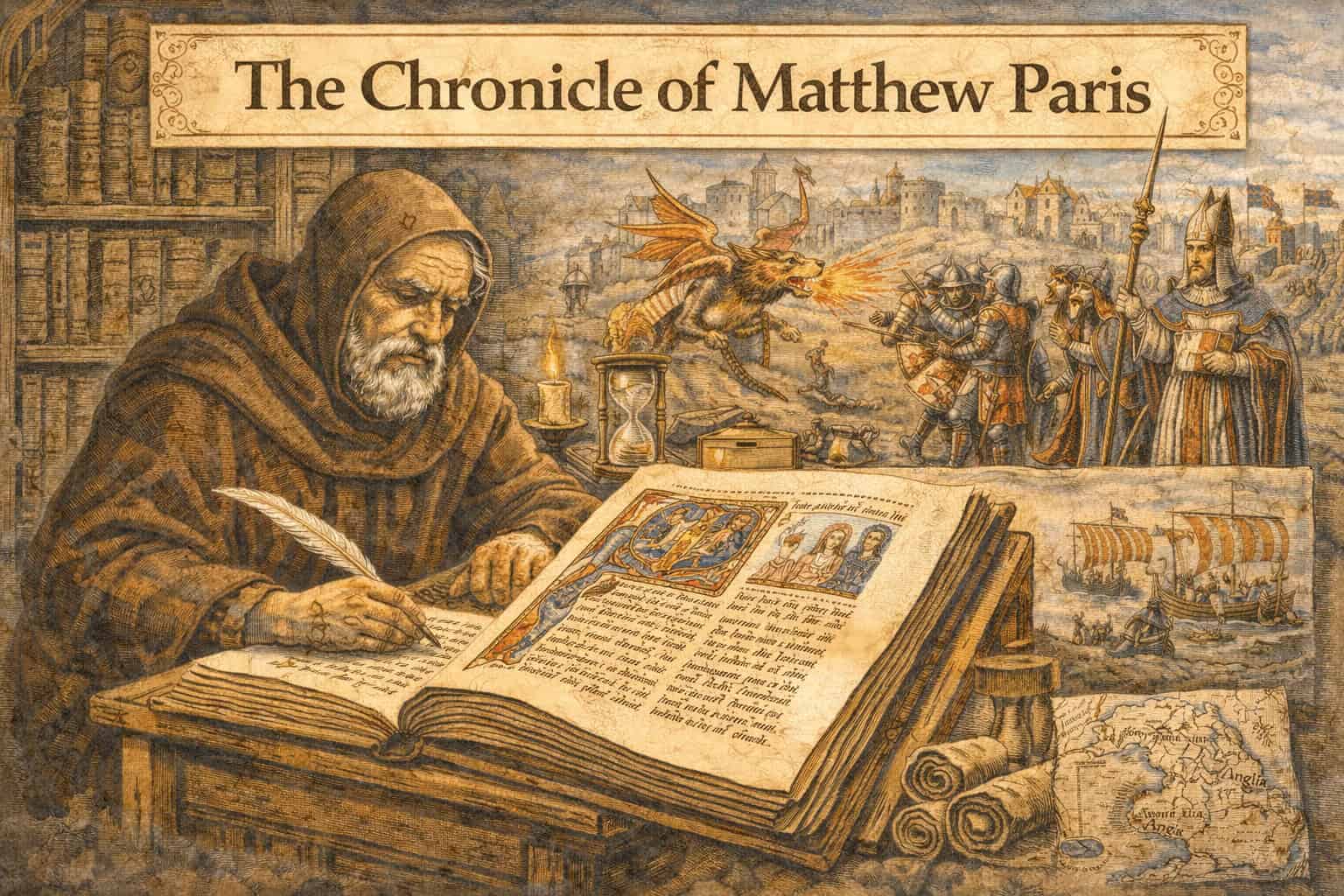
Matthew Paris, a 13th-century monk based at St Albans Abbey, produced one of the most detailed chronicles of medieval England.
What distinguishes Paris from many contemporaries is his observational voice. He did more than list events — he sometimes questioned them.
His writings cover:
- royal policy
- church politics
- foreign affairs
- social tensions
Paris even included maps and illustrations, demonstrating an unusually ambitious approach to historical recording.
Scholars often praise his willingness to critique authority, a trait that was far from universal in medieval writing.
As a result, his chronicle offers both historical information and glimpses of independent thought within monastic scholarship.
Orderic Vitalis and the Ecclesiastical History
Orderic Vitalis, an Anglo-Norman monk writing in the early 12th century, created a sweeping historical work that blended chronicle tradition with deeper narrative reflection.
His Ecclesiastical History spans decades of political and religious transformation following the Norman Conquest.
Orderic’s perspective is especially valuable because he lived within a world still adjusting to dramatic cultural change. His writings capture tensions between Norman rulers and English traditions while documenting the evolving structure of medieval society.
Historians often regard his work as a bridge between simple chronological recording and more interpretive historical writing.
⛪ Thietmar of Merseburg’s Chronicle
Less widely known to general readers but highly respected among scholars, Thietmar of Merseburg’s chronicle provides crucial insight into Central Europe during the 10th and early 11th centuries.
As a bishop, Thietmar wrote with particular attention to the relationship between political authority and the Church, offering a perspective that helps historians better understand the structure of power in medieval Europe.
Because sources from this region are comparatively scarce, Thietmar’s work carries enormous historical weight. It serves as a powerful reminder that medieval history was never confined solely to Western Europe, but was shaped by complex political and religious developments across the continent.
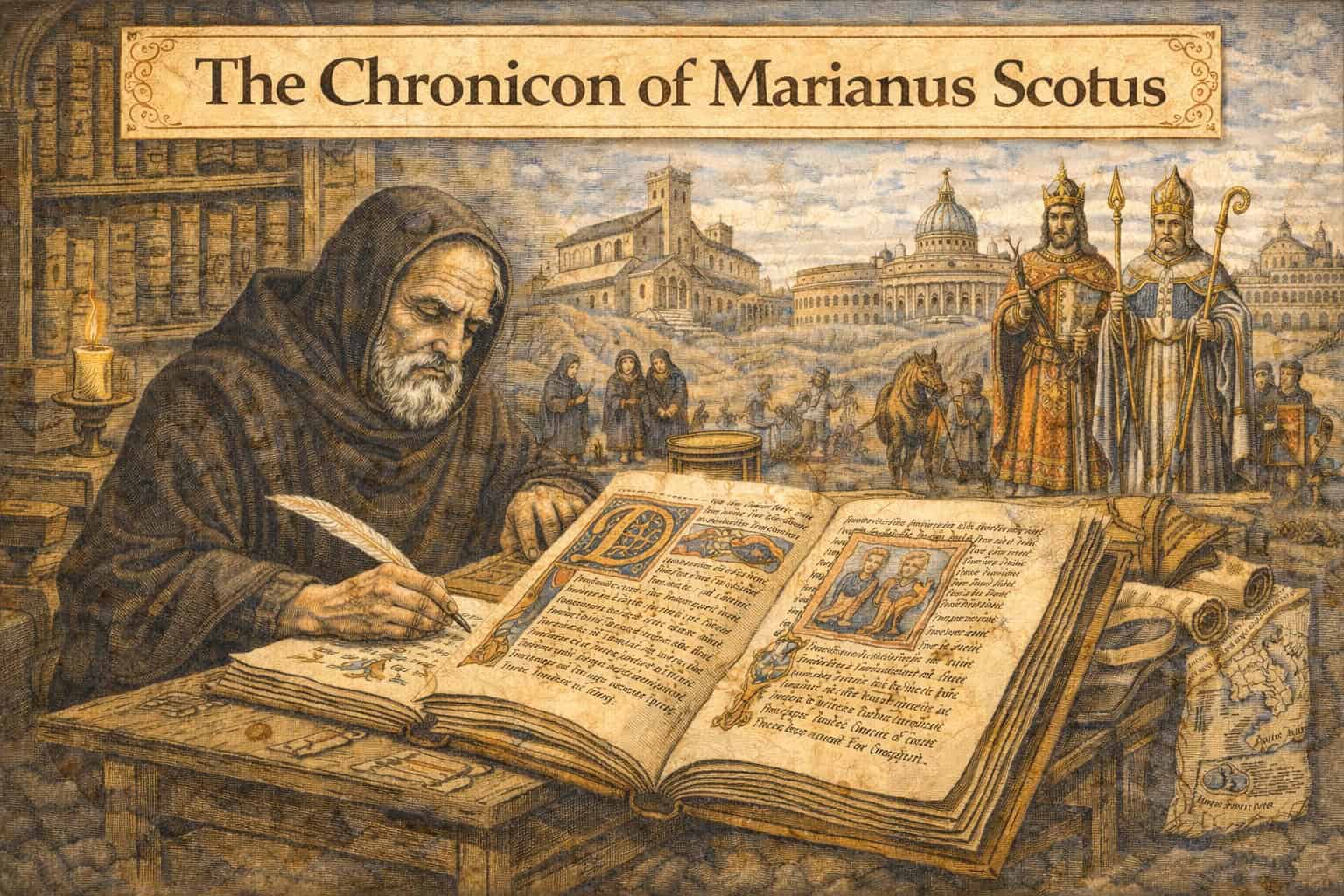
The Chronicon of Marianus Scotus
Marianus Scotus, an Irish monk writing in the 11th century, became known for his ambitious attempt to recalculate the chronology of world history.
Believing earlier timelines contained errors, he carefully reworked dates in an effort to create a more accurate historical framework.
Although not all of his conclusions endured, his dedication reflects something important:
Medieval scholars were not passive recorders — many actively questioned inherited knowledge.
His chronicle influenced later historical calculations and demonstrates the intellectual seriousness present within monastic culture.
⭐ Why These Chronicles Still Matter
These works endure not simply because they are old, but because they preserve perspectives that might otherwise have vanished from history. Without medieval chronicles, much of our understanding of the Middle Ages would be incomplete.
Through these records, historians are able to reconstruct major aspects of medieval society and trace how civilizations evolved over time.
Chronicles also reveal what medieval writers believed was worth remembering — offering powerful insight into how societies define themselves. Even their biases are informative, helping modern scholars better understand propaganda, loyalty, fear, and the political pressures that shaped historical narratives.
A Window Into the Medieval Mind
Reading medieval chronicles is not just an exercise in tracking events.
It is an encounter with how people once understood the world.
Comets signaled divine warning. Victories reflected heavenly favor. Disasters invited spiritual reflection.
To modern readers, these interpretations may seem unfamiliar — but they were entirely logical within medieval frameworks of belief.
Chronicles therefore function as both historical records and psychological artifacts.
They show us not only what happened, but how it was experienced.
Did Chroniclers Know Their Work Would Last?
Probably not.
Many wrote for their own communities, future monks, or regional leaders. Yet their efforts became bridges across centuries.
Every surviving chronicle represents an act of preservation — a decision that certain events should not fade into silence.
Because of those decisions, the medieval world remains far more visible than it otherwise would be.
Final Thoughts
Famous medieval chronicles form the backbone of historical knowledge about the Middle Ages. While archaeology and modern scholarship continue to refine our understanding, these texts remain foundational.
They remind us that history survives only when someone chooses to record it.
And thanks to the chroniclers, voices from nearly a thousand years ago still speak to us today.
Famous Medieval Chronicles — FAQs
What is the most famous medieval chronicle?
The Anglo-Saxon Chronicle is often considered the most famous. Compiled over several centuries, it documents early English history including invasions, royal successions, and political change.
Why is Bede important to medieval history?
Bede, an 8th-century monk, wrote the Ecclesiastical History of the English People. His work helped establish a structured timeline of early English Christianity and remains one of the most reliable sources for the period.
What did Froissart record in his chronicles?
The Chronicles of Jean Froissart vividly describe the events of the Hundred Years’ War, focusing on battles, diplomacy, and the culture of knighthood in 14th-century Europe.
Who was Matthew Paris?
Matthew Paris was a 13th-century English monk whose detailed chronicle recorded political intrigue, royal policy, and international events with unusual depth and commentary.
Are medieval chronicles accurate?
While invaluable, chronicles often reflect the opinions and loyalties of their authors. Historians cross-reference multiple sources to separate factual reporting from interpretation or bias.
Why do historians still study these chronicles?
Famous chronicles provide near-contemporary descriptions of medieval politics, warfare, religion, and society — preserving details that might otherwise have been lost to history.