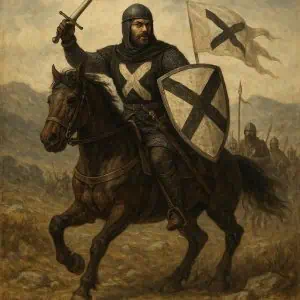
Sir Henry Percy (1364–1403), famously known as “Henry Hotspur,” was one of the most distinguished and daring knights of medieval England. A member of the powerful Percy family of Northumberland, Hotspur earned his legendary reputation through tireless service in England’s military campaigns during the Hundred Years’ War and in battles along the Scottish border. His fearless energy, quick temper, and bold leadership in combat inspired both admiration and fear — traits that gave rise to his enduring nickname, “Hotspur.” Remembered as a symbol of chivalric courage and rebellious spirit, Sir Henry Hotspur remains one of the most iconic figures in English medieval warfare.
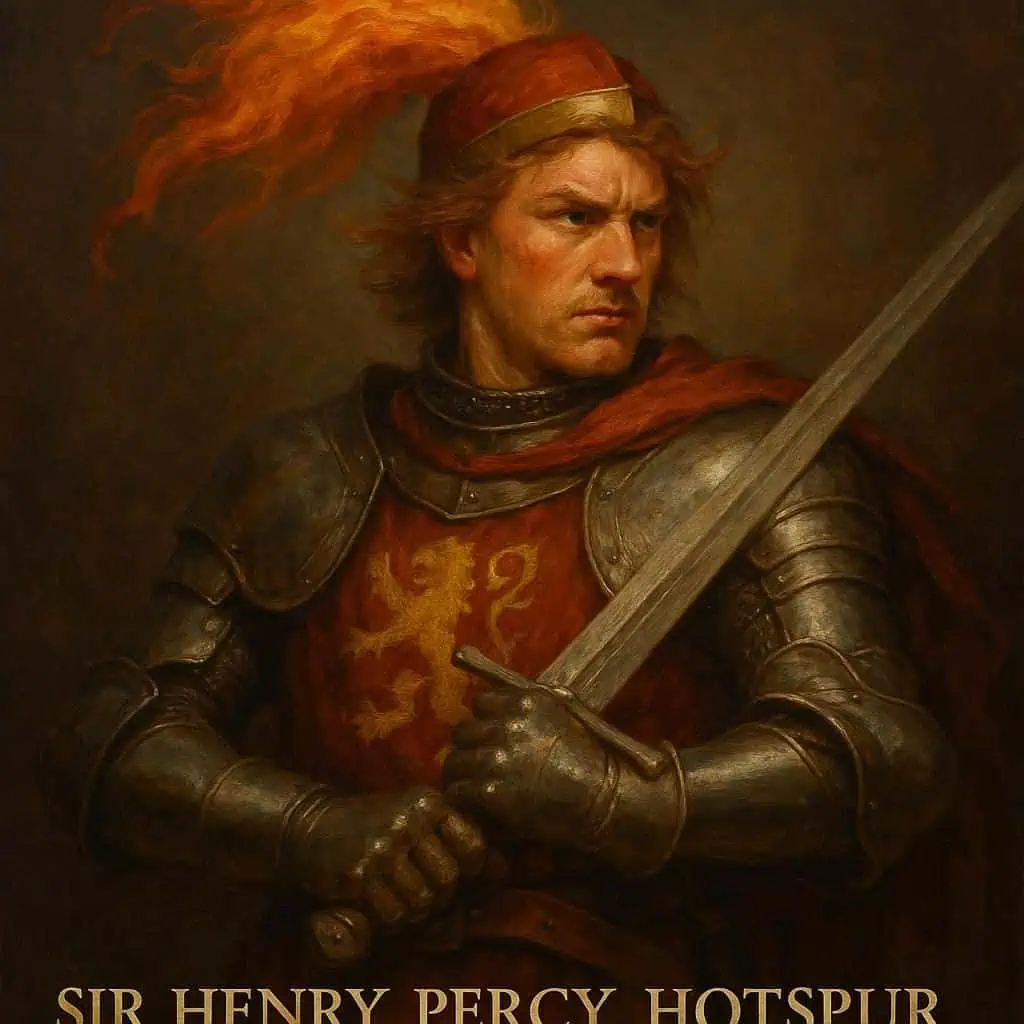
Sir Henry Percy, known throughout England as “Henry Hotspur,” earned his fame through extraordinary military skill, courage, and leadership on the battlefield. His relentless drive and success in medieval warfare brought him honors, land, and recognition from successive English monarchs, solidifying his status as one of the era’s most formidable knights.
However, by 1403, tensions between the powerful Percy family and King Henry IV erupted into open conflict. Feeling betrayed and politically sidelined, Hotspur led a rebellion against the crown, rallying northern forces in defiance of royal authority. The uprising ended in tragedy at the Battle of Shrewsbury (1403), where Henry Hotspur Percy was slain in combat — a dramatic fall that cemented his legacy as both a heroic warrior and a symbol of noble defiance in medieval English history.
Military Career
In 1385 and over the subsequent years, Percy played a significant role in English campaigns into Scottish border regions.
It was his propensity to launch quick and fierce attacks on Scottish borders that Percy earned the nickname “Hotspur” from his Scottish enemies.

In 1386, he went to France to participate in the ongoing Anglo-French military conflict and led many attacks against the French.
📜 Did You Know? Tales of Sir Henry “Hotspur” Percy
- Sir Henry “Hotspur” Percy earned his fiery nickname from the Scottish knights he fought, who admired how quickly he would spur his horse into battle.
- Known for his unshakable loyalty and valor, Hotspur often led his men from the front lines — a mark of true medieval chivalry and courage.
- His death at the Battle of Shrewsbury (1403) turned him into a national legend, inspiring tales of honor, defiance, and bravery throughout medieval England.
The following year, he led another attack against the French as the commander of a naval army trying to relieve the English garrison at Brest. Richard II acknowledged Percy’s military achievements by making him a Knight of the Garter in 1388.

Political Career
During the reign of Richard II, Percy rapidly rose in political authority on the basis of his military achievements. He represented Richard II in a 1393 expedition to Cyprus and was subsequently granted a governorship in the Duchy of Aquitaine.

In 1399, Percy made a fateful decision by siding with Henry IV who had returned from exile to lay claim to the English throne and depose Richard II.
After Henry succeeded in gaining the crown, Percy received lands, grants, and other royal favors further augmenting his political power.

Until his rebellion in 1403, Percy received a number of military and political responsibilities along the Scottish border and in Wales, making him a formidable authority in both regions.
‘Henry Hotspur Percy’Interesting Facts
- Henry Hotspur Percy was one of the most successful English military leaders of the 14th century.
- He was named “Hotspur” by the Scots after he successfully launched rapid and fierce raids into Scottish border regions.
- He rebelled against Henry IV in 1403 but the rebellion failed after he was killed on the battlefield.
- He died at the Battle of Shrewsbury in 1403, fighting against the army of the Prince of Wales.
Rebellion against Henry IV
Although Percy was lavishly granted a number of favors by Henry IV and was one of the most powerful noblemen in England at the time, many vital disagreements between him and the English monarch arose.
These eventually erupted in a rebellion launched by the Percy family in 1403 near Shrewsbury.
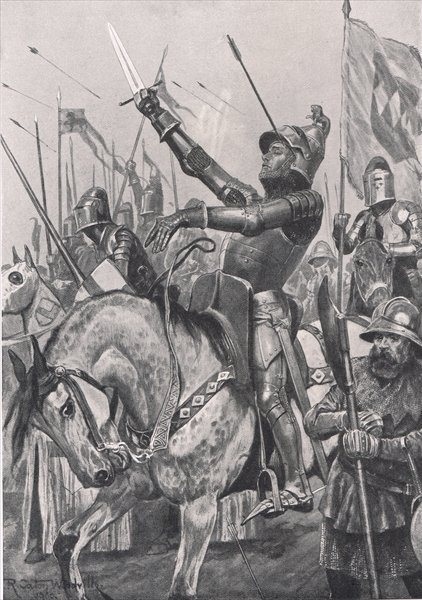
Percy led a sizable army together with his uncle but his father’s army was slow to join him. Consequently, he had to face the much larger army of the Prince of Wales. In the ensuing Battle of Shrewsbury, Percy was killed in the thick of combat.
His death struck a critical blow to the morale of his troops who then fled the battlefield, deciding the conflict in favor of Henry IV.
Depiction by Shakespeare
The character of Henry Hotspur Percy was particularly popularized in the subsequent centuries by his portrayal in Shakespeare’s “Henry IV”.
Although embellished with many fictional elements, the character was depicted as being a formidable warrior who fell in 1403 at the hands of the Prince Of Wales, this latter being a fictional invention.

❓ Frequently Asked Questions About Sir Henry “Hotspur” Percy
1. Who was Sir Henry “Hotspur” Percy?
Sir Henry Percy (1364–1403), nicknamed “Hotspur,” was an English knight and nobleman celebrated for his military valor and leadership during the late Middle Ages.
2. Why was he called “Hotspur”?
He gained the name “Hotspur” from his Scottish enemies, who admired his fiery courage and aggressive tactics in constant border wars.
3. What wars did Hotspur fight in?
Hotspur took part in the **Hundred Years’ War** against France and numerous **Scottish campaigns**, earning a reputation as one of England’s finest soldiers.
4. What was his relationship with King Henry IV?
Although once loyal, Hotspur later rebelled against **King Henry IV**, opposing royal policies and seeking greater autonomy for the Percy family.
5. What happened at the Battle of Shrewsbury (1403)?
Hotspur led rebel forces against the king’s army but was **killed in battle**, ending the revolt and marking his fall from grace.
6. How did Shakespeare portray Hotspur?
In *Henry IV, Part 1*, **William Shakespeare** immortalized him as a brave yet impetuous hero — a rival to Prince Hal (future Henry V).
7. Why is Sir Henry “Hotspur” Percy remembered today?
As a symbol of **chivalry, defiance, and honor**, his legacy lives on through history, literature, and even in the name of **Tottenham Hotspur F.C.**
⚔️ Test Your Knowledge: Sir Henry “Hotspur” Percy Quiz