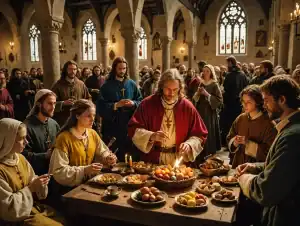
Life for a medieval peasant child was shaped by work, family responsibility, and the rhythms of the agricultural year. Unlike the romantic images often associated with the Middle Ages, childhood for most villagers involved practical labor from an early age.
Children played an essential role in sustaining the household. Whether gathering firewood, tending animals, assisting in the fields, or learning domestic skills, their contributions helped ensure the survival of the family.
This guide explores what a typical day might have looked like for a peasant child, revealing both the hardships and the small moments of community that defined everyday medieval village life.

🌾 A Day in the Life of a Medieval Peasant’s Child — At a Glance
Daily life for a medieval peasant child followed the rhythm of the seasons and the needs of the household. From morning chores and fieldwork to simple meals and evening prayer, childhood was shaped by work, community, and survival.
- Morning: Fetching water, feeding animals, and helping prepare the home for the day.
- Work & Learning: Skills were taught through labor—planting, harvesting, caring for tools and livestock.
- Food: Simple staples like porridge, bread, beans, and seasonal vegetables.
- Village Life: Market days, craftspeople, and shared news reinforced community ties.
- Evening: Supper, stories by the hearth, and prayers before sleep.
This guide walks through a full day—from dawn to dusk—showing how childhood worked inside the wider world of medieval peasant life.
What Was Childhood Like in the Middle Ages?
For most medieval families, survival depended on cooperation. Childhood was not viewed as a long protected stage of life but as preparation for adulthood. By the age of seven or eight, many children were already trusted with meaningful responsibilities.
Education was usually informal unless a child entered religious training. Instead, knowledge passed from parents to children through observation and practice.
1. Rising at Dawn
A peasant child’s day typically began at sunrise. Without artificial lighting, households followed natural daylight patterns.
Morning tasks often included:
- Fetching water
- Feeding chickens or pigs
- Collecting eggs
- Helping prepare the hearth
Early discipline ensured that essential work was completed before the long hours in the fields.

2. A Simple Breakfast
Meals were modest and depended heavily on local harvests.
Typical foods included:
- Porridge made from oats or barley
- Coarse bread
- Milk when available
- Seasonal fruit
Meat was rare for most peasants and usually reserved for special occasions.

3. Learning Through Labor
Rather than attending school, most peasant children learned by assisting their parents.
Common responsibilities:
- Scaring birds from crops
- Herding animals
- Gathering kindling
- Carrying tools
These tasks taught practical survival skills essential for adulthood.

4. Working the Fields
Agriculture dominated medieval life, and children contributed whenever physically able.
During planting or harvest seasons, even younger children might help with lighter duties such as bundling grain or collecting vegetables.
The success of the harvest often determined whether a family would face hunger during winter.
5. Informal Education
Although literacy was uncommon among peasants, education still occurred daily.
Children learned:
- Farming cycles
- Weather patterns
- Craft skills
- Religious traditions
This knowledge ensured continuity across generations.
6. Midday Rest
Work paused briefly around midday.
Lunch typically consisted of bread, cheese, or vegetable stew.
Despite demanding routines, children often found moments to play simple games, strengthening social bonds within the village.
⚖️ Gender Roles Began Early
Medieval society maintained clear divisions of labor, and children were prepared from a young age for the responsibilities they would carry into adulthood.
Girls Frequently Learned
- Cooking
- Spinning
- Sewing
- Household management
Boys Often Assisted With
- Plowing
- Woodcutting
- Animal care
- Repair work
These expectations ensured that most children entered adulthood with the practical skills needed to support their families and sustain village life.
8. Village Community Life
Peasant families rarely lived in isolation.
Children grew up surrounded by:
- Traveling merchants
- Parish gatherings
- Seasonal festivals
- Market days
The village formed both a workplace and a social network.

9. Faith and Daily Routine
Religion shaped nearly every aspect of medieval existence.
Many families ended the day with prayer, reinforcing shared beliefs and offering comfort in an uncertain world marked by disease, famine, and harsh weather.
10. Sleep and Shared Living Spaces
Homes were small, and sleeping arrangements were communal.
Children often slept:
- On straw mattresses
- Beneath wool blankets
- Alongside siblings
Rest was essential before another labor-filled day.

Conclusion
The life of a medieval peasant child was far from easy, yet it fostered resilience, cooperation, and practical intelligence.
While modern childhood centers on education and leisure, medieval children matured quickly within a society where every family member contributed to survival.
Understanding their daily experiences offers valuable insight into the broader structure of medieval society, reminding us that history was shaped not only by kings and knights but by ordinary families working the land.
❓ Medieval Peasant Children — Frequently Asked Questions
Childhood in the Middle Ages looked very different from today. These answers explain how peasant children lived, worked, learned, and contributed to medieval society.
What was life like for a medieval peasant child?
Life centered on the family and village. Most children helped with daily chores, learned practical skills early, and grew up quickly in a world where survival depended on cooperation and hard work.
Did peasant children go to school?
Formal education was rare. Instead, children learned through observation and participation — farming, cooking, caring for animals, and maintaining the household. Knowledge was passed down from parents and elders.
At what age did children begin working?
Many children began helping with simple tasks around the age of five or six. Responsibilities increased with age until they were capable of performing nearly the same work as adults.
What did medieval peasant children eat?
Diets were simple and depended on local harvests. Common foods included porridge, bread, vegetables, beans, and occasional dairy. Meat was uncommon except during festivals or special occasions.
Did peasant children have time to play?
Yes — although work came first. Children often played with handmade toys, practiced games that built physical skills, and socialized with other village children during quieter parts of the day.
How did religion shape their daily lives?
The Church influenced nearly every aspect of medieval life. Children learned prayers, attended services when possible, and grew up within a culture where faith structured the calendar and community traditions.
Was childhood shorter in the Middle Ages?
In many ways, yes. With economic survival at stake, children were expected to contribute early. While families still cared deeply for their children, the transition to adult responsibilities often came much sooner than it does today.