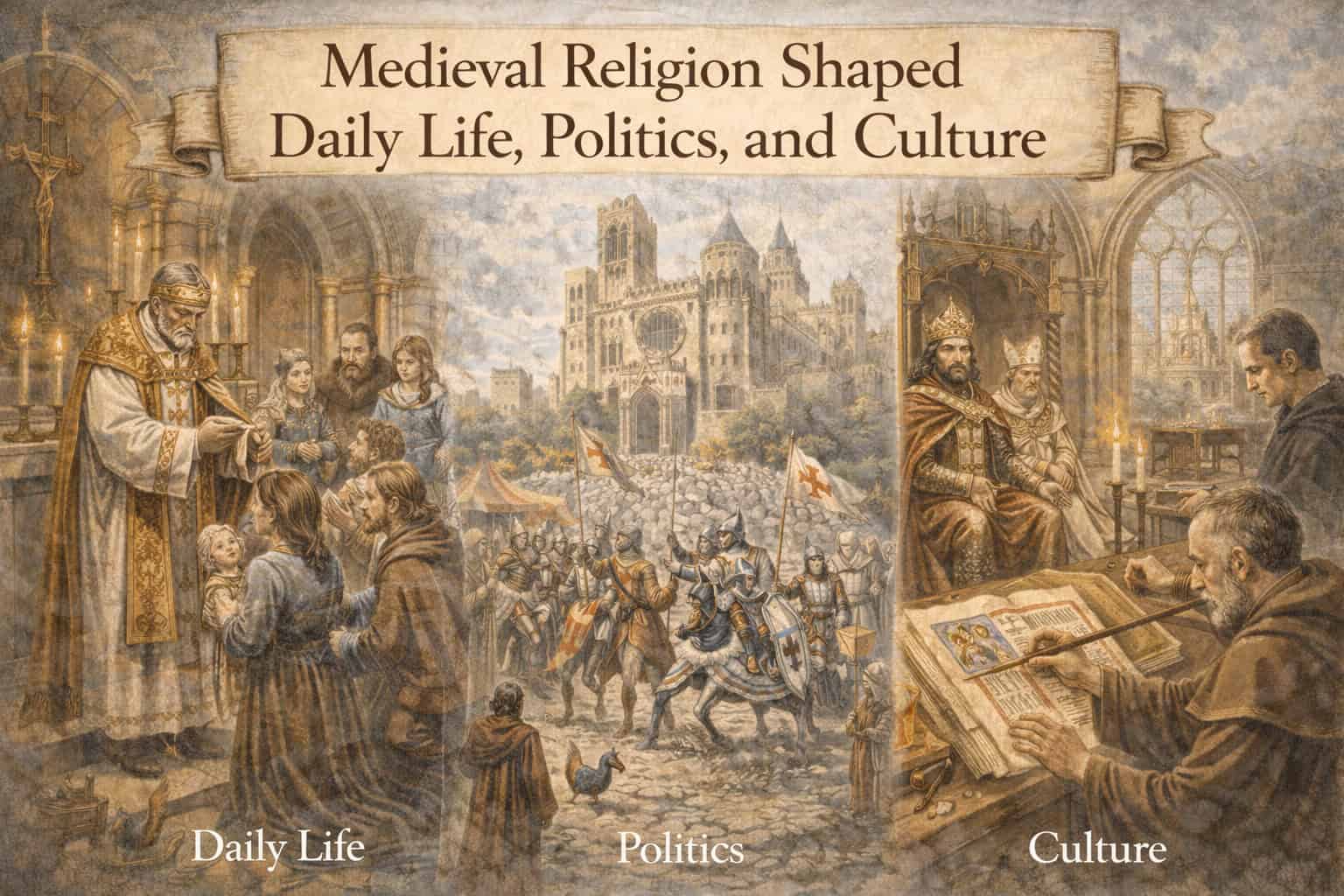
Medieval religion was the dominant organizing force of European society between the 5th and 15th centuries, shaping government, education, law, culture, and daily life. The Catholic Church exercised immense spiritual authority while often influencing political decisions, and religious belief provided the framework through which most people understood the world. From grand cathedrals to small parish churches, religion structured community life and personal identity throughout the Middle Ages.
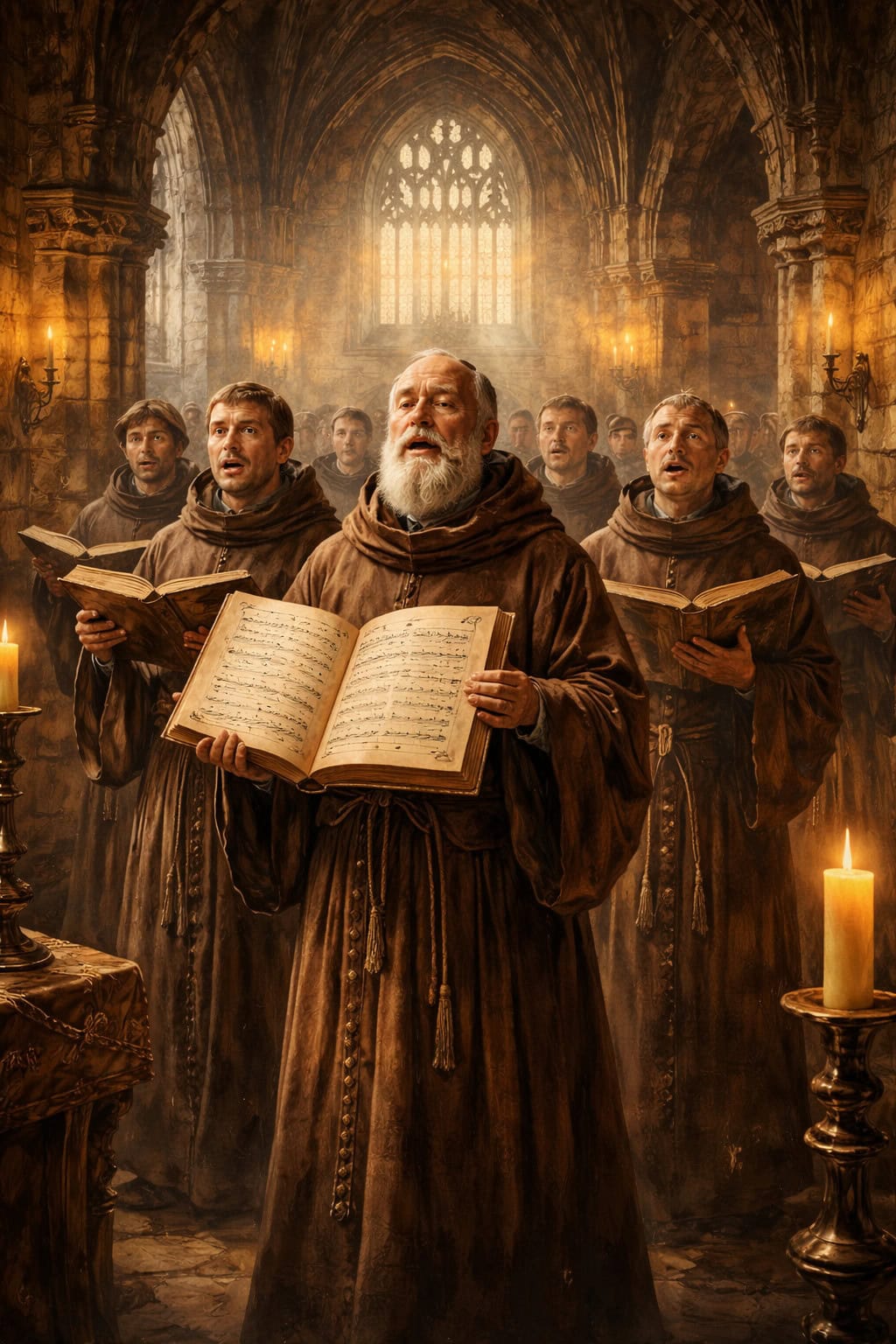
Monasteries preserved classical learning, produced manuscripts, and acted as centers of charity and education. Religious rituals marked the passage of time, and the liturgical calendar governed festivals, fasting periods, and holy days. Faith was not separate from society — it defined it.
Key Facts About Medieval Religion
Why was religion so powerful in the Middle Ages?
The Church provided spiritual authority, social structure, education, and political influence. In a fragmented Europe, it was the only institution with continent-wide reach.
Did everyone follow Christianity?
Most of Western Europe was Christian, but Jewish communities remained active in trade and scholarship, while Islamic civilizations flourished across the Mediterranean and influenced European learning.
What role did monasteries play?
Monasteries preserved classical texts, educated clergy, cared for the poor, and helped maintain literacy during periods of political instability.
Why did the Great Schism matter?
The split of 1054 divided Christianity into Roman Catholic and Eastern Orthodox branches, shaping religious and political alliances for centuries.
Did religion influence everyday people?
Yes. Church attendance, feast days, confession, and pilgrimage were regular parts of life, and religious teaching shaped moral expectations across society.
The Power of the Medieval Church
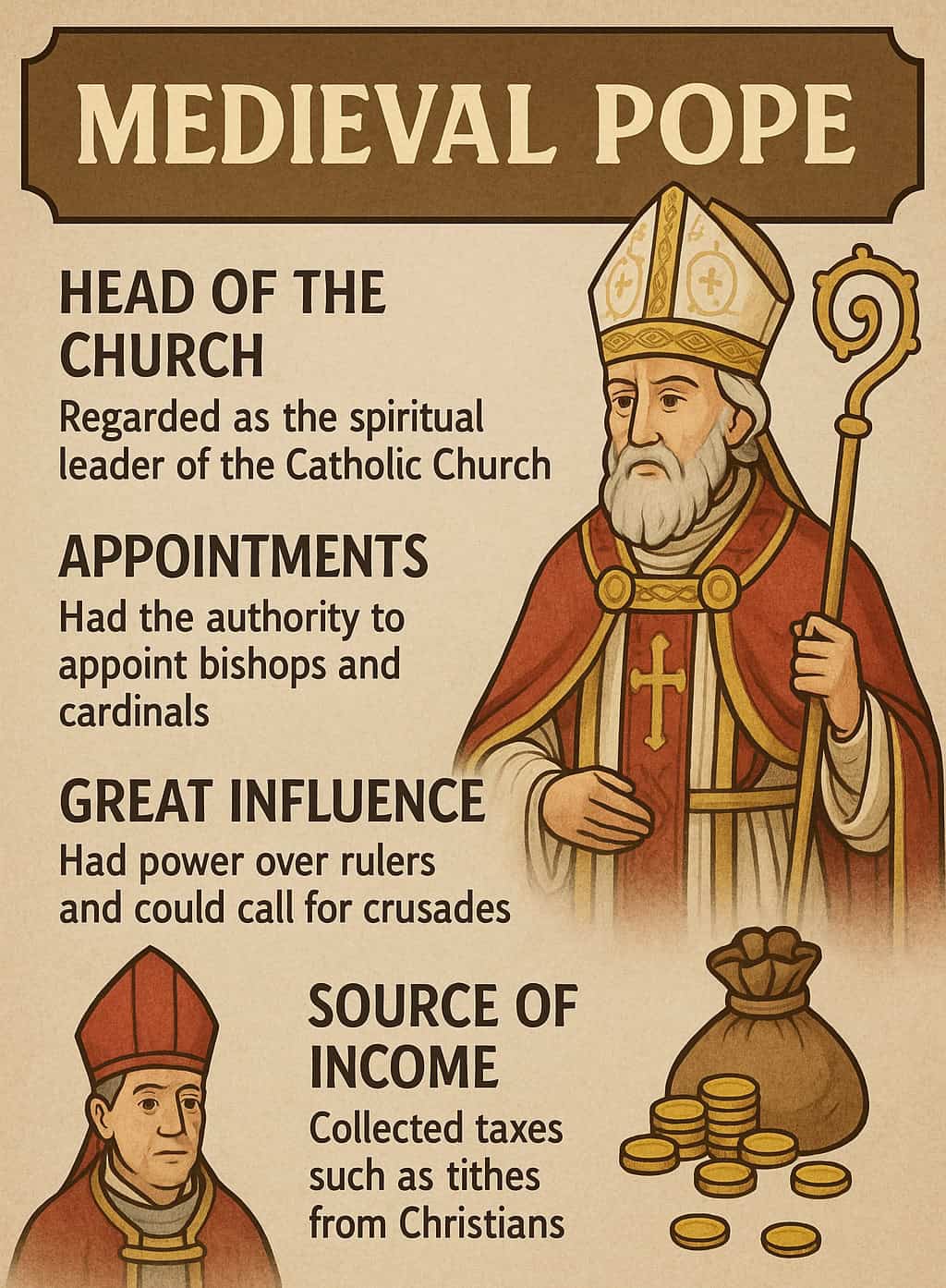
The medieval Church was the most powerful institution in Europe. The Pope stood at the head of Latin Christianity and could influence rulers, settle disputes, and legitimize monarchies. During the early medieval period, when political authority was often fragmented, the Church provided continuity and structure.
Clergy served not only religious roles but administrative ones, advising kings and helping govern territories. Bishops controlled vast lands, and some church leaders rivaled nobles in wealth and influence.
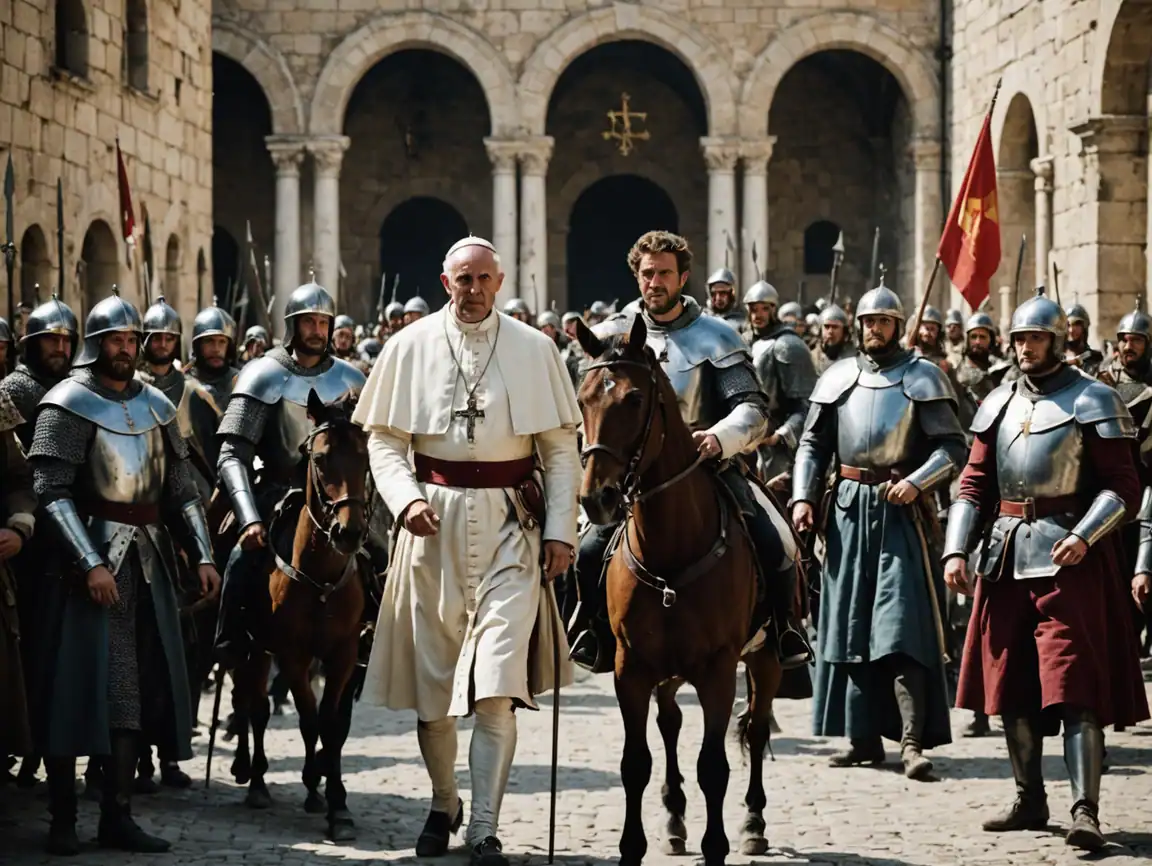
Conflicts between secular rulers and the papacy did occur, particularly over authority and appointments, yet religion remained central to political life for centuries.
Religious Beliefs and Worldview
Religion shaped how medieval people interpreted illness, natural disasters, war, and prosperity. Life was widely understood as preparation for the afterlife, and salvation was a primary concern across all social classes.
Most individuals participated regularly in religious practices such as:
- attending mass
- observing feast days
- confessing sins
- undertaking pilgrimages
The Church taught moral behavior, reinforced social expectations, and provided spiritual reassurance in an uncertain world.
At the same time, strong belief could also produce intolerance. Those accused of heresy risked severe punishment, and religious courts sought to maintain doctrinal unity.
✝️ Major Religions of Medieval Europe
Although Christianity dominated Western Europe, medieval religion was not entirely uniform. Multiple faith traditions shaped intellectual life, trade, and cultural development across the medieval world.
Western & Eastern Christianity
Roman Catholicism emerged as the primary religious authority in Western Europe, while the Eastern Orthodox Church developed separately after the Great Schism of 1054, permanently dividing Eastern and Western Christianity.
The split reflected deep disagreements over theology, church authority, and cultural traditions, creating two major branches of Christianity that continue to exist today.
Judaism & Islam
Judaism maintained a continuous presence across medieval Europe despite periods of persecution and migration. Jewish communities contributed significantly to commerce, scholarship, and urban economic life.
The rapid expansion of Islam from the 7th century created powerful states across North Africa, the Middle East, and parts of Spain. Contact between Christian and Muslim societies helped transmit advances in science, mathematics, medicine, and philosophy into Europe.
Medieval religion therefore developed within a broader world of interacting faiths rather than in complete isolation.
Religion in Everyday Medieval Life
Religion influenced nearly every stage of life, from birth to death. Parish churches formed the center of most communities, serving not only as places of worship but also as gathering spaces where announcements were made and local concerns addressed.
The church calendar structured the year. Festivals, saints’ days, and holy seasons provided rhythm to medieval life, while religious processions and celebrations reinforced shared identity.
Pilgrimages were especially significant. Travelers journeyed to sacred destinations such as Rome, Canterbury, and Santiago de Compostela, seeking spiritual merit, healing, or forgiveness. These journeys also stimulated trade and cultural exchange along major routes.
Church buildings themselves reflected the importance of religion. The construction of large cathedrals required immense resources and showcased both devotion and civic pride.
Challenges to Church Authority
Although the Church held enormous influence, its authority was not uncontested.
Internal divisions periodically weakened religious unity, most notably during the Western Schism (1378–1417), when rival popes claimed legitimacy. Reform movements also emerged in response to concerns about corruption, wealth, and clerical conduct.
By the late medieval period, stronger monarchies began consolidating political power, gradually limiting direct papal influence within their realms. Intellectual change and growing urban populations further encouraged debate about religious authority.
These developments did not diminish the importance of faith, but they signaled a transition toward the transformations that would reshape Europe in the early modern era.
The Social Impact of Medieval Religion
Religion reinforced social hierarchy while also providing support structures for medieval communities.
Church institutions operated hospitals, cared for the poor, and distributed charity. Monastic orders cultivated land, advanced agricultural techniques, and contributed to local economies.
At the same time, religious expectations could justify exclusion or persecution. Minority groups sometimes faced restrictions, and accusations of heresy could result in severe penalties.
Medieval religion therefore functioned as both a stabilizing force and a mechanism of social control.
Decline of Unified Religious Authority
By the closing centuries of the Middle Ages, the Church remained powerful but no longer unchallenged. Political centralization, economic change, and intellectual revival gradually altered Europe’s religious landscape.
Calls for reform increased, setting the stage for the profound religious upheavals that would follow in the 16th century. Yet despite these shifts, the legacy of medieval religion endured — shaping art, law, education, and cultural identity long after the medieval world had passed.
Medieval Religion Summary
Medieval religion was not merely a system of belief but the central framework of European civilization. It guided political legitimacy, structured communities, preserved knowledge, and influenced how individuals understood their place in the world.
To study the Middle Ages is therefore to study a society fundamentally organized around faith — a society in which religion shaped both everyday experience and the broader course of history.
Medieval Religion – Frequently Asked Questions
What was the main religion of medieval Europe?
Roman Catholic Christianity dominated Western Europe, while Eastern Europe followed the Orthodox Church after the Great Schism.
How powerful was the medieval Church?
The Church influenced rulers, controlled vast lands, operated courts, and shaped education, making it the most powerful institution in medieval Europe.
Why were monasteries important?
Monasteries preserved ancient knowledge, copied manuscripts, educated clergy, and provided charity to surrounding communities.
Did other religions exist in medieval Europe?
Yes. Jewish communities lived throughout Europe despite restrictions, and Islamic civilizations contributed major advances in science, medicine, and philosophy.
How did religion affect daily life?
Religious observance structured the calendar, guided moral behavior, and influenced major life events from birth to death.
📜 Glossary of Medieval Religious Terms
Great Schism (1054)
The division between the Roman Catholic Church in the West and the Eastern Orthodox Church in the East.
Monastery
A religious community where monks lived under a rule of life focused on prayer, work, and learning.
Pilgrimage
A devotional journey to a sacred place such as Rome or Santiago de Compostela, often undertaken for penance or healing.
Heresy
Beliefs judged to conflict with official Church doctrine, sometimes prosecuted in religious courts.
Clergy
Ordained religious leaders such as priests and bishops who administered sacraments and led worship.
Inquisition
Church institutions established to investigate and suppress heresy, varying by region and period.