Medieval art refers to the visual arts produced in Europe between the fall of the Western Roman Empire (c. 476) and the beginning of the Renaissance (15th century). Spanning nearly a thousand years, medieval art evolved through several distinct styles, each reflecting changes in religion, politics, technology, and cultural exchange.
Although often viewed as purely religious, medieval art was highly diverse, ranging from illuminated manuscripts and mosaics to sculpture, architecture, stained glass, and metalwork. Its primary purpose was not personal expression, but instruction, devotion, and symbolism.
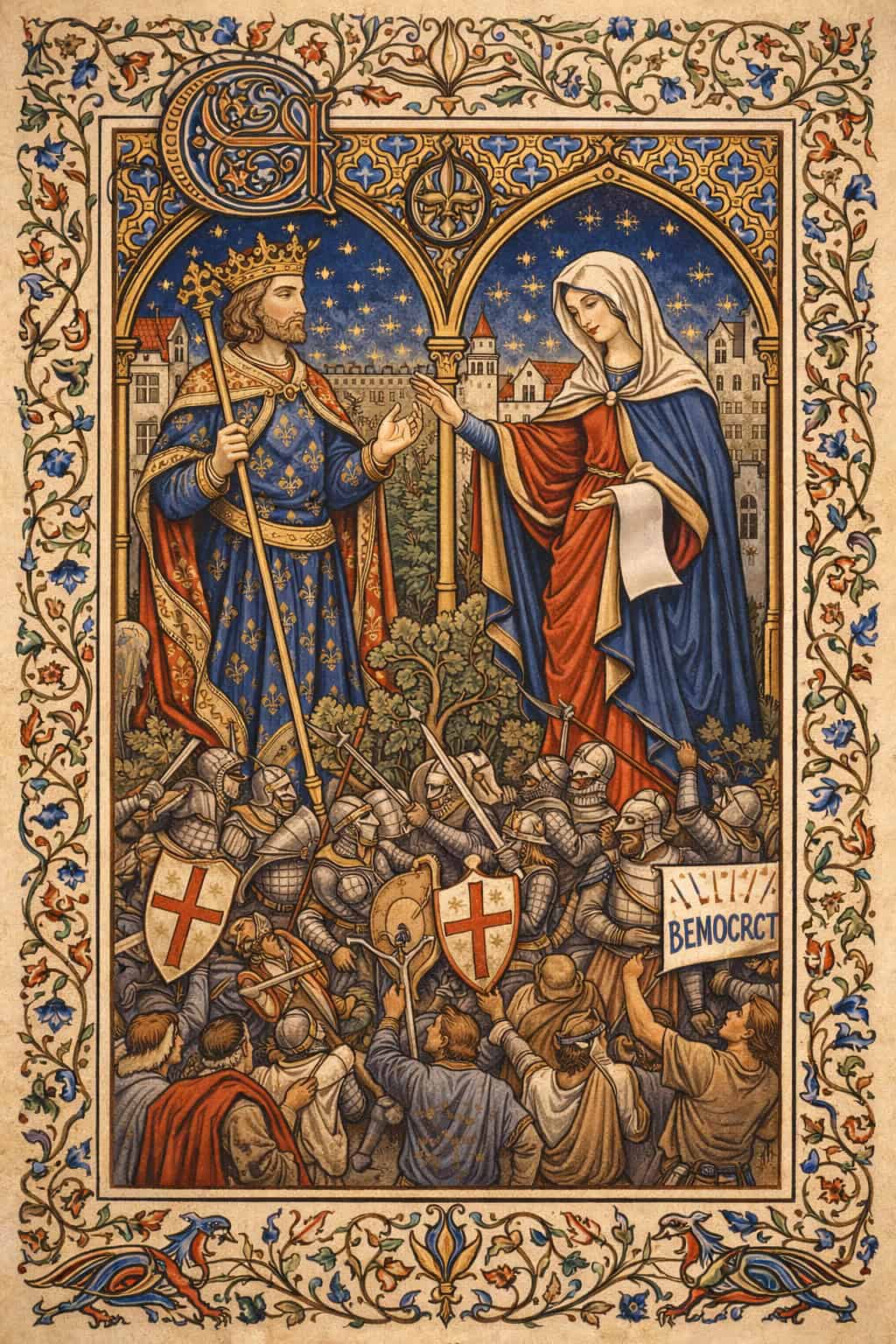
Key Characteristics of Medieval Art
Despite its variety, most medieval art shared several defining traits:
- Strong religious themes, especially Christianity
- Symbolic representation rather than realism
- Vivid colors and decorative patterns
- Flat or shallow perspective, especially in early periods
- Hierarchy of scale, where important figures appear larger
- Art created for churches, monasteries, and rulers
Much medieval art was designed to teach biblical stories to largely illiterate populations, making clarity and symbolism more important than naturalism.
Click to Reveal: Medieval Art Concepts
✦ Gold Backgrounds
Gold symbolized heaven, divine light, and the eternal realm rather than physical space.
✦ Front-Facing Figures
Figures stare directly at the viewer to create spiritual connection and reverence.
✦ Lack of Perspective
Medieval artists avoided depth to emphasize timelessness over realism.
✦ Spiritual Emphasis
Art focused on conveying sacred meaning rather than physical accuracy.
✦ Mosaics
Tiny colored stones and gold tesserae created glowing church interiors.
✦ Icons
Sacred images used in prayer, believed to be windows into the divine.
✦ Manuscripts
Hand-illuminated books decorated with gold, saints, and symbolic patterns.
✦ Church Influence
Medieval art was closely controlled by the Church and followed strict traditions.
Major Periods of Medieval Art
Historians divide medieval art into several overlapping periods and styles:
- Early Christian Art
- Migration Period Art
- Byzantine Art
- Insular (Anglo-Saxon & Celtic) Art
- Pre-Romanesque Art
- Romanesque Art
- Gothic Art
These styles developed differently across regions, resulting in strong local traditions alongside broader European trends.
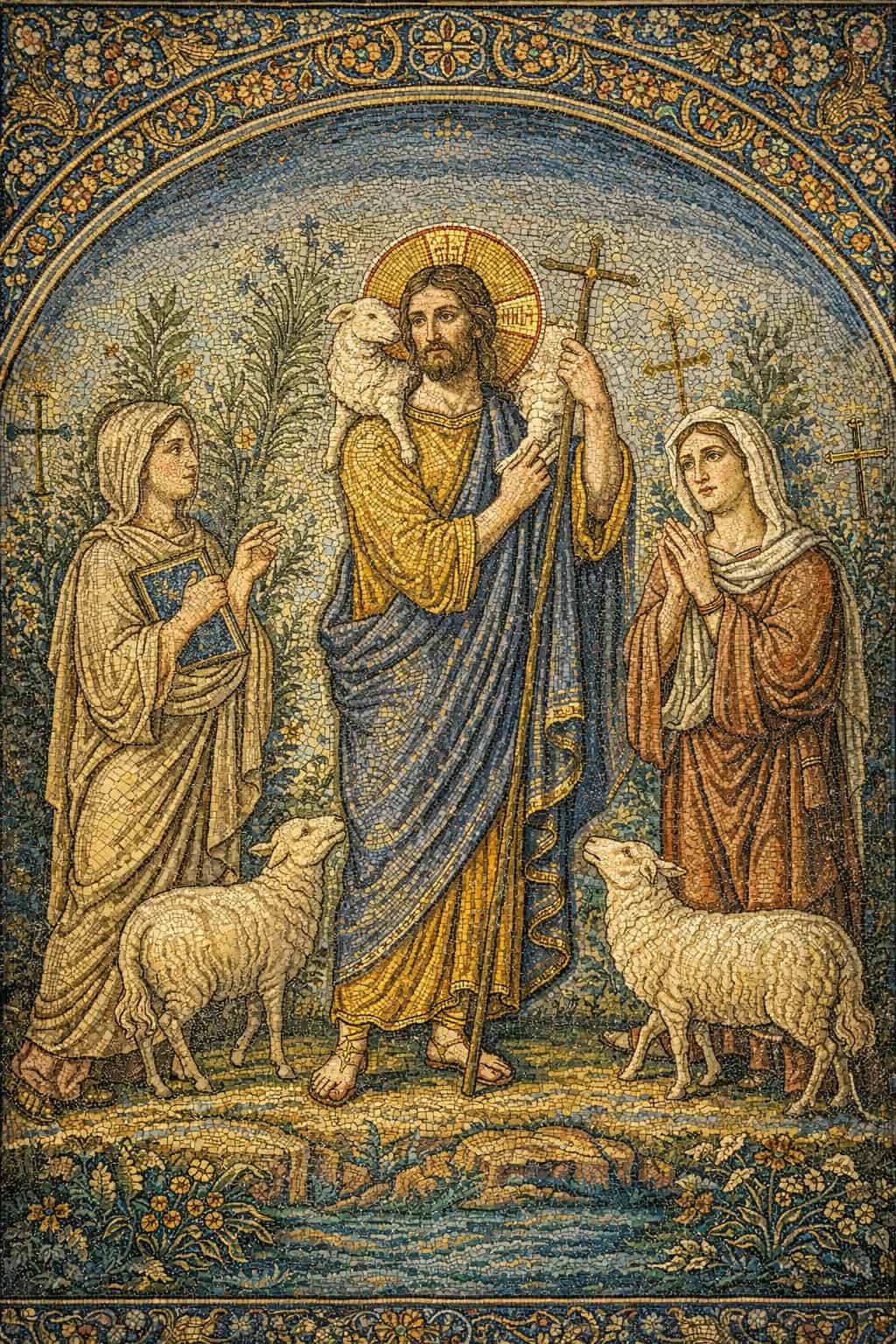
Timeline of Medieval Art
Characterized by gold backgrounds, flat front-facing figures, and spiritual symbolism. Strongly tied to the Eastern Orthodox Church and focused on conveying divine presence rather than realism.
Known for intricate knotwork, interlacing patterns, and illuminated manuscripts such as the Book of Kells. Combined Christian imagery with Celtic traditions.
A revival of Roman styles under Charlemagne and later emperors. Featured clearer figures, imperial imagery, and increased interest in classical forms.
Marked by thick walls, rounded arches, and dramatic sculptures. Art emphasized biblical storytelling and moral lessons, often carved into church portals.
Featured pointed arches, stained glass, and greater naturalism. Figures became more expressive, and light was used symbolically to represent the divine.
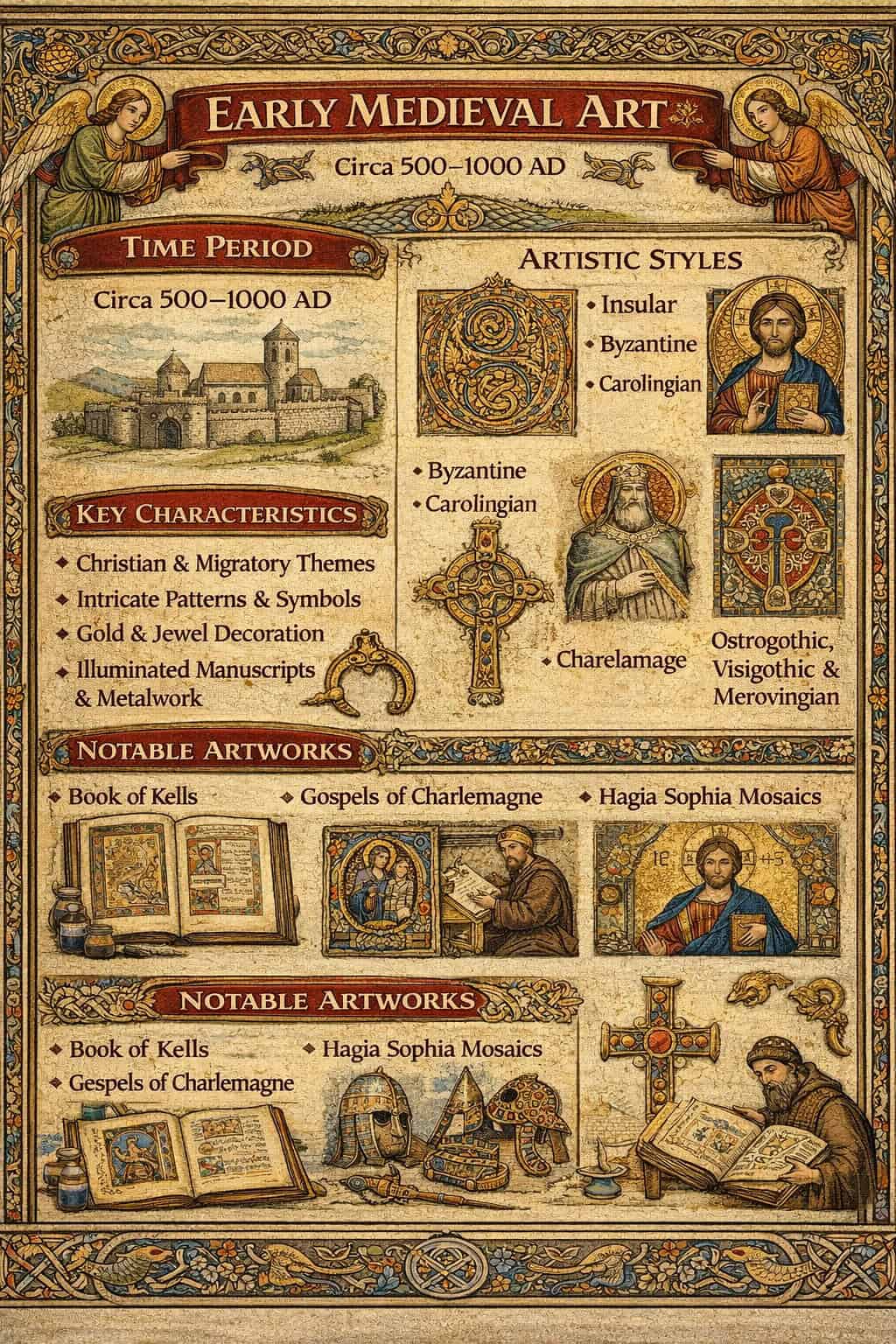
Early Medieval Art (c. 500–1000)
Early medieval art, sometimes called Early Christian or Late Antique art, emerged as Christianity spread across Europe.
Key features included:
- Adaptation of Roman artistic forms for Christian themes
- Use of mosaics, frescoes, and manuscript illumination
- Influence from Germanic and Celtic decorative styles
Notable works from this period include church mosaics, burial art, and illuminated manuscripts such as the Book of Kells.
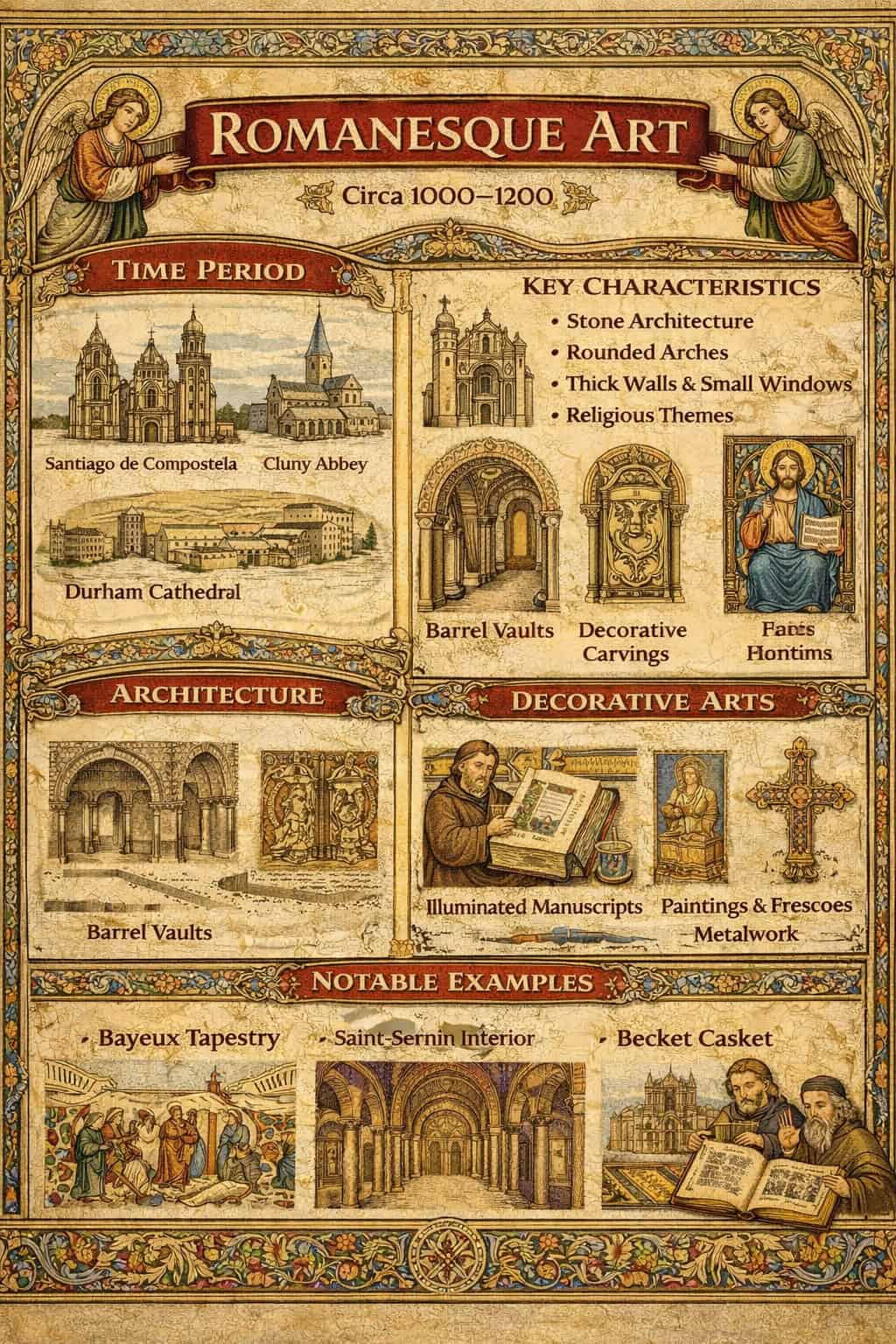
Romanesque Art (c. 1000–1200)
The Romanesque period coincided with growing political stability and church wealth.
Romanesque art is characterized by:
- Massive stone churches with thick walls
- Rounded arches and barrel vaults
- Sculpted portals showing biblical scenes
- Bold, simplified figures conveying moral lessons
Art and architecture were intended to awe worshippers and reinforce the authority of the Church.
Gothic Art (c. 1150–1400)
Gothic art marked a major transformation in medieval aesthetics and technique.
Key developments included:
- Pointed arches and ribbed vaults
- Stained glass windows flooding churches with light
- Greater realism in human figures
- Increased attention to emotion, movement, and proportion
By the late medieval period, Gothic art became more naturalistic and secular, leading toward the International Gothic style and eventually the Renaissance.
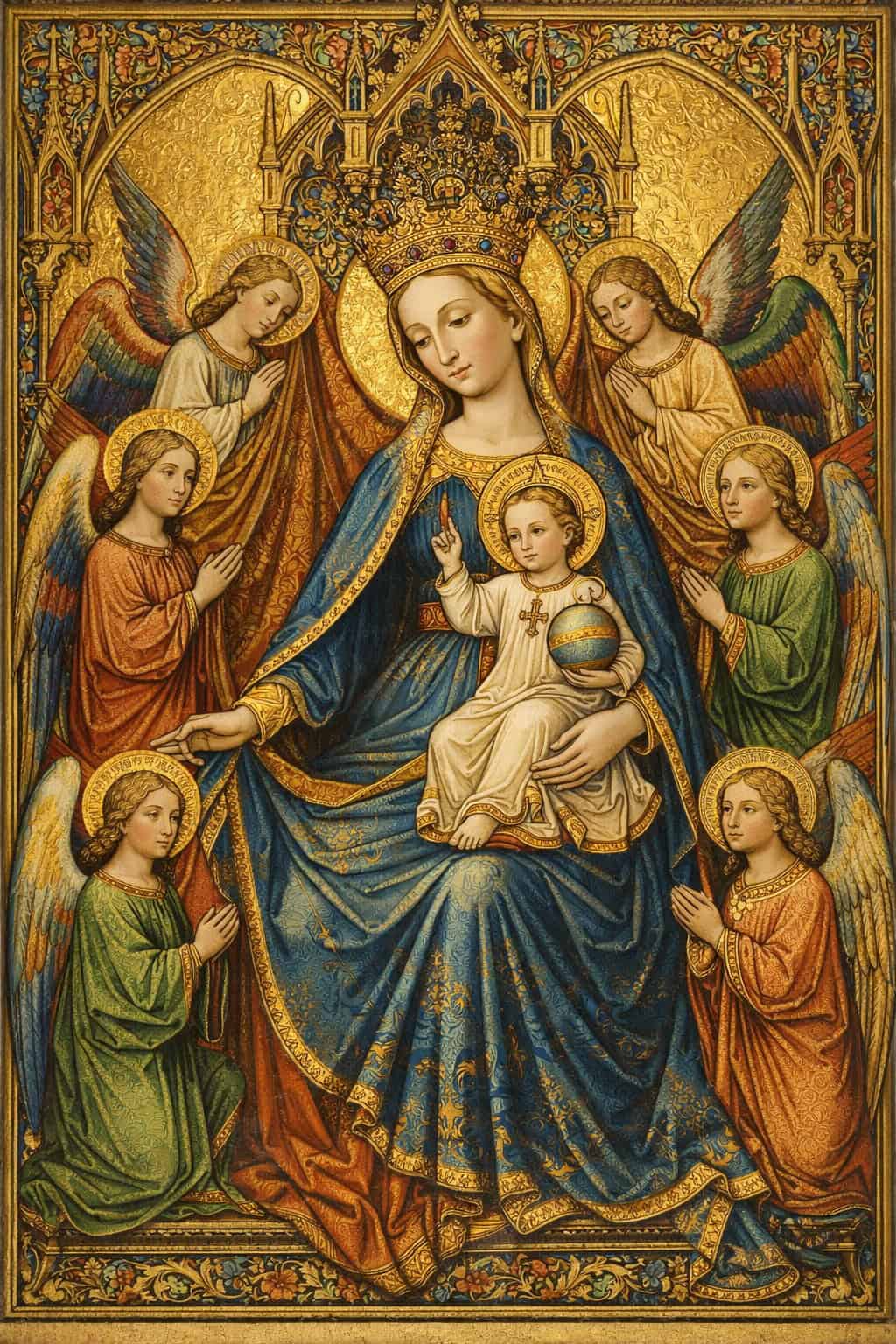
Byzantine Art
Byzantine art developed in the Eastern Roman Empire, centered on Constantinople. It was primarily religious in nature and focused on conveying spiritual truths rather than physical realism.
Defining Features
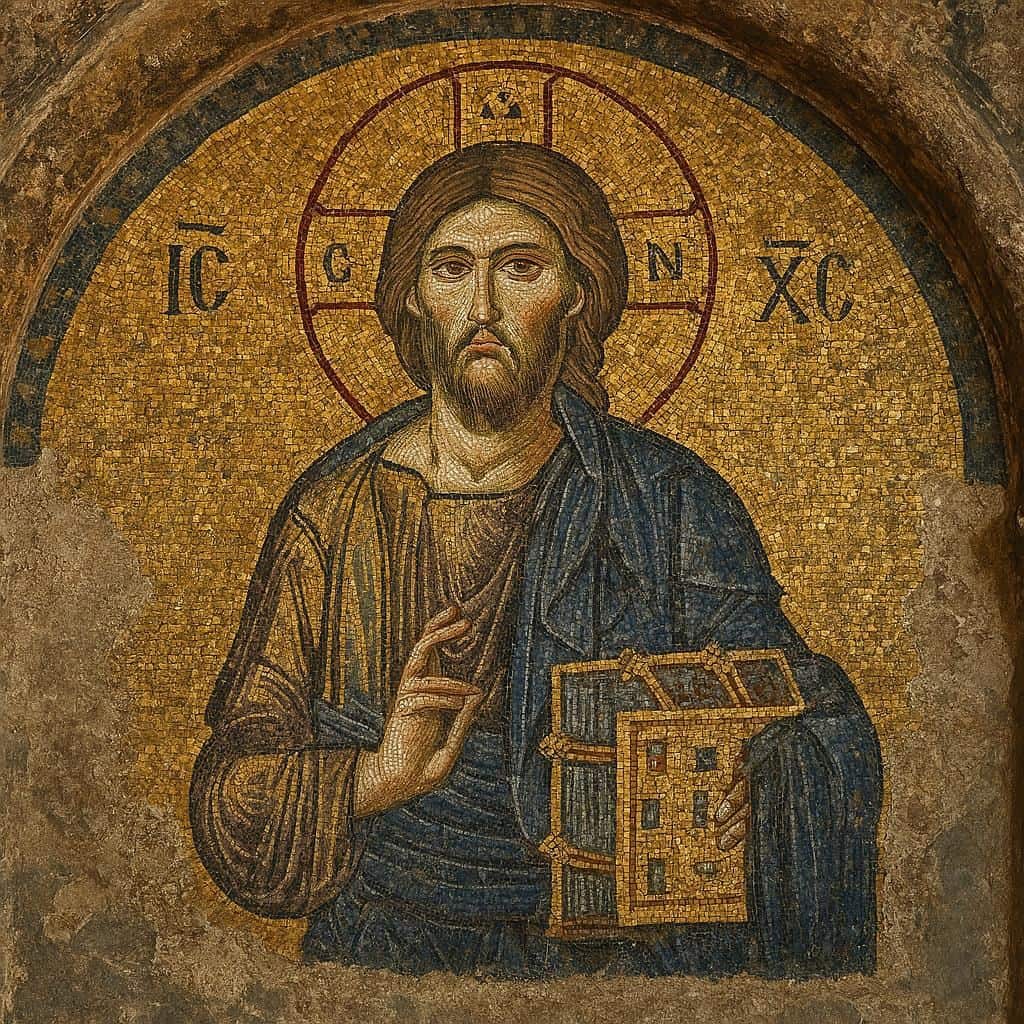
- Gold backgrounds symbolizing heaven and divine light
- Front-facing, stylized figures meant to engage the viewer spiritually
- Lack of perspective and shadow, creating a flat, timeless appearance
- Emphasis on spiritual presence rather than realism
Common Forms of Byzantine Art
- Mosaics
- Icons
- Ivory reliefs
- Manuscript illumination
Byzantine art was deeply tied to the Eastern Orthodox Church and remained remarkably conservative in style for centuries, preserving its symbolic and sacred visual language long after other artistic traditions evolved.
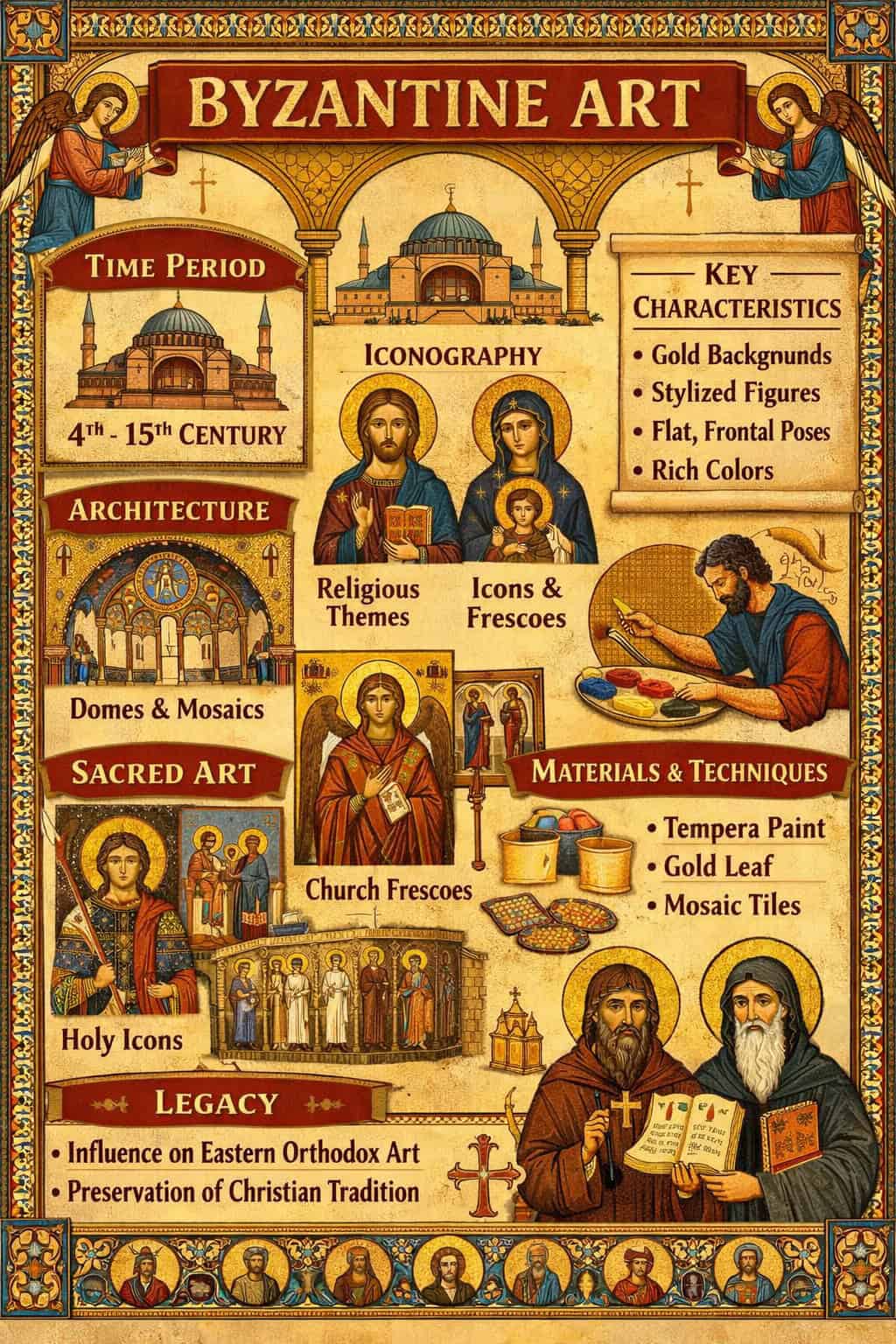
Medieval Art in England
In medieval England, art evolved through several cultural phases:
- Anglo-Saxon art, known for intricate interlace and animal motifs
- Norman Romanesque, introduced after 1066
- Later English Gothic, especially in manuscripts and architecture
Famous examples include:
- The Bayeux Tapestry
- The Winchester Psalter
- Monumental cathedral sculpture and stained glass
Despite foreign influence, English artists developed a distinctive blend of fantasy, symbolism, and craftsmanship.
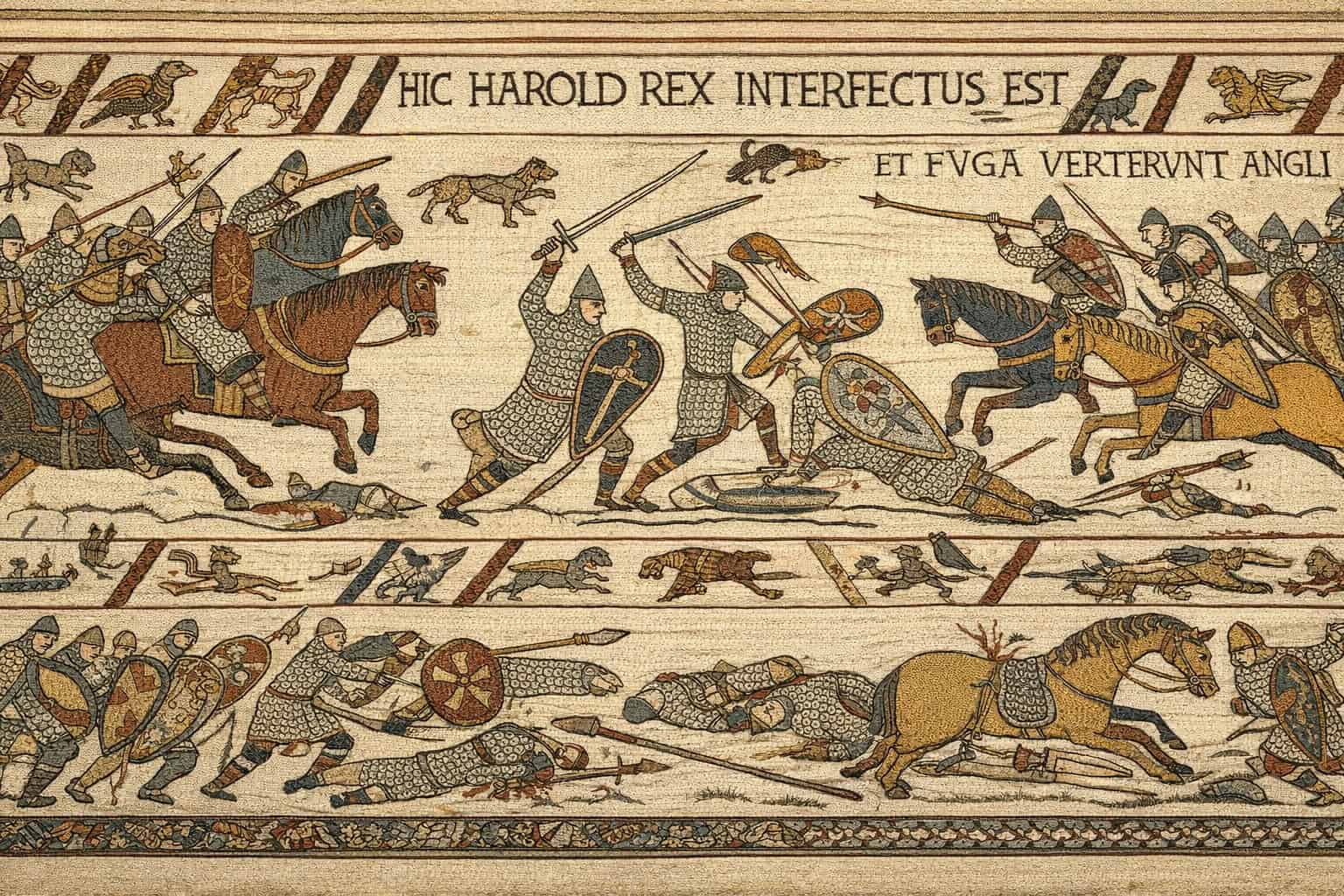
Medieval Painting and Illumination
Most medieval painting survives in the form of illuminated manuscripts.
Key characteristics:
- Use of gold leaf and rich pigments
- Biblical scenes, saints, and moral allegories
- Decorative borders and symbolic imagery
Murals and frescoes also existed, but many were lost due to time and rebuilding.
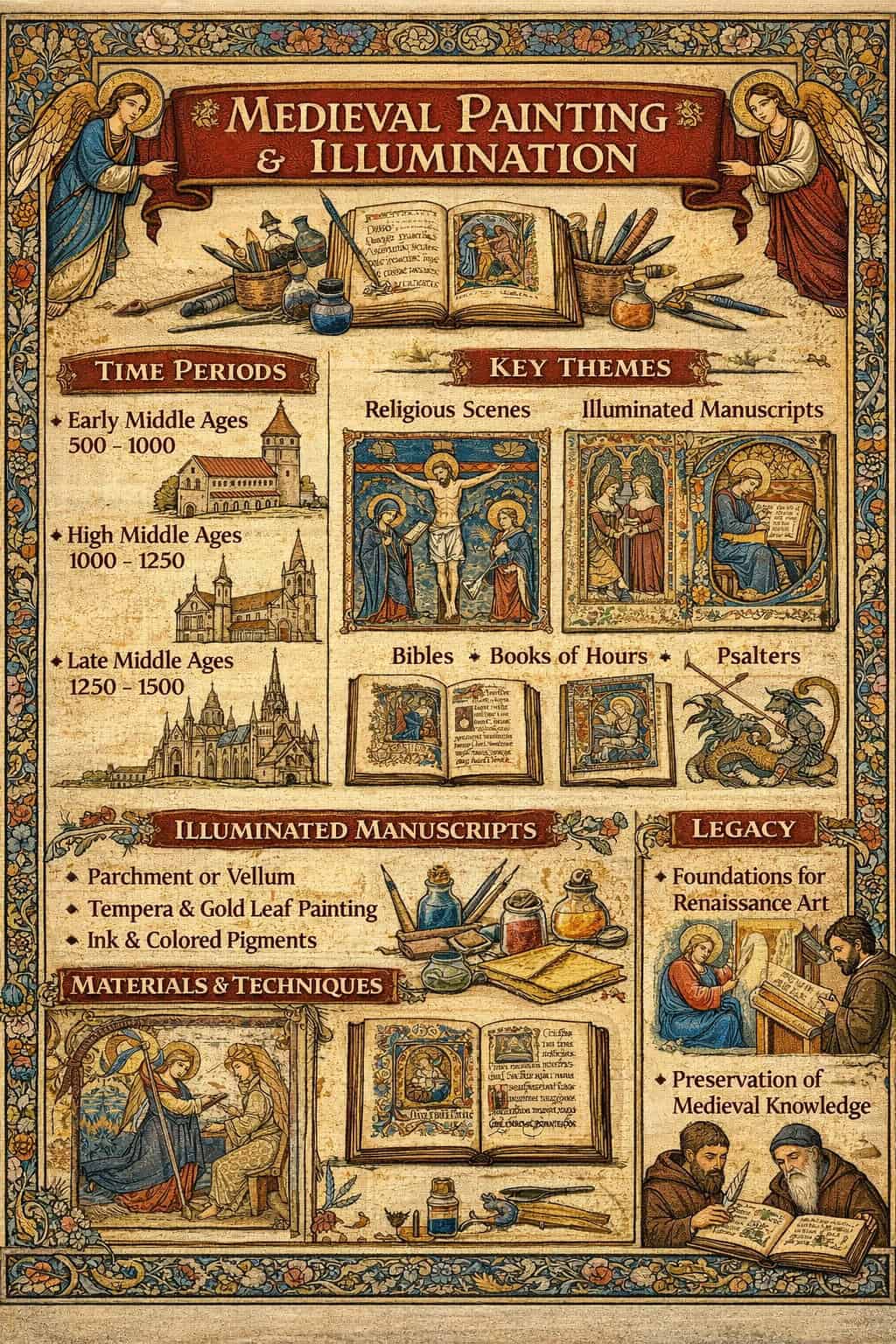
Medieval Sculpture
Sculpture declined after the fall of Rome but revived during the Romanesque and Gothic periods.
Common forms included:
- Architectural sculpture on churches
- Ivory carvings and reliquaries
- Stone statues of saints and biblical figures
Gothic sculpture moved toward greater realism, especially in cathedral façades.

Religious Influence on Medieval Art
Religion shaped nearly all medieval artistic production.
Art was used to:
- Teach Christian doctrine
- Inspire devotion
- Glorify God and the Church
While artistic freedom was limited, medieval artists still demonstrated extraordinary creativity within symbolic and theological boundaries.

Famous Medieval Artworks
Notable examples of medieval art include:
- Christ Pantocrator mosaic, Hagia Sophia
- Bayeux Tapestry, 11th century
- Paris Psalter, 10th century
- Wilton Diptych, c. 1400
- Chartres Cathedral sculptures, 13th century
These works demonstrate the technical skill and spiritual depth of medieval artists.
Legacy of Medieval Art
Medieval art laid the foundations for:
- Renaissance naturalism
- Advances in architecture and engineering
- The development of Western visual storytelling
Far from being a “dark age,” medieval art represents a rich, complex, and innovative period that shaped European culture for centuries.
❓ Medieval Art – Frequently Asked Questions
What is medieval art?
Medieval art refers to European art produced roughly between 500 and 1400, shaped by Christianity, monarchy, and the Church.
Why does medieval art look flat?
Artists avoided perspective and shadow to emphasize spiritual meaning rather than physical realism.
What materials were commonly used?
Stone, wood, gold leaf, pigment, vellum, and glass were commonly used in medieval artworks.
What role did the Church play?
The Church controlled artistic themes, commissioned most works, and used art to teach religious ideas.
Did medieval artists sign their work?
Most medieval artists remained anonymous, as art was seen as an act of devotion, not self-expression.
How did medieval art change over time?
It evolved from symbolic Byzantine styles to Romanesque solidity and later Gothic naturalism.
🧠 Medieval Art Styles Quiz
📜 Glossary of Medieval Art Terms
Byzantine Art
Art style marked by gold backgrounds, icons, and spiritual symbolism.
Romanesque Art
Style featuring rounded arches, heavy forms, and dramatic biblical scenes.
Gothic Art
Later medieval style with stained glass, pointed arches, and increased realism.
Icon
A sacred image used in devotion, especially in Byzantine Christianity.
Illumination
Decorative artwork in manuscripts using gold, color, and symbolic imagery.
Mosaic
Images formed from small pieces of stone or glass, common in churches.