Medieval craftsmen were central to urban life and played an important role in rural communities during the Middle Ages, producing everything from tools and weapons to clothing and household goods. These skilled workers honed their trades through apprenticeships and often operated under strict guild systems that regulated training, standards, and quality. Craftsmen such as blacksmiths, masons, weavers, and potters played a vital role in the economy, construction, and military readiness of medieval towns and castles. Whether working in bustling marketplaces or behind castle walls, their craftsmanship was essential to the development and survival of medieval society.
🛠️ Medieval Craftsmen & Trades at a Glance
- How medieval craftsmen were trained through apprenticeships, journeymanship, and guild membership
- The role of medieval guilds in regulating prices, quality, and professional conduct
- Major medieval trades including blacksmiths, carpenters, weavers, cobblers, and stonemasons
- Specialist craftsmen who produced weapons, armour, coins, and luxury goods
- The importance of craftsmen to castles, towns, trade, and warfare

🛠️ Click-to-Reveal: Medieval Craftsmen & Trades
Apprenticeships & Guilds
Medieval craftsmen were trained through long apprenticeships before advancing to journeyman and eventually master craftsman status. Strict guild systems controlled training, quality, prices, and entry into each trade.
Everyday Medieval Craftsmen
Blacksmiths, carpenters, cobblers, weavers, and coopers produced essential goods used daily in medieval towns, villages, and castles.
Trade, Cloth & Luxury Crafts
Specialist craftsmen such as goldsmiths, cloth finishers, and luxury merchants supplied high-value goods for nobles, churches, and wealthy urban elites.
Weapons & Armour Craftsmen
Armourers, swordsmiths, bowyers, and fletchers produced weapons and protective equipment essential to medieval warfare and castle defence.
Construction & Infrastructure Trades
Stonemasons, carpenters, and wheelwrights built castles, churches, bridges, carts, and other infrastructure vital to medieval life.
Specialist & Official Craftsmen
Licensed craftsmen such as moneyers, bellfounders, and locksmiths worked under royal or civic authority, producing coins, bells, and security devices.
Medieval Craftsmen Apprenticeship & Guilds
Medieval craftsmen usually began learning a trade at a young age as apprentices. Many apprentices followed the same occupation as their fathers, while others were placed with established master craftsmen to learn specialised skills. Over time, a medieval person wishing to practice a craft independently would typically become associated with a specific guild, which governed training, standards, and career progression within the trade.

The practice of forming guilds for specific crafts and professions became firmly established during the High and Late Middle Ages across Europe. A medieval guild existed primarily to protect the interests of its members by regulating training, quality of workmanship, prices, and working conditions, while also providing a collective voice in dealings with local authorities and rulers.

In England, the concept of organised guilds expanded significantly after the Norman Conquest of 1066, as towns grew and trade became more regulated. Medieval guilds were formed not only for craftsmen, but also for merchants, musicians, and other professional groups, helping to structure urban life, regulate skills, and control commercial standards in medieval towns and cities.
The number of people working as craftsmen grew steadily as the medieval period progressed, particularly with the expansion of towns, markets, and trade networks, which increased demand for skilled labour and specialised craft production.
🛠️ Craftsmen
- Freemen who paid taxes
- Kept secrets of their trade within the family
- Passed down their skills to their offspring
Qualified craftsmen were classed as either Journeymen or Masters of their craft. Journeymen had completed their apprenticeship but had not yet produced a “masterpiece” accepted by their guild as worthy of the title of master craftsman.
🏛️ The Guild
- An organisation created to protect the interests of its members
- Guarded the secrets of the craftsman’s particular trade
- Ensured the provision of a decent wage
- Required a long and successful apprenticeship for membership
- Members paid a yearly membership fee
- Guild members could be expelled for breaking strict rules
From Apprentice to Journeyman
After several years of training and service, an apprentice would become a journeyman, a status that allowed him to work for wages and practise his trade independently, often travelling to gain further experience.
A journeyman could eventually become a master craftsman, but only after producing a masterpiece that met the strict standards of the guild and demonstrating the ability to run a workshop and train apprentices.

🛠️ Types of Medieval Craftsmen
Horse shoes, door knockers, metal gates, armour, weapons, tools, torture devices
Bells of all types for churches, towns, and public buildings
Elite cloth finishers and merchants, particularly in medieval Florence
Produced candles for lighting homes, churches, and great halls
Houses, carts, fences, beams, gates, flooring, doors, furniture
Storage chests for valuables, clothing, and travel goods
Made and repaired footwear for common people
Minted coins under royal authority
Jewellery, ceremonial objects, crowns, and precious metalwork
Wooden casks, barrels, and storage containers
Leather equipment for people, animals, and warfare
Padlocks, door locks, and security devices
Stonework for castles, churches, cathedrals, and walls
Cloth and textile production of all kinds
Wheels for carts and carriages, always in high demand
1. Blacksmith
Blacksmiths were among the most in-demand craftsmen of the medieval period, producing a wide range of essential everyday items such as keys, locks, horseshoes, tools, and metal fittings. While many blacksmiths also forged simple weapons and armour, the growing complexity of medieval warfare led to the rise of specialist smiths, including armourers and swordsmiths, who focused exclusively on the production of armour and edged weapons.

Learn more about the Medieval Blacksmith
2. Bellfounders
Bellfounders were highly skilled medieval craftsmen, as bells were in constant demand throughout the Middle Ages, particularly for churches, monasteries, and public buildings. Large bells were cast in moulds using molten metal, a process that required considerable expertise. After casting, bells were carefully tuned by controlled removal of metal to ensure they produced the correct pitch and tonal harmony, which was essential for marking time, religious services, and important events.

During the Middle Ages, bells were used on many important medieval buildings to mark the time, announce religious services, signal public events, and serve as warnings during emergencies such as fires or attacks. Bells were commonly installed on:
Public buildings such as town halls and guildhalls
- Clock towers
- Churches and monasteries
- Public buildings such as town halls and guildhalls

3. Calimala – Cloth Finishers and Merchants
The Calimala were an elite medieval guild of cloth finishers and merchants based in Florence, Italy, one of the most important commercial centres of medieval Europe. The guild rose to prominence before the dominance of the House of Medici, though its wealth later helped support Florence’s political and economic power.
Members of the Calimala guild imported high-quality woollen cloth from France, Flanders, and other regions, then used advanced finishing techniques to improve its value. These processes included dyeing, stretching, fulling, calendering, and final finishing, producing luxury textiles sought after across Europe.

4. Candlemaker
Candles were primarily used for illumination throughout the medieval period, providing light in homes, churches, castles, and during religious ceremonies, feasts, and special occasions. Because artificial lighting was limited, candles were an essential part of everyday medieval life.
A candlemaker was the craftsman responsible for producing these candles. While most towns and cities had professional candlemakers, wealthy noble households, monasteries, and large estates often employed their own candlemakers. These craftsmen worked with materials such as beeswax (used mainly by the Church and nobility) and tallow (animal fat), carefully processing the wax or fat and moulding or dipping it to create candles of varying quality.

5. Carpenter
Timber (lumber) was widely used throughout the medieval period for the construction of buildings, particularly houses, halls, bridges, and roof structures. In addition to structural work, a wide range of wooden non-construction products—including furniture, carts, tools, barrels, and household items—were in constant demand.
As a result, the carpenter was nearly as important to medieval society as the stonemason, especially in regions where stone was scarce or expensive. In the later Middle Ages, advances in timber-framing techniques, including the use of joints, trusses, and wooden pegs, allowed carpenters to construct larger, multi-storey buildings that were both durable and structurally sound.

7. Cobbler – Shoemaker
Medieval shoes were made and repaired by cobblers, who were responsible for maintaining footwear for much of the common population. Cobblers typically focused on repairing worn shoes, resoling footwear, and producing simple, practical designs suitable for everyday medieval life.
Footwear for the nobility and wealthy classes, however, was usually produced by a specialist craftsman known as a cordwainer. Cordwainers worked with new, high-quality leather—often imported—and created luxury shoes featuring distinctive styles, finer stitching, and decorative elements that reflected social status and fashion.
Most medieval shoes were made from leather, while wooden pattens (overshoes) were sometimes worn outdoors to protect shoes from muddy streets. Shoes were not typically made from burlap, but from animal hides, occasionally reinforced with wooden soles or layers for durability.

8. Medieval Moneyer
A medieval moneyer was authorised to mint coins from metals such as silver, and more rarely gold or copper alloys, which were used for buying goods, paying wages, and collecting taxes. Moneyers operated under royal licence and worked in officially approved mints controlled by the Crown.
Because coinage represented royal authority, moneyers were strictly regulated. They were typically paid through fees or a small percentage of the coins produced, rather than profiting freely from the metal itself. Severe punishments—including fines, imprisonment, or mutilation—could be imposed for counterfeiting or debasing coinage.
The work of medieval moneyers was essential to maintaining economic stability, royal revenue, and trust in the medieval monetary system.

Read more about Medieval Moneyers
9. Goldsmith
Medieval goldsmiths were among the most important and wealthy craftsmen of the Middle Ages and could, in some cases, even act as early bankers. Goldsmiths were highly skilled metalworkers who worked with precious metals, particularly gold, to create luxury items such as ceremonial crowns, sceptres, jewellery, and religious objects for wealthy medieval elites, including kings, nobles, and the Church.
Goldsmiths were members of elite and powerful guilds and produced goods by carefully shaping metal using advanced techniques such as casting, forging, filing, soldering, and polishing. Their craftsmanship was held to exceptionally high standards, reflecting both the value of the materials used and the prestige of their clients.

Learn more about Medieval Goldsmiths
10. Cooper
Coopers were highly skilled medieval craftsmen who made wooden barrels, casks, and other similar containers essential to daily life in the Middle Ages. They were well established in England by the late 13th century and remained in high demand throughout the medieval period due to the widespread need for reliable storage and transport vessels.
There were different types of coopers, each specialising in specific kinds of casks. Some produced containers for dry goods, while others made barrels designed for the storage and transportation of liquids such as wine, ale, and water. Medieval breweries employed many coopers to make and maintain casks used to store and transport the popular ales produced during this period.


11. Harness and Beltmakers
Harness and beltmaker were specialised medieval craftsmen who produced leather goods essential for both everyday life and military use. Their work included belts, straps, horse harnesses, reins, and fittings used by knights, soldiers, merchants, and farmers. Because horses were vital for transport, agriculture, and warfare, harness makers were in steady demand throughout the Middle Ages. These craftsmen often worked closely with saddlers, armourers, and blacksmiths, and many belonged to leatherworking guilds that regulated quality and training.

12. Medieval Locksmith
Locksmiths were in high demand during the medieval period, producing many types of locks and keys. One of the most common designs was the fetterlock, which was often used to secure livestock, gates, and storage areas. Medieval homes and buildings frequently had multiple door locks, particularly important structures such as armouries, treasuries, and storehouses where valuable goods were kept secure.

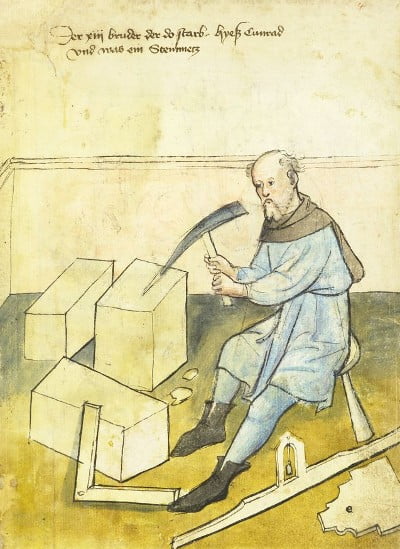
13. Medieval Stonemason
Stone masonry was a highly skilled medieval occupation. Stonemasons were often tasked with building major structures such as castles, churches, and cathedrals. In addition to large-scale construction, some master stonemasons specialised in decorative work, creating elaborate stone carvings and architectural features such as medieval gargoyles, capitals, and relief sculptures.
15. Weavers
Medieval weavers produced a wide range of cloth goods, including clothing, household textiles, and furnishings made from materials such as wool, flax, hemp, and, in some cases, silk. Weavers were typically classed as urban craftsmen and were required to join a guild, which regulated quality standards, training, and fair practice within the trade.
Medieval weavers often worked from home or small workshops and used two main types of looms:
- Warp-weighted looms – commonly used during the early medieval period
- Horizontal looms – increasingly adopted in the later medieval period, allowing greater efficiency and wider cloth production

16. Medieval Wheelwright
A medieval wheelwright was in high demand to make and repair wooden wheels for carts, wagons, and carriages. The word wheelwright comes from Old English, meaning “shaper of wood,” reflecting the skilled woodworking required for the trade.
Carts and wagons were essential for agriculture, trade, and transport, while carriages were popular modes of travel among wealthy medieval people such as royalty, nobles, and prosperous merchants, making wheelwrights vital to medieval transport and commerce.

⚔️ Medieval Craftsmen: Weapons & Armour
As well as craftsmen who produced everyday goods, medieval society relied on a specialised group of highly skilled weapons and armour craftsmen. These specialists supplied the arms and protective equipment needed for warfare, defence, and the military elite.
Crafted helmets, mail, plate armour, and other protective equipment for knights and soldiers
Produced longbows and other bows used in hunting and warfare
Made arrows and added fletching to ensure stability and accuracy in flight
Forged swords and bladed weapons, often working alongside armourers and blacksmiths
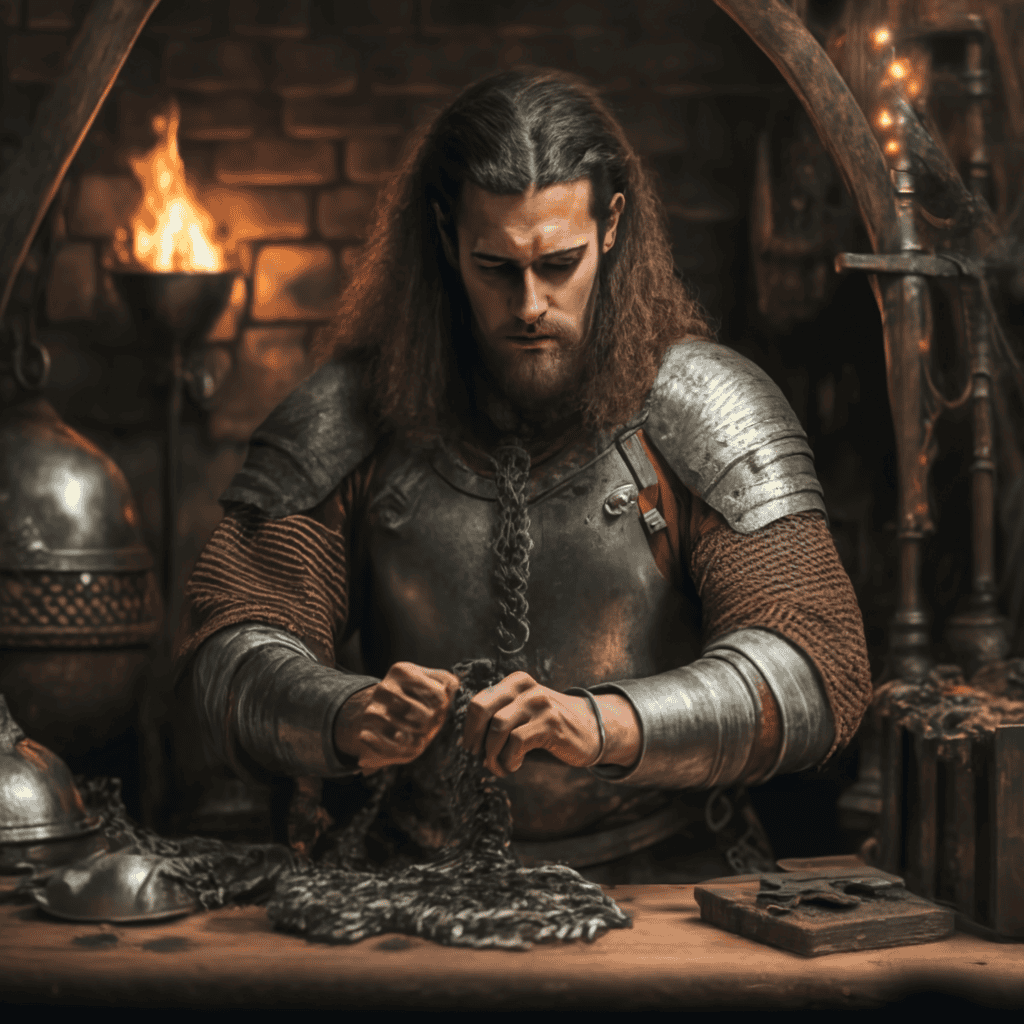
1. Armourer
An armourer was similar to a blacksmith, and in the early medieval period many medieval blacksmiths did indeed make armour and weapons. As the Middle Ages progressed, however, advances in medieval warfare and weapon technology led to the rise of specialist smiths, including dedicated armourers who focused solely on protective equipment.
An armourer would heat metal in a forge and then hammer and shape it on an anvil to produce items such as helmets, breastplates, and mail armour. Major centres of armour production later developed in Germany and Italy, where highly sophisticated armour could be produced efficiently and in large quantities for knights, nobles, and professional soldiers.
Learn More about Medieval Craftsman – The Armourer
2. Bowyer
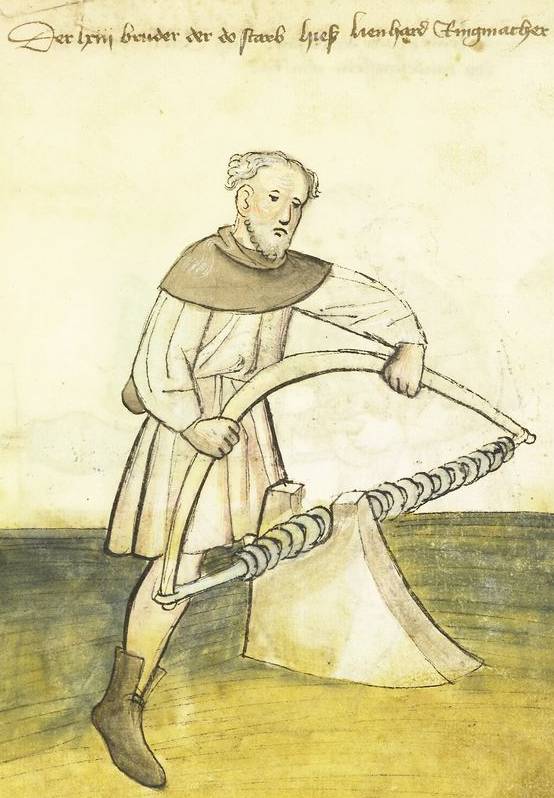
A bowyer was in high demand as a weapons maker during the medieval period, as he produced the powerful longbows used in many battles of the Hundred Years’ War between England and France during the Plantagenet period. These bows were a crucial element of medieval English military success.
A skilled bowyer could carefully shape freshly cut wooden bow staves, usually from yew, into functional longbows through hours of intense, precise work. The quality of a bow depended on the bowyer’s experience, knowledge of wood, and ability to balance strength with flexibility.
Learn more about the Medieval Craftsman – The Bowyer
3. Fletcher
A fletcher either made the entire arrow or added the fletching to the end of the arrow. The fletching, also known as the arrow flight, consisted of feathers attached to the shaft, which helped stabilise the arrow and guide its flight through the air.

🛠️ Other Important Medieval Craftsmen
Tanners
Tanners processed animal hides into usable leather, which was essential for shoes, belts, armour straps, and saddles. Because the work produced strong odours, tanneries were usually located outside town centres.
Fullers
Fullers played a key role in the textile industry by cleaning and thickening woollen cloth. Their work improved the quality and durability of fabric after it had been woven.
Dyers
Dyers specialised in colouring cloth using natural dyes derived from plants, minerals, and insects. Certain colours were expensive and closely associated with wealth and status.
Glaziers
Glaziers created stained glass windows for churches and cathedrals. This highly skilled craft combined artistry with technical knowledge and often required craftsmen to travel between building sites.
❓ Medieval Craftsmen & Trades – Frequently Asked Questions
What was a medieval craftsman?
A medieval craftsman was a skilled worker who produced goods such as tools, clothing, weapons, and building materials. Craftsmen were essential to medieval towns, castles, and everyday life.
How were medieval craftsmen trained?
Craftsmen trained through long apprenticeships, learning their trade under a master. Afterward, they became journeymen and could eventually qualify as master craftsmen.
What role did guilds play in medieval trades?
Medieval guilds regulated training, prices, wages, and quality. They protected members’ interests and controlled who could legally practise a trade.
Were medieval craftsmen wealthy?
Most craftsmen lived modestly, though successful masters—especially goldsmiths and merchants—could become quite wealthy and influential in urban society.
What were the most important medieval crafts?
Key medieval crafts included blacksmithing, carpentry, weaving, stonemasonry, and armour-making, all vital to survival, warfare, and construction.
Did craftsmen work in castles?
Yes. Skilled craftsmen such as masons, armourers, and carpenters were often employed directly by castles to maintain defences and equipment.
Could women be medieval craftsmen?
Women sometimes worked in crafts such as weaving, brewing, and textile production, often within family businesses, though guild membership was usually restricted.
What happened if a craftsman broke guild rules?
Guilds could fine, suspend, or expel members who broke rules, which often meant losing the legal right to practise their trade.
🧠 Medieval Craftsmen Knowledge Quiz
📜 Glossary of Medieval Crafts & Trades
A trainee craftsman who learned a trade under a master for several years.
A qualified craftsman who had completed an apprenticeship but was not yet a master.
A fully qualified guild member allowed to run a workshop and train apprentices.
An organisation regulating a specific trade, controlling quality, prices, and membership.
A licensed craftsman authorised to mint coins for the medieval crown.
A specialist metalworker who produced armour and protective equipment.
A craftsman who made bows, particularly longbows used in medieval warfare.
A skilled builder who cut and shaped stone for castles, churches, and cathedrals.