Medieval instruments and musicians played a central role in the cultural, religious, and social life of the Middle Ages. From the grand halls of castles to bustling town squares and sacred churches, music shaped entertainment, worship, and storytelling across medieval Europe. Minstrels, troubadours, trouvères, jongleurs, and waits performed using a wide range of string, wind, and percussion instruments, preserving history and tradition in a largely oral society. This guide explores the instruments medieval musicians played, their social roles, and how medieval music evolved from early sacred chant to rich secular performance.

Medieval Instruments and Musicians
Medieval instruments were played by a wide range of medieval musicians, including:
- Minstrels
- Troubadours
- Trouvères
- Jongleurs
- Waits
These musicians performed in castles, towns, villages, and at feasts, religious festivals, and royal ceremonies.
Troubadours and waits, in particular, were often employed by nobles and kings, providing music for important public and private occasions.
Most medieval musicians were skilled at playing several instruments, although some specialised in one or two. By the high and late medieval period, a wide variety of musical instruments was available across Europe.
🎶 Click-to-Reveal: Medieval Instruments & Musicians
Who were medieval musicians?
Medieval musicians included minstrels, troubadours, trouvères, jongleurs, and town waits. Some served courts or churches, while others travelled to perform in towns, markets, and festivals.
Where did they perform?
Performances took place in castles, great halls, churches, town squares, fairs, and during major religious feast days. Outdoor music often needed louder instruments to carry over crowds.
What instruments were most common?
Common medieval instruments included the lute, harp, vielle, rebec, pipes, recorders, drums, and bells. Instrument choice depended on location, audience, and musical style.
String, wind, and percussion — what’s the difference?
String instruments were plucked or bowed (like the harp or vielle). Wind instruments used blown air (like pipes and recorders). Percussion instruments were struck (like drums and cymbals).
What were “Bas” and “Haut” instruments?
Medieval writers often grouped instruments by volume: Bas instruments were soft (suited for indoors), while Haut instruments were loud (used outdoors). This refers to loudness, not pitch.
How did church music differ from secular music?
Church music focused on sacred worship, including Latin chant and later polyphony. Secular music was performed in vernacular languages and often explored courtly love, chivalry, humour, and storytelling.
Categories of Medieval Instruments
Medieval instruments were commonly divided into three main categories:
- Percussion instruments
- String instruments
- Wind instruments
This classification reflects how sound was produced rather than musical style.
Percussion Instruments
In the Middle Ages, percussion instruments included bells, cymbals, drums, triangles, and wooden sound blocks.
Most medieval drums were made from hollowed wood or clay shells, with animal skin membranes stretched tightly across the opening. These skins were often warmed to increase flexibility before being secured.
As instrument-making advanced, rope-tensioned drums appeared, allowing musicians to adjust pitch and tone more effectively.
Percussion instruments produced sound through direct vibration, and volume could be controlled by striking the instrument softly or forcefully using hands or sticks. The drum was the most widespread percussion instrument throughout medieval Europe.

String Instruments
Medieval string instruments produced sound by strings that were plucked, bowed, or struck, usually using fingers or a plectrum.
Popular medieval string instruments included:
- Lute
- Harp
- Psaltery
- Fiddle
- Vielle
- Rebec
These instruments were commonly used in both secular entertainment and courtly music, especially in the high medieval period.

Wind Instruments
Medieval wind instruments were typically made of wood, bone, or horn. Sound was produced by blowing air through the instrument and changing pitch by covering finger holes.
Common medieval wind instruments included:
- Pipe
- Recorder
- Flute
- Bagpipe
- Horn
- Shawm (later medieval)
These instruments were widely used by minstrels, troubadours, and waits, particularly for outdoor performances.
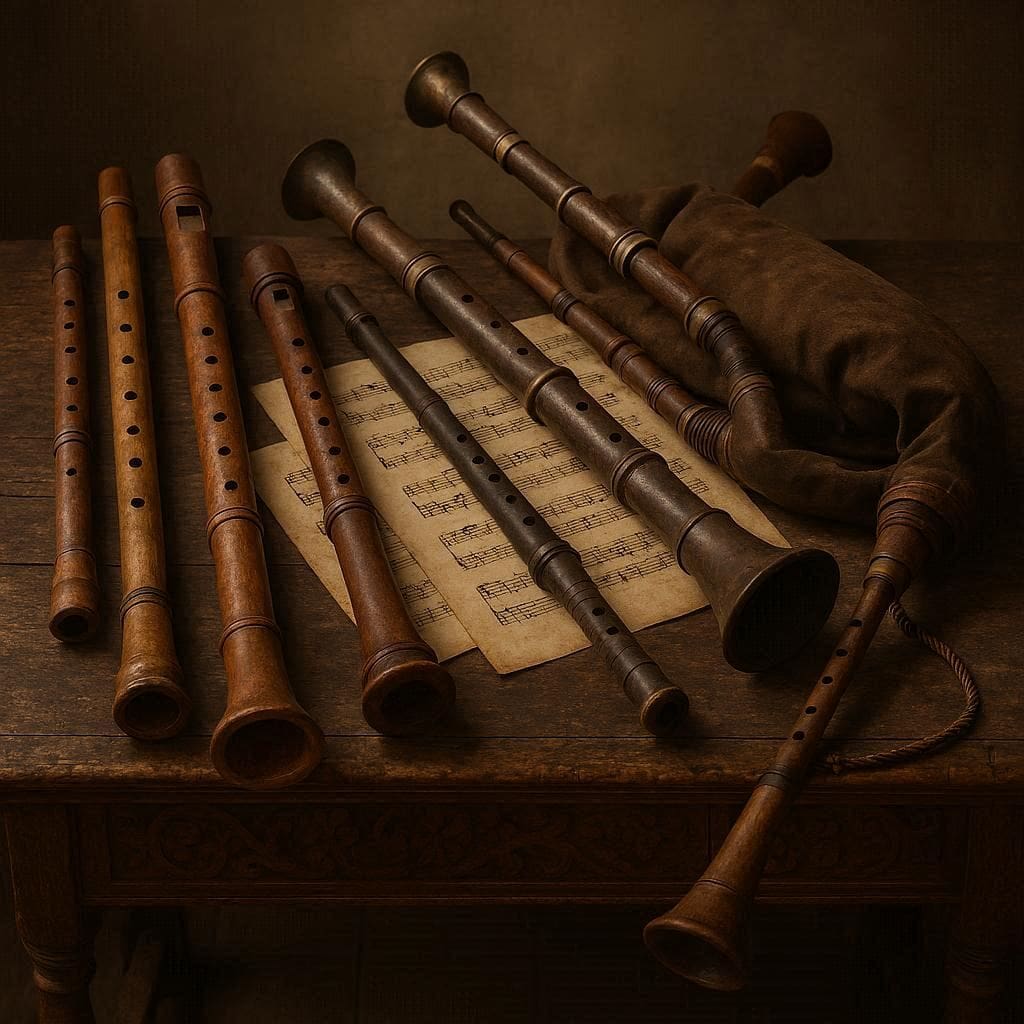
Bas and Haut Instruments
Medieval instruments were also classified by volume (not pitch) into bas instruments and haut instruments.
Bas (Soft) Instruments
- Used indoors
- Generally gentle and quiet
- Included: lute, harp, rebec, vielle, recorder
Haut (Loud) Instruments
- Used outdoors
- Loud and penetrating
- Included: pipe, shawm, sackbut, tabor
This distinction helped determine where instruments were played and for what purpose.

Other Medieval Musical Instruments
Some medieval instruments were highly distinctive:
- Hurdy-gurdy – a string instrument played with a rotating wheel
- Organistrum – an early form of the hurdy-gurdy
- Pipe organ – widely used in churches
From the 12th century onward, instrument design expanded rapidly, making medieval Europe a period of significant musical experimentation.
Medieval musicians and their instruments laid the foundations for later Western musical traditions. Through innovation, cultural exchange, and performance, medieval music evolved from simple chant into complex artistic expression. Whether entertaining kings, leading religious worship, or performing in marketplaces, musicians shaped medieval culture and preserved knowledge long before written literacy became widespread. Many medieval instruments and musical forms influenced Renaissance music and remain recognizable in modern folk and classical traditions, ensuring the lasting legacy of medieval music in European history.
❓ Bas & Haut Instruments – Frequently Asked Questions
What do bas and haut mean in medieval music?
The terms bas and haut refer to volume, not pitch. Bas instruments were soft, while haut instruments were loud and penetrating.
Why were bas instruments mainly played indoors?
Bas instruments produced gentle sounds suited to enclosed spaces such as chambers, courts, and private halls.
What settings required haut instruments?
Haut instruments were used outdoors for festivals, civic ceremonies, military signals, and public celebrations.
Is bas the same as low-pitched?
No. A bas instrument could be high-pitched but quiet. The distinction was based on loudness, not pitch range.
Did this system apply everywhere in medieval Europe?
The bas and haut classification was most common in Western Europe, especially during the later Middle Ages.
🧠 Bas & Haut Instruments Knowledge Quiz
📜 Glossary of Bas & Haut Musical Terms
Bas Instruments
Soft medieval instruments intended for indoor performance and intimate settings.
Haut Instruments
Loud medieval instruments designed for outdoor use and public events.
Lute
A plucked string bas instrument commonly used in courtly and chamber music.
Recorder
A soft woodwind bas instrument suitable for indoor performance.
Shawm
A powerful double-reed haut instrument used for outdoor music and ceremonies.
Sackbut
An early trombone-like haut instrument capable of projecting sound over distance.
Tabor
A small drum classified as a haut instrument, often paired with a pipe.
Vielle
A bowed string bas instrument used in both secular and courtly medieval music.