Medieval Europe was shaped by warfare, and this constant state of conflict naturally influenced recreation. Many of the era’s most popular pastimes doubled as training for battle, blending sport with martial preparation.
From grand tournaments attended by royalty to village wrestling matches, medieval fighting games tested strength, endurance, skill, and courage. While some were highly ritualized, others were chaotic and dangerous — reflecting the harsh realities of the age.
These activities were not merely entertainment; they helped warriors maintain combat readiness and allowed nobles to demonstrate honor, reputation, and physical superiority.
Medieval fighting games were combat-based sports and contests that developed throughout the Middle Ages to train warriors and entertain spectators. Popular activities included jousting, tournaments, archery competitions, wrestling, and mock sword fighting. While some events were carefully regulated, many were physically dangerous and closely resembled real battlefield conditions.
Explore More Medieval Sports and Warfare
Tournaments: The Greatest Spectacle of Combat
No event captured the spirit of medieval martial culture more than the tournament.
Emerging in the 11th century, tournaments quickly evolved into large public spectacles where knights competed before crowds of nobles and commoners alike.
These gatherings served multiple purposes:
- Military training
- Social display
- Political networking
- Opportunities for ransom and profit
- Reinforcement of chivalric ideals
Victory brought prestige, wealth, and sometimes powerful patronage.
Among the most famous tournament contests were the mêlée and joust.
Mêlée: The Closest Game to Real Warfare
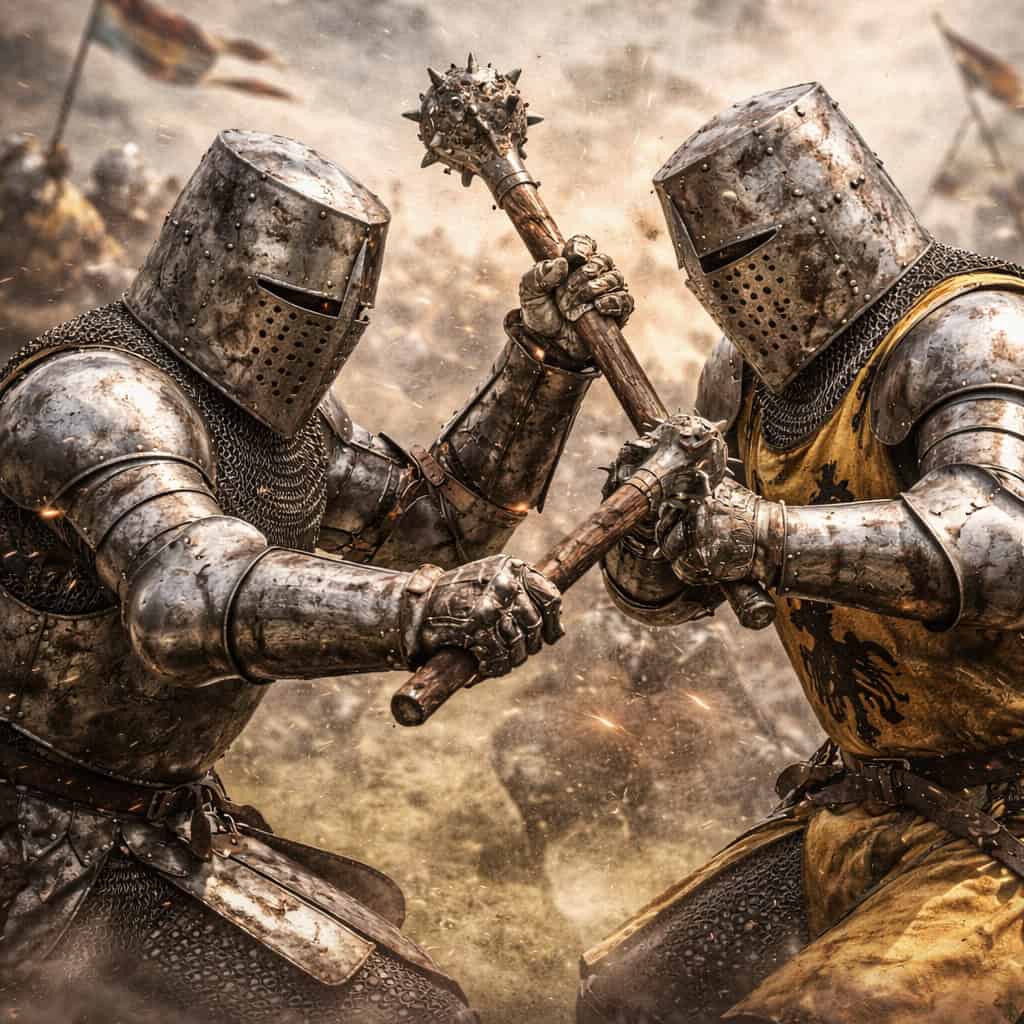
The mêlée was one of the earliest and most dangerous medieval fighting games.
Two teams of mounted knights charged at each other across open ground, attempting to break enemy formations and capture opponents. Unlike staged duels, the mêlée often resembled an actual battlefield.
Weapons were typically blunted, but injuries — and deaths — were not uncommon.
Capturing an opposing knight could result in a substantial ransom, making the mêlée both a sporting and financial opportunity.
For centuries, it remained the centerpiece of tournament culture.
Jousting: The Icon of Knightly Combat
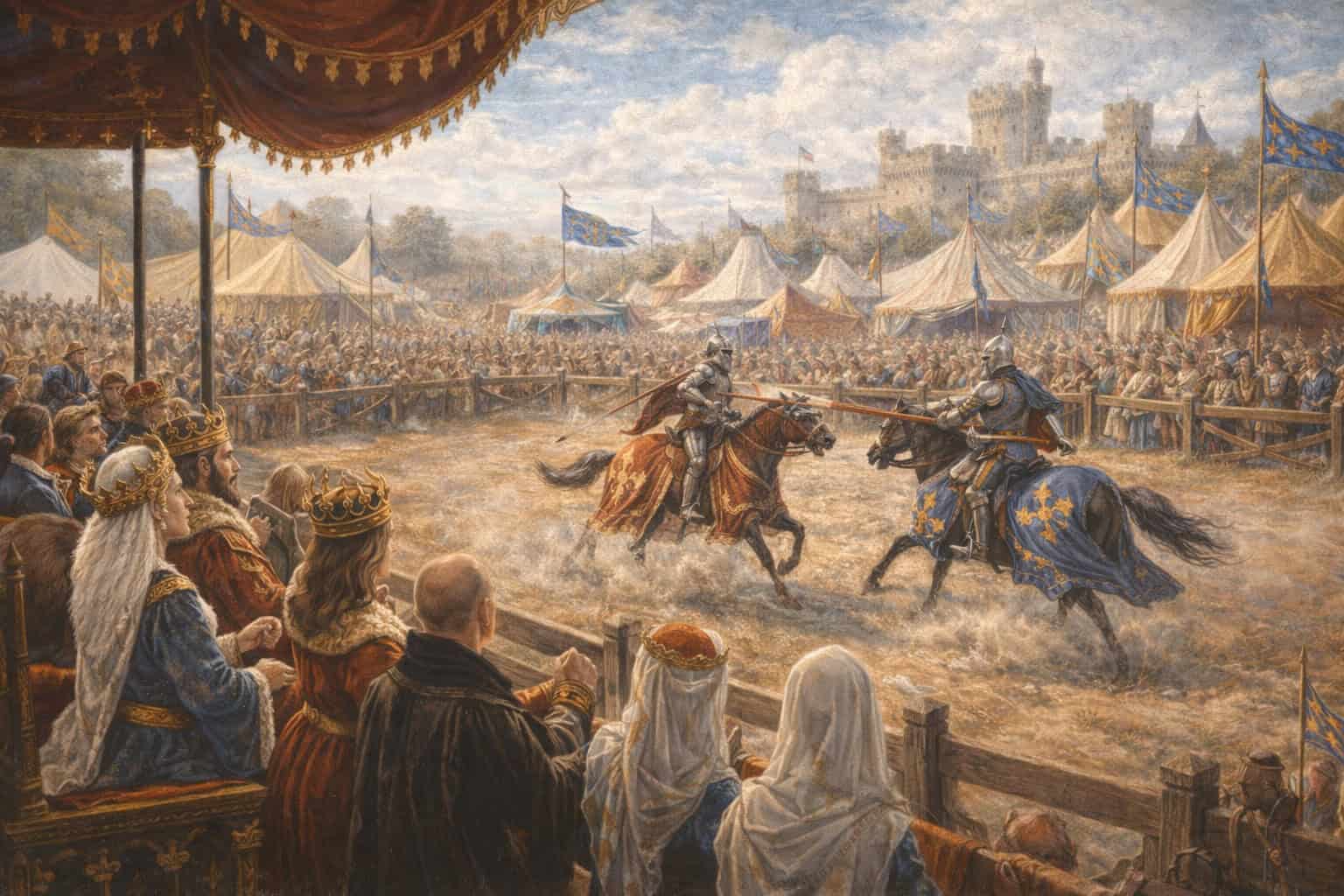
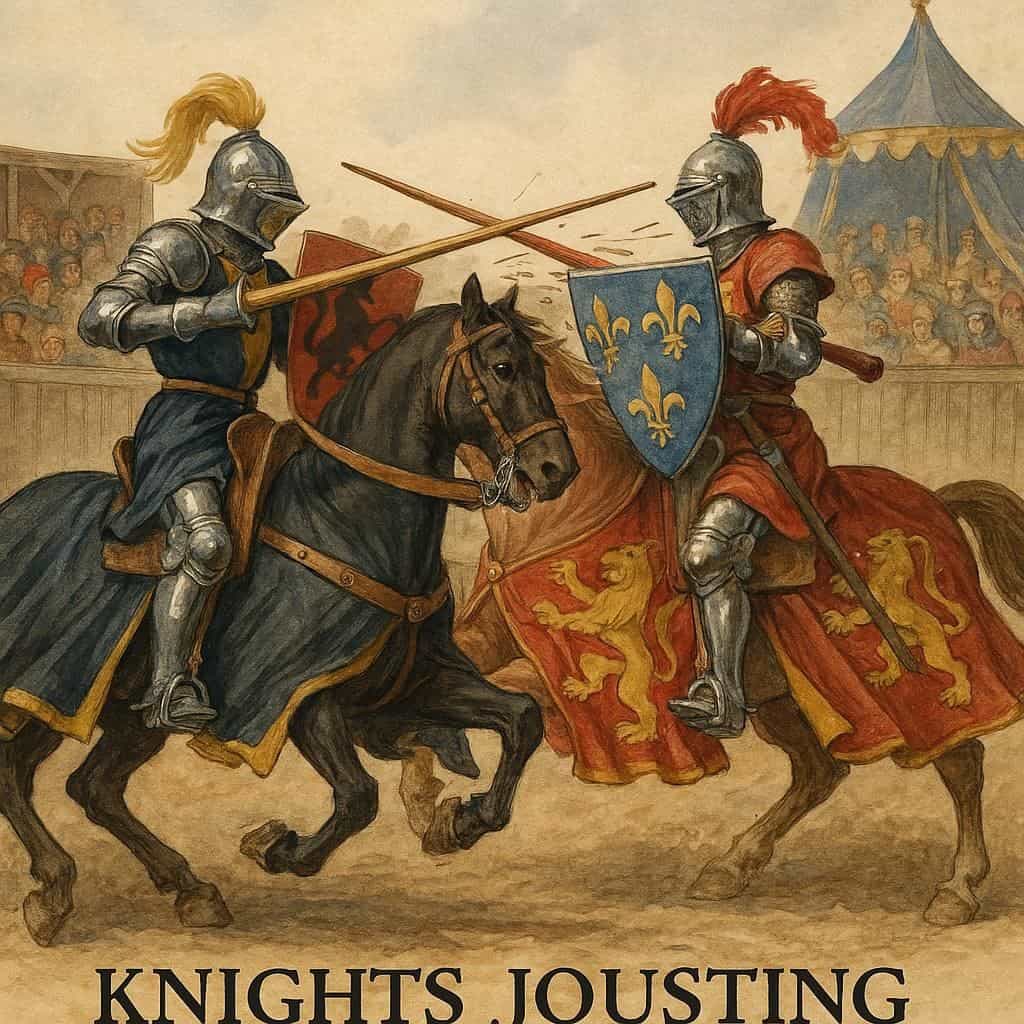
By the late Middle Ages, jousting surpassed the mêlée in popularity and became the defining image of knightly sport.
In a joust, two armored knights rode toward each other with lances, aiming to unhorse their opponent.
Success required exceptional coordination:
- Controlling a powerful warhorse
- Maintaining balance in heavy armor
- Striking with precision at high speed
Though safer than early tournaments, jousting still carried serious risk.
Beyond competition, it symbolized discipline, honor, and aristocratic identity.
Archery Contests
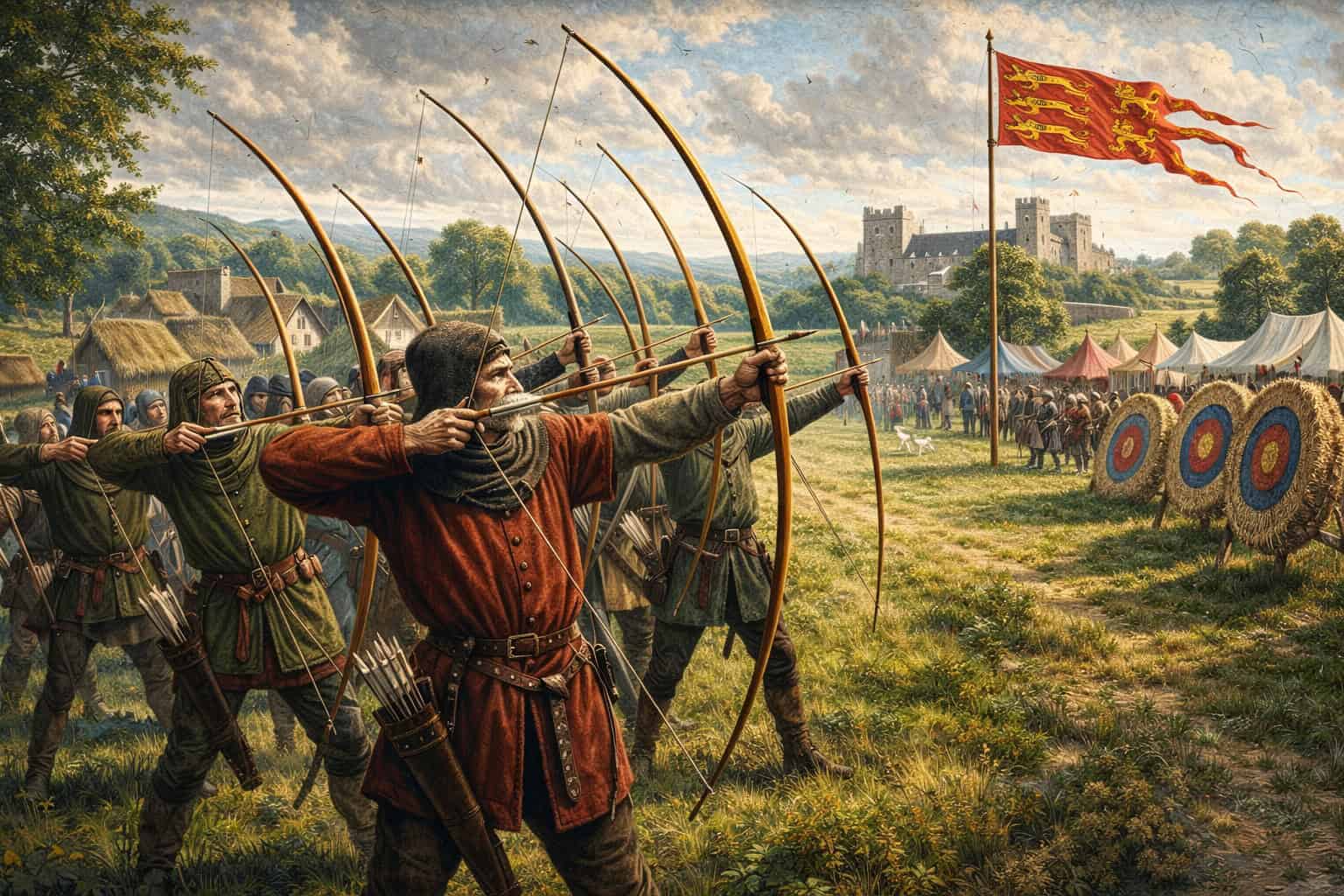
Archery occupied a unique place among medieval fighting games because it involved both civilians and professional soldiers.
In England especially, laws required men to practice regularly with the longbow — a weapon that proved devastating in battles such as Crécy and Agincourt.
Archery competitions rewarded:
- Accuracy
- Strength
- Consistency
- Battlefield readiness
Over time, these contests helped produce some of the most feared missile troops in Europe.
Sword Fighting and Martial Training
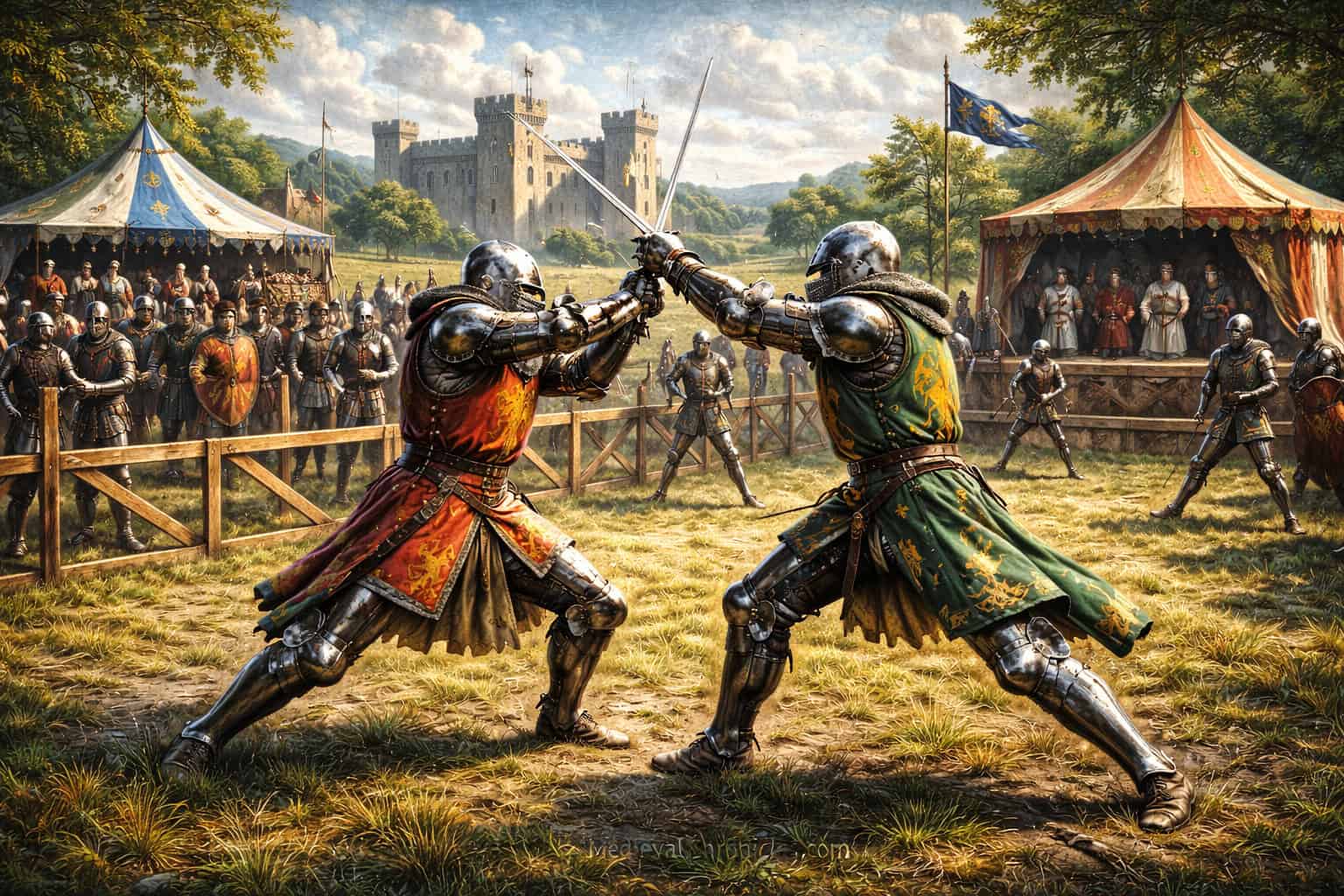
Mock sword combat allowed warriors to sharpen their technique without entering real battle.
Training exercises often included:
- Sparring with blunted weapons
- Shield drills
- Group combat practice
- Reaction training
For knights, mastering the sword was essential — not only for survival but for reputation.
Skill with weapons reinforced social hierarchy, separating the trained warrior elite from the general population.
Medieval Wrestling
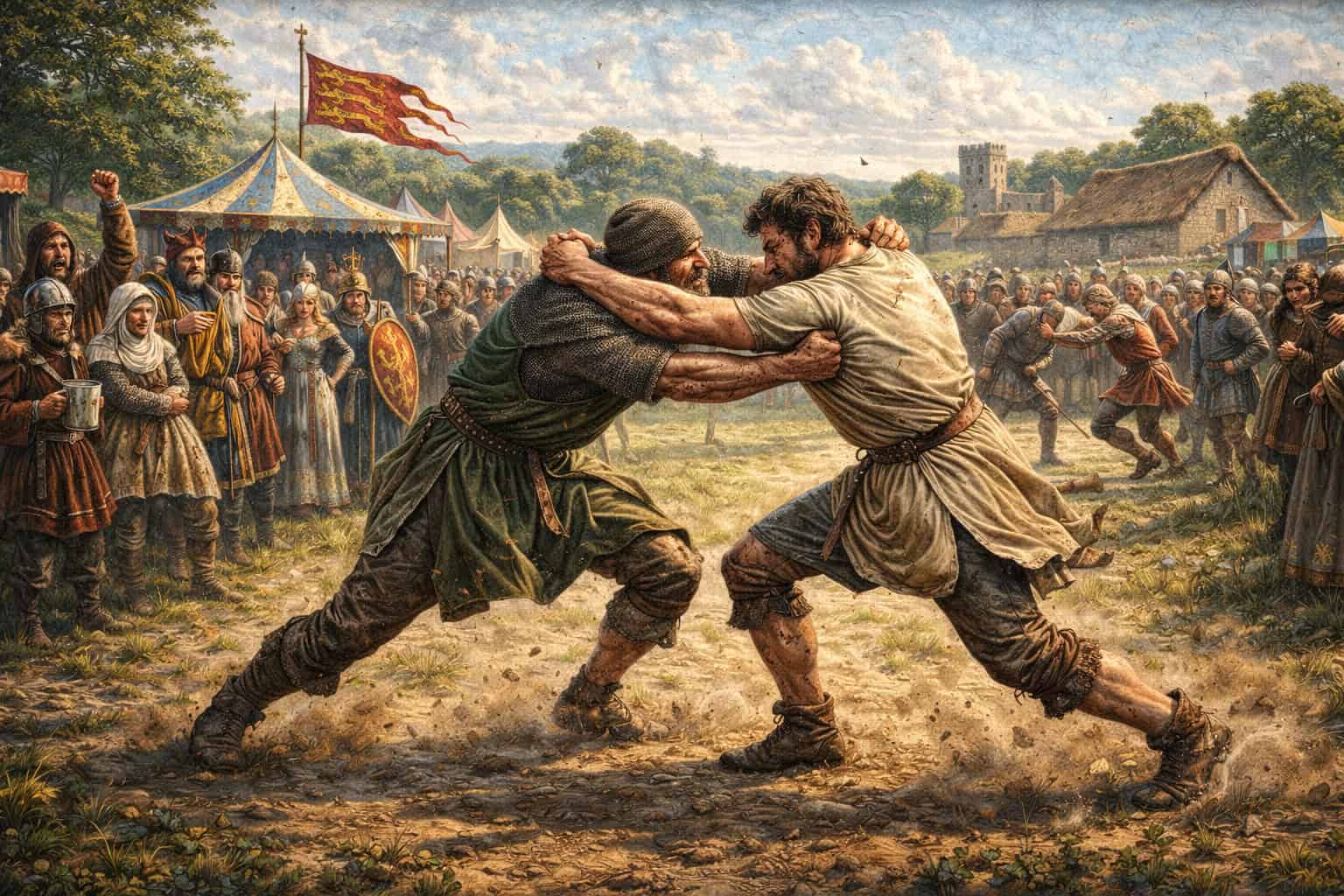
Wrestling was one of the most widespread fighting sports of the Middle Ages, practiced across nearly every social class.
Unlike tournaments, wrestling required minimal equipment, making it accessible to peasants as well as nobles.
Medieval wrestling styles emphasized:
- Throws
- Joint locks
- Grappling
- Balance disruption
Combat manuals from later centuries even illustrate sophisticated wrestling techniques intended for armored fighters who had lost their weapons.
In many regions, wrestling matches were fixtures at festivals and fairs.
It was both entertainment and practical combat training.
Quarterstaff and Pole Weapon Contests
Staff weapons were common battlefield tools, and competitive bouts helped fighters develop reach, timing, and defensive awareness.
The quarterstaff became particularly associated with England, where it was used in organized contests that rewarded control rather than brute aggression.
These matches were fast-paced and technically demanding.
Why Fighting Games Mattered in Medieval Society
Martial sports were deeply connected to the values of medieval culture.
They helped:
- Prepare men for war
- Display noble status
- Reinforce chivalric ideals
- Build local identity
- Provide structured outlets for aggression
In a world where conflict was never far away, the boundary between sport and survival was often thin.
The Gradual Decline of Medieval Fighting Sports
By the 16th century, technological change began reshaping warfare.
Gunpowder weapons reduced the dominance of armored knights, and battlefield tactics shifted away from traditional cavalry combat.
As a result:
- Large tournaments became less practical
- Jousting declined
- Martial games evolved into ceremonial displays
Yet their cultural legacy endured.
Even today, the image of armored knights clashing in tournament fields remains one of the most powerful symbols of the medieval world.
Medieval Fighting Games FAQ
What were the most popular medieval fighting games?
The most popular medieval fighting games included jousting, tournament mêlées, archery contests, wrestling, and mock sword combat. These activities helped warriors develop skills needed for real warfare.
Were medieval tournaments dangerous?
Yes. Early tournaments were extremely dangerous and sometimes resulted in serious injuries or death. Although safety measures improved over time, these contests still carried significant risk.
Why were fighting games important in the Middle Ages?
Fighting games prepared knights and soldiers for battle, reinforced social status, and demonstrated ideals such as courage and honor. They also served as major public spectacles that attracted large audiences.
Did ordinary people participate in medieval combat sports?
Yes. While tournaments were primarily for nobles, sports such as wrestling, archery, and staff fighting were widely practiced by common people.
When did medieval fighting games decline?
Many traditional combat sports declined during the 16th century as gunpowder weapons transformed warfare and reduced the battlefield role of armored knights.
Glossary of Medieval Fighting Games
A mounted contest in which two knights charged at each other with lances.
A large-scale tournament battle involving teams of knights fighting simultaneously.
A powerful medieval bow used in both warfare and competitive archery.
A moral and social code associated with medieval knighthood emphasizing honor and bravery.
A long wooden staff used for training, self-defense, and competitive fighting.
A formal event where knights competed in martial contests before spectators.