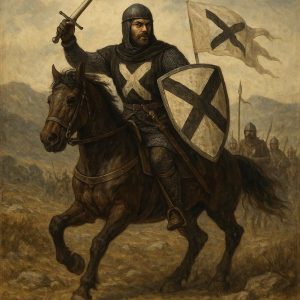
The Order of the Teutonic Knights was a powerful Catholic military order founded at the end of the 12th century, during the time of the Crusades in the Holy Land. Originally established to aid Christian pilgrims and care for the sick and injured, the Teutonic Order soon evolved into a formidable military and religious brotherhood. Known for their discipline, distinctive white cloaks emblazoned with black crosses, and their later campaigns in Eastern Europe, the Teutonic Knights became one of the most influential crusading orders of the medieval era.
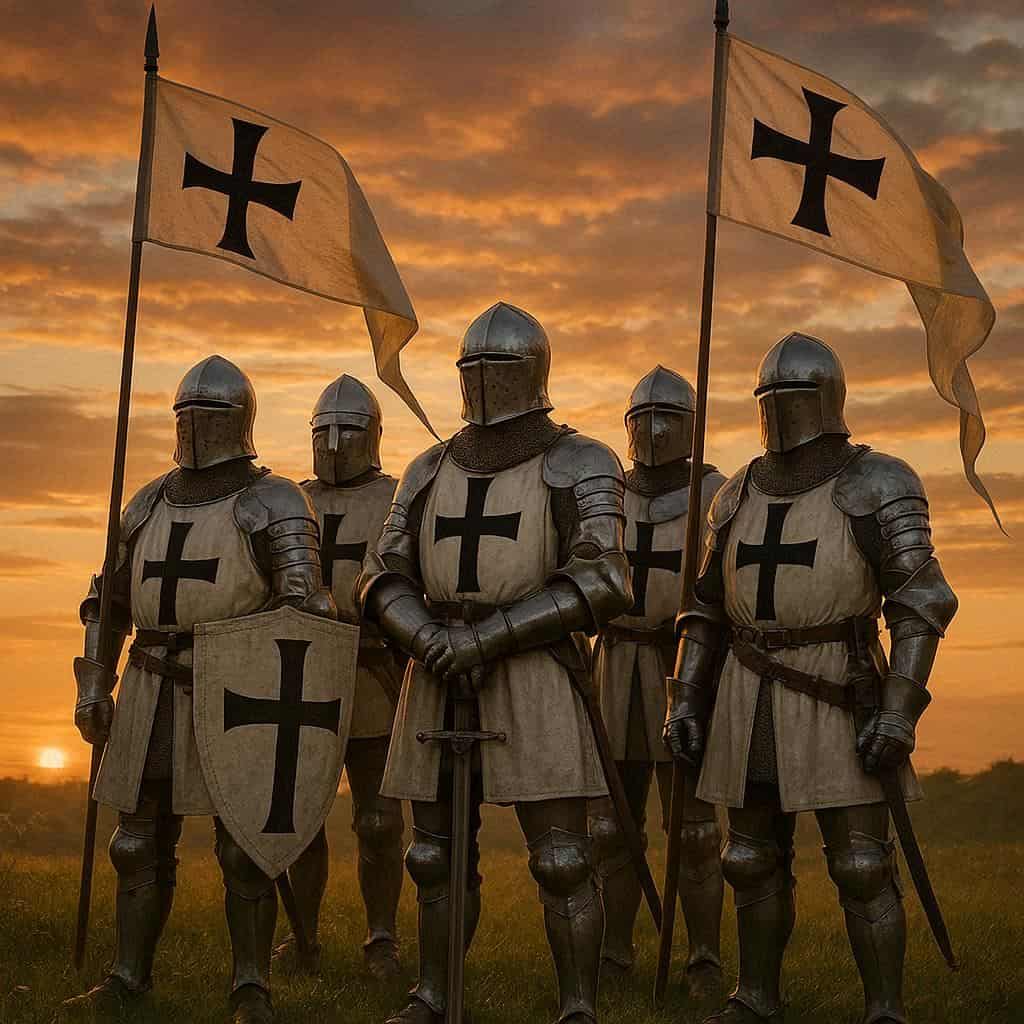
The Teutonic Order first established its base in the city of Acre, a vital stronghold and port of great strategic importance during the Crusades in the Holy Land. From there, the Teutonic Knights provided aid to Christian pilgrims and took part in major military campaigns. However, after the fall of Acre in 1291 and the expulsion of the Crusader armies from the Middle East, the Order redirected its mission northward. Seeking new fields of influence, the knights turned to Poland, Lithuania, and Prussia, launching campaigns to Christianize the pagan tribes of Northern Europe and establish a powerful monastic state along the Baltic coast.

By the end of the 13th century, the Teutonic knights had a monastic state of their own, a very sound financial base, a sizeable army of mercenaries, a naval fleet, and were virtually the administrators of an independent state nominally under Papal supervision.

📜 Did You Know? The Teutonic Knights and Their Medieval Legacy
- The Teutonic Order was founded in the late 12th century in the city of Acre during the Crusades in the Holy Land to care for sick pilgrims and defend Christian interests.
- After the fall of Acre in 1291, the Teutonic Knights moved their headquarters to Venice, then to Prussia, where they built a powerful monastic state along the Baltic coast.
- The knights wore white mantles with a distinctive black cross, symbolizing purity, sacrifice, and steadfast faith in battle.
- They constructed massive stone castles and fortresses such as Malbork Castle, one of the largest brick fortresses in medieval Europe.
- Through the Baltic Crusades, the Order sought to Christianize pagan tribes in Prussia, Lithuania, and Livonia, expanding religious influence and territorial power.
Teutonic Knights Origins
The Order of the Teutonic Knights came into being in the last 12th century. It was originally a German-led institution meant to establish a hospital for Christians in the Holy Land.By the end of the century, the Order had been more organized along the lines of the Knights Templar. It had a military basis now and a Grand Master who led its operations.

By the beginning of the 13th century, the Order had evolved as a thoroughly military order and was meant to take part in the Christian Crusades against the Muslims in the Middle East.
However, the Order didn’t prove a very decisive battlefield force. It lost its headquarters in Acre when the city fell to Muslim forces in 1271.

Crusade and Invasion of Prussia
Prussia was a pagan region at the beginning of the 13th century. Upon the encouragement of the Polish rulers, the Teutonic Knights led a Crusade under Papal authority in the region.
The Crusades began around 1230 and it took the Order nearly fifty years to completely subdue the pagan Prussians.
This was mostly accomplished by killing most of the natives or forcing them into exile. The Order also attempted to expand into Kievan Rus but was thwarted at the landmark Battle of the Ice by Alexander Nevsky in 1242.

Teutonic Knights at the Height of Power
During the 14th century, the Teutonic Knights continued to expand their influence all over the Baltic countries and further inland. They were able to subdue Lithuania after a long and fierce struggle and were granted lands in Sweden and other areas in return for their military service.
By the beginning of the 15th century, the Order effectively had a huge state in northern Europe. This state spanned Prussia, Livonia, Estonia, and a range of other territories. At this time, the Order had a sizable fleet of its own and a formidable force of knights.

Teutonic Knights Decline
The decline of the Order began after Lithuania and other territories Christianised under the Order were thoroughly assimilated into Christendom. In 1410, the Order lost a major battle to a joint Polish-Lithuanian army. The defeat was the first of a series that the Order suffered throughout the 15th century.
By the 16th century, the Order had been ousted from Prussia. By the 19th century, the Order had two little territories under its direct control. It was finally dissolved on the orders of Napoleon in 1809, bringing the military history of the Order to an end. However, it was later revived and today functions as a charity group.
❓ Frequently Asked Questions About the Teutonic Knights
1. Who were the Teutonic Knights?
The Teutonic Knights were a medieval Catholic military order founded during the Crusades to protect Christian pilgrims and fight in defense of the Holy Land.
2. When and where was the Order founded?
The Order of the Teutonic Knights was established around 1190 in the city of Acre (modern-day Israel) during the Third Crusade.
3. What was the main goal of the Teutonic Knights?
Their mission was to care for the sick, aid Christian pilgrims, and later to Christianize pagan regions in Northern Europe, especially in **Prussia**, **Lithuania**, and **Livonia**.
4. Why did the Teutonic Knights move to Europe?
After the fall of Acre in 1291, the Order lost its base in the Holy Land and moved its headquarters to **Venice** and later to **Prussia**, where it became a powerful **military and religious state**.
5. What symbol did the Teutonic Knights wear?
They wore a white mantle emblazoned with a **black cross**, representing purity, discipline, and devotion to the Christian faith.
6. What was the legacy of the Teutonic Order?
The Teutonic Order left a lasting mark on **European history** through its castles, crusades, and role in shaping the **Christianization of the Baltic region**. Its legacy continues through modern charitable organizations descended from the Order.
⚔️ Test Your Knowledge: The Teutonic Knights Quiz