The Tudor dynasty (1485–1603) marked one of the most dramatic and transformative eras in English history. Rising to power after the bloody Wars of the Roses, the Tudors rebuilt the monarchy, reshaped religion, strengthened royal government, and oversaw immense growth in culture, trade, naval power, and national identity. Their rule bridged the gap between medieval England and the early modern world, leaving a legacy still felt today.
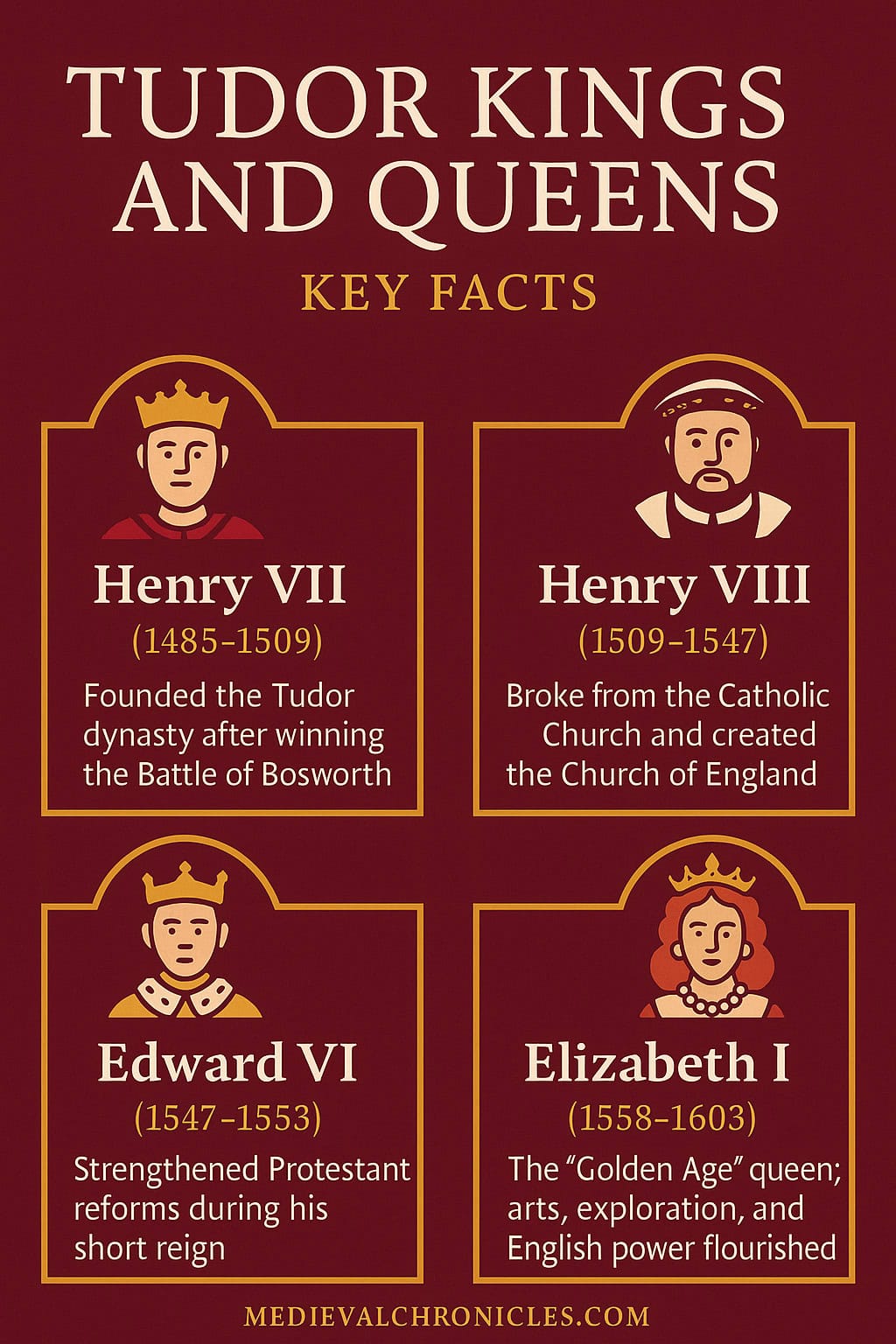
This expanded guide explores each Tudor monarch, their achievements, their failures, and the defining events of their century-long rule.
Origins of the Tudor Dynasty
The Tudor era began in 1485, when Henry Tudor defeated Richard III at the Battle of Bosworth Field, ending the Wars of the Roses. As Henry VII, he united the rival factions of Lancaster and York by marrying Elizabeth of York, symbolically restoring national stability.
The Tudors inherited a kingdom ravaged by decades of civil war, weakened nobility, and economic instability. Through calculated alliances, cautious financial policy, and tight royal control, they rebuilt England into a stronger, more centralized state.
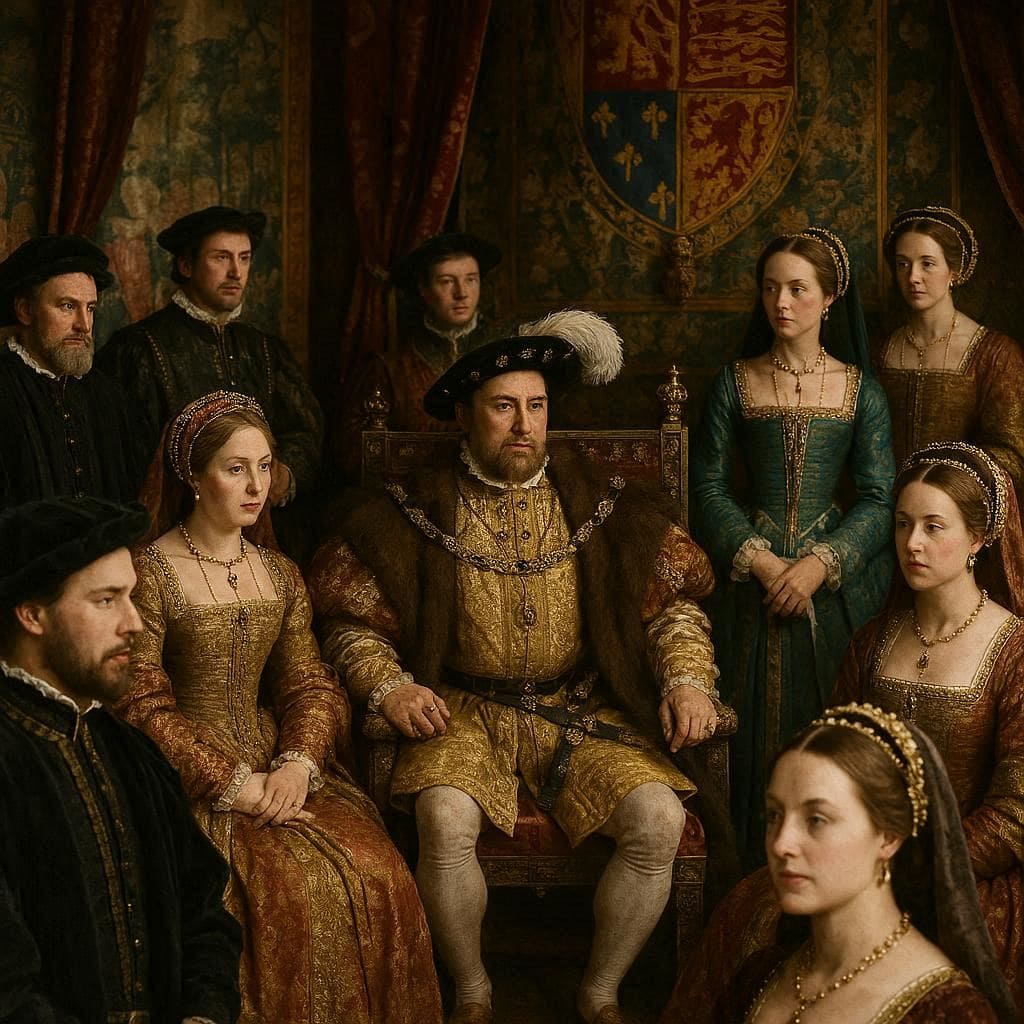
Timeline of Tudor Monarchs
- Henry VII (1485–1509) – Founder of the dynasty; restored stability after civil war.
- Henry VIII (1509–1547) – Famous for six marriages, the English Reformation, and major constitutional change.
- Edward VI (1547–1553) – Young Protestant king who advanced the Reformation.
- Mary I (1553–1558) – Attempted to restore Catholicism; known as “Bloody Mary.”
- Elizabeth I (1558–1603) – “The Virgin Queen,” presided over the Elizabethan Golden Age and the rise of England as a world power.
Tudor Kings and Queens: Detailed Profiles
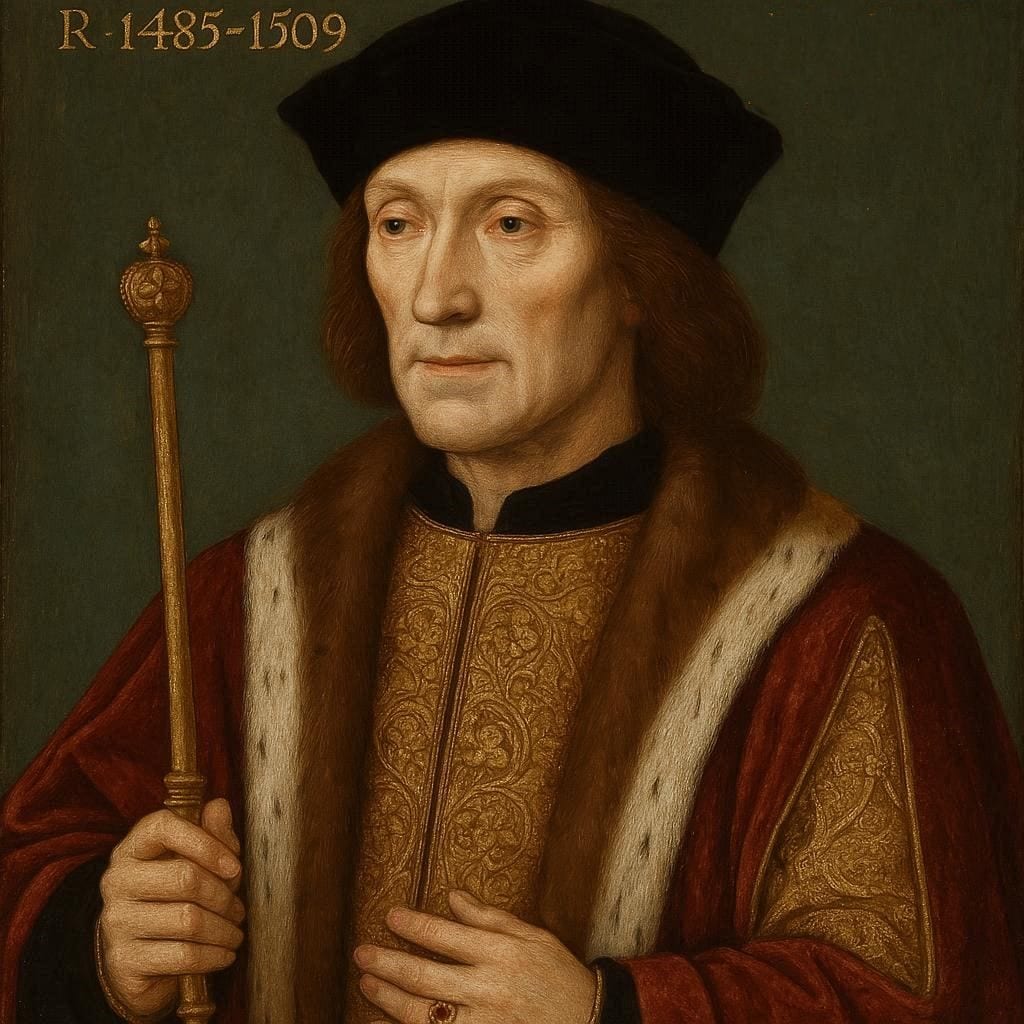
Henry VII (1485–1509)
First Tudor King | Founder of the Dynasty | Restored Political Stability
Henry VII emerged victorious from the Wars of the Roses and immediately focused on rebuilding England’s shattered political order. His reign is associated with:
- Re-establishing royal authority
- Increasing financial stability through careful taxation and trade expansion
- Reducing the power of unruly nobles
- Strengthening England’s international position through diplomatic marriages
His marriage to Elizabeth of York united the red rose of Lancaster and the white rose of York, ending decades of dynastic conflict. Henry VII also left a stable, wealthy monarchy for his son — something England had not enjoyed for generations.
Henry VIII (1509–1547)
Second Tudor King | English Reformation | Six Wives | Rise of Naval Power
Henry VIII is the most famous Tudor monarch and one of the most well-known kings in world history. His reign introduced monumental changes:
🏆 Key Achievements of the Tudor Era
The Tudors reshaped England politically, religiously, and culturally. Here are the most defining achievements that transformed the realm.
- Established the Church of England by breaking from the Roman Catholic Church under Henry VIII.
- Asserted the divine right of kings, dramatically expanding royal authority and centralised governance.
- Dissolved the monasteries, transferring vast monastic lands and wealth into the hands of the Crown.
- Strengthened the Royal Navy, laying the early foundations for England’s rise as a dominant maritime power.
- Oversaw a cultural renaissance in art, theatre, literature, music, and learning—leading to the Elizabethan Golden Age.
These achievements helped transform England from a medieval kingdom into a powerful early-modern state.
Key Achievements
- Established the Church of England by breaking from the Roman Catholic Church
- Asserted the divine right of kings and expanded royal power
- Dissolved the monasteries, transferring their immense wealth to the Crown
- Strengthened the Royal Navy, laying foundations for England’s future naval dominance
- Oversaw a cultural renaissance in art, music, and learning
Controversies
- Married six wives, executing two
- Ruthlessly suppressed rebellions, including the Pilgrimage of Grace
- Became increasingly tyrannical, paranoid, and unhealthy later in life
Despite his brutality, Henry VIII permanently transformed English religion, government, and national identity.

🛡️ Key Strengths of Tudor Rule
The Tudors were exceptionally skilled at maintaining political stability and controlling their public image. Their strategic marriages, propaganda, and reforms strengthened the English monarchy during a time of immense change.
- Strong central monarchy with reduced noble influence.
- Effective propaganda through art, ceremony, and symbolism.
- Diplomatic diplomacy balancing France, Spain, and the Holy Roman Empire.
- Administrative modernisation in taxation, justice, and bureaucracy.
- Legacy of stability that prepared England for the rise of the Stuarts.
Edward VI (1547–1553)
Third Tudor Monarch | England’s First Raised Protestant King
Edward VI, son of Henry VIII and Jane Seymour, became king at age nine. Real power rested with his regents: Edward Seymour and later John Dudley. Edward was fiercely committed to Protestant reform.
Major Developments Under Edward VI
- Creation of a fully Protestant Church of England
- Introduction of the Book of Common Prayer
- Abolition of the Mass and clerical celibacy
- Further dissolution of religious institutions
- Widespread social unrest and economic difficulty
Edward’s reign was short; he died at age 15 from a severe illness, likely tuberculosis or a related infection.
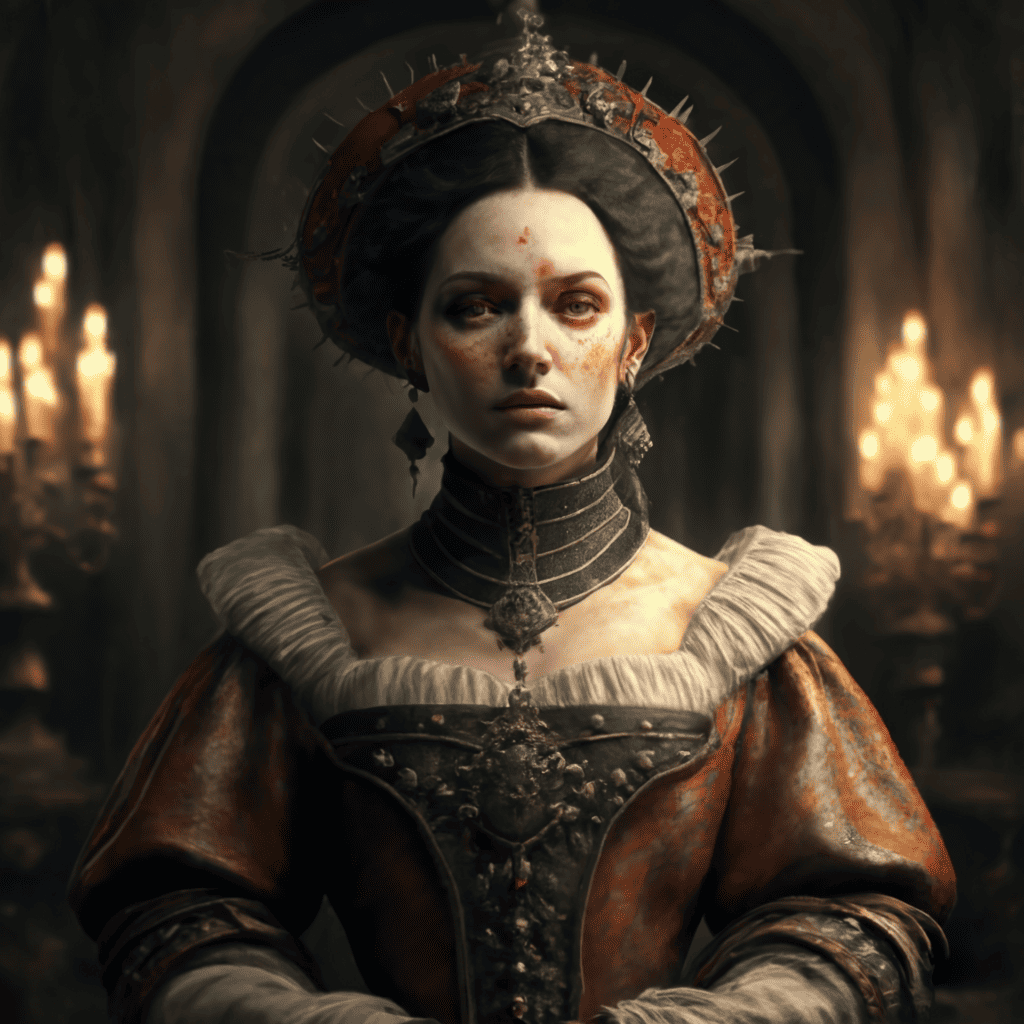
Mary I (1553–1558)
Fourth Tudor Monarch | First Queen Regnant | Catholic Restoration
Mary I, daughter of Henry VIII and Catherine of Aragon, overturned Edward’s reforms and restored Roman Catholicism.
Key Aspects of Her Reign
- Reinstated papal authority
- Married Philip II of Spain, a controversial decision
- Oversaw the execution of around 280 Protestants, earning her the nickname “Bloody Mary”
- Faced economic hardship, poor harvests, and political resistance
Although her intention was to reunite England with Catholic Europe, her methods damaged her reputation for centuries.
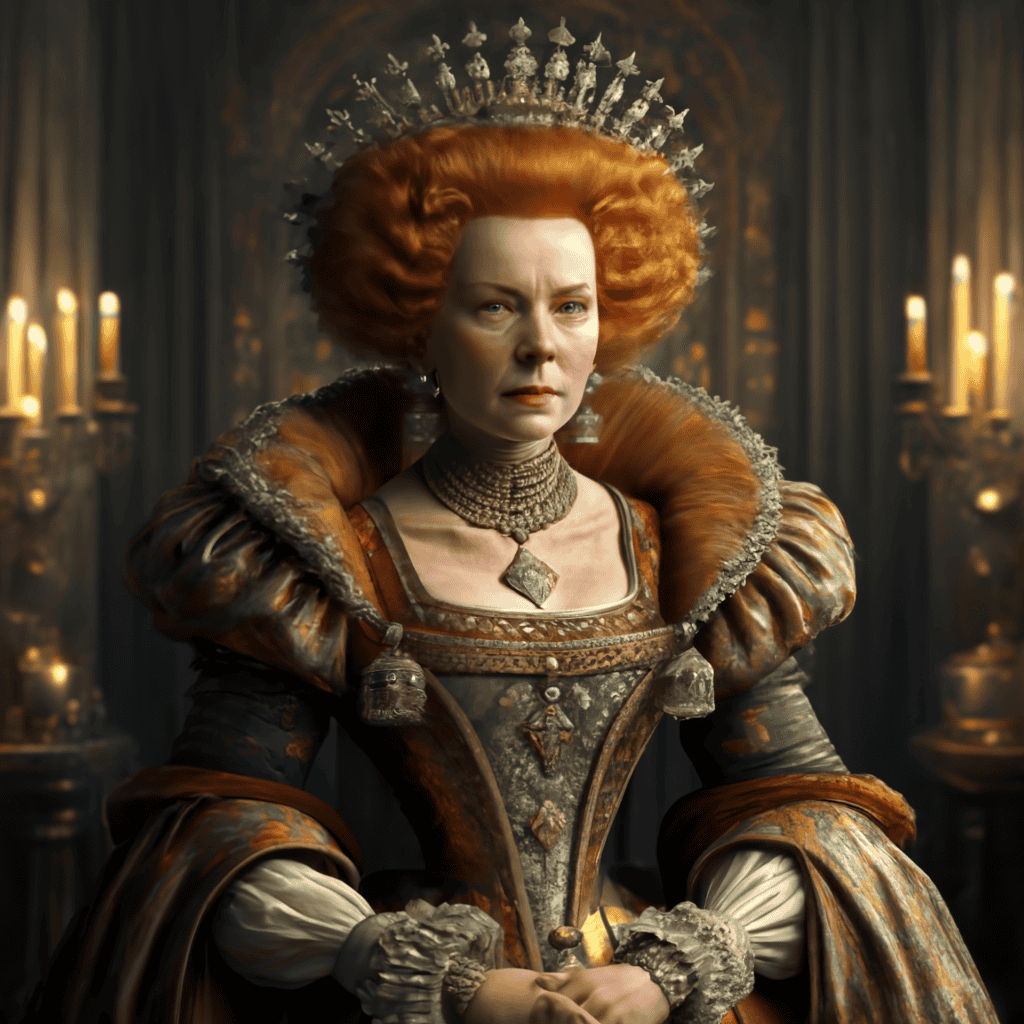
Elizabeth I (1558–1603)
Fifth Tudor Monarch | The “Virgin Queen” | Golden Age of England
Elizabeth I, daughter of Henry VIII and Anne Boleyn, restored Protestantism but adopted a more moderate approach than her siblings.
Achievements of Elizabeth’s Reign
- Established the enduring Elizabethan Religious Settlement
- Defeated the Spanish Armada (1588), securing England’s independence
- Expanded English exploration under figures like Sir Francis Drake
- Oversaw the Elizabethan Golden Age, a flourishing of literature and theatre
- Shakespeare
- Marlowe
- Spenser
- Strengthened national identity and centralized government
Elizabeth’s long, stable rule laid the foundations for England’s rise as a major world power. She died childless in 1603, ending the Tudor line.
Most Important Tudor Monarch
While all Tudor rulers left their mark, Henry VIII is considered the most significant due to:
- The English Reformation
- The creation of a national church
- Constitutional and governmental transformation
- Expansion of royal authority
- Cultural and naval development
His decisions reshaped English history permanently.
⚔️ Click to Reveal: Most Important Tudor Monarch
Most Important Tudor Monarch
While every Tudor ruler left a lasting impact on England, Henry VIII is widely considered the most significant Tudor monarch due to:
- His dramatic break with the Roman Catholic Church and creation of the Church of England.
- His sweeping Dissolution of the Monasteries, transforming land ownership and royal finances.
- Major expansions in royal authority and government bureaucracy.
- His influence on the English Reformation and long-term religious identity of England.
- His powerful image and personality, which shaped Tudor culture and later historical memory.
Worst Tudor Monarch
Historical consensus often considers Henry VIII both the most important and the most tyrannical Tudor monarch:
- Executed political rivals, advisors, and two wives
- Crushed rebellions savagely
- Bankrupted parts of the treasury
- Ruled increasingly through fear
Mary I is sometimes cited as the worst due to her burnings of Protestants, though her reign was short and complex.
⭐ Worst Tudor Monarch — Click to Reveal
⚠️ Reveal the Tudor Dynasty’s Worst Monarch
Henry VIII is widely regarded by historians as the worst Tudor monarch due to his brutality, excess, and the long-term instability created by his decisions.
- Executed two of his wives and hundreds of courtiers, nobles, and religious opponents.
- Bankrupted the monarchy through extravagant spending and costly foreign wars.
- Crushed rebellions mercilessly, including the Pilgrimage of Grace.
- Dissolved the monasteries, causing massive cultural destruction and social displacement.
- Left England religiously divided, setting the stage for decades of unrest.
His reign reshaped England forever—yet his legacy remains dominated by tyranny, instability, and personal excess.
Achievements of the Tudor Dynasty
Political and Administrative
- Strengthened the central monarchy
- Reduced the power of the nobility
- Improved financial stability
Religious
- Permanent shift from Catholicism to Protestantism
- Birth of the Church of England
Cultural
- Growth of literature, theatre, education, and renaissance thought
Economic
- Expansion of trade
- Increased urbanization
- Growing naval strength
International
- Rise of England as an emerging global power
Tudor Kings & Queens Summary
The Tudors ruled England for 118 years, transforming it from a divided, war-torn kingdom into a strong, culturally vibrant, religiously redefined nation. From Henry VII’s stabilizing rule to Elizabeth I’s brilliant reign, the dynasty reshaped the identity and future of England.
❓ Tudor Kings & Queens – Frequently Asked Questions
How did the Tudor dynasty begin?
The dynasty began in 1485 when Henry Tudor defeated Richard III at the Battle of Bosworth, ending the Wars of the Roses.
Why was Henry VIII so significant?
Henry VIII created the Church of England, dissolved the monasteries, and greatly expanded royal authority.
Why is Mary I called “Bloody Mary”?
She earned the nickname for executing Protestant reformers while restoring Catholicism.
What was the Elizabethan Golden Age?
A cultural flourishing during Elizabeth I’s reign marked by advancements in exploration, theatre, literature, and naval power.
Why did the Tudor dynasty end?
Elizabeth I died unmarried and without an heir in 1603, passing the crown to the House of Stuart.
🧠 Tudor Kings & Queens Quiz
📜 Glossary of Tudor Terms
Tudor Dynasty
Royal house that ruled England from 1485–1603, beginning with Henry VII and ending with Elizabeth I.
Reformation
The religious upheaval in the 16th century that led to England breaking from the Roman Catholic Church.
Church of England
The national church established by Henry VIII after separating from papal authority.
Dissolution of the Monasteries
The closure and destruction of monastic institutions in England between 1536–1541.
Privy Council
A group of advisors who assisted the monarch in governing Tudor England.
Act of Succession
Laws passed to determine who was legally recognised as heir to the English throne.
👑 Tudor Kings & Queens – Image Gallery