During the High Middle Ages (11th–13th centuries), Europe’s contact with the Islamic East — especially through the Crusades — profoundly transformed medieval society. Returning crusaders and merchants brought back exotic spices, silks, luxury goods, and new culinary traditions that reshaped daily life across Christendom. This growing fascination with Eastern refinement, artistic expression, and courtly manners inspired a wave of cultural sophistication in Europe.
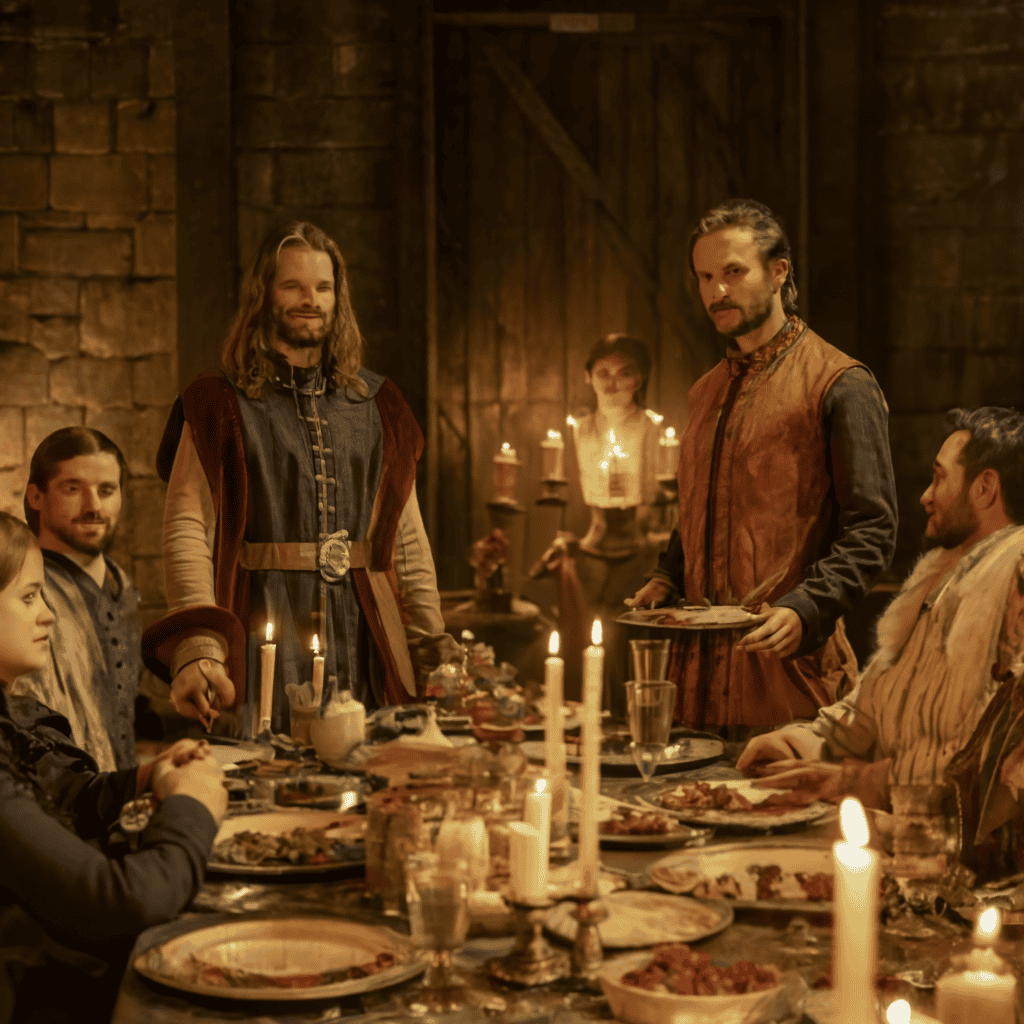
Nowhere was this influence more visible than at the medieval banquet — a grand social and political event that combined feasting, pageantry, and ritualized etiquette. These lavish gatherings not only showcased wealth and power, but also reflected the evolving ideals of chivalry, nobility, and hospitality that defined the medieval world.
🍗 The Difference Between Feasts and Banquets
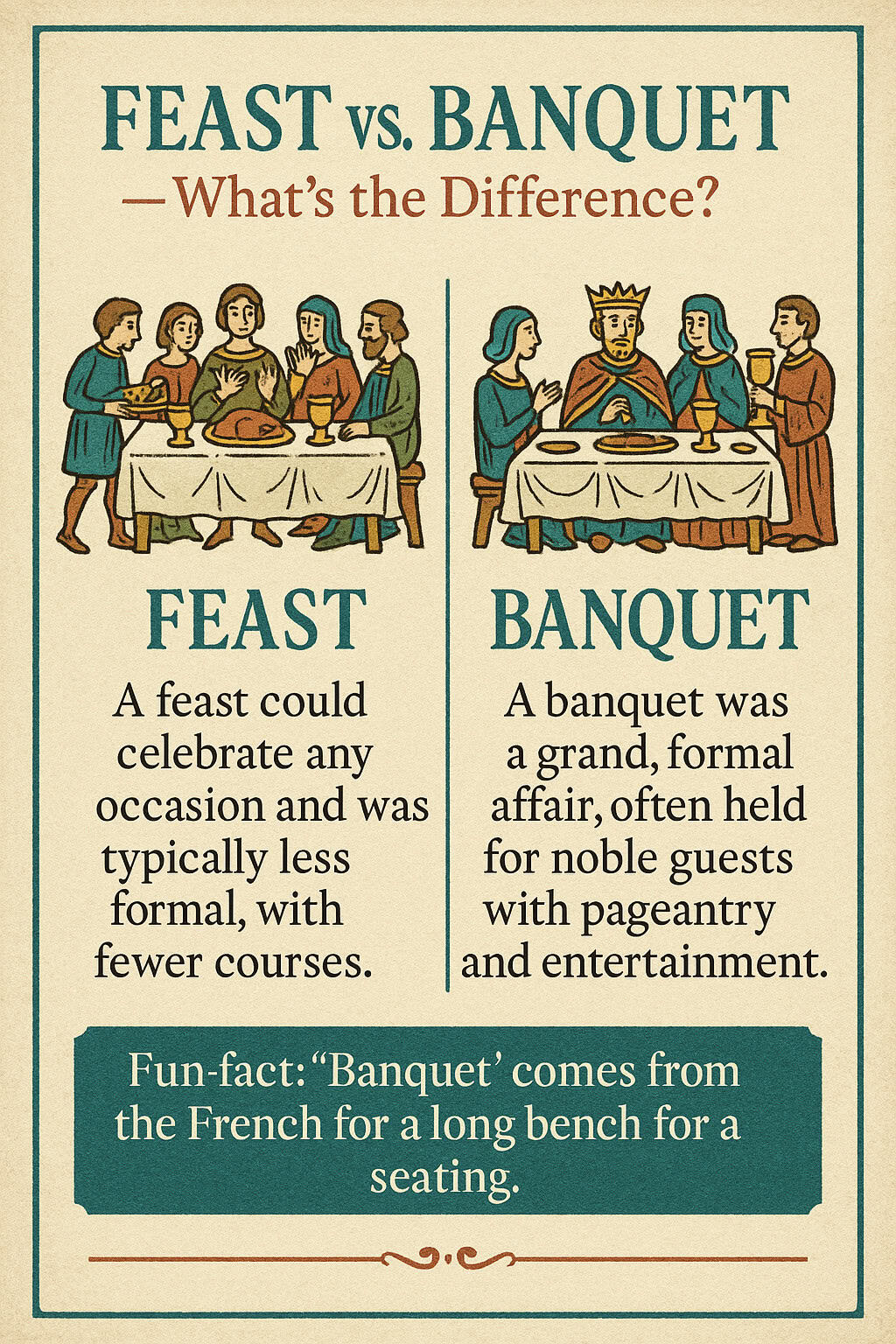
Medieval feasts and banquets both celebrated abundance, but they weren’t quite the same.
- Feasts were informal gatherings, often held for local festivals, weddings, or seasonal celebrations.
- Banquets, by contrast, were formal affairs hosted by nobles or royalty to mark significant events — coronations, royal visits, victories in battle, or important holy days like Pentecost and Christmas.
Both occasions showcased not only wealth but also status, etiquette, and the sophistication of medieval society.
🎉 Occasions for Medieval Banquets
Banquets were arranged to honor royal coronations, victories in war, knighting ceremonies, and visits from foreign dignitaries. They symbolized power and prestige, often hosted in the Great Hall of a castle — a grand space that reflected the authority of the lord or monarch.
Guests followed strict protocols, and every element — from the seating arrangement to the music — reinforced the social hierarchy of the medieval world.
🍞 Did You Know?
Instead of plates, nobles at medieval banquets often ate from “trenchers” — thick slabs of stale bread that soaked up the juices of the meal. After dining, the used trenchers were collected and given to the poor as charitable alms.
🍖 Food, Meat, and Exotic Flavors
Food at medieval banquets was as much a display of power as it was a meal.
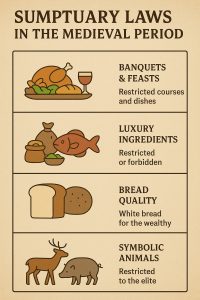
The upper classes enjoyed abundant fresh meats, including beef, pork, venison, pheasant, partridge, and swan. Game was often hunted by the nobles themselves, using trained hounds and falcons.
Exotic spices such as cinnamon, saffron, and cloves — imported through trade with the East — distinguished noble cuisine from that of commoners, who largely ate grains, vegetables, and stews.

🦌 Hunting and Status
Hunting was not just a pastime but a symbol of nobility. The right to hunt was tightly controlled under feudal law, and nobles maintained private hunting grounds filled with deer, boar, hares, and wild birds.
Game from these hunts was often served at banquets, reinforcing the host’s wealth and privilege.

🍷 Etiquette and Table Manners
At a medieval banquet, etiquette was everything. Table manners reflected one’s breeding and rank.
Guests washed their hands before dining, and food was served according to status — with the king or lord seated on a raised dais at the top table.
Instead of modern plates, diners used “trenchers” — thick slabs of stale bread that absorbed juices. After the meal, these were given to the poor as alms.
Golden goblets, silver cutlery, and embroidered tablecloths further emphasized refinement and luxury.
👑 Did You Know?
At royal banquets, it was considered the highest honor if the king personally offered a guest food from his own plate. The top table, placed on a raised dais, was reserved for royalty and their closest allies — a visible symbol of medieval hierarchy.
👑 Banquets Under William the Conqueror
During the reign of William the Conqueror (1066–1087), royal feasts grew grander and more formal. The Great Hall of Norman castles became the stage for magnificent banquets that reinforced the king’s divine authority.
Feasts often included roasted game, fish, and wine, and were accompanied by music and entertainment — from jesters and minstrels to elaborate performances between courses.

🍇 Banquets in the Late Middle Ages – Edward IV’s Court
By the 15th century, under King Edward IV, banquets reached their peak of extravagance. The king’s personal attendants, known as “servants of honor,” were ranked above ordinary household staff and attended only the monarch and his guests.
Entertainment became more theatrical — jesters, musicians, and even short plays were performed between courses. The upper classes drank fine wines, while common guests received ale.
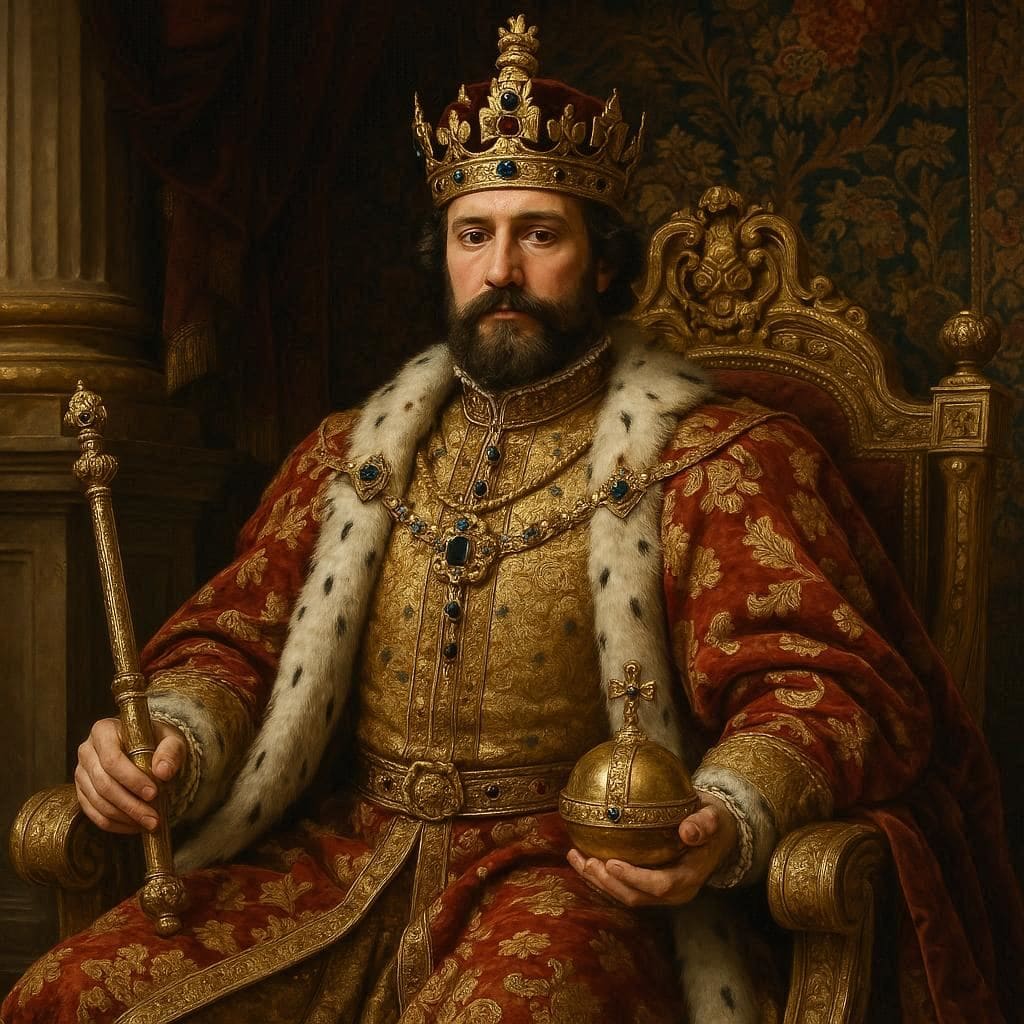
🇫🇷 Medieval Banquets in France
French noble banquets were equally lavish. Meals could include five or six courses, featuring roasted meats, pastries, sweet jellies, and cheeses.
For example, a feast hosted in 1455 by the Count of Anjou featured dishes like heron, sturgeon, rabbit, leveret, cream with fennel seeds, and strawberries — showcasing the culinary opulence of the French court.
🎭 Did You Know?
During grand medieval banquets, guests were entertained between courses with music, jesters, and short plays. These performances — called “entremets” — sometimes featured elaborate costumes and props, turning dinner into a full theatrical spectacle.
🍽️ Customs and the Feudal Hierarchy
Medieval banquets mirrored the strict social hierarchy of feudalism. Seating, service, and even access to food depended on rank. The nobility sat nearest to the lord, while lower-ranking guests served or waited on them.
These rituals reinforced the feudal order, turning dining into a visible expression of class, power, and loyalty.
🕯️ Legacy of the Medieval Banquet
By the late Middle Ages, as trade expanded and the middle class grew wealthier, the culture of banqueting spread beyond the nobility. Wealthy merchants began imitating noble customs, hosting their own feasts with imported wines, fine tableware, and elaborate dishes.
The medieval banquet thus became not just a meal but a symbol of civilization, power, and culture, marking a society that valued status, ceremony, and spectacle.
🍗 Frequently Asked Questions about Medieval Banquets
What was the purpose of a medieval banquet?
Medieval banquets were formal gatherings that celebrated important religious, political, or social events. They displayed wealth, status, and hospitality among the nobility.
Who attended medieval banquets?
Usually royalty, nobles, and high-ranking clergy. Commoners attended only as servants or entertainers.
What types of food were served?
Banquets featured roasted meats, game birds, pies, and spiced dishes. Imported ingredients like saffron, cinnamon, and cloves showed the host’s wealth.
How did people eat without forks?
Guests used knives and trenchers—thick bread slices acting as plates. Forks became common only later in Europe.
What was an “entremet”?
An entremet was entertainment between courses, such as music, plays, or jesters performing in the Great Hall.
Were banquets just for the upper class?
Yes. Peasants had simpler feasts during festivals or harvests, while banquets were exclusive to nobility and royalty.
What did banquets symbolize?
They reflected chivalric ideals, feudal hierarchy, and religious piety—a stage for displaying order and grandeur in medieval life.
🏰 Perfect Quiz: Medieval Banquets & Feasts
📚 Further Reading & Reliable Resources
- Laura Windsor Etiquette – Medieval Banqueting & Royal Coronations
- British Museum Blog – How to Cook a Medieval Feast: 11 Recipes from the Middle Ages
🏺 Explore authentic insights into medieval dining traditions and historical feast culture from these trusted sources.