/** Added For Pinterest Account Below */

The medieval period was a time of great knights, many of whom became legendary for their chivalry, military prowess, and feats of bravery.

Knights-Of-Round-Table-Poster

From the battlefields of Europe to the Crusades in the Holy Land, knights played a critical role in shaping the history of the continent. In this article, we will explore some of the greatest medieval knights in Europe, their accomplishments, and their impact on history.


William Marshal

William Marshal was an English knight who served under several English kings, including Richard the Lionheart and King John. He was considered one of the greatest knights of his time, known for his bravery and skill on the battlefield.

William-Marshal-Medieval-Knight

Marshal was also a skilled diplomat and served as regent for King Henry III. He is remembered as one of the greatest examples of chivalry and honor in medieval Europe.

William Marshall Interesting Facts


William Marshall served under five different kings
Marshall was born in 1147 and started his career as a knight at the age of 20. He served under five different English kings during his lifetime, including Henry II, Richard the Lionheart, John, and Henry III.

He was considered one of the greatest knights in history
Marshall was renowned for his military prowess, chivalry, and martial prowess. He was regarded as one of the greatest knights in history and was known for his bravery, skill with the sword, and expertise in jousting.

He served as Regent of England
Marshall was appointed as Regent of England by King Henry III when he was just 70 years old. He was entrusted with the task of ruling the country in the king’s absence and was able to stabilize the country during a period of political unrest.

He was a tournament champion
Marshall was known for his skill in tournament combat and won many tournaments throughout his life. He was even invited to tournaments in France, where he won the respect of the French nobility with his prowess.

He founded a college
In his later years, Marshall founded a college in Oxford called the College of Chivalry. It was designed to train young knights in the art of chivalry, and it became a center of learning for knights from all over Europe.

“William Marshal stands out as one of the greatest knights in medieval history, both for his remarkable skill on the battlefield and for his unwavering loyalty and chivalrous values. He embodied the ideals of knighthood and served as a shining example for generations of knights to come.”

David Crouch, historian and author of “William Marshal: Knighthood, War and Chivalry, 1147-1219”

Godfrey of Bouillon

Godfrey of Bouillon was a French knight who became the first ruler of the Kingdom of Jerusalem after the First Crusade. He was known for his bravery and leadership during the crusade, and his capture of Jerusalem in 1099 was a defining moment in the history of the Holy Land.

Godfrey of Bouillon

Godfrey of Bouillon Interesting Facts


He refused to be called king:
Godfrey was offered the title of king of Jerusalem after the city was captured in 1099, but he refused it. Instead, he preferred to be called “Defender of the Holy Sepulchre” and to rule as a servant of Christ.

He was a skilled military commander:
Godfrey was a skilled military leader who played a crucial role in the capture of Jerusalem. He was known for his bravery, tactical prowess, and ability to inspire his soldiers.

He was a devout Christian:
Godfrey was deeply religious and saw the First Crusade as a holy mission. He was known for his piety and devotion to the Christian faith, and he donated much of his wealth to support the church.

He died young: Godfrey died at the age of 40, just a year after the capture of Jerusalem.
He fell ill during a siege and died a few days later, leaving behind a legacy as a great Christian warrior.
He was known for his humility:
Despite his many accomplishments, Godfrey was known for his humility and simple way of life. He lived modestly and did not seek personal glory or riches, but instead focused on serving God and his fellow Christians.


Godfrey of Bouillon: “Godfrey of Bouillon was the quintessential Crusader knight, brave, pious, and steadfast in his devotion to the cause of Christendom.”

Steven Runciman, British historian and author of “A History of the Crusades.”

Bertrand du Guesclin

Bertrand du Guesclin was a French knight who fought during the Hundred Years’ War against the English. He was known for his tactical skills and leadership, and he played a critical role in the French victory at the Battle of Castillon in 1453.

Bertrand du Guesclin being knighted
Bertrand du Guesclin being knighted by French King

Bertrand du Guesclin Interesting Facts


He was a commoner
Bertrand du Guesclin was born into a noble family, but his family’s fortunes declined, and he grew up as a commoner. He worked as a page and a squire before becoming a knight, and he rose to prominence through his military skill and bravery.

He was a loyal servant of the French crown
Bertrand du Guesclin served as a commander in the French army during the Hundred Years’ War. He was a loyal supporter of the French crown and fought against the English and their allies throughout his career.

He defeated a famous English knight in single combat
In 1351, Bertrand du Guesclin defeated the English knight Sir Thomas Canterbury in single combat during the Battle of Mauron. The victory earned him a reputation as a skilled fighter and brought him to the attention of the French king.

He was appointed Constable of France
In 1370, Bertrand du Guesclin was appointed Constable of France, the highest military office in the kingdom. He was the first commoner to hold the position and was responsible for leading the French army against the English and their allies.

He died of natural causes
Unlike many medieval knights, Bertrand du Guesclin died of natural causes rather than in battle. He died in 1380 at the age of 60 and was mourned by the French people as a hero and a great military leader.


Bertrand du Guesclin: “Bertrand du Guesclin was the epitome of the medieval warrior, a master of strategy and tactics, feared by his enemies and revered by his allies.”

Kelly DeVries, American historian and expert on medieval warfare.

El Cid

El Cid, or Rodrigo Diaz de Vivar, was a Spanish knight who fought during the Reconquista against the Moors.

Famous Spanish Knights El Cid

He was known for his courage and military skill, and his victories against the Moors helped to establish the Kingdom of Castile.

El Cid (Rodrigo Díaz de Vivar) Interesting Facts

He fought for both Christian and Muslim rulers
El Cid served as a military leader for both Christian and Muslim rulers during his career.
He fought for the Christian king Sancho II of Castile, but also fought for the Muslim emir of Zaragoza, whom he had befriended.

He was exiled from Castile
El Cid was exiled from Castile by King Alfonso VI, who suspected him of treason. He went into exile with a small band of followers and became a mercenary, offering his services to various rulers in Spain.

He conquered Valencia
El Cid captured the city of Valencia from the Muslims in 1094 and ruled it as an independent principality for several years. He is celebrated as a hero in Valencia, and his tomb is located in the city’s cathedral.

He was known for his military skill
El Cid was renowned for his military skill and bravery. He was a skilled tactician and a talented swordsman, and his soldiers admired him for his leadership and courage.

He inspired legends and folklore
El Cid’s life and achievements have inspired numerous legends, ballads, and works of literature. He is depicted as a noble and heroic figure who embodies the ideals of chivalry and honor. His story continues to fascinate and inspire people in Spain and around the world.


El Cid: “Rodrigo Díaz de Vivar, known as El Cid, was the perfect medieval knight, combining martial prowess with courtly graces.” – Richard A. Fletcher, British historian and scholar of medieval Spain.

Kelly DeVries, American historian and expert on medieval warfare.

Jean de Joinville

Jean de Joinville was a French knight who served as a close advisor to King Louis IX. He is best known for his chronicles of the Seventh Crusade, in which he participated, and for his descriptions of the life and character of Louis IX.
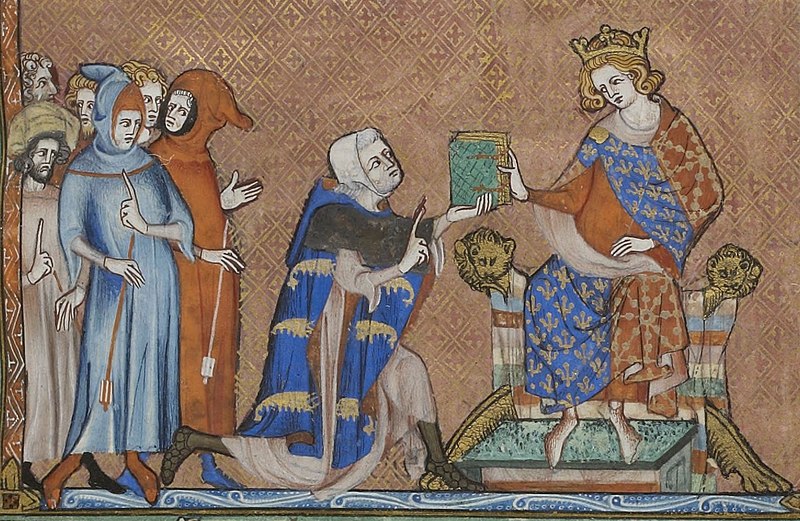
800px Jean de Joinville Louis X

Jean de Joinville Interesting Facts


He was a close friend and confidant of King Louis IX
Jean de Joinville served as a close advisor and friend to King Louis IX of France. He accompanied the king on his crusades to the Holy Land and was present at his deathbed.

He wrote one of the earliest French prose works
The Life of Saint Louis is one of the earliest works of French prose and is considered a masterpiece of medieval literature. Joinville’s vivid and detailed descriptions of the events he witnessed have made his chronicle a valuable historical source.

He was captured during a crusade
Joinville was captured by the Egyptians during the Seventh Crusade and spent several months as a prisoner. He was eventually ransomed and returned to France, where he continued to serve the king.

He was a member of the French nobility
Joinville came from a noble family in Champagne and held various positions of authority in his region. He was also a prominent figure at the royal court and held several important positions in the French government.

He was known for his piety and devotion
Joinville was a devout Christian and saw his service to the king as a way to serve God. He was known for his piety and devotion to the Catholic faith, and his chronicle contains many reflections on religious topics.


Jean de Joinville: “Jean de Joinville’s ‘Life of Saint Louis’ is not only a masterpiece of medieval literature but also a valuable source for the study of medieval chivalry and the ideal of knighthood.”

Margaret Wade Labarge, Canadian historian and expert on medieval French literature.

Edward, the Black Prince

Edward, the Black Prince, was an English knight who fought during the Hundred Years’ War against the French. He was known for his tactical skills and bravery, and his victory at the Battle of Poitiers in 1356 was a significant moment in the war.
Edward The Black Prince

Edward, the Black Prince Interesting Facts


He earned his nickname from his black armor
The Black Prince earned his nickname because of the black armor he wore in battle. The armor was probably made of blackened steel, which would have made it more resistant to rust and corrosion.

He was a skilled military leader
Edward was known for his tactical brilliance and his ability to inspire his troops. He won several key battles during the Hundred Years’ War, including the Battle of Crécy and the Battle of Poitiers.

He was a patron of the arts
Edward was a patron of the arts and was particularly interested in music. He is said to have played the harp himself and was known to commission musical works.

He suffered from poor health
Edward suffered from poor health throughout his life and was frequently incapacitated by illness. He died at the age of 45, probably from a combination of respiratory problems and other ailments.

He had a famous captive
After the Battle of Poitiers, Edward took the French king, John II, as his prisoner. John was held in captivity in England for several years and was eventually released in exchange for a large ransom.
The captivity of the French king was a major humiliation for France and a major victory for England.


Edward the Black Prince: “Edward the Black Prince was one of the most renowned warriors of the Middle Ages, admired for his courage, skill, and military genius.”

David Green, British historian and expert on medieval England.

Jacques de Lalaing

Jacques de Lalaing was a renowned Flemish knight and jouster who lived during the late medieval period. Born into a noble family, Lalaing became known for his incredible feats of arms and chivalric values.

knight gd3209a35a 640

He served as a military commander in several campaigns, including the Siege of Oudenaarde and the Battle of Nancy, where he fought against the forces of the Duke of Burgundy.

Lalaing was also a skilled diplomat, negotiating several important treaties on behalf of his lord.

Despite his impressive career, Lalaing met an untimely end at the Battle of Azincourt, where he was killed in action. His legacy as one of the greatest knights of the medieval period lives on through the many accounts of his chivalrous deeds and feats of arms.

Jacques de Lalaing Interesting Facts


He was a master of chivalry
Jacques de Lalaing was considered the epitome of chivalry in his time. He was renowned for his martial prowess, his skill with weapons, and his devotion to the ideals of knighthood.

He served as a knight errant
Jacques de Lalaing spent several years as a knight errant, traveling throughout Europe and offering his services to various rulers. He fought in numerous battles and tournaments and gained a reputation as one of the greatest warriors of his time.

He was a patron of the arts
Jacques de Lalaing was also a patron of the arts and was known for his love of literature and poetry. He commissioned several works of literature and was himself a talented poet.

He died in battle
Jacques de Lalaing died in battle at the age of 30, while fighting against the French at the Battle of Montlhéry. He was leading the Burgundian vanguard when he was killed by a French lance.

He inspired a famous book of chivalry
Jacques de Lalaing’s life and achievements inspired the famous book of chivalry, the Livre des faits de Jacques de Lalaing. The book, written by an anonymous author, recounts the knight’s life and his many adventures and battles. It is considered one of the finest examples of medieval literature.


Jacques de Lalaing: “Jacques de Lalaing was the epitome of the Burgundian knight, renowned for his martial skills, chivalric ideals, and devotion to the courtly arts.”

Craig Taylor, American historian and expert on medieval Burgundy.

Joan of Arc

Joan of Arc was a French peasant girl who became a military leader during the Hundred Years’ War. She led the French army to several victories against the English before being captured and executed by the English in 1431. She was later canonized as a saint by the Catholic Church.

Medieval France Joan of Arc
Joan of Arc was a legendary figure in medieval France

Joan of Arc Interesting Facts


She claimed to have received divine visions
Joan of Arc claimed to have received visions from God, in which she was instructed to lead the French army against the English. She believed that she had been chosen by God to help restore the French monarchy and drive the English out of France.

She was a skilled military strategist
Despite having no formal military training, Joan of Arc was a skilled military strategist and was able to lead the French army to several victories against the English. Her most famous victory was at the Battle of Orleans, where she lifted the English siege of the city.

She was put on trial for heresy
Joan of Arc was eventually captured by the English and was put on trial for heresy by the Inquisition. She was accused of dressing like a man, which was considered a crime at the time, and of claiming to have divine visions.

She was found guilty and was burned at the stake in 1431
She was canonized as a saint: Joan of Arc was canonized as a saint by the Catholic Church in 1920. She is one of the few people in history to have been both condemned as a heretic and later canonized as a saint.

She has inspired numerous works of art and literature
Joan of Arc has inspired numerous works of art and literature, including plays, operas, and films. She has also been the subject of many books, both historical and fictional, and is considered one of the most iconic figures in French history.


Joan of Arc: “Joan of Arc was not only a courageous warrior and visionary but also a symbol of resistance and hope for the French people during the Hundred Years’ War.”

Helen Castor, British historian and author of “Joan of Arc: A History.”

Ulrich von Liechtenstein

Ulrich von Liechtenstein was an Austrian knight who was known for his chivalry and poetry. He is best known for his autobiography, which chronicled his adventures and his love for his wife.

The Black Knight Armor

Ulrich von Liechtenstein Interesting Facts


He wrote a famous book about chivalry
Ulrich von Liechtenstein wrote a book called “Frauendienst” or “Service of Ladies,” which was a romanticized account of his love for a woman named “Lady Venus.” The book is considered one of the finest examples of medieval courtly love literature.

He was a master of jousting
Ulrich von Liechtenstein was also renowned for his skill in jousting. He participated in many tournaments and even wore a suit of armor that was covered in mirrors so that he could reflect the sun and dazzle his opponents.

He claimed to be descended from a noble family
Ulrich von Liechtenstein claimed to be descended from a noble family from the region of Liechtenstein, which is now a principality between Austria and Switzerland.

He was a patron of the arts
Ulrich von Liechtenstein was a patron of the arts and supported many artists and musicians during his lifetime. He was also a talented poet and musician himself and wrote many songs and poems.

His life inspired a famous movie
Ulrich von Liechtenstein’s life and his book “Frauendienst” inspired the 2001 movie “A Knight’s Tale,” starring Heath Ledger. The movie tells the story of a young man who poses as a knight and competes in tournaments, using the name “Sir Ulrich von Liechtenstein.”


Ulrich von Liechtenstein: “Ulrich von Liechtenstein was not only a skilled knight and jousting champion but also a poet and troubadour, embodying the ideal of courtly love and chivalric virtue.”

E. Jane Burns, American medievalist and expert on medieval German literature.

William Wallace

William Wallace was a Scottish knight who fought against English rule during the Scottish Wars of Independence. He was known for his leadership and bravery, and his victory at the Battle of Stirling Bridge in 1297 was a significant moment in the war.

Legendary Scottish Knight William Wallace
William Wallace was a Scottish knight, born in 1270 and died in 1305.

William Wallace Interesting Facts


He led a famous victory at the Battle of Stirling Bridge
In 1297, William Wallace led the Scottish forces to victory over the English army at the Battle of Stirling Bridge. The battle was a turning point in the war for Scottish independence and established Wallace as a national hero.

He was betrayed and captured by the English
In 1305, William Wallace was betrayed by one of his own men and was captured by the English. He was taken to London, where he was put on trial for treason, convicted, and executed.

He inspired a famous movie
William Wallace’s life and his struggle for Scottish independence inspired the 1995 movie “Braveheart,” starring Mel Gibson. The movie won five Academy Awards, including Best Picture, and helped to cement Wallace’s status as a national hero in Scotland.

He was known for his bravery and skill in battle
William Wallace was known for his bravery and his skill in battle. He was a skilled swordsman and was able to inspire his men to fight fiercely for their freedom.

His legacy lives on in Scotland
William Wallace is a national hero in Scotland and his legacy lives on in the country’s history, culture, and politics. He is remembered as a symbol of Scottish independence and is celebrated every year on August 23, which is known as “Wallace Day.”


“As a military leader, Wallace was an enigma. He was never defeated in battle and showed an uncanny ability to outmaneuver and outsmart his opponents.” – Fiona Watson, Scottish historian and author.

“As a military leader, Wallace was an enigma. He was never defeated in battle and showed an uncanny ability to outmaneuver and outsmart his opponents.” – Fiona Watson, Scottish historian and author.

Robert the Bruce

Robert the Bruce was a Scottish knight who became King of Scotland in 1306. He was known for his military skill and his victories against the English during the Wars of Scottish Independence. He is remembered as a Scottish hero and a symbol of Scottish independence.

Robert The Bruce Statue

Robert the Bruce Interesting Facts


He was excommunicated by the Catholic Church
Robert the Bruce was excommunicated by the Catholic Church for killing a rival claimant to the Scottish throne inside a church. He was later forgiven by the Pope and the excommunication was lifted.

He led the Scots to victory at the Battle of Bannockburn
In 1314, Robert the Bruce led the Scottish forces to a famous victory over the English army at the Battle of Bannockburn. The battle was a turning point in the Scottish Wars of Independence and helped to secure Scotland’s independence from England.

He suffered from leprosy
Robert the Bruce suffered from a skin disease, which was likely leprosy. He is said to have worn a special garment to hide his disfigurement and to have relied on his family for support in his later years.

He is the subject of a famous poem
Robert the Bruce is the subject of the famous poem “The Bruce” by John Barbour, which was written in the 14th century. The poem is considered one of the most important works of Scottish literature.

His legacy lives on in Scotland
Robert the Bruce is a national hero in Scotland and his legacy lives on in the country’s history, culture, and politics. He is remembered as a symbol of Scottish independence and is celebrated every year on June 24, which is known as “Bannockburn Day.”


“Robert the Bruce was undoubtedly one of the most skilled and accomplished military commanders of his time. His strategic genius, coupled with his unwavering determination and leadership, helped Scotland achieve independence and secure its place in history.”

Michael Penman, Scottish historian and author.

These knights were not only skilled warriors, but they were also leaders, diplomats, and symbols of chivalry and honor. Their legacy continues to inspire people today, and their impact on history is a testament to the power of the knight in medieval Europe.


Great Books about the Greatest Knights in Europe

“The Knight in History” by Frances Gies

“The Greatest Knight: The Remarkable Life of William Marshal, the Power Behind Five English Thrones” by Thomas Asbridge

“God’s Battalions: The Case for the Crusades” by Rodney Stark

“The Norman Conquest: The Battle of Hastings and the Fall of Anglo-Saxon England” by Marc Morris

“Medieval Warfare: A History” by Maurice Keen