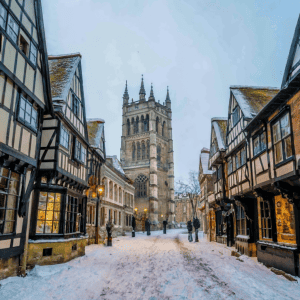
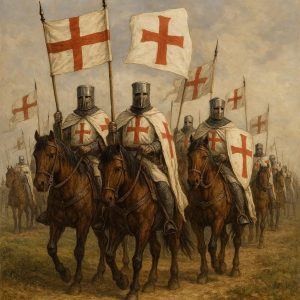
Feudalism was the dominant social, economic, and political system in medieval Europe, structuring society through a rigid hierarchy based on land ownership, loyalty, and military service. At its core, feudalism was a system of mutual obligation: kings granted land to nobles, nobles protected and managed that land with the help of knights, and peasants worked the land in exchange for security. This decentralized network of power shaped medieval life for centuries, influencing governance, warfare, and the daily lives of people across the continent.
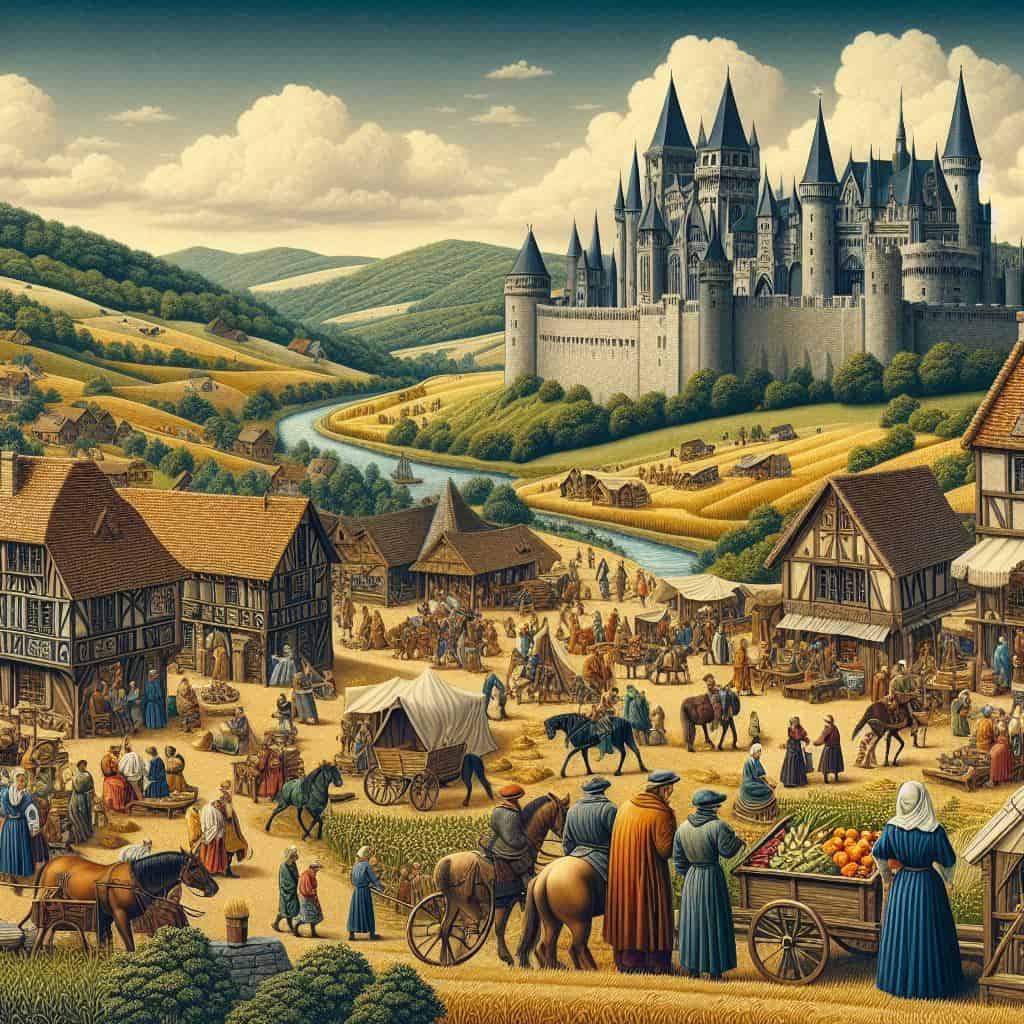
The Western Roman Empire had fallen and in its place, many small entities had come into being.

LEGO Creator 3in1 Medieval Dragon Toy – Set 31161
Price: £40.99
Age: 9+
Features: Transforms into a Sea Serpent or a Phoenix; mythical creatures building set; perfect birthday gift for boys & girls.
By using this link, you’re helping support our site at no extra cost to you – thank you!
There was no central government or power, lands and roads were unsafe, populations were declining with invaders threatening from the East, and a number of other risks.

It was at such a time that the feudal system emerged as a kind of social solution to these problems. However, it had its pros and cons and it both helped and hindered the people. Following is a look at both aspects.

Feudalism – Centralization of Power
The feudal system helped lords establish a sort of central power after the end of the Roman Empire. The lords lacked the means and resources to directly assert their authority over the lands.
So they used the feudal system as an alternate way of asserting this authority. Europe was also besieged by various invaders from the East.

There was a desperate need for the lords, such as those of the Carolingian Empire, to muster enough force to counter these invaders. Feudalism played an instrumental role in making this possible.
When did Feudalism begin?
Feudalism began at the start of the 9th century in Medieval Europe and began more structured with more rigid rules as the middle ages progressed.
Feudalism ended with the medieval period as the Renaissance started to begin in Europe around the 15th and 16th centuries.
Restoration of Peace
After Roman Empire fell, Germanic tribes from the East came wave upon wave into Western Europe. This led to a rapid disintegration of the previous infrastructure including roads and bridges.
At the same time, lawlessness became rampant due to a lack of centralized authority. Bandits ruled the routes and trading caravans had a hard time making journeys.

Feudalism changed this by creating a social hierarchy. Knights imposed a kind of law on the land, and the lords undertook efforts to rebuild the infrastructure. These measures ultimately played a key role in reviving society.
Feudalism *Lack of Unity
A key problem with the feudal system was that it hindered the true consolidation of power. The king or the lord didn’t have absolute or direct power over all land. Instead, he had to rely on the lords who in turn had ownership of this land.

Similarly, the king couldn’t field a large enough army on his own and depended on his lords or nobles.
This lacks a true consolidation of authority in medieval Europe, preventing the initiation of any large-scale projects that someone like a Roman emperor could have undertaken.

Social Disparity
The feudal system notoriously supported a distinct class system. This was because the feudal system couldn’t work without such a system. This class system led to injustice and lop-sided laws.

The powerful could persecute the weak and the poor with immunity. Similarly, the king would impose harsh laws on the vassals without any resource for the latter.
This disparity ultimately led to events like the Barons’ Wars in England. It also led to a struggle for a more just and equal distribution of power, laying the foundations of modern democracy in Europe.

Feudal system Fast Facts
- The feudal system helped lords establish a central power after the collapse of the Roman Empire.
- The feudal system was established in countries such as France many years before it was established in England.
- The King granted land to lords and nobles in return for loyalty and forces in times of war.
- The feudal system was a distinct class system with the king at the top and peasants at the bottom.
- The unfairness and inequality of the feudal system led to major events such as the Baron’s war in England.
- The power of the feudal system began to wane during the period of the Tudor dynasty.
Q: What is feudalism in simple terms?
A: Feudalism was a political, social, and economic system used in medieval Europe where land was exchanged for loyalty and service. Kings granted land to nobles, who in turn protected it with the help of knights, while peasants worked the land in return for security.
Q: Who was at the top of the feudal system?
A: The king was at the top of the feudal hierarchy, followed by nobles, knights, and peasants at the bottom.
Q: What were the main roles in the feudal system?
A: The main roles included kings (landowners), nobles (land managers), knights (military protectors), and peasants or serfs (laborers and farmers).
Q: Was feudalism only used in Europe?
A: Feudalism was most common in medieval Europe, but similar systems existed in places like Japan and China with different cultural adaptations.
Q: When did feudalism start and end?
A: Feudalism began around the 9th century in Europe and gradually declined by the 15th century with the rise of centralized monarchies and the growth of towns.
Q: Why was feudalism important?
A: Feudalism provided structure and security in a time of frequent invasions and weak central governments, helping societies stay organized and protected.