King Arthur and the Knights of the Round Table form one of the most enduring bodies of medieval literature, shaping the imagination of Europe for centuries. The stories blend fragments of real early medieval history with heroic myth, Christian symbolism, and chivalric ideals. Over time, Arthur evolved from a possible post-Roman war leader into a legendary king whose court embodied both the virtues and the flaws of medieval knighthood.

Origins of the Arthurian Legend
The earliest references to Arthur appear not in medieval romance but in early Welsh tradition. A 9th-century manuscript known as the Historia Brittonum, traditionally attributed to the cleric Nennius, presents Arthur as a British military leader who fought against Saxon invaders after the collapse of Roman rule.
Later Welsh texts, including the Annales Cambriae, add further references, but none describe Arthur as a king ruling a great empire. These early sources suggest that if Arthur existed, he was likely a Romano-British warlord, defending his people during the turbulent 5th–6th centuries.

According to legend, Arthur’s parents were of Roman-Celtic noble descent, linking him to the last remnants of Romanised Britain. When Roman administration withdrew in the early 5th century, the Britons struggled to defend themselves. The legend claims that Arthur rose to prominence as the champion of the Britons, winning great battles such as the mythical Battle of Mount Badon.
Historically speaking, there is no firm evidence that Arthur ever lived—but the cultural power of his story transformed him into something far greater than a historical figure: a symbol of ideal kingship.
Arthurian Questions – Click to Reveal the Answer
The Transformation of Arthur: From Warlord to Medieval King
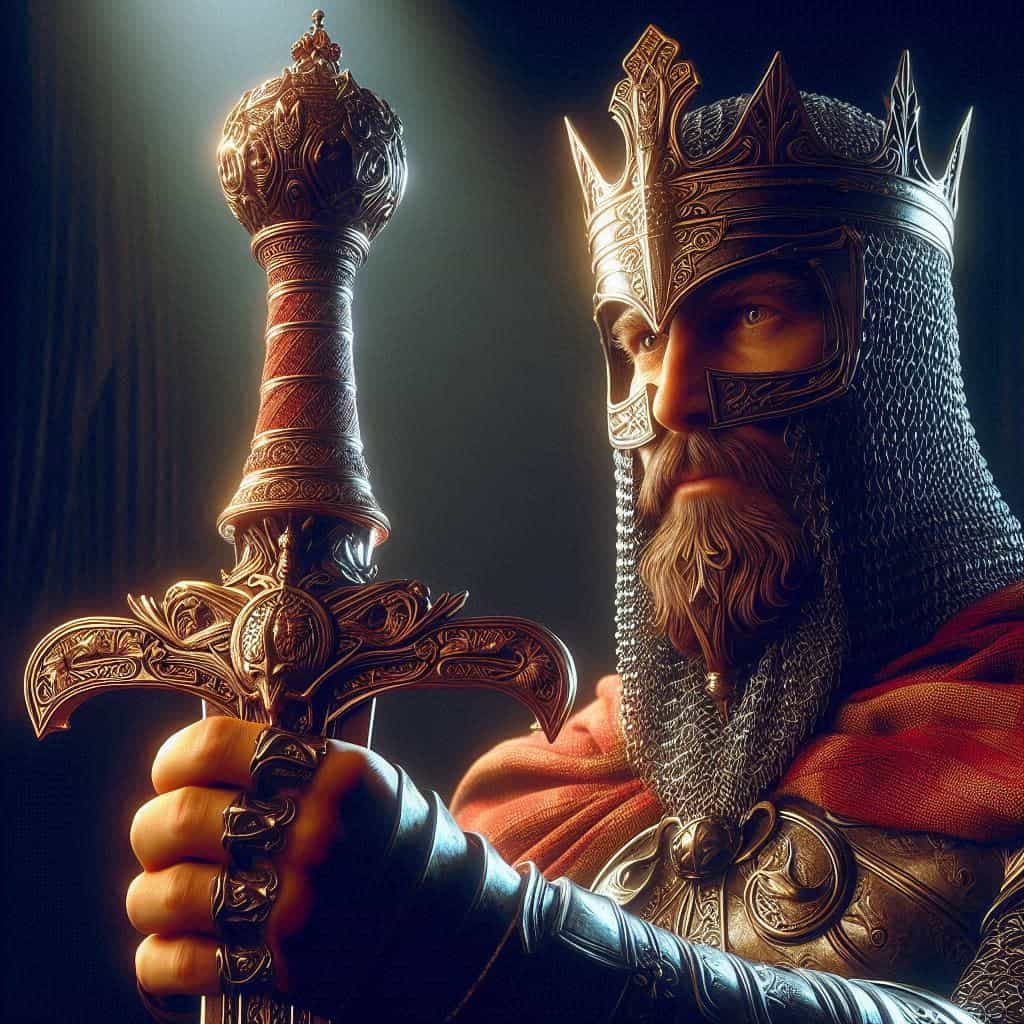
By the 12th century, the Arthurian tradition had expanded dramatically. Writers such as Geoffrey of Monmouth in Historia Regum Britanniae reimagined Arthur as a mighty king, ruling a vast realm from a dazzling court at Camelot. Geoffrey’s work inspired French and German poets, who added:
- Chivalry
- Courtly love
- Holy quests
- The ideal of the perfect knight
This evolution turned Arthur from a regional folk hero into a pan-European symbol of nobility, Christian virtue, and moral struggle.
As Arthurian literature developed, it portrayed not only noble traits—loyalty, courage, honour, religious devotion—but also human failings such as betrayal, ambition, and forbidden love. This tension between idealism and weakness is part of what keeps the Arthurian story enduring and relatable.
The Knights of the Round Table
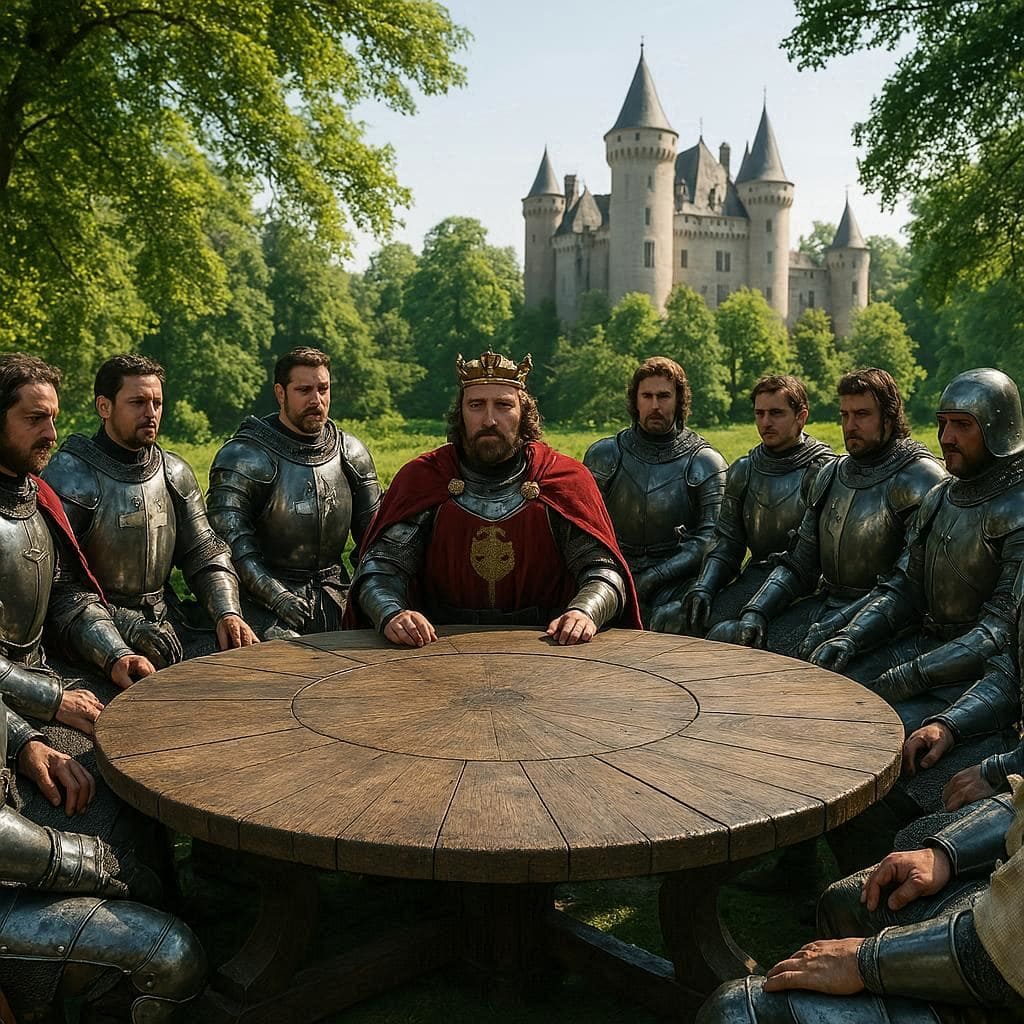
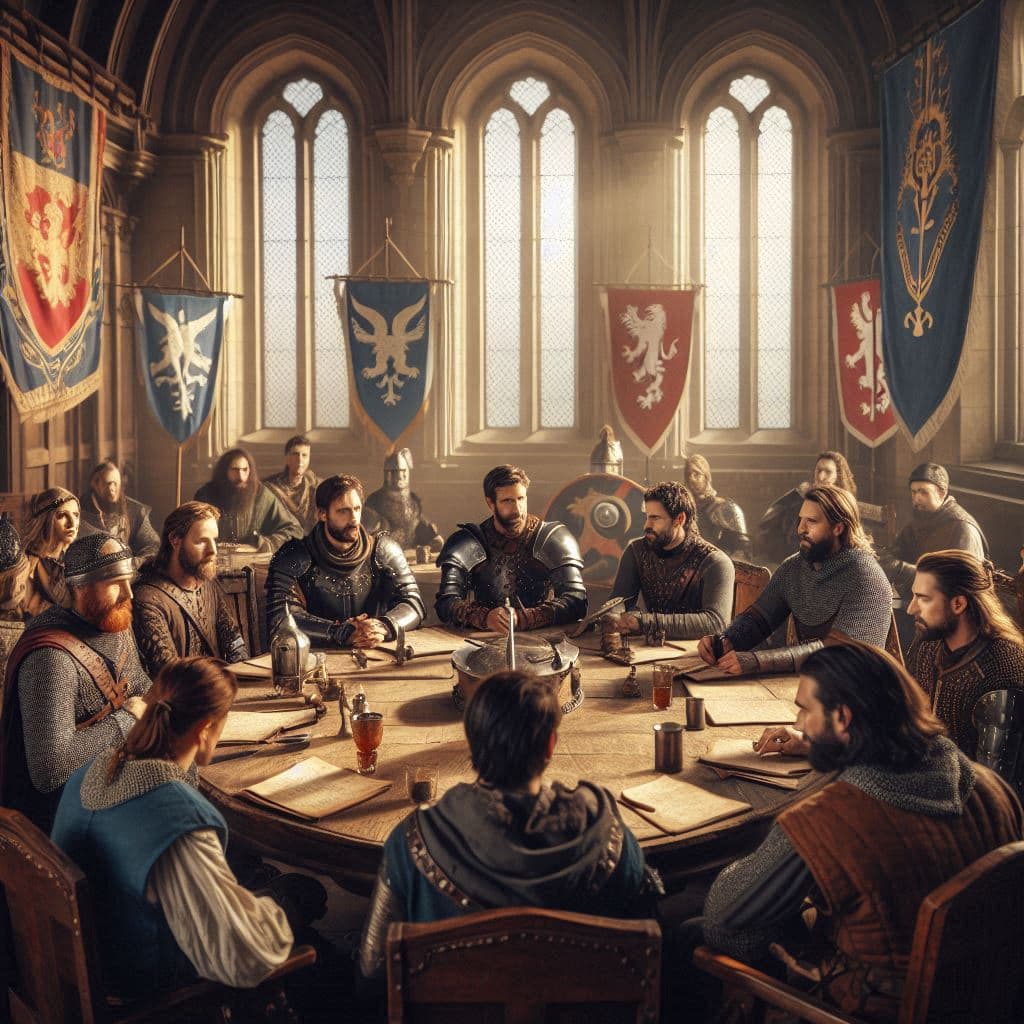
In the romances of Chrétien de Troyes, Sir Thomas Malory, and others, King Arthur’s knights become central characters. The Round Table itself symbolises equality, ensuring that no knight sits above another. These knights defend Arthur’s kingdom, take part in heroic adventures, and later embark on spiritual quests.
The most famous knights include:
- Sir Lancelot, the greatest warrior yet tragically flawed
- Sir Gawain, loyal, fierce, and tied to older Celtic tradition
- Sir Galahad, the symbol of purity and holiness
- Sir Percival, seeker of the Grail in early versions
- Sir Bedivere, who returns Excalibur to the lake
- Sir Tristan, known for his own tragic romance
- Sir Mordred, the betrayer who brings Arthur down
In literature, the knights represent the ideal of chivalry—courage, courtesy, piety, and loyalty—but they also embody the challenges of living up to those ideals.
Timeline of the Arthurian Tradition
- 5th–6th Century: Possible historical setting for a Romano-British war leader named Arthur resisting Saxon encroachment.
- 9th Century: The Historia Brittonum, attributed to Nennius, records Arthur as a heroic battle leader.
- 10th Century: The Annales Cambriae reference the Battle of Badon and the Battle of Camlann.
- 12th Century: Geoffrey of Monmouth’s Historia Regum Britanniae transforms Arthur into a majestic king ruling from Camelot.
- 12th–13th Century: French writers introduce Lancelot, the Holy Grail, and the code of chivalry, reshaping Arthurian romance.
- 15th Century: Sir Thomas Malory compiles Le Morte d’Arthur, creating the definitive version of Arthur’s rise, fall, and final battle.
- Modern Era: Arthur becomes a global cultural icon in novels, art, films, and historical speculation.
Queen Guinevere: Loyalty, Love, and Conflict
Queen Guinevere plays a central role in the rise and fall of Arthur’s kingdom. Medieval authors portray her differently:
- In many versions, she has a forbidden love affair with Sir Lancelot, Arthur’s greatest knight.
- In others, she is seduced or abducted by Mordred, Arthur’s treacherous nephew.
The consequences of these betrayals are enormous. The Round Table splits into rival factions, leading to civil war and the collapse of Arthur’s court. Guinevere’s story reflects the tension between courtly love and marital duty, a recurring theme in medieval literature.
The Round Table: Symbol of Unity
The Round Table is perhaps the most iconic symbol of Arthurian legend. It represents:
- Equality among knights
- Unity of purpose
- Shared commitment to chivalric values
A real wooden “Round Table” hangs today in Winchester Great Hall, dating to the 13th century. Although not Arthur’s actual table, it shows how deeply the legend permeated medieval English identity.
Only the most noble and virtuous knights were permitted to take their seats at the table—a powerful medieval metaphor for honour and belonging.
The Quest for the Holy Grail
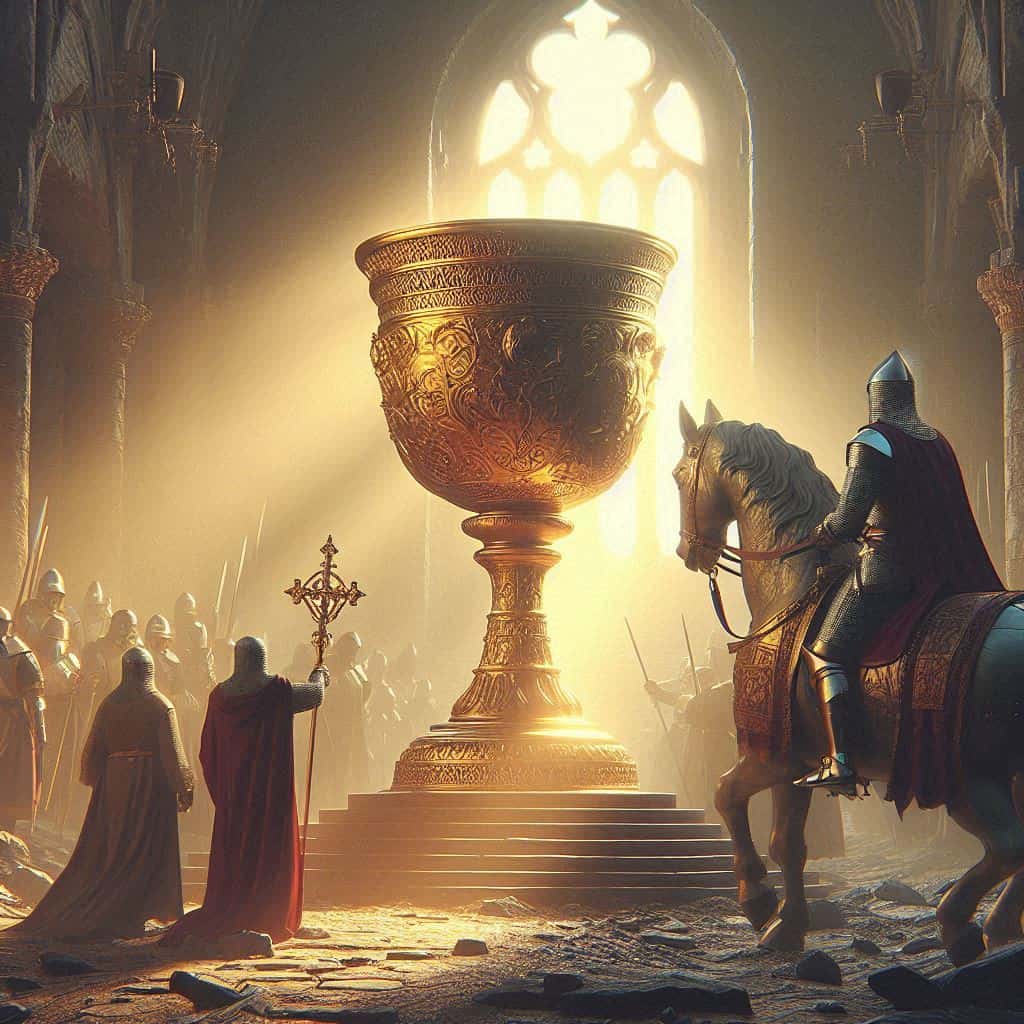
One of the most spiritually significant parts of Arthurian romance is the Quest for the Holy Grail—the sacred chalice associated with Christ’s Last Supper.
According to legend, the Grail appears in Arthur’s hall as a vision, prompting the knights to ride forth in search of it. Yet only the purest of them can succeed:
- Galahad, the most sinless
- Percival, faithful and humble
- Bors, steadfast despite human weakness
Their quest represents the ultimate test of faith, moral purity, and spiritual transformation. In many versions, the Grail is taken up into heaven and never seen again.
The End of Arthur’s Reign
Arthur’s downfall is one of the most powerful episodes in medieval literature. While Arthur fights abroad, his nephew Mordred usurps the throne. Arthur returns, leading to the final battle at Camlann.
Most knights perish. Arthur kills Mordred, but receives a mortal wound. As he dies, he commands Sir Bedivere to return Excalibur to the lake from which it came.
According to legend, Arthur’s body is carried to Avalon, where he will one day return in Britain’s hour of greatest need.
Arthur’s Enduring Legacy
Whether or not Arthur ever lived, his legend has shaped:
- Medieval chivalry
- European literature
- Political symbolism
- National identity
- Modern storytelling in novels, films, and games
As Arthurian scholar Geoffrey Ashe observed, Arthur serves as a mirror of cultural hopes and fears—an eternal figure who represents both the lost golden age and the ideal future.
Frequently Asked Questions About King Arthur and the Round Table
King Arthur & The Round Table Quiz
Glossary of Arthurian Terms
Camelot
The legendary court and royal seat of King Arthur, symbolising ideal kingship and harmony.
Round Table
A circular table used by Arthur and his knights to represent equality and shared honour.
Excalibur
Arthur’s legendary sword, often associated with divine authority and rightful kingship.
Holy Grail
The sacred chalice sought by Arthur’s knights, symbolising spiritual purity and enlightenment.
Chivalry
A knightly code of honour, bravery, loyalty, and moral conduct, shaped by Arthurian romance.
Avalon
A mystical island where Arthur is taken after his final battle, representing healing and the hope of return.
Courtly Love
A medieval tradition of idealised, often forbidden love—central to tales of Lancelot and Guinevere.
Mordred
Arthur’s treacherous nephew (or son, in some versions), whose rebellion brings about the king’s downfall.
Lancelot
Arthur’s greatest knight—peerless in battle but undone by his
Grail Quest
A spiritual journey undertaken by Arthur’s knights to achieve
Great Books about King Arthur and the Knights of the Round Table
“The Once and Future King” by T.H. White
This classic novel is a beloved retelling of the Arthurian legend. It follows the story of King Arthur from his childhood to the establishment of the Round Table and the knights’ adventures. It explores themes of chivalry, power, and the complexities of leadership.
“The Acts of King Arthur and His Noble Knights” by John Steinbeck
Steinbeck’s posthumously published work is a modern adaptation of the Arthurian legends. It provides a cohesive narrative, focusing on the heroic deeds of King Arthur and his knights. Steinbeck brings his unique storytelling style to create a compelling retelling of the Arthurian tales.
“Le Morte d’Arthur” by Sir Thomas Malory
This seminal work is one of the most influential compilations of Arthurian legends. It weaves together various stories about King Arthur, the Knights of the Round Table, and the quest for the Holy Grail. Malory’s work has been a significant source of inspiration for subsequent Arthurian literature.
“King Arthur and His Knights of the Round Table” by Roger Lancelyn Green
This book, written for younger readers, presents an engaging and accessible retelling of the Arthurian legends. It follows King Arthur’s rise to power, the formation of the Round Table, and the knights’ quests and adventures. It’s a great introduction to the stories for readers of all ages.
“The Arthurian Legends: An Illustrated Anthology” edited by Richard Barber
This anthology collects various Arthurian tales from different authors and time periods. It includes excerpts from medieval texts, poems, and modern retellings. With a combination of text and illustrations, it provides a comprehensive overview of the Arthurian legends and the Knights of the Round Table.
These books offer different perspectives on the Arthurian legends, from classic retellings to modern adaptations. They capture the essence of King Arthur and the noble knights who gathered at the Round Table, immersing readers in the world of chivalry, honor, and adventure.