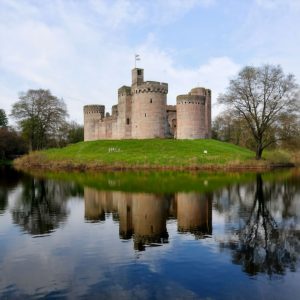
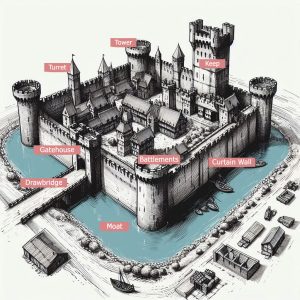
Medieval castle towers were among the most important parts of a fortress, rising above the walls to give defenders height, visibility, and a deadly advantage in battle. From these elevated positions, guards could spot danger miles away, signal warnings, and fire down on attackers with bows or crossbows. Towers also strengthened weak points in a castle’s defenses and acted as safe strongholds during a siege. Beyond warfare, they symbolised lordly power, dominating the landscape as a clear warning of authority.
Castle Towers Purpose
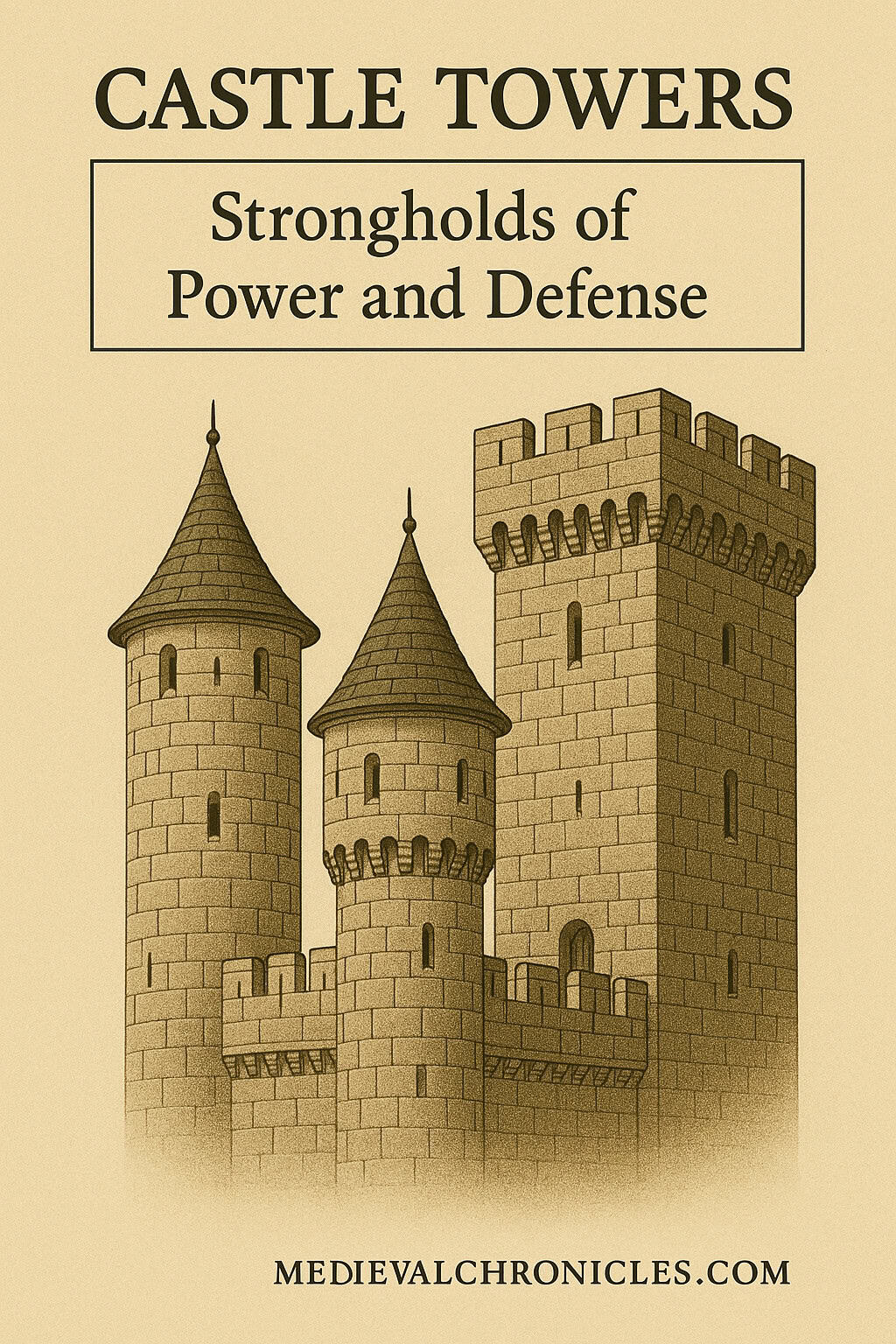
A medieval castle tower served several roles, depending on its location and size. Some towers were built purely for defense, while others were used as living space or secure storage.
Common purposes included:
- Surveillance and early warning from a high vantage point
- Flanking fire, allowing defenders to shoot along the face of the walls
- Reinforcing weak points such as corners and gateways
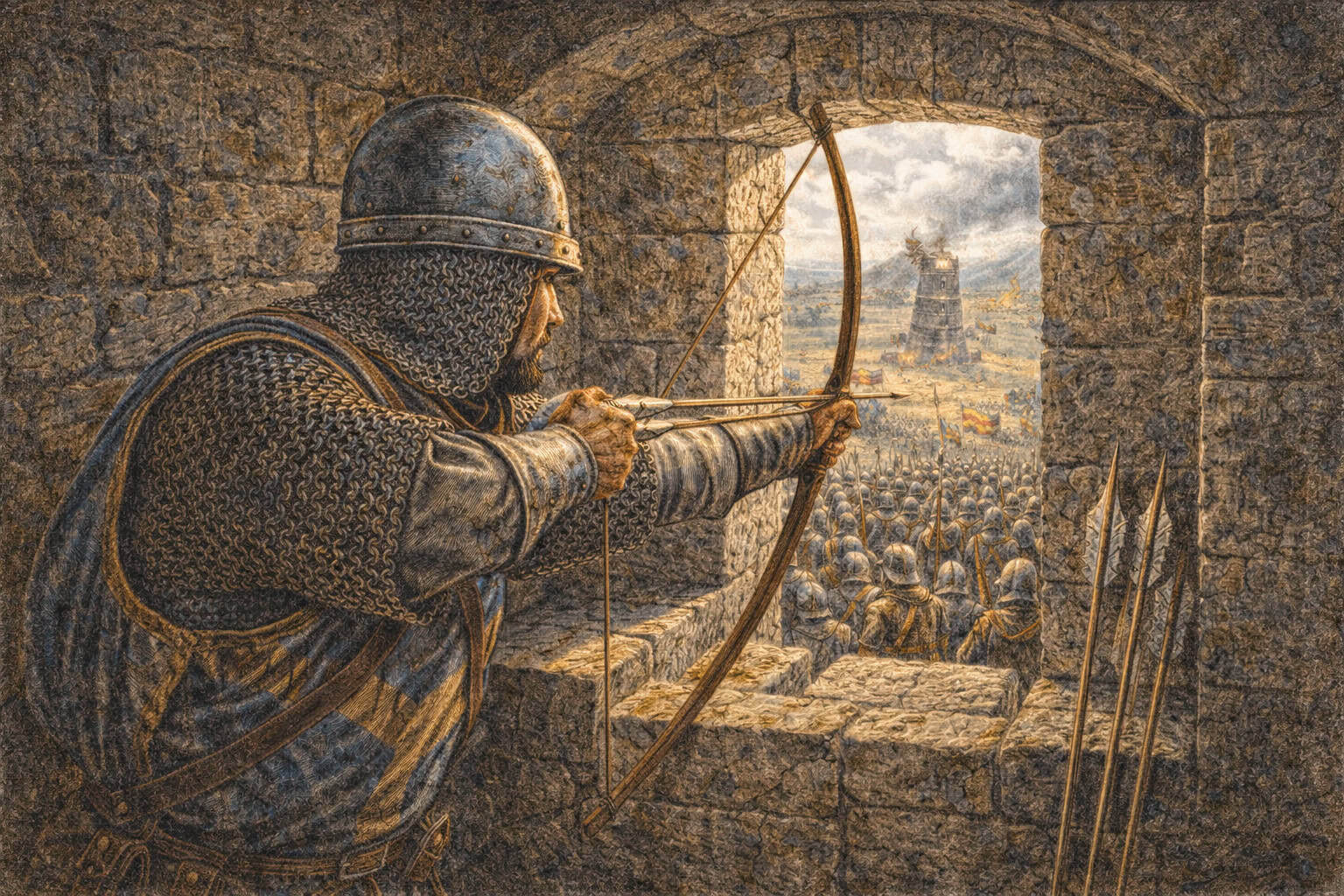
- A fighting platform for archers and crossbowmen
- Secure storage for weapons, food, or valuables
- Imprisonment, especially for high-status or political prisoners
Where Were Medieval Castle Towers Located?
Castle towers could be placed in several strategic locations, each designed to improve the overall defensive system.
Typical tower locations included:
- Corner towers, built at the angles of the curtain wall for wide coverage
- Wall towers, spaced along the walls to support defenders and extend firing range
- Gate towers, positioned beside or above the entrance to protect the most vulnerable point
- Flanking towers, projecting outward to give better angles of attack
A well-designed castle used tower placement to create overlapping fields of fire, meaning attackers could be targeted from more than one direction at once.
How Were Medieval Castle Towers Defended?
Click to reveal the answer ▼
Towers were defended mainly through their height, strong construction, and the protective features built into their walls. Archers and crossbowmen could shoot through narrow arrow loops (also called loopholes), allowing defenders to fire outward while staying protected.
Common Defensive Features
- Arrow loops for archery and crossbow fire
- Battlements and crenellations for cover along the roofline
- Machicolations and murder holes for dropping missiles through openings above entrances
- Thick stone walls designed to resist impact and fire
Castle Tower Designs
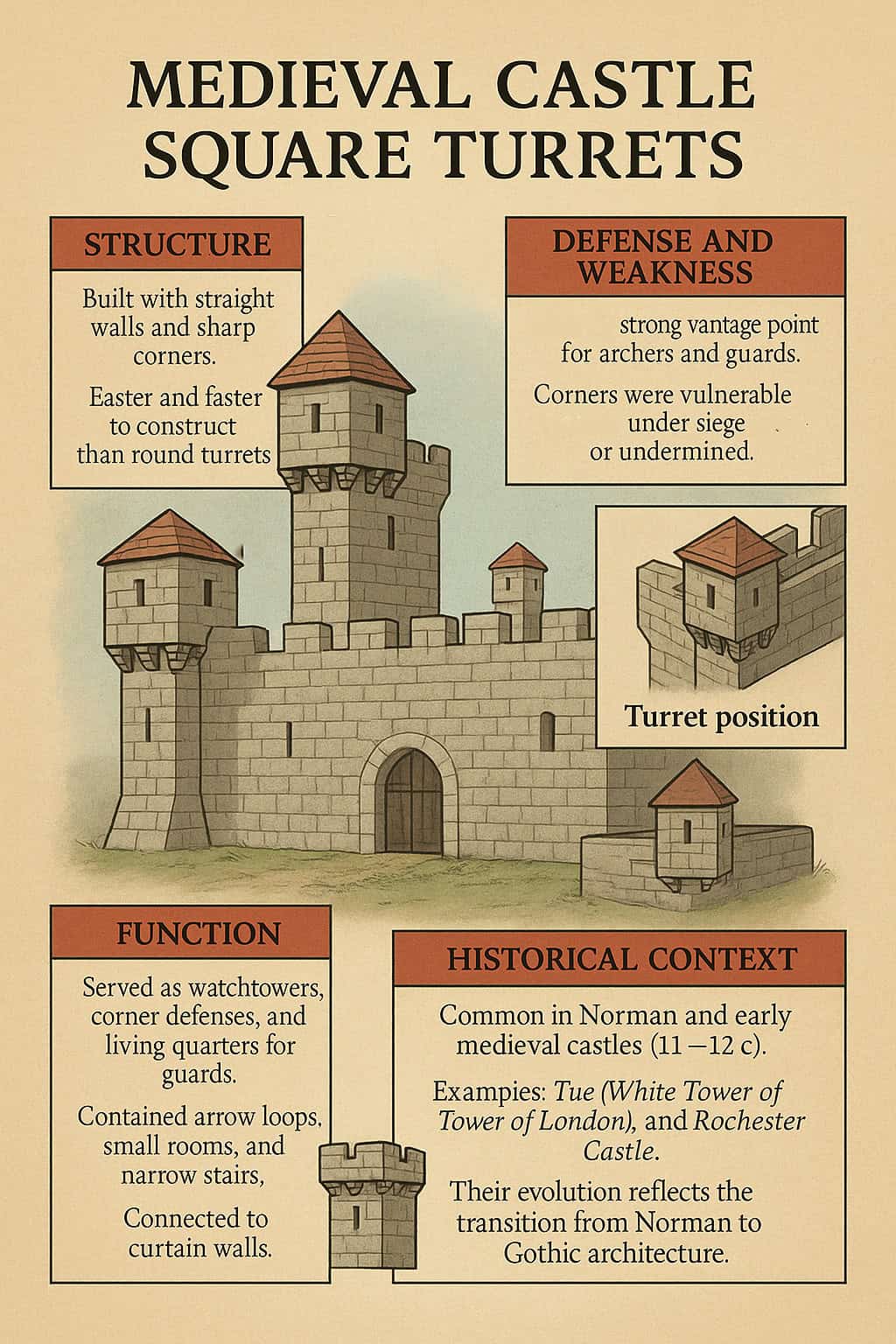
Castle towers evolved over time as siege tactics improved. Early medieval towers were often square or rectangular, which were easier to build but had weaknesses—especially at the corners, where attackers could focus damage.
Later castles increasingly used round towers, which offered several advantages:
- Better deflection of projectiles and less damage from impact
- No sharp corners to concentrate structural weakness
- Improved sightlines and firing angles around the tower
- Greater resistance to battering and some siege techniques
Other tower shapes included horseshoe towers and polygonal towers, which combined strong angles with better defensive coverage.
How Were Castle Towers Built?
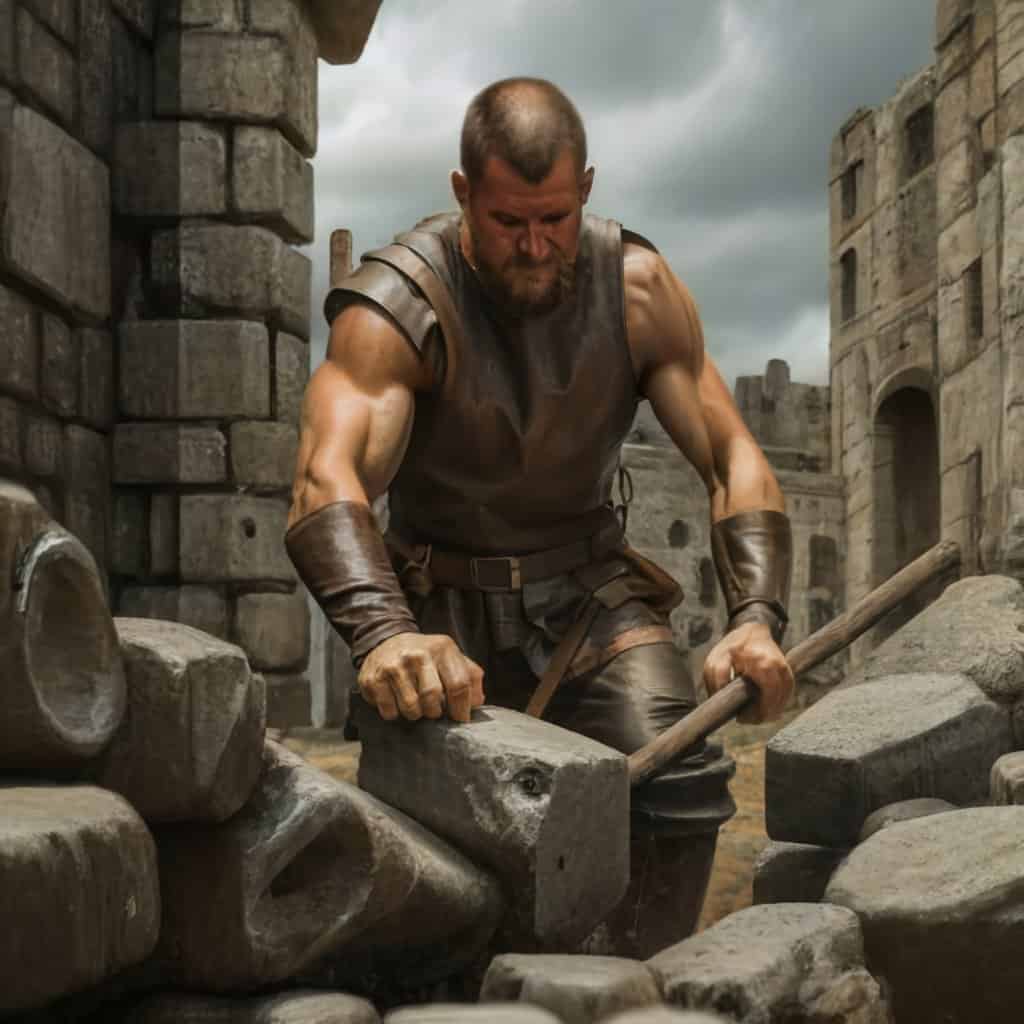
Early castles often relied on timber towers because they were fast and cheap to construct. However, wooden towers were vulnerable to fire and heavy siege pressure. From the 11th century onward—especially after the Norman Conquest of 1066—stone towers became more common across many regions of Britain and Europe.
Stone towers were valued because they were:
- Fire-resistant
- Harder to break through during a siege
- More durable for long-term defence and prestige
Many castles developed increasingly sophisticated stone towers as military architecture advanced.
Castle Tower Summary
Castle towers were essential to medieval fortifications, providing defensive strength, visibility, and powerful firing positions during sieges. They helped protect walls and gateways, allowed defenders to strike attackers from above, and served as symbols of authority. Over time, tower design shifted from simpler wooden and square forms to stronger stone towers, including round and polygonal shapes built to withstand evolving siege warfare.
❓ Castle Towers FAQ
What was the main purpose of a castle tower?
A castle tower provided height and visibility for defenders, allowing archers to watch the surrounding land and protect weak points in the walls. Towers also acted as strongpoints during a siege.
Why did castles switch from square towers to round towers?
Round towers reduced blind spots and were harder to damage with mining or repeated impacts. They also helped deflect stones and projectiles better than sharp corners.
What are arrow loops (loopholes)?
Arrow loops were narrow vertical openings that allowed archers or crossbowmen to fire outward while remaining protected behind stone walls.
Did defenders really pour boiling oil from towers?
It’s possible in rare cases, but it was not common. More often defenders dropped stones, heavy objects, and fired arrows or crossbow bolts from towers and battlements.
Were castle towers used for anything besides defense?
Yes. Towers could be used for storage, guard rooms, private chambers, and sometimes as a place of imprisonment for high-status captives.
What is the difference between a keep and a tower?
A keep was usually the castle’s main stronghold and residence, while other towers were placed around walls or gates to strengthen defenses and improve firing angles.
🧠 Castle Towers Quiz
Choose an answer for each question and press Check Answers.
📜 Castle Towers Glossary
Arrow Loop (Loophole)
A narrow slit in a tower or wall that allowed defenders to fire arrows or crossbow bolts while staying protected.
Battlements
The protective parapet at the top of a wall or tower, often made of alternating raised and lowered sections.
Crenellations
The “tooth-like” pattern of battlements, with solid merlons and open crenels for firing.
Flanking Fire
Defensive fire aimed along the face of a wall, allowing defenders to strike attackers at the base of fortifications.
Keep
The main fortified tower or stronghold of a castle, often used as a residence and final refuge.
Machicolations
Stone projections with openings that allowed defenders to drop missiles down onto attackers below.
Mining
A siege technique where attackers dug tunnels to weaken or collapse walls and towers.
Murder Holes
Openings in ceilings above gateways used to drop stones or fire down into the entrance passage.