Castle arrow slits—also known as arrow loops or loopholes—were one of the most effective defensive features in medieval castles. From the outside, they look like thin cuts in stone, but they were carefully designed fighting positions. Their purpose was simple: allow defenders to shoot arrows or bolts outward while keeping their bodies protected behind thick castle walls.
Modern films often show arrow slits as small and awkward openings, but in reality many were built with smart internal engineering. A defending archer could see more than the attacker expected, and the stonework around the slit often helped widen the firing angle while still limiting exposure.
Arrow slits became especially important during siege warfare, when attackers tried to reach the walls using ladders, siege towers, or battering rams. A well-placed arrow loop could turn a castle wall into a deadly killing zone.
This article is part of our complete guide to Medieval Castle Parts .
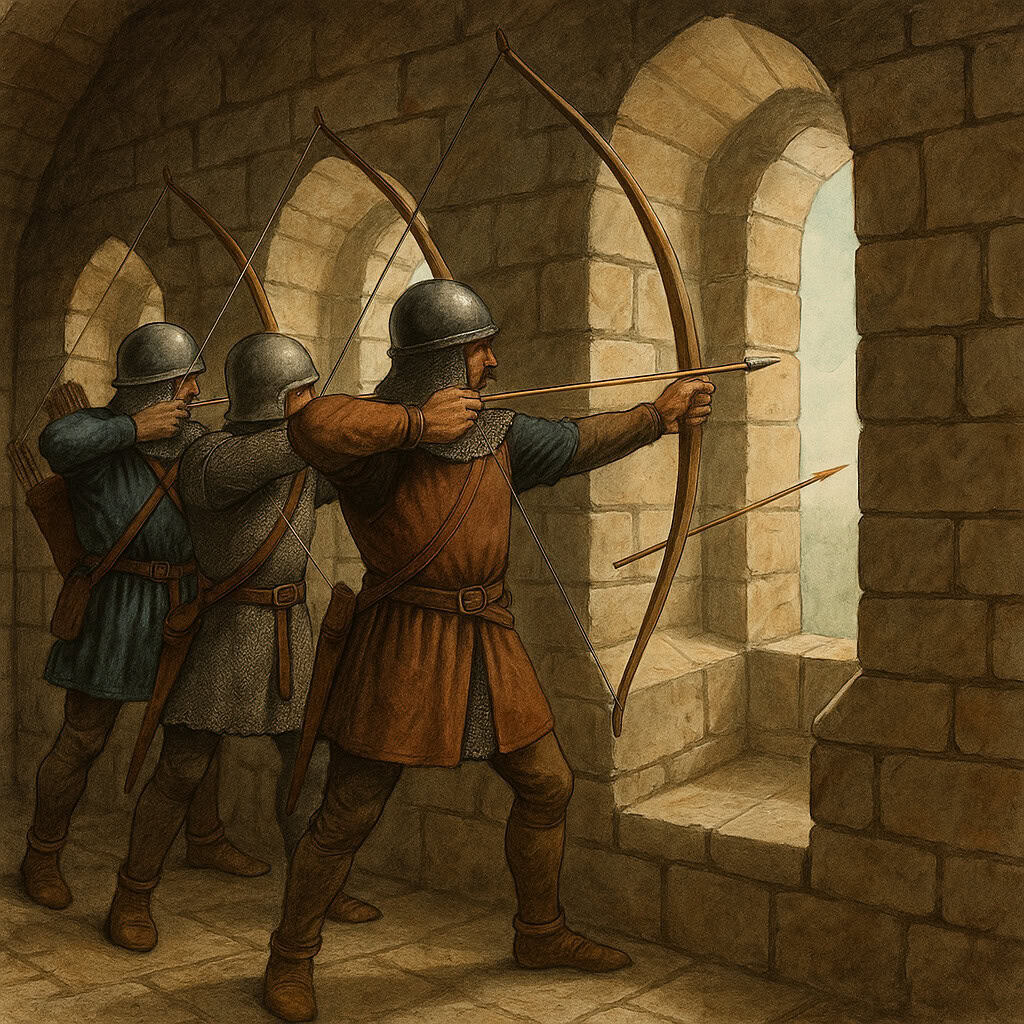
Castle arrow loops (also called arrow slits or loopholes) were narrow openings designed to let defenders shoot outward while staying protected behind thick stone walls. Most were wider on the inside to give a better aiming angle, while remaining small on the outside to reduce the chance of enemy shots getting through.
- Oldest style: vertical slits
- Improved style: cruciform (cross-shaped) loops
- Extra protection: displaced transverse slots
- Heavy defense zones: gatehouses and towers
Design
The strength of an arrow slit was not just the narrow opening on the outside, but the larger space behind it. Many arrow loops were built with an internal recess called an embrasure. This recess allowed the defender to step closer to the opening, adjust their stance, and aim in multiple directions without exposing their full body.
Castle builders often shaped the stonework around the slit at angled sides. This gave the defender a wider field of fire, meaning one archer could defend more of the wall than would be possible through a straight hole cut through stone.
Arrow slits were also designed with different weapons in mind:
- Longbows needed space for the archer to stand and draw a tall bow
- Crossbows were more compact and could be aimed from tighter positions
- Some later openings were adapted for early gunpowder weapons, especially in the late medieval period
The best arrow loops balanced two things: maximum protection for the defender and maximum visibility and firing angles against attackers.
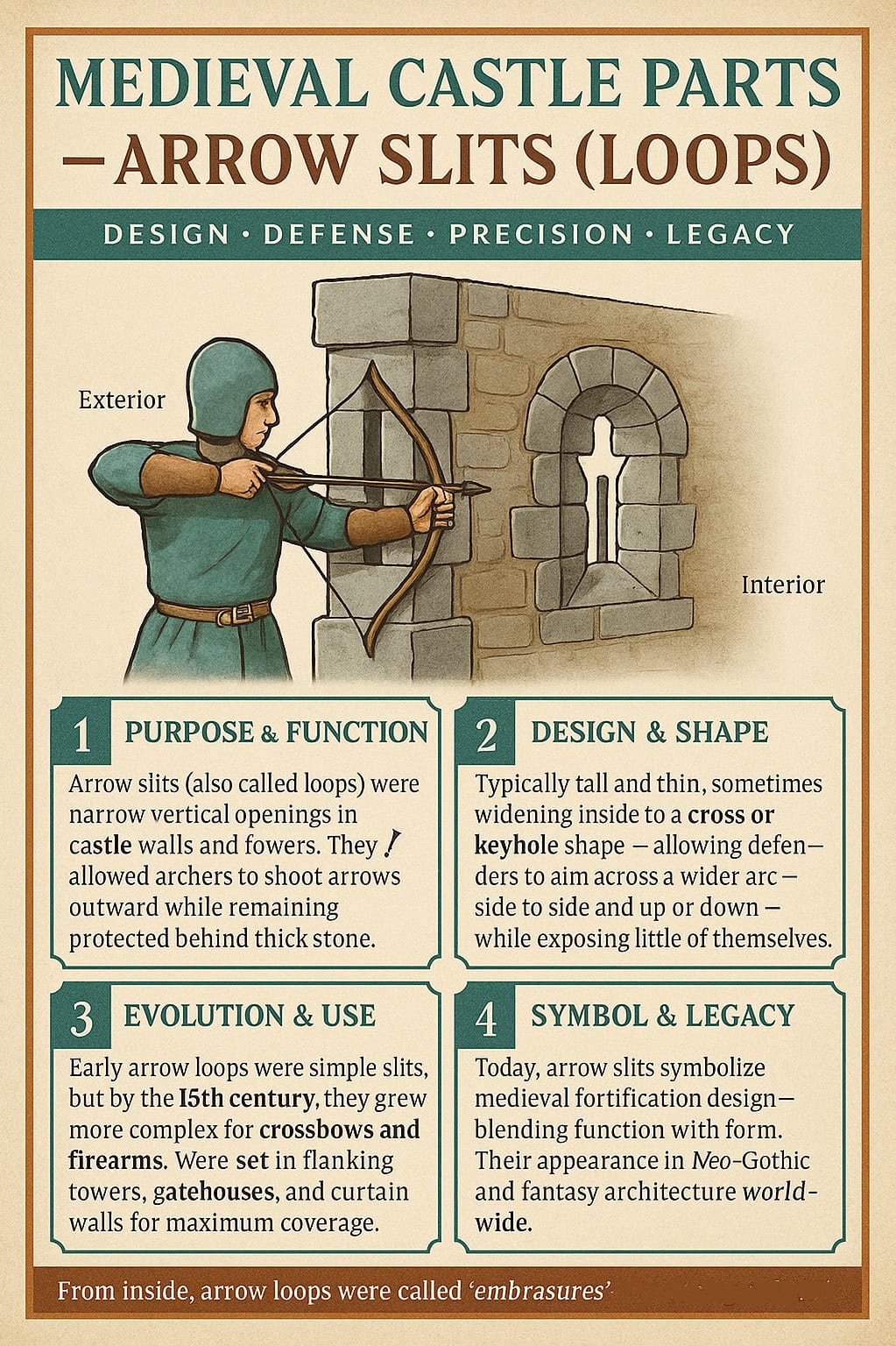
Castle Arrow Loops / Slits Fast Facts
- Also called: arrow loops, arrow slits, loopholes, shot holes
- Purpose: let defenders fire arrows (and later crossbow bolts) while staying protected
- Typical shape: narrow vertical slit outside, widening to a larger splay inside for aiming
- Where found: gatehouses, curtain walls, towers, and near vulnerable approaches
- Best for: covering walls, gateways, bridges, and the base of towers
- Design advantage: wide interior angle of fire with minimal opening to the enemy
- Crossbow versions: often slightly wider, sometimes with additional horizontal cuts
- Later evolution: gunloops for early firearms, usually round/“keyhole” openings
- Defense bonus: stone thickness around the slit shields the archer from return fire
- Common mistake: assuming all slits are identical—angle, height, and splay vary by location and threat
What Is an Embrasure?
Behind the arrow slit, the defender often stood in a recessed space called an embrasure. This was the widened internal opening cut into the thickness of the wall.
The embrasure mattered because it allowed the defender to:
- step into position safely
- aim left or right with more freedom
- reload more easily
- stay protected from incoming arrows and thrown weapons
Without an embrasure, an arrow slit would be far less useful, because the defender would be trapped in one narrow line of sight.
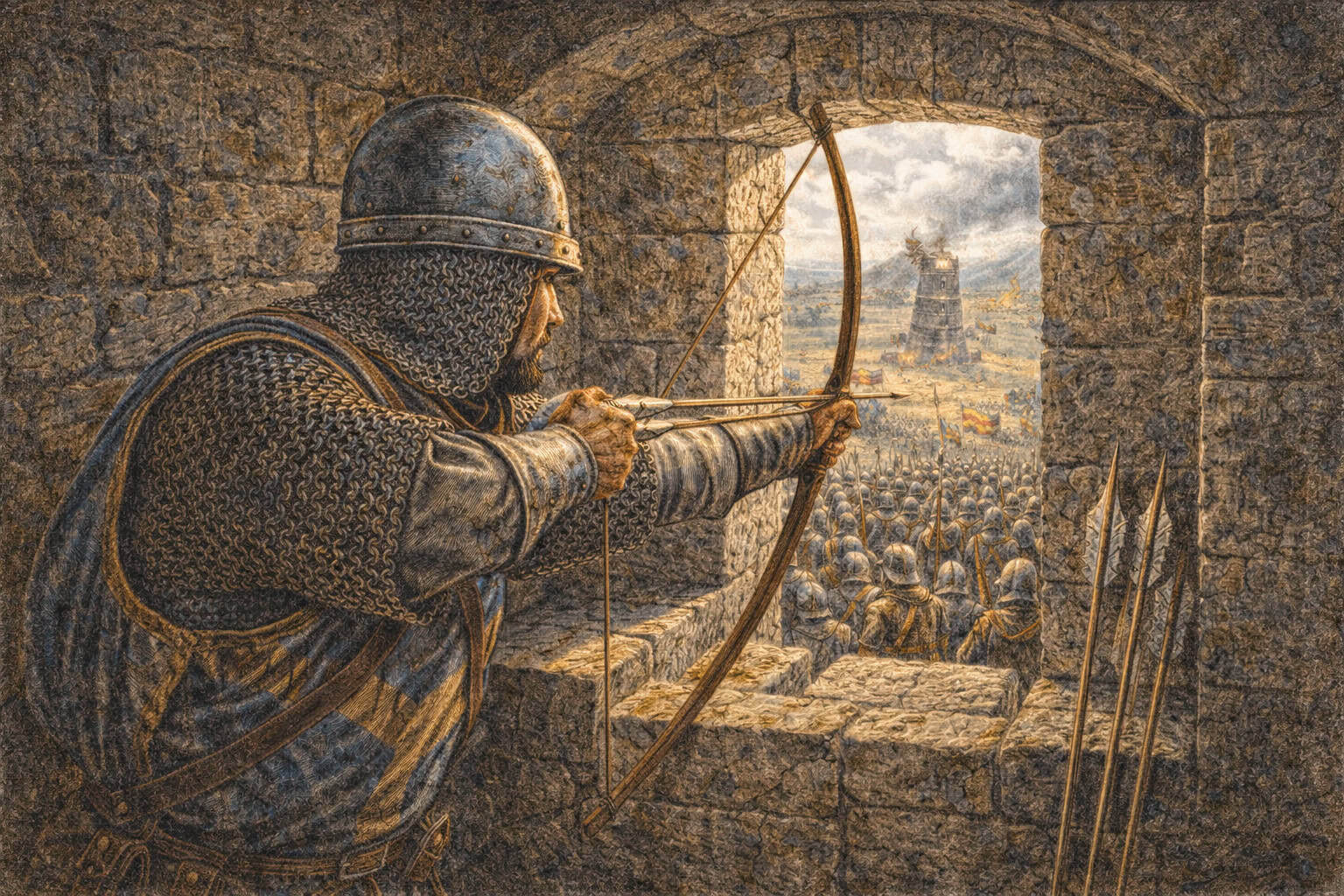
Arrow Slit History
Openings for shooting missiles existed long before the Middle Ages, and ancient fortifications sometimes used narrow gaps for defenders. However, the classic medieval arrow slit became a major feature of stone castle design mainly from the 12th century onward.
This timing matters because many early castles—especially after the Norman Conquest—began as timber fortifications or simple earthworks. As castles developed into large stone structures with thick walls and powerful towers, defensive features like arrow loops became more advanced and more widespread.
Early medieval arrow slits were often simple vertical openings. They protected the archer, but they also had a major weakness: the defender could only see and shoot into a narrow zone outside. If attackers approached from the wrong angle, they might not be visible until they were dangerously close.
As medieval military architecture improved, arrow loops became more sophisticated. Better shaping, wider internal recesses, and improved placement allowed defenders to cover a larger area. By the 13th century, many castle designs placed arrow slits strategically around the entire defensive circuit to create strong fields of fire.
Some famous castles with notable arrow loop designs include:
- Dover Castle (England)
- Framlingham Castle (England)
- Château Gaillard (France)
- White Castle (Wales)
Each reflects different stages in medieval castle development and defensive thinking.
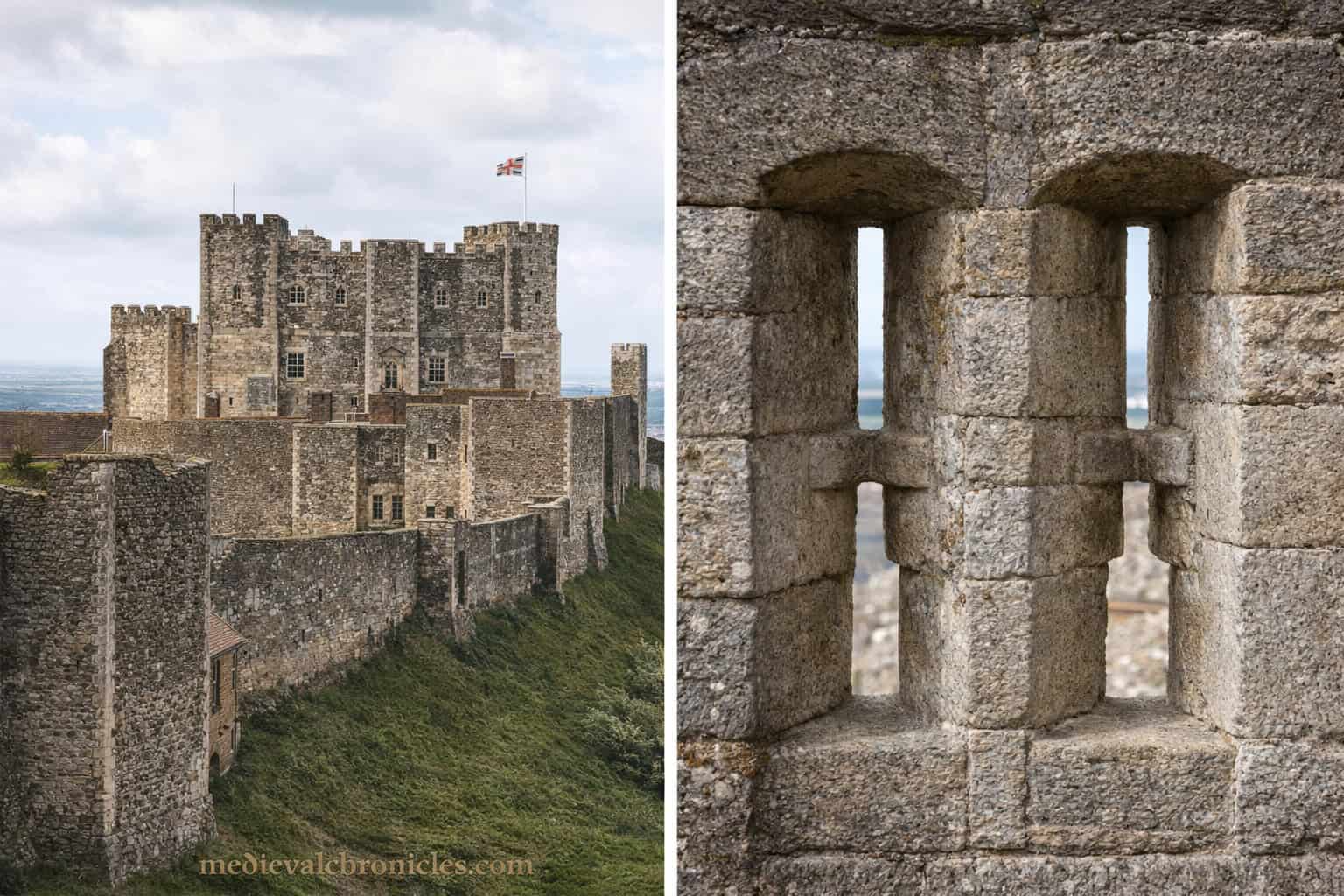
Types of Castle Arrow Slit
Medieval arrow slits were not all the same. Over time, builders created different shapes to improve visibility, aiming angles, and protection.
Vertical Arrow Slits
The earliest common type was the simple vertical slit. This allowed defenders to aim up and down, but it limited side-to-side movement. It was highly protective, but the defender’s field of view was narrow.
Cross-Shaped (Cruciform) Arrow Loops
A later improvement was the cross-shaped arrow loop, sometimes called a cruciform loophole. This design added a horizontal slit to the vertical opening, which helped defenders track enemies moving across the wall face.
These openings often look like a religious cross, but the main reason for the shape was practical: better vision and a wider firing arc.
Displaced Transverse Slots
Another clever variation was the displaced transverse slot, where the opening was offset in a way that reduced the attacker’s direct line of sight into the slit. This made the defender harder to hit and improved survivability during heavy fighting.
Larger Embrasures for Multiple Defenders
Some arrow loop positions were built into larger fighting recesses, especially in towers and gatehouses. In certain areas, defenders could operate close together, allowing more intense defensive fire where attackers were most likely to concentrate— such as near entrances or weak points in the walls.
Why Arrow Slits Were So Effective
Arrow slits helped castles survive because they gave defenders key advantages:
- Protection: defenders could fight while staying mostly hidden
- Control of approach routes: attackers were forced into dangerous zones
- Overlapping defense: multiple loops could cover the same area
- Psychological impact: attackers faced constant missile fire while advancing
In combination with walls, towers, and gatehouses, arrow loops were a major reason castles could resist sieges for weeks or even months.

Conclusion
Castle arrow slits were far more than simple holes in stone. They were carefully planned defensive features that allowed medieval defenders to fire arrows or bolts while staying protected inside the castle wall. Over time, arrow loops evolved from basic vertical slits into advanced designs with wider embrasures and improved firing angles, reflecting the growing sophistication of medieval warfare and castle engineering.
If you want to explore more castle defenses, see the other articles in the castle parts section to build a full understanding of how medieval castles were designed to fight—and survive.
Castle Arrow Loops / Slits FAQ
Quick answers to common questions about loopholes, embrasures, and medieval defensive design.
What is an arrow slit (arrow loop)?
Why are arrow slits narrow on the outside but wider inside?
Are arrow slits and embrasures the same thing?
What is a cross-shaped (cruciform) loophole used for?
Did castles use arrow slits for crossbows too?
Could attackers shoot back through arrow slits?
Where were arrow slits placed in a castle?
What came after arrow slits?
Quick Quiz: Castle Arrow Slits
Test your knowledge in under a minute.
Glossary: Arrow Loops & Castle Defense
Key terms you’ll see when exploring medieval castle walls and fortifications.
Arrow Loop / Arrow Slit
A narrow wall opening used for firing arrows (and sometimes bolts) while staying protected.
Loophole
A general term for a defensive firing opening in a wall, including arrow loops and gunloops.
Embrasure
The recessed interior space behind a slit where a defender could stand, aim, and reload.
Splay
The widening of the opening inside the wall to improve the defender’s field of fire.
Cruciform Loophole
A cross-shaped arrow loop that adds a horizontal slot for improved tracking and vision.
Transverse Slot
A horizontal opening added to improve side-to-side aiming.
Displaced Slot
An offset slit design that reduces an attacker’s direct line of sight into the opening.
Curtain Wall
The main outer defensive wall enclosing the castle’s interior buildings and courtyards.
Gatehouse
A heavily defended entrance structure, often packed with loops, murder holes, and doors.
Gunloop
A later firing opening designed for early firearms, often round or keyhole-shaped.