
Medieval Times
Medieval Times
Early medieval clothing reflected the complex cultural changes that shaped Europe after the fall of the Roman Empire. As Roman political control collapsed in the West, Europe entered a period of transformation influenced by the arrival and settlement of various Germanic tribes, including the Anglo-Saxons, Franks, and Visigoths.
During this period, the traditions of Roman society blended with the customs of these migrating peoples. This cultural exchange influenced many aspects of daily life, including dress, textiles, and fashion.
Clothing styles varied from region to region across Europe, but several common elements appeared throughout the early medieval world. Garments were practical, often made from wool, linen, or leather, and designed to suit the daily activities of the wearer.
It is also important to note that clothing clearly reflected social status. The garments worn by the nobility and elite differed significantly from those of farmers, craftsmen, and laborers.
Early medieval clothing developed during a period of major cultural change in Europe following the fall of the Roman Empire. People across the continent commonly wore tunics, cloaks, mantles, and leggings, while wealthier nobles displayed their status through silk garments, decorative brooches, and imported fabrics. Clothing during this period reflected both social status and regional traditions, influenced by Roman heritage, Germanic customs, and the growing influence of Christianity.
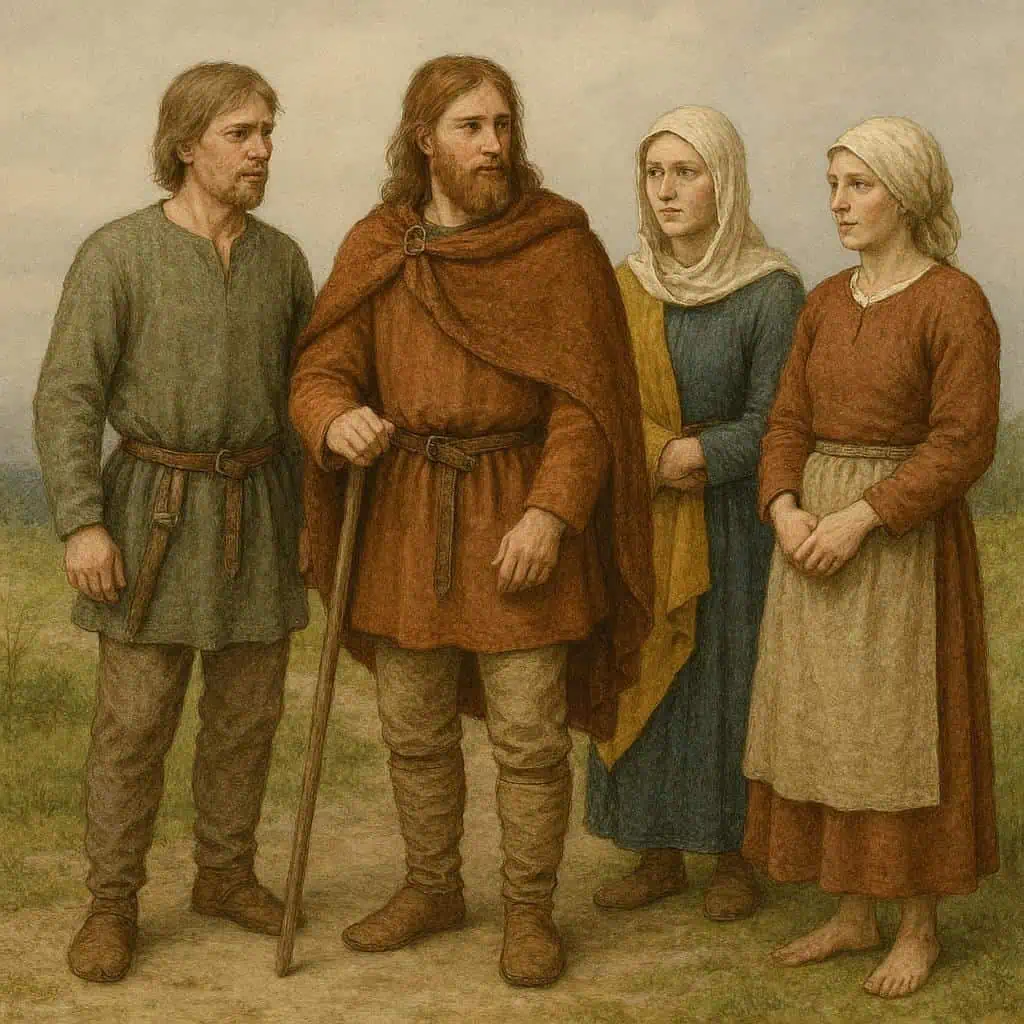
The wealthy and noble classes in early medieval Europe wore clothing that reflected their status, access to luxury materials, and connection to long-distance trade networks.
Elite garments were often made from fine fabrics, some of which were imported from distant regions. Silk, one of the most luxurious materials of the period, was commonly brought from the Byzantine Empire. Cotton textiles also appeared in elite wardrobes and were often traded from Egypt and the Arab world.
In addition to silk and cotton, noble clothing frequently included high-quality wool, linen, fur, and leather. Decorative features were especially important in elite dress, particularly in Anglo-Saxon England, where garments were often adorned with brooches, clasps, buckles, and ornate belts.
The tunic was the most common garment worn by men during the early medieval period. It was typically made from folded pieces of fabric with a neck opening and attached sleeves. The length of the tunic often reflected social status and occupation.
Warriors, craftsmen, and peasants usually wore shorter tunics that reached the knee or slightly above, allowing easier movement during work or combat. Members of the nobility, however, often wore longer tunics, sometimes extending to the ankles and decorated with colorful embroidery, rich fabrics, and ornamental trim.
To complete their attire, nobles often wore leggings for the lower body and added cloaks or mantles when traveling outdoors or during colder weather. These garments provided warmth while also reinforcing the wearer’s rank and prestige.
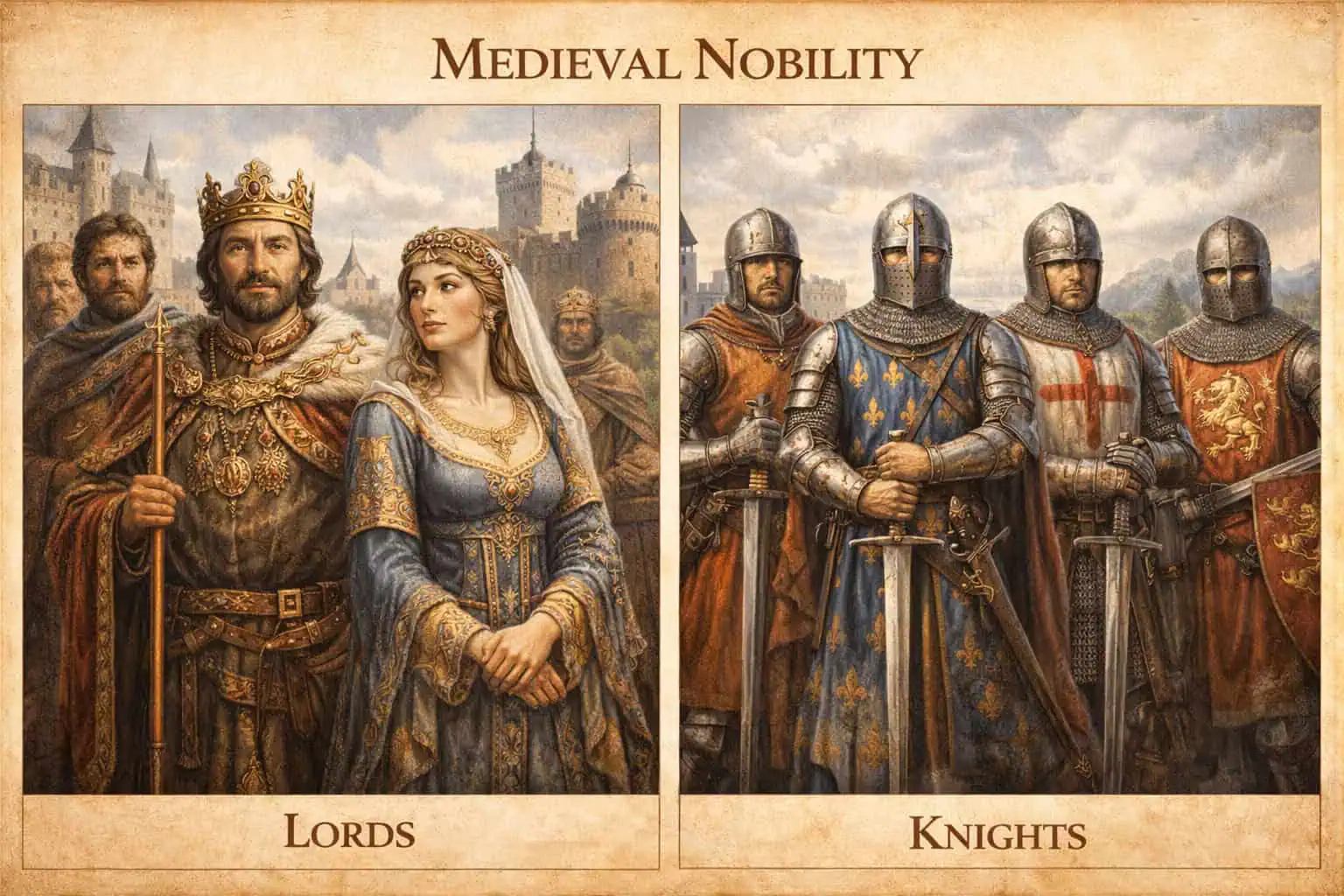
Women during the early medieval period usually wore a long tunic-style dress with sleeves. This garment was similar in design to men’s tunics but typically extended to the ankles and was shaped differently to fit the body.
Many women wore an under-tunic beneath the outer garment for additional warmth and comfort. The outer dress often featured a slit at the bodice, which could be fastened using lacing.
Under the dress, women sometimes wore hose or leg coverings, although the style and length of these garments varied across different regions of Europe.
Like men, women also wore cloaks or mantles when outdoors. These garments provided protection from cold weather and rain.
With the growing influence of Christianity across Europe, modesty in dress became increasingly important. Women commonly covered their hair in public using veils, kerchiefs, or simple head coverings, which became a typical feature of female clothing during the period.
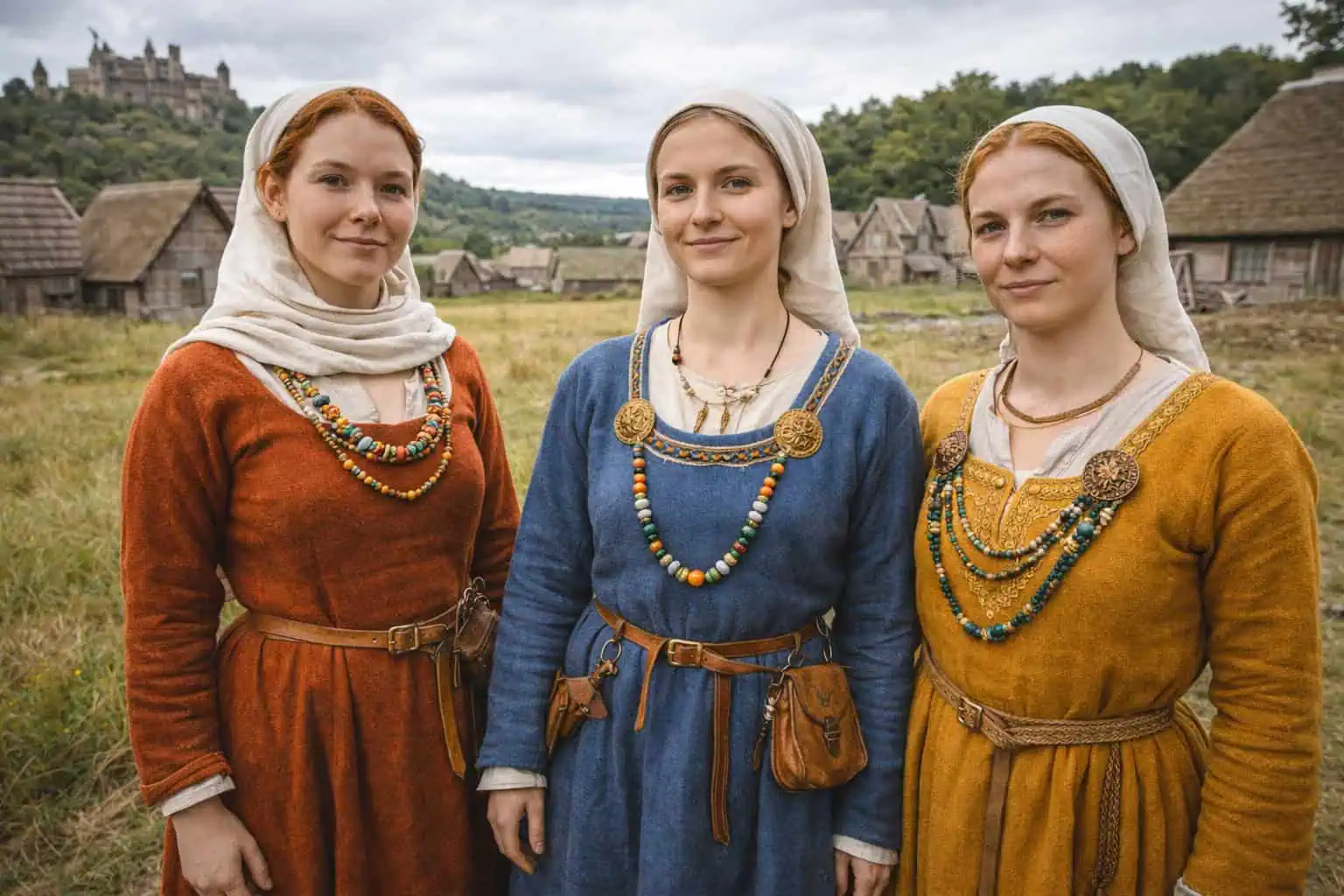
During the early medieval period, the clothing of the Christian clergy gradually became more elaborate and structured.
Initially, clerical dress was relatively simple. Over time, however, the Church developed a system of distinct garments associated with specific religious roles and ranks.
Members of the clergy began wearing specialized vestments such as the cope, pallium, maniple, dalmatic, and stole. Each of these garments carried symbolic meaning and reflected the hierarchy within the Church.
Higher-ranking clergy members often wore vestments made from fine fabrics such as silk, emphasizing both religious authority and ceremonial importance.
The increasing complexity of clerical clothing reflected the growing influence of the Christian Church in medieval European society.

Men in early medieval Europe commonly wore tunics with sleeves and leggings, often combined with a cloak or mantle in colder weather.
Women typically wore a long-sleeved tunic dress, sometimes layered with an under-tunic and paired with a cloak.
Wealthy nobles used silk, cotton, fur, and imported fabrics to create more elaborate garments.
Common people usually wore clothing made from wool or linen, which were widely available and durable materials.
Decorative accessories such as belts, buckles, brooches, and metal clasps were commonly used in clothing.
Cloaks worn in Western Europe often reflected lingering Roman influences in design and style.
Clergy members wore specialized garments such as the cope, pallium, maniple, and dalmatic as part of ecclesiastical dress.
Early medieval clothing developed during a period of major cultural transformation in Europe. Influenced by Roman traditions, Germanic tribal customs, and the growing authority of Christianity, clothing styles evolved to reflect both practical needs and social identity.
While common people wore simple wool and linen garments, the nobility displayed wealth and status through fine fabrics, decorative accessories, and imported textiles. At the same time, the clergy adopted distinctive garments that symbolized their role within the expanding Christian Church.
Together, these clothing traditions offer valuable insight into daily life, social hierarchy, and cultural exchange in early medieval Europe.
Most people wore tunics, cloaks, leggings, and mantles. Clothing was typically made from wool or linen and designed for practicality and durability.
Common fabrics included wool and linen, while wealthier individuals could afford silk, cotton, fur, and imported textiles.
Nobles wore garments made from luxury fabrics such as silk and decorated them with brooches, clasps, and embroidery, while commoners usually wore simpler wool or linen clothing.
The tunic was the most widely worn garment for both men and women. The length and decoration of the tunic often indicated social status.
Yes. The growth of Christianity encouraged modest clothing styles, and women often covered their hair with veils or head coverings in public.