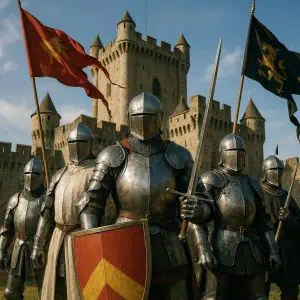
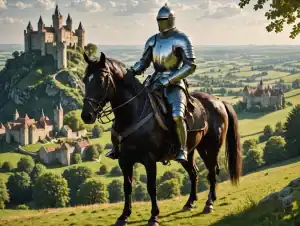
A medieval squire was the essential final step in a young noble’s journey to knighthood, acting as both apprentice and assistant to an experienced knight. Typically beginning in their early teens, squires were trained in the arts of combat, horsemanship, and chivalry, while also learning responsibility through duties such as caring for armor, weapons, and horses. This vital role prepared boys for the challenges of knighthood, giving them firsthand experience on the battlefield and in courtly life. Exploring the life of a squire provides valuable insight into the training, discipline, and values of medieval warriors.

The medieval page hailed from a noble family himself and his service as an attendant was seen as a part of his training in courtly manners and a precursor to his qualification as a knight later in his life.

To this end, boys from noble medieval families would receive basic training in manners and rudimentary education at their home until the age of around seven years.
Once the boys hit seven years old, they were sent to assume the position of a page, commonly that of a fellow noble family.

Tasks of a Medieval Page
The medieval Page was required to perform different duties for the lord or knight he attended on. This was seen as a form of education rather than a form of subjugation and the page gladly served the lord in order to learn the manners of courtly life.
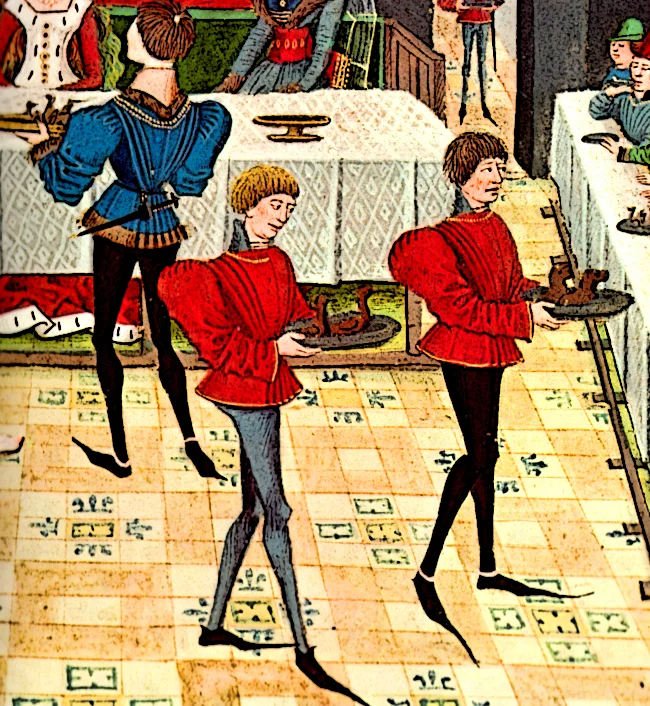
Typical chores of a page included taking the lord’s messages to different other persons, tidying up the clothes and weapons of his lord, and serving the Lord in other ways such as by filling his wine cup at meals.
Often the page was also required to aid the lord put on his armor and weaponry just ahead of a battle.

Medieval Page Training
The purpose of a page’s placement as an attendant upon a nobleman or a knight was to train him in certain courtly and noble skills.

Typically, the Page would receive training in a number of skills such as horse riding, falconry, armed combat, and hunting, skills which would contribute to his position in the medieval aristocracy.
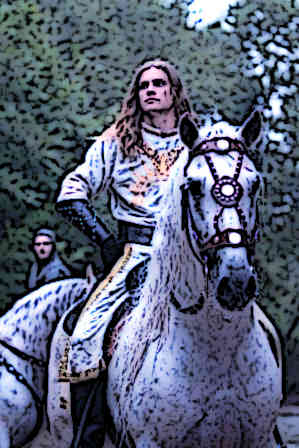
The page also received a basic education in other courtly skills such as composing poetry, writing and singing songs and playing a variety of musical instruments. In some cases, the Page was educated in playing board games as well.

Was a Medieval Page Paid?
The Page was offered little to no direct reimbursement in return for his service. Rather, the education, combat training, and other forms of learning he attained at the lord’s expense were considered a suitable and adequate reimbursement.

In addition, the Page was provided food, shelter, and clothing at the lord’s house as well. In rare cases when the Page went out of his way to serve the Lord, the lord could offer a reward as an acknowledgment of his service.

Future Career of a Medieval Page
A boy from a noble medieval family typically served a major lord as a page from seven years of age to around the age of fourteen.
Upon reaching around fourteen years of age, if the Page was deemed appropriately trained in the courtly manners and skills, he was promoted to the position of a squire.

A squire then went on to serve a knight, typically both on and off the battlefield. It is through the page’s training as a squire that he ultimately reached the point where he was awarded the prestigious position of knighthood by a leading lord.

Frequently Asked Questions about Medieval Page Boys
What was a Medieval Page Boy?
A page boy was a young servant or apprentice, usually of noble birth, who began training for knighthood by serving a knight or noble household.
At what age did boys become pages?
Boys typically started as pages around age 7, learning basic manners, courtly etiquette, and introductory martial skills.
What duties did a page boy have?
Page boys performed tasks such as running errands, delivering messages, assisting knights, and learning riding and weapon basics.
How long did one serve as a page?
Boys usually served as pages for about 5-7 years before becoming a squire to continue training for knighthood.
Did all page boys become knights?
No. Only some pages progressed to become squires and eventually knights, depending on skill, opportunity, and social status.
What training did a page receive?
Pages learned horse riding, basic combat, etiquette, literacy, and loyalty as preparation for their future role as a knight.
Was being a page considered prestigious?
Yes. Serving as a page in a noble household offered prestige, education, and connections necessary for a future military or noble career.