Medieval France emerged as one of the most influential kingdoms in Europe, shaping the continent’s political structure, military traditions, religious life, and cultural development for nearly a thousand years. Spanning roughly from the 5th to the late 15th century, this period witnessed the rise of powerful monarchies, the spread of feudal society, the construction of formidable castles, and the growth of cities that would define the future French nation.
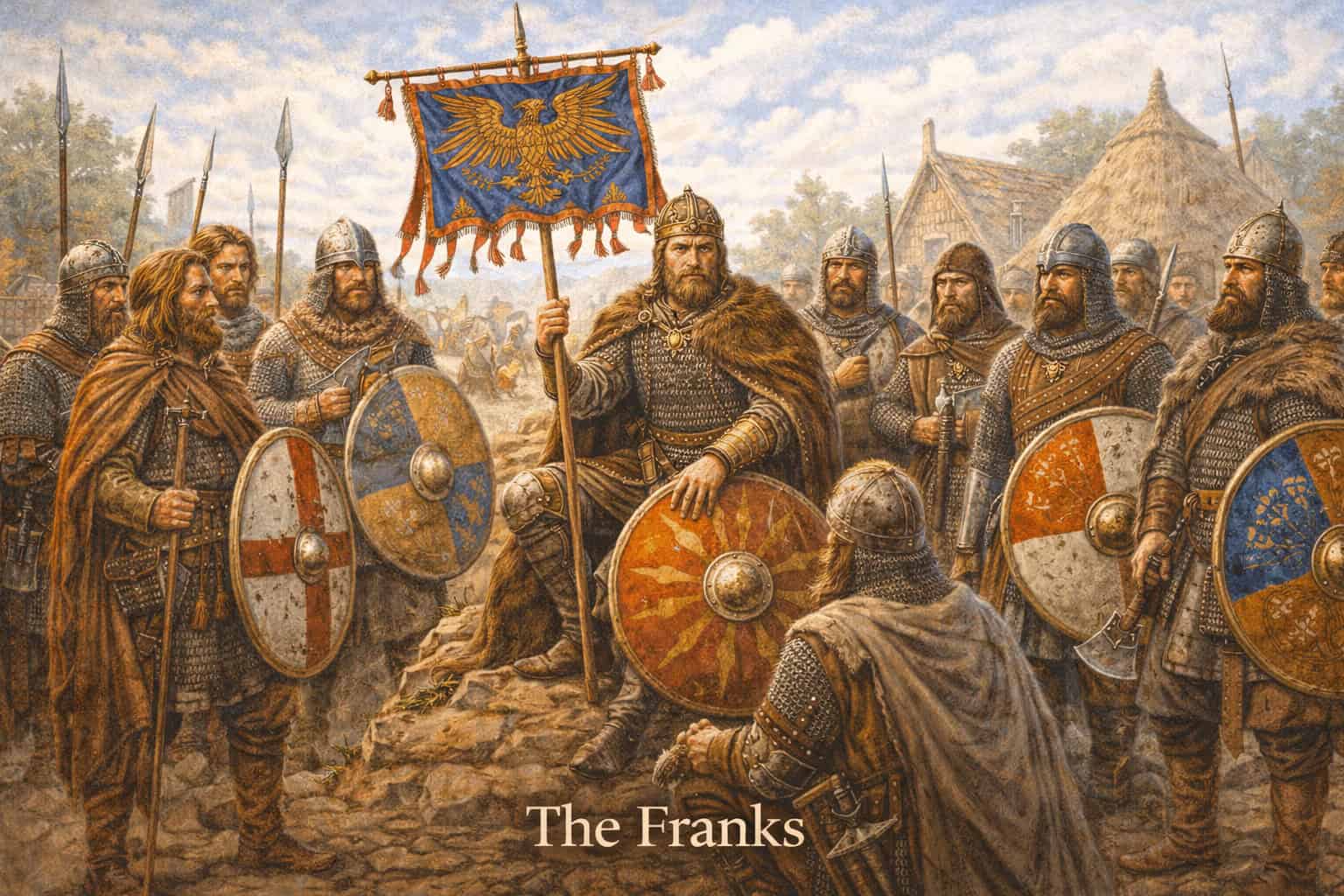
The name “France” derives from the Franks, a Germanic people who established dominance in the region following the collapse of Roman authority in Western Europe. Under leaders such as Clovis I, the Frankish tribes were united, laying the foundations for what would gradually evolve into the medieval French kingdom.
Over time, France transformed from a fragmented territory ruled by regional nobles into one of Europe’s strongest centralized monarchies — a development that profoundly influenced medieval politics across the continent.
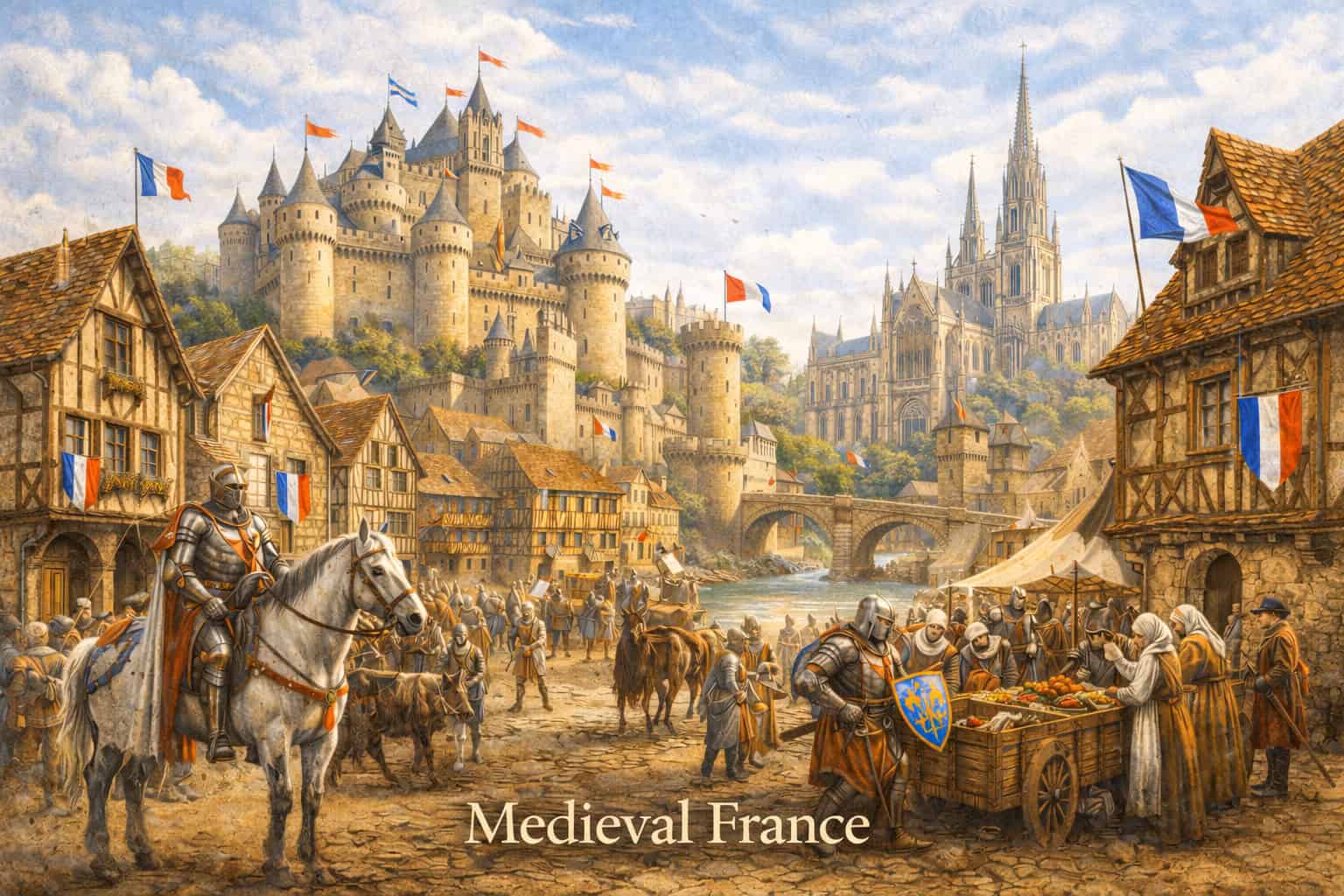
🇫🇷 Medieval France — At a Glance
Medieval France emerged from the rule of the Frankish tribes and evolved into one of the most powerful kingdoms in Europe. From the rise of feudalism to the construction of fortified castles, the authority of French monarchs, and the cultural influence of the Catholic Church, this period shaped the political and social foundations of modern France.
Spanning roughly the 5th to the 15th centuries, medieval France witnessed territorial expansion, dynastic rule, economic growth, and transformative conflicts such as the Hundred Years’ War. Understanding this era reveals how France developed into a centralized kingdom and a major force in European history.
🕰️ Timeline of Medieval France
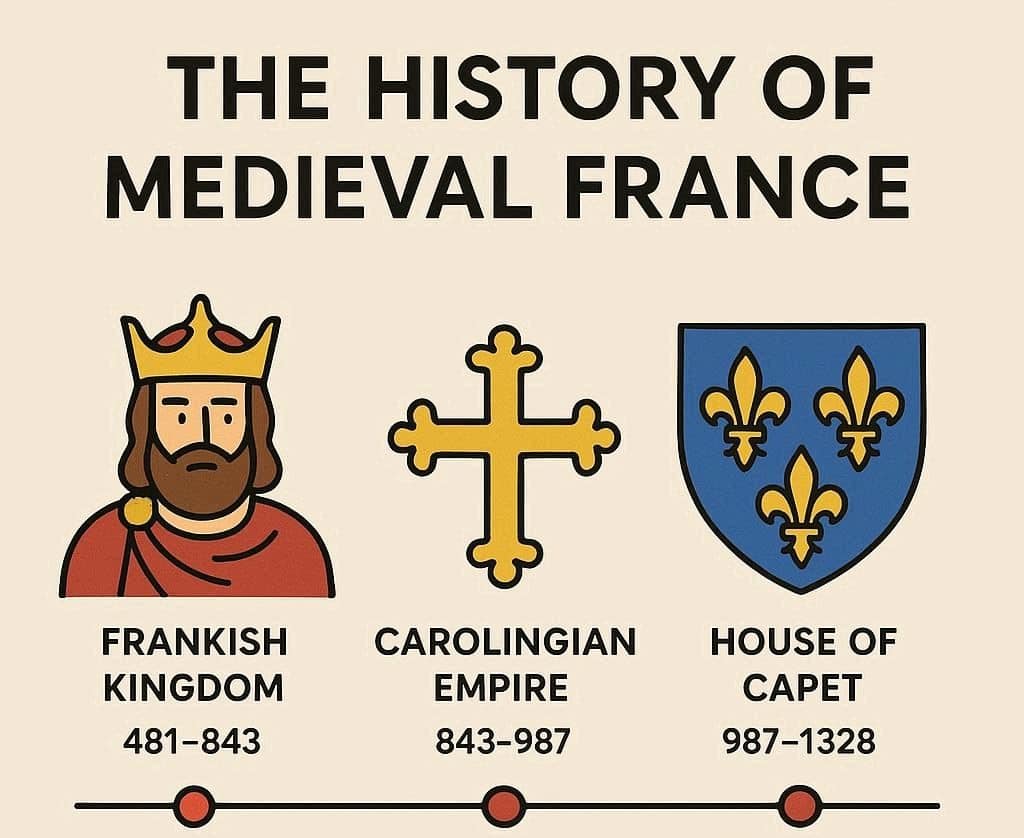
The history of medieval France spans nearly a thousand years, marked by dynastic change, territorial consolidation, religious influence, and evolving royal authority.
Early Middle Ages (c. 500–900)
The Franks established dominance in Gaul under leaders such as Clovis I. Christianity expanded, and the foundations of the future French kingdom began to form.
Carolingian Era (c. 750–987)
Under Charlemagne, the Frankish realm expanded across much of Western Europe. After his empire fragmented, regional nobles gained power, encouraging the growth of feudalism.
Capetian Consolidation (987–1300)
The Capetian dynasty strengthened royal authority and gradually unified French territories. Cities grew, trade expanded, and monumental cathedrals reshaped the urban landscape.
Late Medieval Period (1300–1500)
Crisis and recovery defined the era — including the Black Death and the Hundred Years’ War. By the late 15th century, France emerged more centralized, setting the stage for the early modern state.
Origins of Medieval France
The origins of medieval France can be traced to the Frankish Kingdom, established during the late 5th century. When Clovis I converted to Christianity, he strengthened ties with the Church and secured legitimacy for his rule — a decision that helped align the emerging kingdom with the religious identity of Western Europe.
After the decline of the Merovingian dynasty, power gradually shifted to the Carolingians, culminating in the reign of Charlemagne. Although he ruled a vast empire rather than France alone, his governance, educational reforms, and administrative systems helped shape the political landscape from which medieval France would later emerge.
Following the fragmentation of Charlemagne’s empire, regional rulers gained influence, accelerating the rise of feudal structures.
Feudalism in Medieval France
Feudalism became the defining political and social system of medieval France between the 9th and 15th centuries. It organized society around land ownership, loyalty, and military service.
At the top stood the king, who granted land — known as fiefs — to powerful nobles. In return, these nobles pledged loyalty and provided soldiers when needed. Beneath them were vassals and knights, while the majority of the population consisted of peasants and serfs who worked the land.
This hierarchical structure provided stability during centuries often marked by invasion, conflict, and political uncertainty. However, it also decentralized authority, allowing regional lords to wield significant power.

Medieval French Society and Daily Life
Life in medieval France was overwhelmingly rural. Most people lived in small farming communities where survival depended on agriculture, seasonal labor, and local cooperation.
Peasants typically resided in modest wooden homes and spent much of their lives cultivating crops, raising livestock, and fulfilling obligations to their lords. In contrast, the nobility lived in fortified residences and exercised political and judicial authority over surrounding lands.
By the 12th and 13th centuries, however, towns began expanding. Paris emerged as a major administrative, commercial, and intellectual center, reflecting the gradual shift toward urban life.
Religion remained central to all levels of society, influencing law, education, and cultural identity.
The Power of the Medieval French Monarchy
Across the Middle Ages, French kings transformed France from a fragmented feudal territory into one of Europe’s most powerful centralized kingdoms. Through dynastic continuity, territorial expansion, and administrative reform, the monarchy steadily increased its authority over both nobles and common subjects.
Foundations of Royal Authority
Early medieval rulers often competed with powerful regional lords, but over time the monarchy strengthened its political position and expanded direct control over French lands.
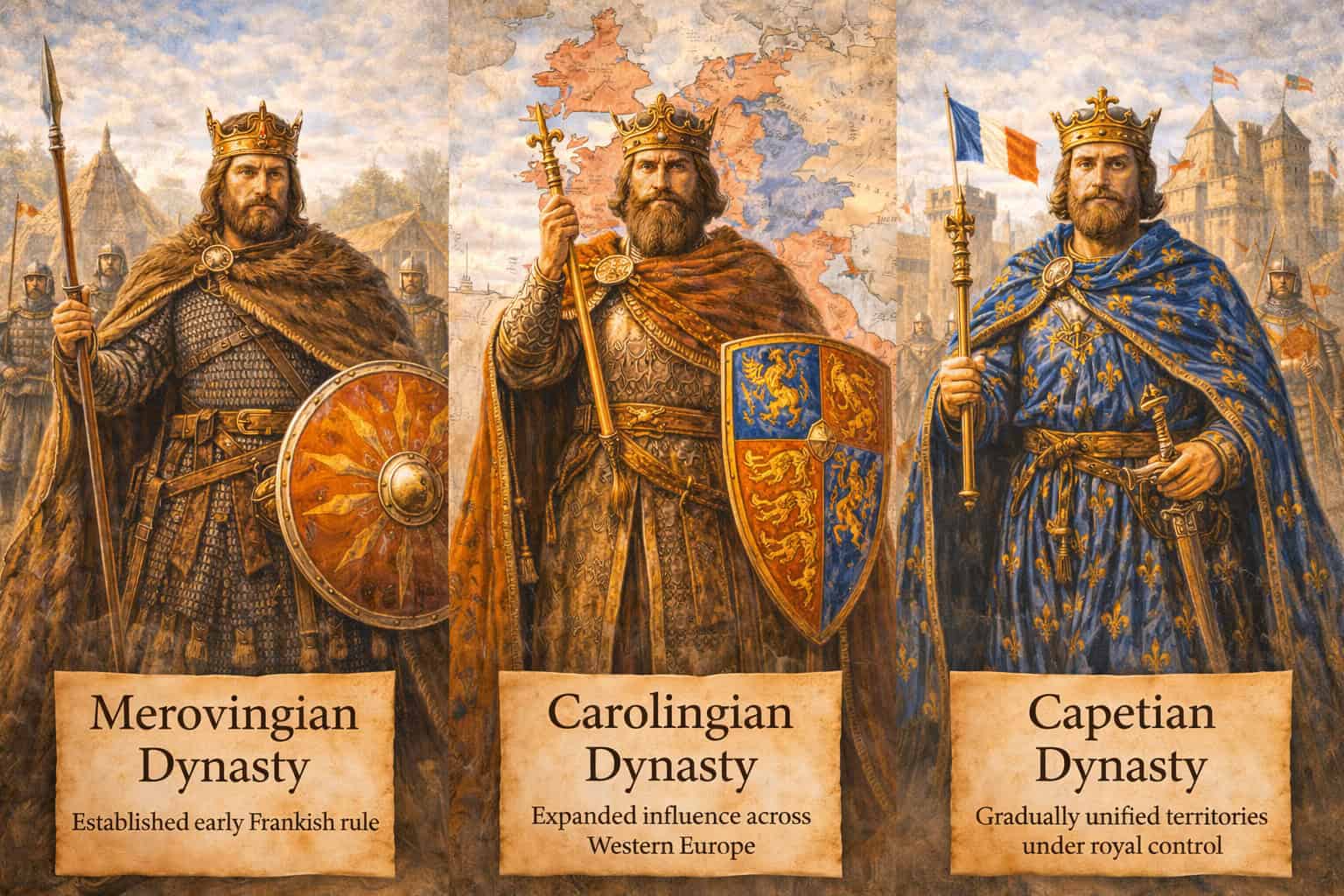
- Merovingian Dynasty: Established early Frankish rule
- Carolingian Dynasty: Expanded influence across Western Europe
- Capetian Dynasty: Gradually unified territories under royal control
The Capetians were especially important in stabilizing succession and reinforcing the long-term strength of the French crown.
Expansion of Kingly Power
As the medieval period progressed, French monarchs reduced the independence of rival nobles, improved systems of governance, and elevated France’s status within Europe.
- Expansion of royal territory
- Creation of stronger administrative institutions
- Greater influence over law and justice
- Recognition of the king’s divine authority
Coronation ceremonies reinforced the belief that kings ruled by divine will — a powerful idea that strengthened loyalty and enhanced royal prestige throughout medieval France.
Castles and Fortifications
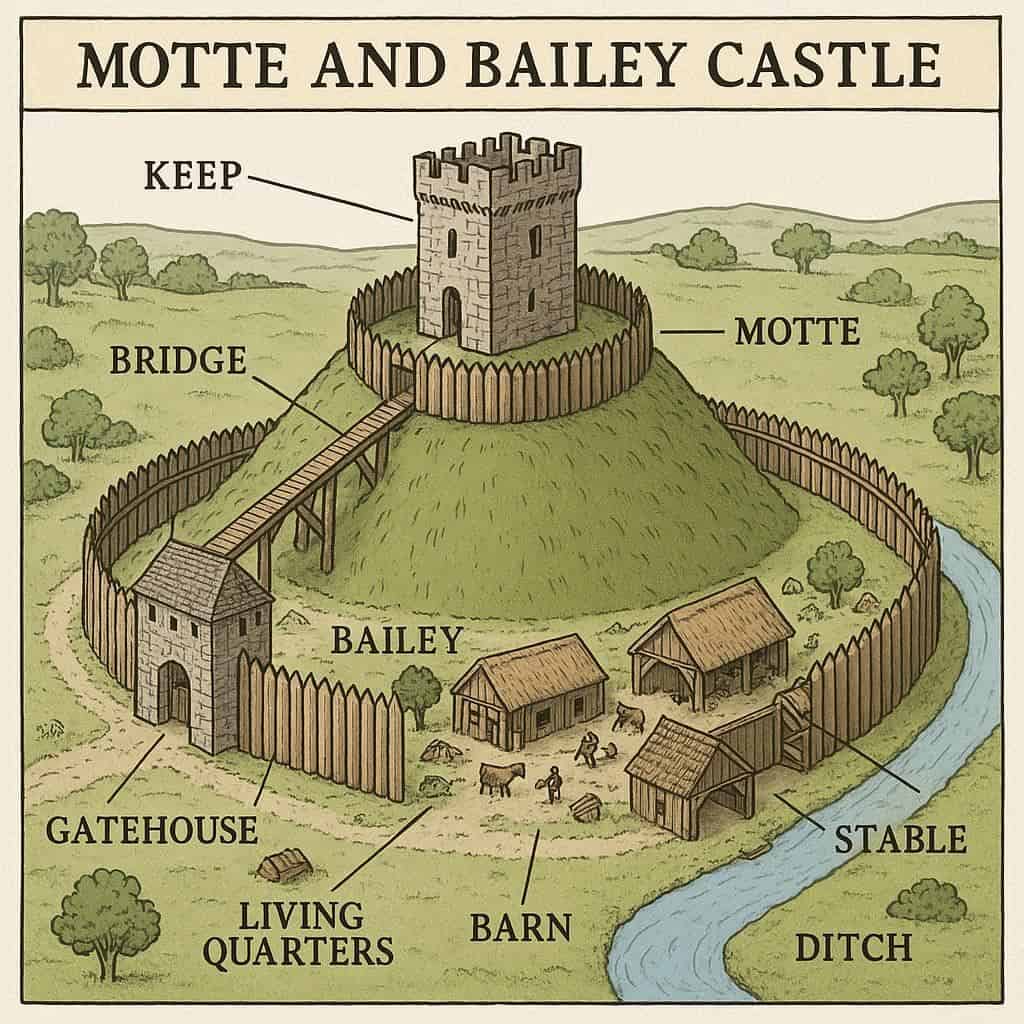
France became renowned for its vast number of castles, many of which were constructed to defend territories and project noble power.
Early medieval fortifications often followed the motte-and-bailey design — consisting of a raised earth mound topped with a defensive structure and an enclosed courtyard. Over time, these were replaced by imposing stone keeps and eventually by sophisticated concentric castles designed to withstand prolonged sieges.
These fortifications were not only military strongholds but also administrative centers and symbols of authority.
Châteaux and Noble Residences
The French term château refers broadly to a large country residence. While some châteaux functioned as fortified castles, others were designed primarily for comfort and display, reflecting aristocratic wealth.
Unlike purely defensive structures, many later châteaux emphasized elegance, spacious interiors, and landscaped surroundings — signaling the gradual shift from medieval warfare toward more stable political conditions.
Knights and Warfare
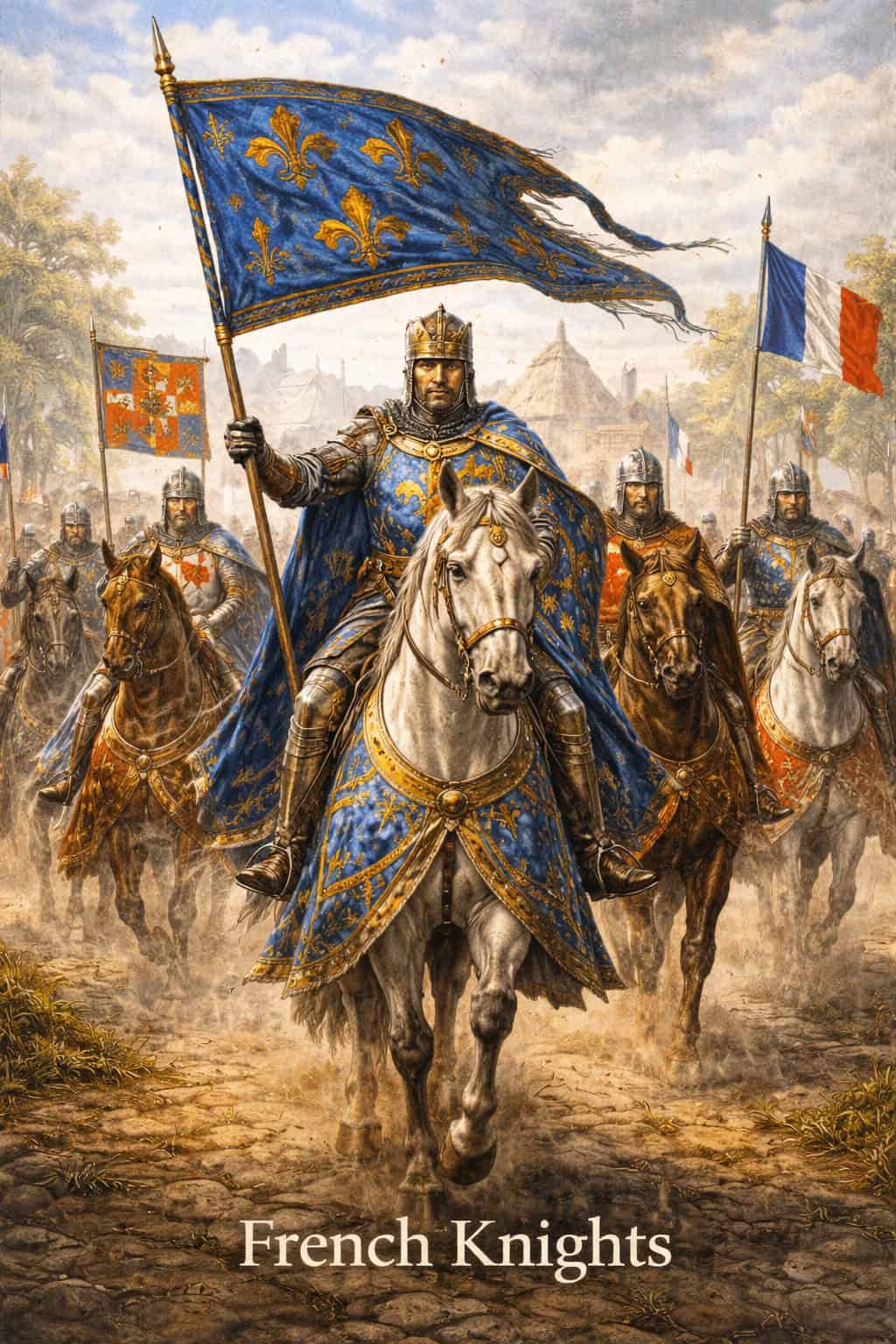
Knights formed the military backbone of medieval France. Drawn largely from the aristocracy, they were bound by loyalty to their lords and trained extensively for combat.
French knights played major roles in conflicts such as the Crusades and the Hundred Years’ War, demonstrating both military skill and social prestige.
One of the most celebrated knights was Bertrand du Guesclin, whose leadership helped bolster French resistance during periods of conflict.
Religion and Cultural Life
The Catholic Church exerted enormous influence over medieval France. Monasteries preserved knowledge, cathedrals dominated city skylines, and religious rituals shaped everyday experience.

France also contributed significantly to medieval culture.
Music
Early polyphonic music flourished at Notre-Dame Cathedral, where composers such as Léonin and Pérotin advanced new musical forms.
Literature and Performance
Troubadours and trouvères composed poetry and songs that celebrated chivalry, romance, and heroic deeds.

Food, Fashion, and Social Status
Among the nobility, lavish banquets showcased wealth and political alliances. Exotic spices such as cinnamon, ginger, and saffron reflected expanding trade networks.
Clothing also signaled social rank. Fine fabrics and elaborate garments distinguished the aristocracy, while peasants wore simpler, practical attire suited to agricultural work.
Fashion trends evolved over time, particularly as urban economies expanded.
Peasants and Rural Communities
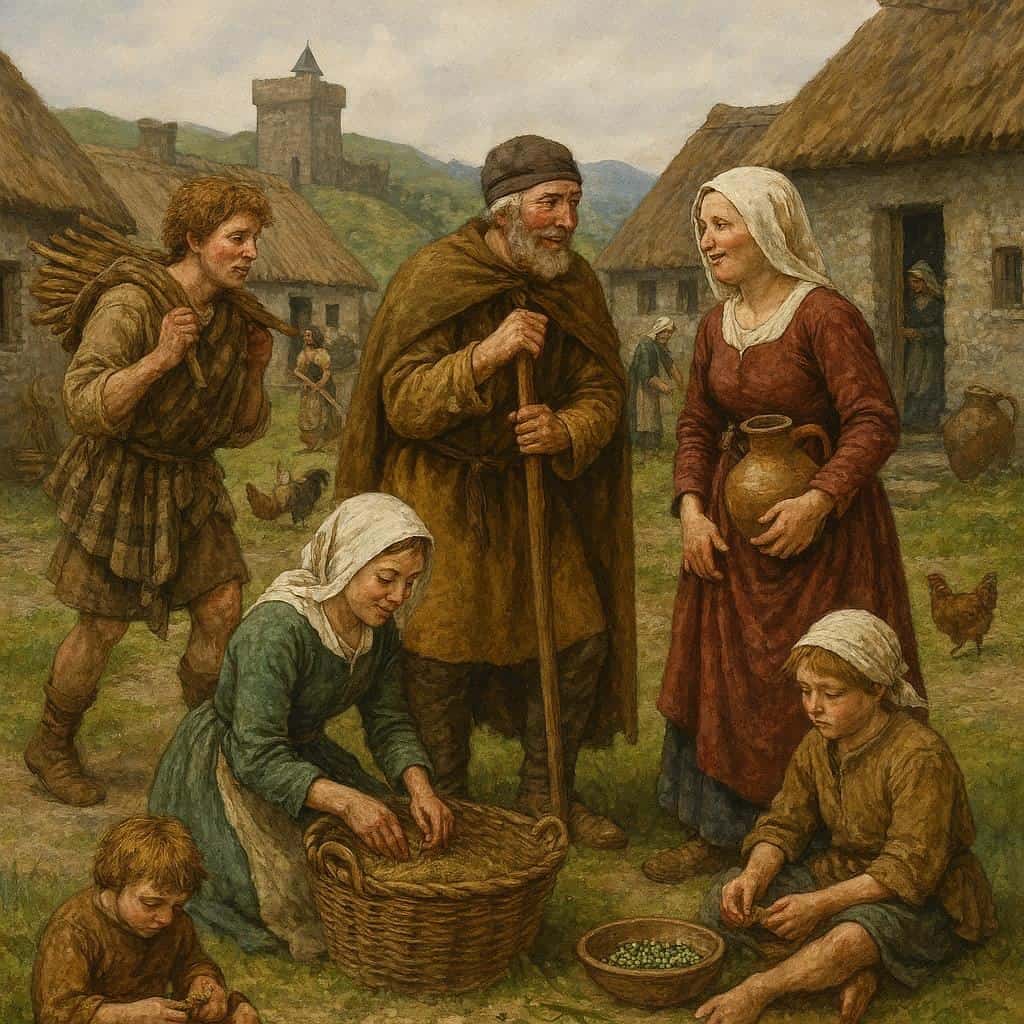
Peasants formed the foundation of the medieval economy. Though their lives were demanding, their labor sustained the kingdom.
Most villages consisted of a few dozen families who relied on shared fields, communal resources, and seasonal rhythms. Despite hardships — including famine, war, and disease — these communities demonstrated resilience across centuries of change.
Toward the End of the Medieval Era
By the late 15th century, several forces began reshaping France:
- stronger centralized monarchy
- expanding trade
- technological advances in warfare
- gradual decline of feudal structures
These transformations helped usher France into the early modern world while preserving many institutional foundations established during the Middle Ages.
Summary
Medieval France was a kingdom defined by transformation. From the rise of the Franks to the consolidation of royal power, the period witnessed the development of political systems, military traditions, and cultural achievements that shaped European history.
Its castles, monarchs, religious institutions, and evolving society reveal a dynamic civilization navigating centuries of change — leaving a legacy that continues to influence modern France.
Major Eras of Medieval France
The history of medieval France unfolded across several dynastic periods, each shaping the kingdom’s political structure, territorial strength, and cultural identity. Understanding these eras reveals how France evolved from a fragmented post-Roman territory into a powerful centralized monarchy.
Merovingian Era (c. 481–751)
Founded by Clovis I, the Merovingian dynasty established the earliest foundations of the Frankish kingdom after the collapse of Roman authority in Gaul.
- Unification of Frankish tribes
- Conversion to Christianity
- Alliance with the Church
- Early formation of French identity
Despite their achievements, later Merovingian rulers lost influence as real power shifted to palace officials.
Carolingian Era (751–987)
The Carolingians replaced the Merovingians and expanded Frankish dominance across much of Western Europe, most notably under Charlemagne.
- Creation of a vast European empire
- Administrative and educational reforms
- Promotion of Christian rule
- Revival of classical learning
After Charlemagne’s death, the empire fragmented — accelerating the rise of feudal power structures.
Capetian Era (987–1328)
The Capetian dynasty gradually strengthened royal authority and expanded direct control over French territories, setting the stage for a unified kingdom.
- Stabilized royal succession
- Expanded crown lands
- Reduced noble independence
- Strengthened governance
Capetian rulers transformed France from a feudal patchwork into a more centralized state.
Late Medieval France (14th–15th Centuries)
Crisis and recovery defined the later Middle Ages, as France endured war, plague, and political instability before emerging stronger.
- The Hundred Years’ War
- The Black Death
- Rise of national identity
- Growth of centralized monarchy
By the late 1400s, France stood poised to become one of Europe’s dominant early modern powers.
Frequently Asked Questions About Medieval France
Explore key facts about medieval France, including its rulers, social structure, culture, and the forces that shaped one of Europe’s most influential kingdoms during the Middle Ages.
What was medieval France?
Medieval France refers to the period roughly between the 5th and 15th centuries, when the region evolved from Frankish territories into a powerful European kingdom characterized by feudalism, expanding monarchy, and growing cultural influence.
Who were the Franks?
The Franks were a Germanic people who settled in Gaul after the fall of the Western Roman Empire. Under leaders such as Clovis I, they unified large territories and laid the political foundations for the future French state.
How did feudalism shape France?
Feudalism organized society around land ownership and loyalty. Kings granted land to nobles, nobles relied on knights for military service, and peasants worked the land — creating a structured but unequal social hierarchy.
What role did the monarchy play?
Over time, French monarchs strengthened royal authority, reduced the independence of powerful nobles, and expanded crown territories — gradually transforming France into a more centralized kingdom.
What were major events in medieval France?
Key developments included Viking invasions, the rise of the Carolingian Empire, the Hundred Years’ War, devastating outbreaks of plague, and the emergence of a stronger national identity.
How important was religion?
The Catholic Church influenced nearly every aspect of medieval life — from education and politics to architecture. Grand cathedrals symbolized both spiritual devotion and civic prestige.
What ended the medieval period in France?
The transition toward the early modern era was driven by stronger monarchies, economic expansion, technological change, and cultural movements that paved the way for the Renaissance.
Why is medieval France historically significant?
Medieval France helped shape European politics, warfare, culture, and governance. Its evolving monarchy and social systems influenced the development of the modern French nation and the broader history of Europe.
Glossary of Medieval France
Understanding medieval France becomes easier when you know the key terms that defined its politics, society, and culture. This glossary highlights important concepts from the Middle Ages.
Feudalism
A hierarchical system in which land was granted in exchange for loyalty and service. It structured medieval society from the king down to peasants.
Vassal
A noble who pledged loyalty to a lord or monarch in return for land and protection, often providing military support when required.
Fief
The parcel of land granted by a lord to a vassal. Control of fiefs formed the economic backbone of feudal France.
Frankish Kingdom
The early medieval realm established by the Franks, whose expansion laid the foundations for the future French state.
Carolingian Dynasty
The ruling family of the Frankish Empire, most famously associated with Charlemagne, who united much of Western Europe.
Capetian Dynasty
A long-lasting royal line that strengthened the monarchy and gradually centralized political authority in France.
Château
A large country residence of the nobility. While some were fortified, many functioned primarily as aristocratic homes rather than defensive castles.
Donjon
The main defensive tower of an early castle — also known as a keep — designed to provide refuge and strategic advantage during attacks.
Manorial System
The economic structure that supported feudalism, centered on agricultural estates worked by peasants who supplied food and labor.
Troubadours
Medieval poet-musicians who composed and performed lyrical works about courtly love, chivalry, and noble life.
Hundred Years’ War
A prolonged conflict between France and England (1337–1453) that helped shape French national identity and strengthened the monarchy.
Estates
The three social divisions of medieval French society — clergy, nobility, and common people — each with distinct roles and privileges.