
The medieval period in Germany, stretching from the 5th to the 15th century, was a transformative era marked by a dynamic interplay of regional powers, imperial ambitions, and cultural achievements.
From the legacy of the Holy Roman Empire to the flourishing of Hanseatic League cities, Germany’s historical journey exemplified a remarkable rise in power and influence.
This article explores ten key reasons that contributed to Germany’s ascendancy during this eventful epoch.
1. Holy Roman Empire
The Holy Roman Empire, established in the 10th century, united Germanic and Italian territories under a centralized monarchy. Its rulers, such as Charlemagne and Frederick Barbarossa, sought to revive the legacy of the ancient Roman Empire and assert imperial authority.

2. Feudal System and Regional Rulers
The feudal system’s prevalence in Germany led to the rise of powerful regional rulers, dukes, and princes who vied for territorial control. This decentralized structure, while sometimes fractious, helped forge a strong sense of regional identity.

3. The Hanseatic League
The Hanseatic League, a confederation of northern German trading cities, including Lübeck, Hamburg, and Bremen, played a pivotal role in promoting economic growth and expanding Germany’s influence in European commerce.
4. Cultural Flourishing
Medieval Germany witnessed a flourishing of culture and scholarship, particularly during the Ottonian and Hohenstaufen dynasties. The sponsorship of arts, literature, and religious institutions contributed to Germany’s intellectual prominence.
5. The Golden Bull of 1356
The Golden Bull issued by Emperor Charles IV in 1356 established a formal electoral system for selecting future Holy Roman Emperors. This solidified the political structure and added stability to the empire’s governance.
6. Gothic Architecture
Medieval Germany saw the construction of iconic Gothic cathedrals, such as Cologne Cathedral and Ulm Minster, showcasing the country’s architectural brilliance and religious devotion.

7. Military and Mercenary Traditions
Germany’s medieval knights and mercenaries gained a formidable reputation on the battlefield. Their prowess and tactical acumen contributed to the country’s military influence and power projection.
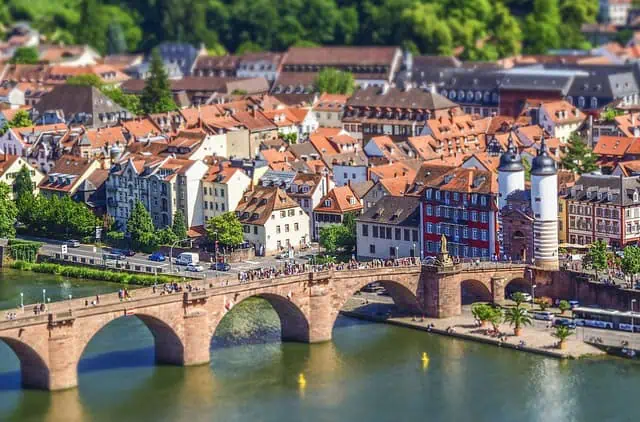
8. University of Heidelberg
The establishment of Heidelberg University in 1386 marked a significant milestone in German education and fostered intellectual exchange, attracting students and scholars from across Europe.
9. Religious and Political Influence
Medieval Germany’s central location within Europe made it a crossroads of political and religious developments. Key decisions like the Concordat of Worms in 1122 shaped the relationship between church and state.
10. The Teutonic Order
The Teutonic Order, originally founded for the protection of pilgrims, played a pivotal role in the Christianization and territorial expansion of medieval Germany, particularly in the Baltic region.

The medieval period in Germany was a time of dynamic growth, marked by political, economic, and cultural achievements.
From the influence of the Holy Roman Empire to the prosperity of Hanseatic League cities and the flourishing of intellectual and artistic endeavors, Germany’s rise to power was multifaceted and shaped its role in European history.
The lessons and contributions of medieval Germany continue to resonate, underscoring its enduring significance as a nation of considerable influence and cultural heritage.


