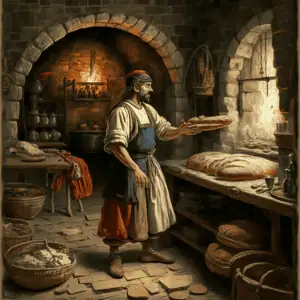
The medieval baker played a vital role in sustaining daily life across castles, towns, and villages. Baking was not just a skill but a crucial necessity, with bakers producing everything from coarse black bread for peasants to fine loaves for lords. Using large communal ovens, stone mills, and simple ingredients, these craftsmen provided the cornerstone of the medieval diet. Explore the life, tools, and routines of bakers in the Middle Ages and their importance in the social and economic fabric of medieval society.
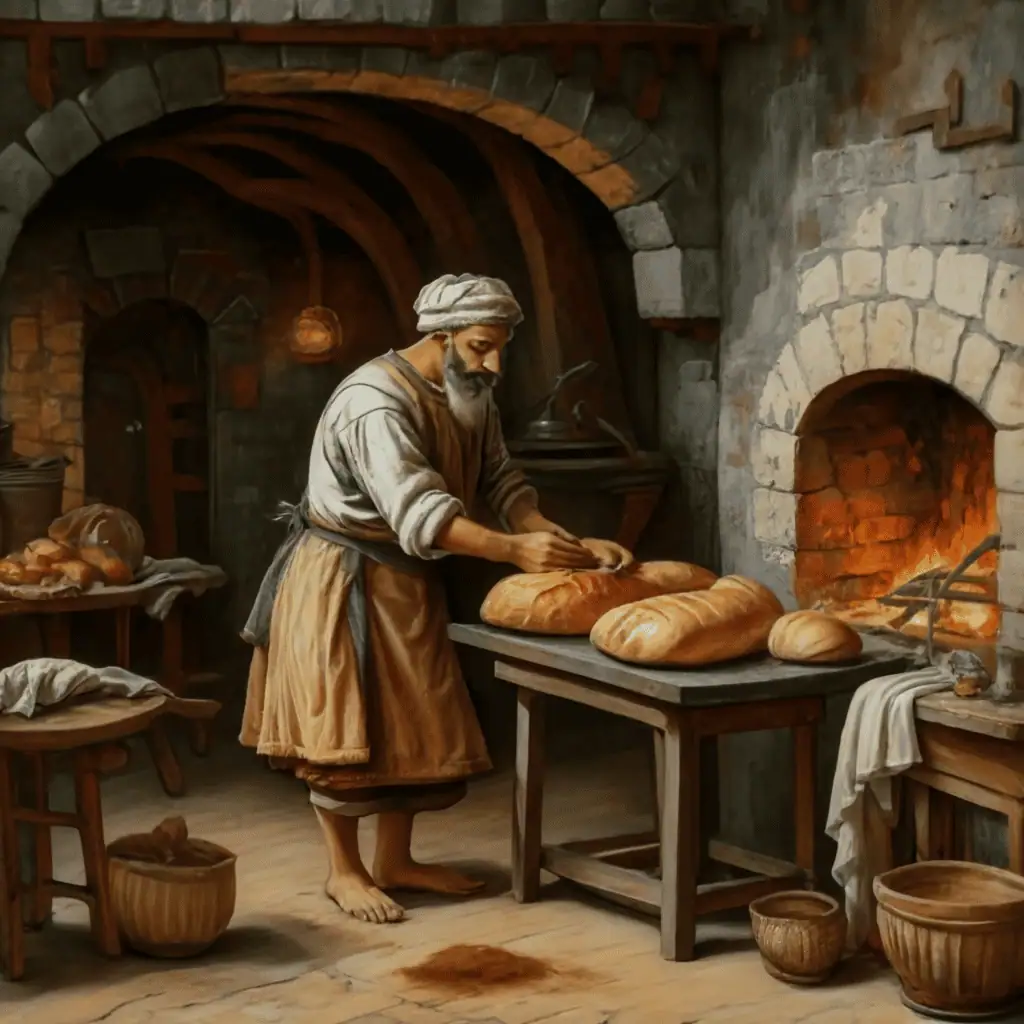
Life as a medieval baker was both challenging and rewarding. Bakers had to wake up early in the morning to start their work, as bread needed to be ready for breakfast. They worked long hours, often well into the night, to ensure that the people of the town or village had fresh bread every day.
“Bakers were an essential part of medieval society, providing the daily bread that was a staple of the diet. They were respected members of their community and played an important role in the local economy.”
Sarah Rees Jones, Professor of Medieval History at the University of York
The life of a medieval baker was centered around the bakery. The bakery was usually located in the town square or near the market, where the baker could easily sell his goods to the people passing by. The bakery itself was a simple, brick or stone building, with an oven built into one of the walls.

Bakers used a variety of tools and equipment to make their bread. They used large wooden bowls for mixing the dough, and wooden paddles for transferring the dough to the oven. They also used a tool called a “peel” to remove the bread from the oven once it was baked.
“Medieval bakers had to be skilled at their craft, using a variety of techniques and ingredients to create bread that was nutritious, tasty, and long-lasting. They were also subject to strict regulations and had to follow guidelines to ensure the quality of their product.”
Steven Epstein, Professor of History at Northwestern University

The ingredients used to make bread in medieval times were simple. Flour, water, salt, and yeast were the basic ingredients, although bakers sometimes added other ingredients like honey or nuts to create different types of bread.
“Baking was a labor-intensive process in medieval times, with bakers working long hours and often sleeping in the bakery to ensure that the bread was ready for the morning. Despite the challenges, many bakers enjoyed a good living and had a strong sense of pride in their work.”
Laura Mason, Food Historian and Author
Flour was usually made from locally grown grains like wheat or rye, and the water was usually drawn from a nearby well or stream.

In addition to baking bread, medieval bakers also made other types of baked goods like pastries and cakes. These were usually reserved for special occasions like weddings or festivals, and were more expensive than bread.

Medieval bakers had to follow strict regulations and guidelines to ensure that their bread was of high quality. For example, bakers were not allowed to use too much flour or water in their dough, as this would make the bread heavy and difficult to digest. They also had to ensure that their ovens were at the correct temperature and that the bread was baked for the right amount of time.
“Bread was a symbol of social status in medieval times, with the wealthy eating fine white bread and the poor eating coarser, darker bread. Bakers were responsible for providing bread for all levels of society and played a role in shaping the social hierarchy.”
Chris Wickham, Professor of Medieval History at the University of Oxford

Despite the challenges, being a medieval baker was a respected and important profession. Bakers were often well-paid and enjoyed a good reputation in the community. They were also given special privileges, such as the right to sell their bread before anyone else in the market.
“Medieval bakers were innovative in their use of ingredients, experimenting with spices, herbs, and other flavors to create breads with unique tastes and textures. They were also skilled at adapting to changes in the availability of ingredients and the demands of their customers.”
Ken Albala, Professor of History at the University of the Pacific.
In conclusion, the life of a medieval baker was a challenging but rewarding one. Bakers were responsible for providing the daily bread to the people of their community, and had to follow strict regulations and guidelines to ensure that their bread was of high quality.
Despite the long hours and hard work, being a baker was an important and respected profession in medieval times.
Common Types of Bread Baked by Medieval Bakers
White Bread
This was the most common type of bread and was made with fine wheat flour. It was light and fluffy and had a slightly sweet taste.
Whole Wheat Bread
This bread was made with coarser flour and had a denser texture than white bread. It was more nutritious than white bread and was often eaten by peasants.
Rye Bread
This bread was made with rye flour and had a dark color and a distinctive flavor. It was often eaten in northern Europe where rye was a common crop.
Barley Bread
This bread was made with barley flour and was often eaten by the poor. It had a rough texture and was not as flavorful as other types of bread.
Oat Bread
This bread was made with oat flour and was often eaten by the poor or used as a type of porridge. It had a soft texture and a slightly sweet taste.
Fruit Bread
This bread was made with dried fruit, nuts, and spices. It was a sweet bread that was often eaten as a dessert.
Flatbread
This bread was made without yeast and was cooked on a hot surface like a griddle. It was a simple bread that was often eaten with cheese or honey.
Overall, medieval bakers used the ingredients they had available to them to create a variety of breads that were both nutritious and delicious. Each type of bread had its own unique flavor and texture, and some were reserved for special occasions or eaten only by certain members of society.
Tools Commonly used by Medieval Bakers
Baking Peel
A long-handled wooden shovel used for placing bread in and removing bread from the oven.
Bread Trough: A large, rectangular wooden container used for mixing and kneading dough.
Dough Scraper
A handheld tool used for cutting and shaping dough.
Banneton
A basket or container made of wicker or reed used for proofing bread.
Hearth Oven
A brick or stone oven that was heated with wood or charcoal and used for baking bread.
Rolling Pin
A wooden cylinder used for rolling out dough.
Flour Sieve
A handheld tool used for sifting flour to remove any lumps or impurities.
Cooling Rack
A wire rack used for cooling freshly baked bread.
Bread Knife
A long, serrated knife used for slicing bread.
Sourdough Starter
A mixture of flour and water that is fermented and used to make sourdough bread. It was kept in a special container called a crock or a jar.
What did medieval bakers do on a daily basis?
Medieval bakers started their work before dawn, preparing bread for the day. They mixed flour, water, and leavening (often natural yeast), shaped the dough, and baked it in large communal or private ovens. Their work was physically demanding and essential to daily life.
What kind of bread was common in the Middle Ages?
The type of bread people ate depended largely on their social status. The poor usually ate dark, coarse bread made from rye or barley, while the wealthy could afford fine white wheat bread. A type of high-quality white bread called manchet was especially prized among the upper classes.
Did bakers belong to guilds in medieval times?
Yes, bakers were typically members of guilds, especially in towns and cities. These guilds regulated trade practices, set standards for quality, and protected bakers’ interests. Being part of a guild also provided some legal protections and helped ensure fair competition.
How were bakers regulated in medieval towns?
Bakers were subject to strict oversight. Town officials inspected the weight and quality of loaves to prevent cheating or price gouging. If a baker was caught selling underweight bread, they could face fines or public punishment, such as being placed in the pillory.
What tools did medieval bakers use?
Common tools included wooden troughs for mixing dough, large paddles (called peels) to place loaves in the oven, and heavy stone or clay ovens fired by wood. Flour was often milled locally, and sieves were used to separate coarse from fine grains.
Was baking considered an important trade in medieval society?
Absolutely. Bread was a staple food, and reliable access to it was critical. Bakers played a central role in the local economy and food supply. A well-respected baker could gain influence in their community, especially if they served a large population or noble household.