The rise of Islam in Europe during the Middle Ages was one of the most significant developments in medieval history, reshaping politics, culture, science, and architecture across large parts of the continent. From the Iberian Peninsula to the eastern Mediterranean, Islamic rule introduced new systems of governance, advanced scholarship, and enduring cultural exchanges that deeply influenced medieval European civilization.
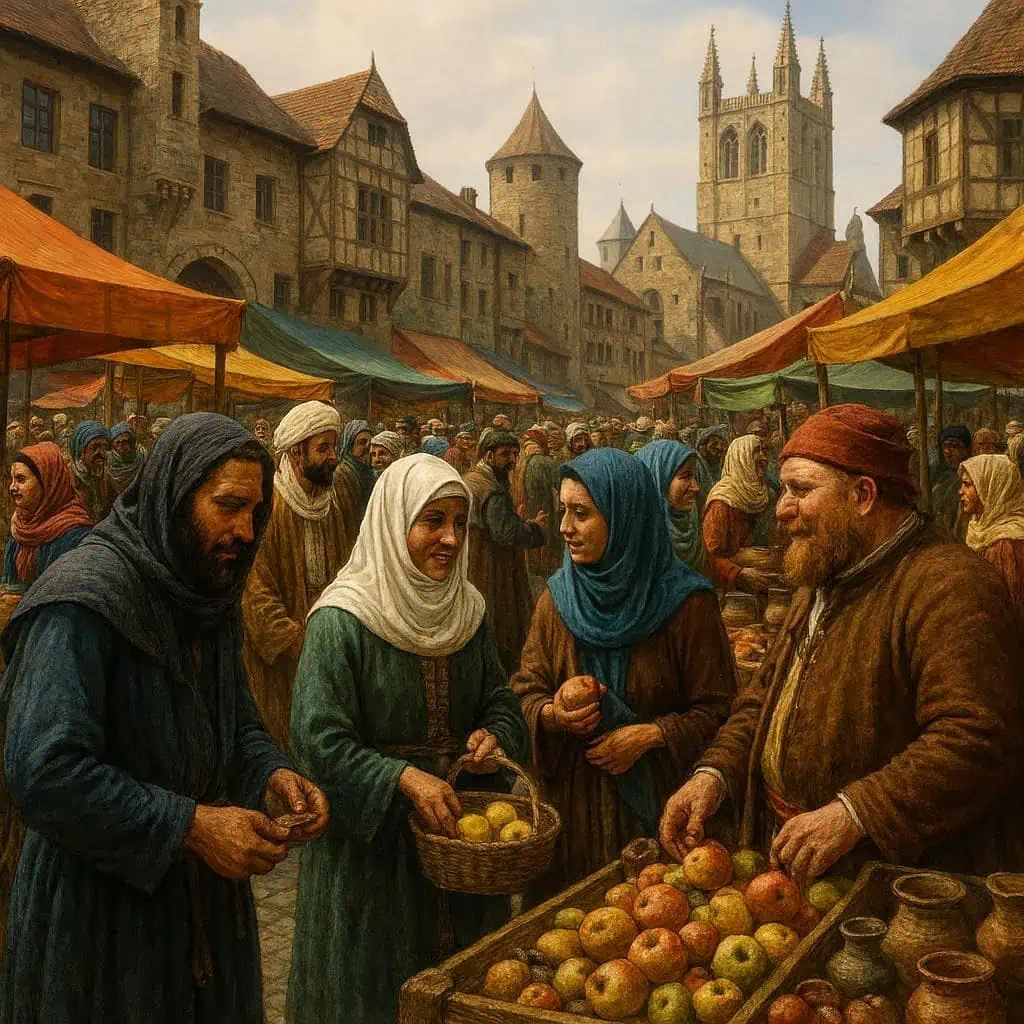
Between the 7th and 15th centuries, several powerful Islamic caliphates and dynasties ruled territories in or bordering Europe. Their presence left a lasting imprint that can still be seen today in European cities, languages, architecture, and intellectual traditions.
🕌 Click-to-Reveal: Key Themes of Islam in Medieval Europe
1) 711 and the Rise of al-Andalus
In 711, Muslim forces crossed into Iberia and within a few years established the foundations of al-Andalus, creating one of the most influential Islamic regions in medieval Europe.
2) Umayyad Legacy in Iberia
The Umayyad tradition shaped early Islamic Iberia, especially through later Umayyad rule in Córdoba, which became a center of administration, learning, and culture in medieval Spain.
3) The Abbasids and the Knowledge Pipeline
While the Abbasid Caliphate ruled from Baghdad rather than Europe, its intellectual networks helped transmit classical texts and scientific ideas through translation and scholarship that later reached Europe.
4) Taifas: Fragmented but Flourishing
After Córdoba’s caliphal unity weakened, Iberia split into taifa kingdoms. Political fragmentation often intensified rivalry—but also encouraged patronage of art, poetry, and architecture.
5) Almoravids and Almohads in Iberia
The Almoravids and later the Almohads arrived from North Africa, reshaping politics and religion in Iberia and leaving major architectural and administrative legacies in medieval Spain.
6) Trade, Diplomacy, and Mediterranean Exchange
Islamic states were deeply connected to the Mediterranean. Trade routes moved spices, textiles, coins, and ideas between Islamic ports and Christian Europe, especially through Italy and Iberia.
7) Architecture as a Living Legacy
Islamic design influenced Europe through arches, domes, courtyards, tilework, calligraphy, and geometric decoration. Many famous monuments still shape the built landscape today.
8) After Political Rule: Influence Continued
Even when Islamic political control declined in parts of Europe, Islamic influence continued through scholarship, trade, technology, and cross-cultural communities—shaping Europe well beyond the Middle Ages.
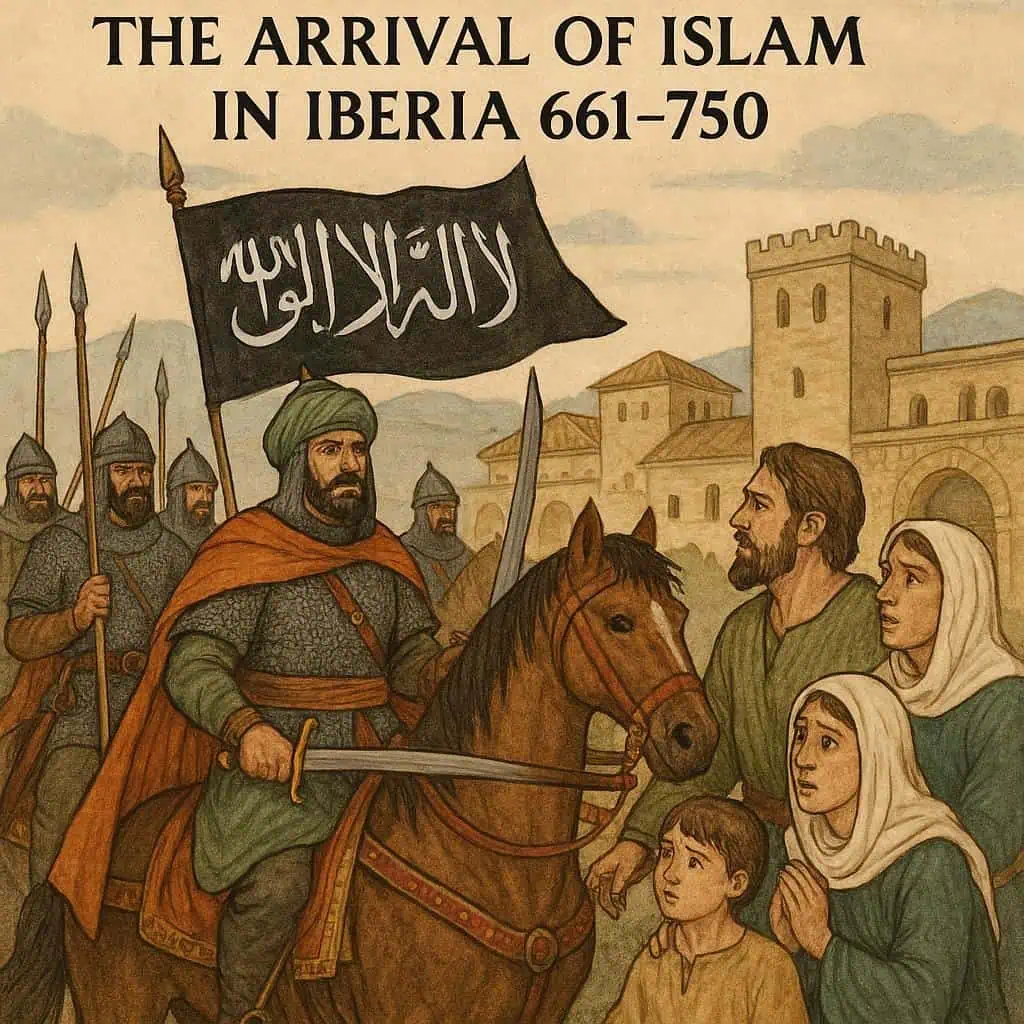
The Umayyad Caliphate and the Arrival of Islam in Iberia (661–750)
The Umayyad Caliphate, founded in 661 by Muʿāwiya I, was the first great Islamic empire to extend its authority into Europe. At its height, Umayyad rule stretched from Central Asia across North Africa and into the Iberian Peninsula.
In 711 CE, Muslim forces composed largely of Berbers and Arabs crossed the Strait of Gibraltar and rapidly defeated the Visigothic Kingdom of Hispania. Within a few years, most of Iberia came under Muslim control, becoming known as al-Andalus. Islamic rule introduced new agricultural practices, administrative systems, and urban development.
Although the Umayyad Caliphate fell in 750, a surviving Umayyad prince established the Emirate of Córdoba, which later became the Caliphate of Córdoba in 929. This state became one of the most prosperous and intellectually advanced societies in medieval Europe.
The Abbasid Caliphate and the Islamic Golden Age (750–1258)
The Abbasid Caliphate, established in 750, shifted the center of Islamic power eastward to Baghdad. While the Abbasids did not directly rule Iberia, their influence shaped the broader Islamic world, including Muslim Europe.
During this period, Islamic civilization experienced a flourishing of science, medicine, mathematics, astronomy, philosophy, and literature. Knowledge preserved and expanded by Muslim scholars later entered Europe through translation centers in Spain and Sicily, profoundly influencing medieval European learning.
Abbasid intellectual traditions played a key role in transmitting classical Greek and Roman knowledge back into Europe, helping to lay foundations for later European revival and innovation.

The Fatimid Caliphate and Mediterranean Influence (909–1171)
The Fatimid Caliphate, an Ismaili Shia dynasty founded in 909, ruled much of North Africa and the eastern Mediterranean, including Egypt. Though its direct political control did not extend deeply into Europe, the Fatimids were major participants in Mediterranean trade networks.
Fatimid Cairo became a center of learning and commerce, and institutions such as Al-Azhar Mosque helped shape Islamic scholarship. Through trade and diplomacy, Fatimid cultural and economic influence reached southern Europe, especially through Italy and Iberia.
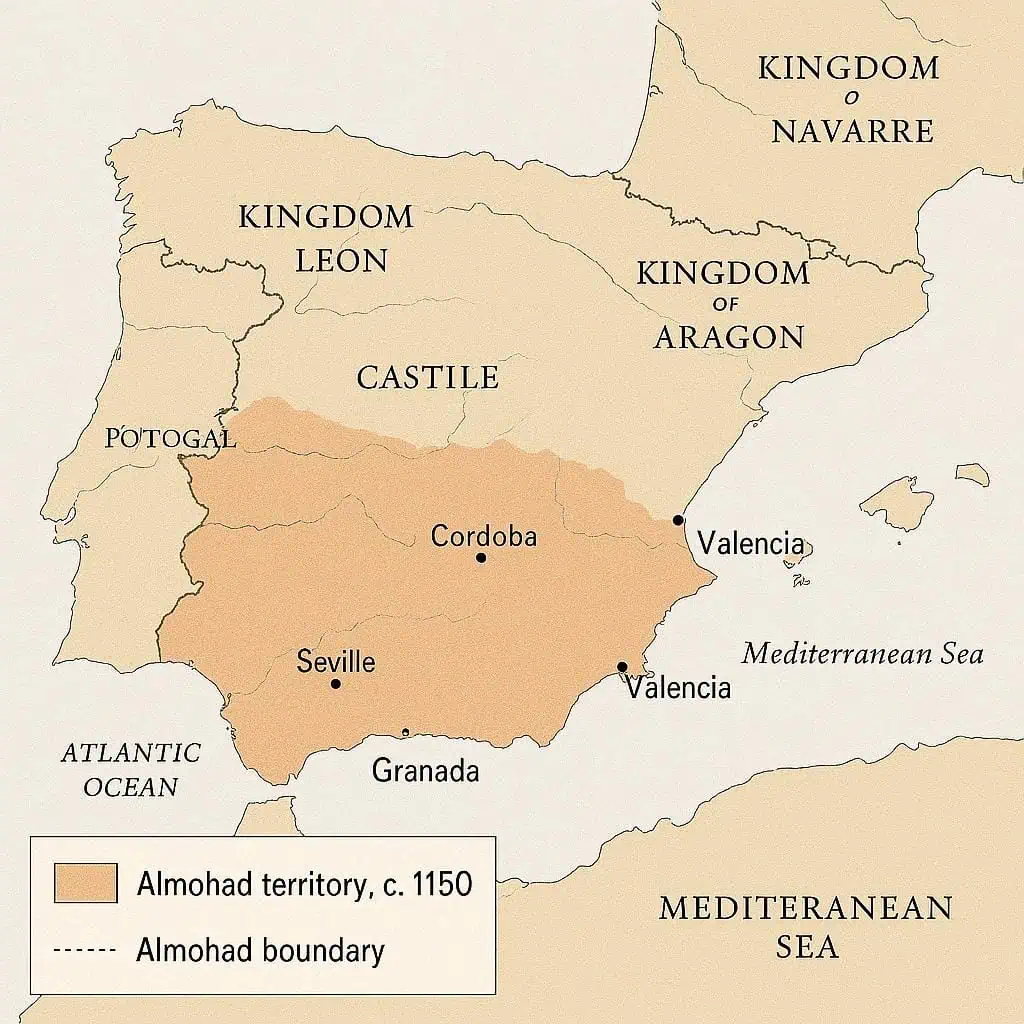
The Almohad Caliphate and Reform in Iberia (1130–1269)
The Almohad Caliphate emerged in North Africa in the 12th century and expanded into Iberia, replacing earlier Muslim dynasties. The Almohads implemented religious reforms and strengthened centralized rule while also sponsoring monumental architecture.
Under Almohad authority, cities such as Seville flourished. Landmarks including the Giralda and expanded mosque complexes remain iconic examples of Islamic architecture in Europe. Over time, however, Christian kingdoms advanced southward, weakening Almohad control.
Islamic Rule in Iberia and the Reconquista
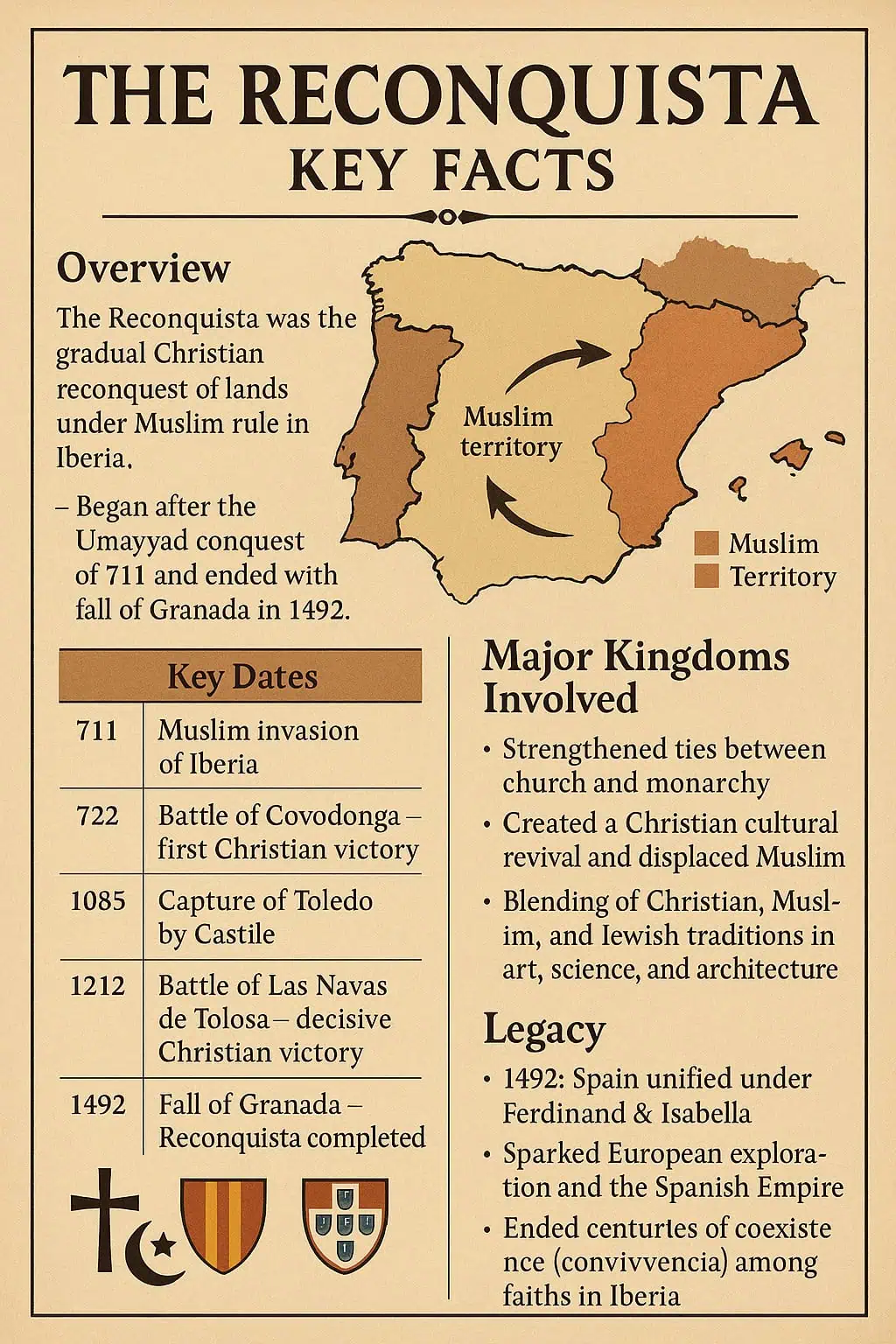
From the 8th to the 15th century, Muslim-ruled states coexisted, competed, and interacted with Christian kingdoms in Iberia. Periods of warfare alternated with diplomacy, trade, and cultural exchange.
As Christian realms expanded during the Reconquista, Muslim territory gradually contracted. By the late Middle Ages, Islamic rule was limited to the Nasrid Kingdom of Granada, which survived through diplomacy and tribute.
In 1492, Granada was captured by Ferdinand II of Aragon and Isabella I of Castile, ending Muslim political rule in Iberia. Despite this, Islamic cultural, scientific, and architectural influence remained deeply embedded in Spanish and European society.
The Mamluk Sultanate and Eastern Mediterranean Power (1250–1517)
The Mamluk Sultanate, based in Egypt and the Levant, was one of the most formidable Islamic powers of the later Middle Ages. While its territory lay outside Europe, the Mamluks played a crucial role in Mediterranean trade and diplomacy.
Mamluk-controlled trade routes connected Europe with Asia and Africa, facilitating the exchange of goods, technologies, and ideas. European merchants, particularly from Italian city-states, maintained strong commercial ties with Mamluk ports.
Legacy of Islam in Medieval Europe
Cultural & Intellectual Impact
- Transmission of classical knowledge from Greek and Roman sources to Europe
- Major advances in medicine, mathematics, astronomy, and engineering
- Development of scholarly institutions and libraries
- Influence on European education and learning traditions
Urban, Architectural & Economic Influence
- Architectural innovations such as arches, domes, courtyards, and decorative geometry
- Introduction of new agricultural techniques and crops
- Growth of multicultural urban societies, especially in medieval Spain
- Lasting influence on European city planning and craftsmanship
Islamic scholars, artisans, and administrators continued to shape European development long after political rule ended. Their contributions helped pave the way for the European Renaissance and the emergence of modern scientific thought.
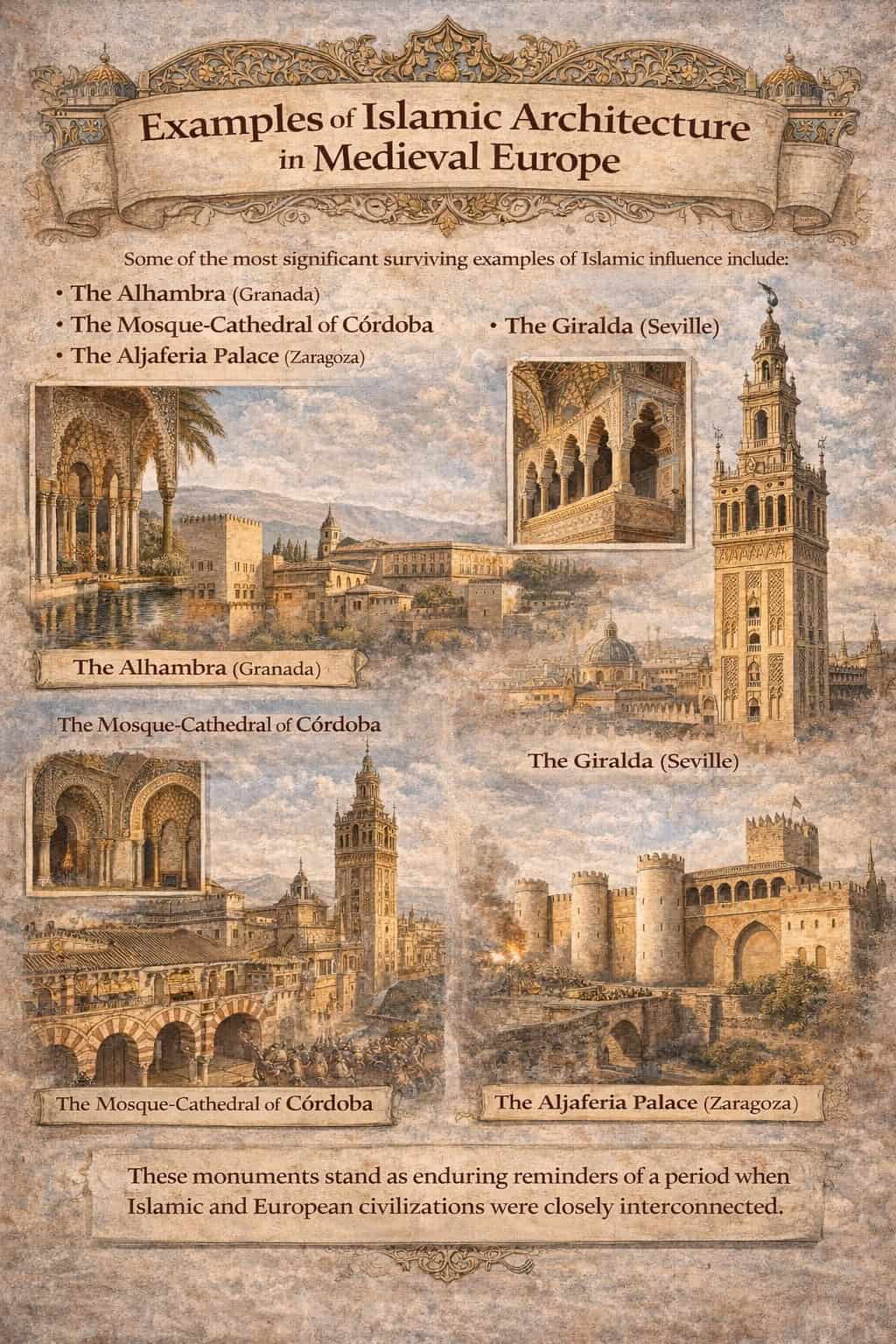
Examples of Islamic Architecture in Medieval Europe
Some of the most significant surviving examples of Islamic influence include:
- The Alhambra (Granada)
- The Mosque-Cathedral of Córdoba
- The Giralda (Seville)
- The Aljafería Palace (Zaragoza)
These monuments stand as enduring reminders of a period when Islamic and European civilizations were closely interconnected.
Islam’s Enduring Impact on Medieval Europe
The history of Islam in medieval Europe reveals a period of deep cultural exchange, intellectual growth, and political complexity that shaped the continent long beyond the Middle Ages. Through Islamic rule in Iberia, Mediterranean trade networks, and scholarly transmission, Muslim civilizations introduced knowledge, technologies, and artistic traditions that transformed European society. Even after Islamic political authority declined, its influence persisted in architecture, science, medicine, and urban life, helping lay the foundations for the European Renaissance. Understanding this legacy offers a clearer and more balanced view of how medieval Europe developed through interaction rather than isolation.
❓ Frequently Asked Questions: Islam in Medieval Europe
When did Islam first arrive in Europe?
Islam first entered Europe in 711 with the Muslim conquest of the Iberian Peninsula, leading to the creation of al-Andalus.
What was al-Andalus?
Al-Andalus was the Muslim-ruled region of Iberia, known for its cultural diversity, scholarship, and architectural achievements.
Did Islamic rule influence Christian Europe?
Yes. Through trade, translation movements, and diplomacy, Islamic knowledge in science, medicine, and mathematics influenced medieval European development.
Which Islamic dynasties ruled in Europe?
Major dynasties included the Umayyads of Córdoba, Taifa kingdoms, Almoravids, and Almohads.
How long did Islamic rule last in Iberia?
Islamic political rule in Iberia lasted from 711 to 1492, ending with the fall of Granada.
Why is this period historically important?
It represents one of the most significant periods of cross-cultural exchange in European history, shaping later medieval and Renaissance developments.
🧠 Knowledge Quiz: Islam in Medieval Europe
📜 Glossary: Islam in Medieval Europe
The Muslim-ruled regions of the Iberian Peninsula from 711 to 1492.
The Islamic dynasty that established rule in Iberia and made Córdoba a major center.
Independent Muslim states that emerged after the decline of Umayyad authority.
The centuries-long Christian campaign to reclaim Iberian territories.
A reformist North African dynasty that ruled parts of Iberia in the 12th–13th centuries.
Muslims living under Christian rule who influenced architecture and craftsmanship.