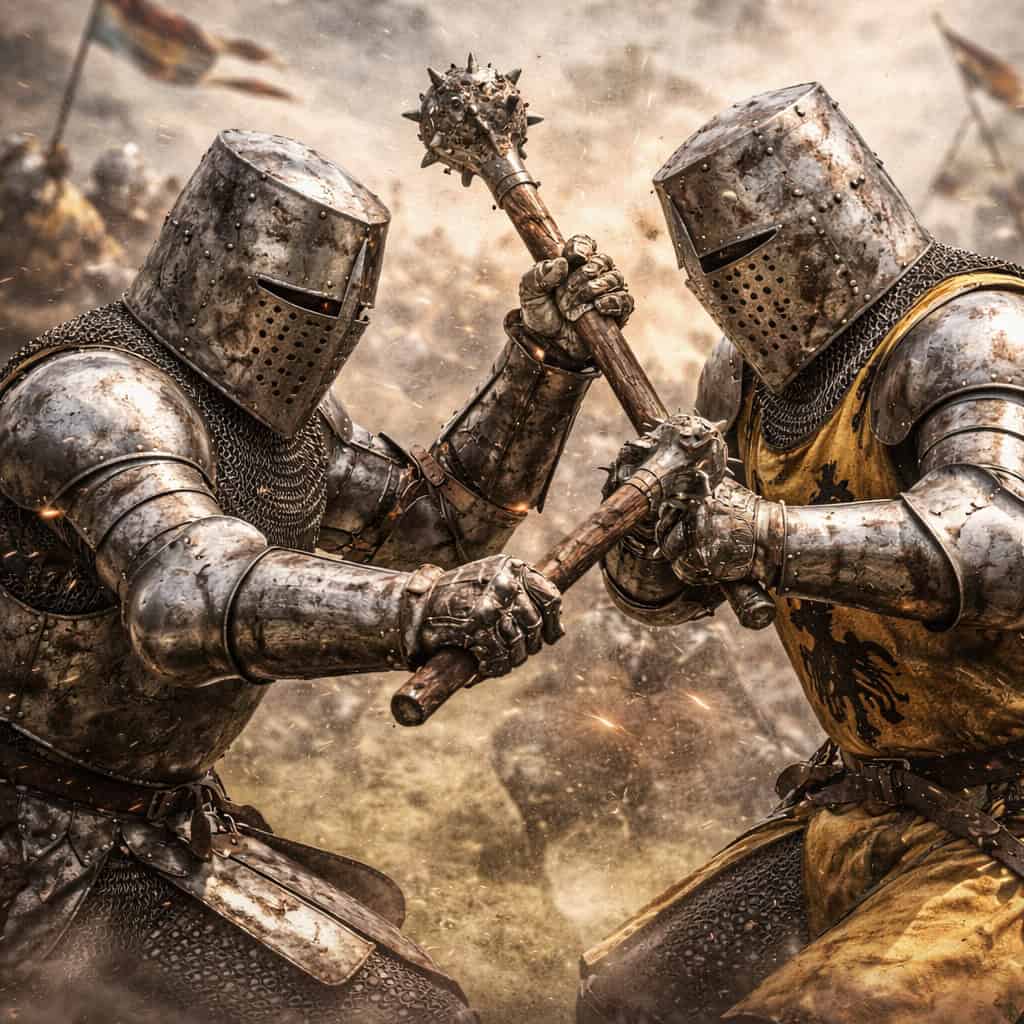
Medieval warfare was shaped by constant innovation in military technology, battlefield tactics, and protective armor. Across the Middle Ages, weapons were carefully designed to meet the changing demands of war, with different arms serving distinct roles on the battlefield. From lightly equipped infantry to heavily armored knights, medieval soldiers relied on weapons capable of breaking defenses, countering armor, and dominating enemies at close range or from afar.
The wide variety of medieval weapons—combined with the craftsmanship behind them—played a decisive role in shaping battles, military strategies, and even the rise and fall of kingdoms. Understanding these weapons offers insight not only into how wars were fought, but into the societies that depended on them.
What are medieval weapons?
Medieval weapons were the arms used in warfare during the Middle Ages (c. 5th–15th centuries). They included melee weapons such as swords, axes, and maces; ranged weapons like longbows and crossbows; and siege weapons including catapults and trebuchets. These weapons evolved alongside armor and battlefield tactics.
Melee weapons
Swords, axes, maces, warhammers, and polearms used in close combat.
Ranged weapons
Longbows, crossbows, and thrown weapons designed to strike from a distance.
Siege weapons
Trebuchets, catapults, ballistae, and siege towers used to attack fortifications.
In short, medieval weapons were built to match a fighter’s role—infantry, archer, or knight—and to overcome defenses like shields and plate armor.
This hub introduces the main categories of medieval weapons, with detailed articles dedicated to each weapon type, its history, design, and use in warfare.
Swords
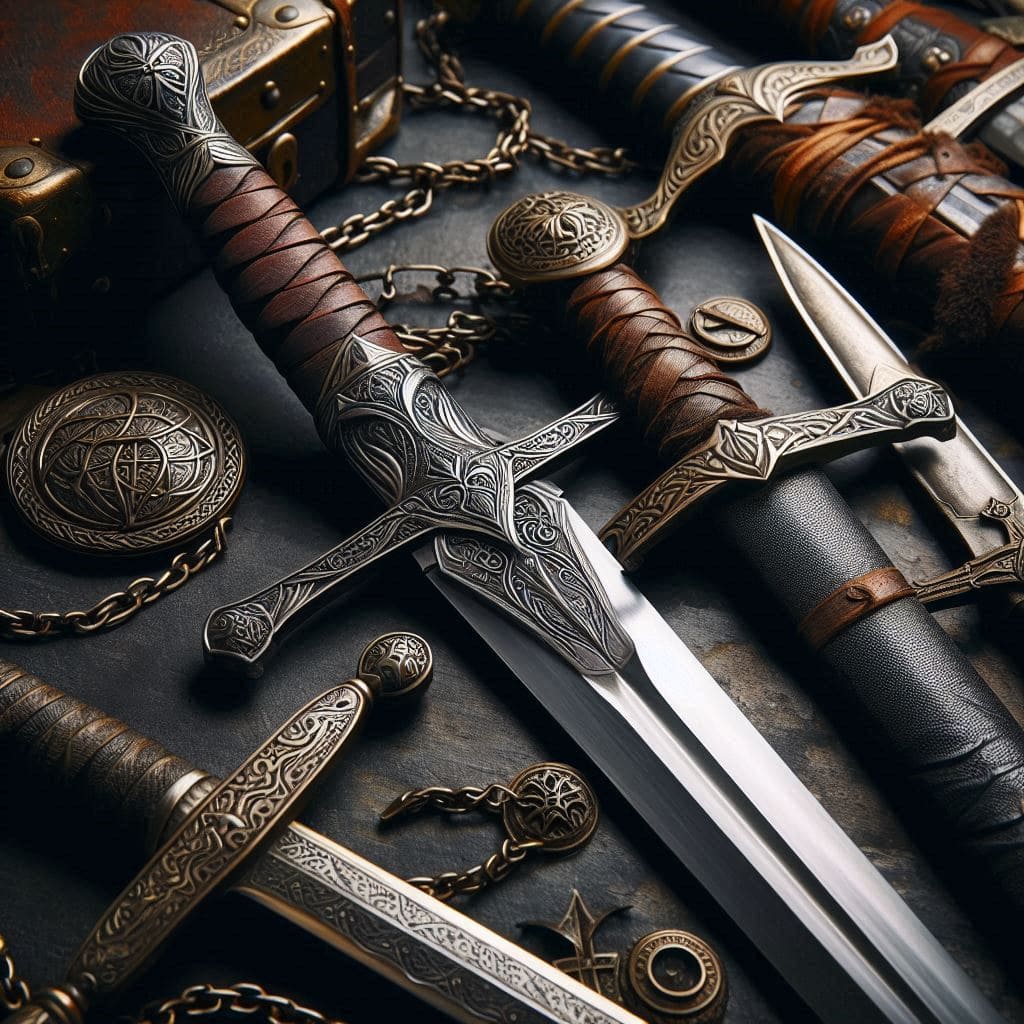
Swords were among the most iconic weapons of the Middle Ages, valued for their versatility and symbolic importance. Early medieval swords balanced cutting and thrusting, while later designs evolved to counter improved armor. Beyond the battlefield, swords represented honor, status, and martial identity—especially among knights and the nobility.
Ranged from short arming swords to long two-handed greatswords
Early blades emphasized cutting power with broad, double edges
Later swords featured narrower points for piercing armor gaps
Used for both offense and defense through parrying and counterattacks
Closely associated with knighthood and noble status
Axes
Axes were practical, brutal weapons known for their striking power and simplicity. Unlike swords, axes required less refined technique, making them popular among infantry as well as elite warriors. Their ability to crush shields and armor made them feared weapons, though their battlefield role gradually declined as polearms became more dominant.
Designed for chopping, cleaving, and crushing
The Danish axe was favored by Viking warriors for its reach and power
The throwing axe (Francisca) disrupted enemy formations
Effective against armor but less versatile in formation fighting
Widely used across social classes

Polearms
Polearms became essential weapons for medieval infantry, offering reach, control, and versatility against mounted and armored opponents. Combining wooden shafts with complex metal heads, polearms allowed soldiers to strike, hook, and thrust while maintaining distance from heavily armored foes.
Spears and pikes for formation combat
Halberds combining axe blades, spear points, and hooks
Poleaxes designed for fighting armored knights
Long reach to counter cavalry charges
Widespread use among professional infantry

Blunt Weapons: Maces, Warhammers, and Clubs
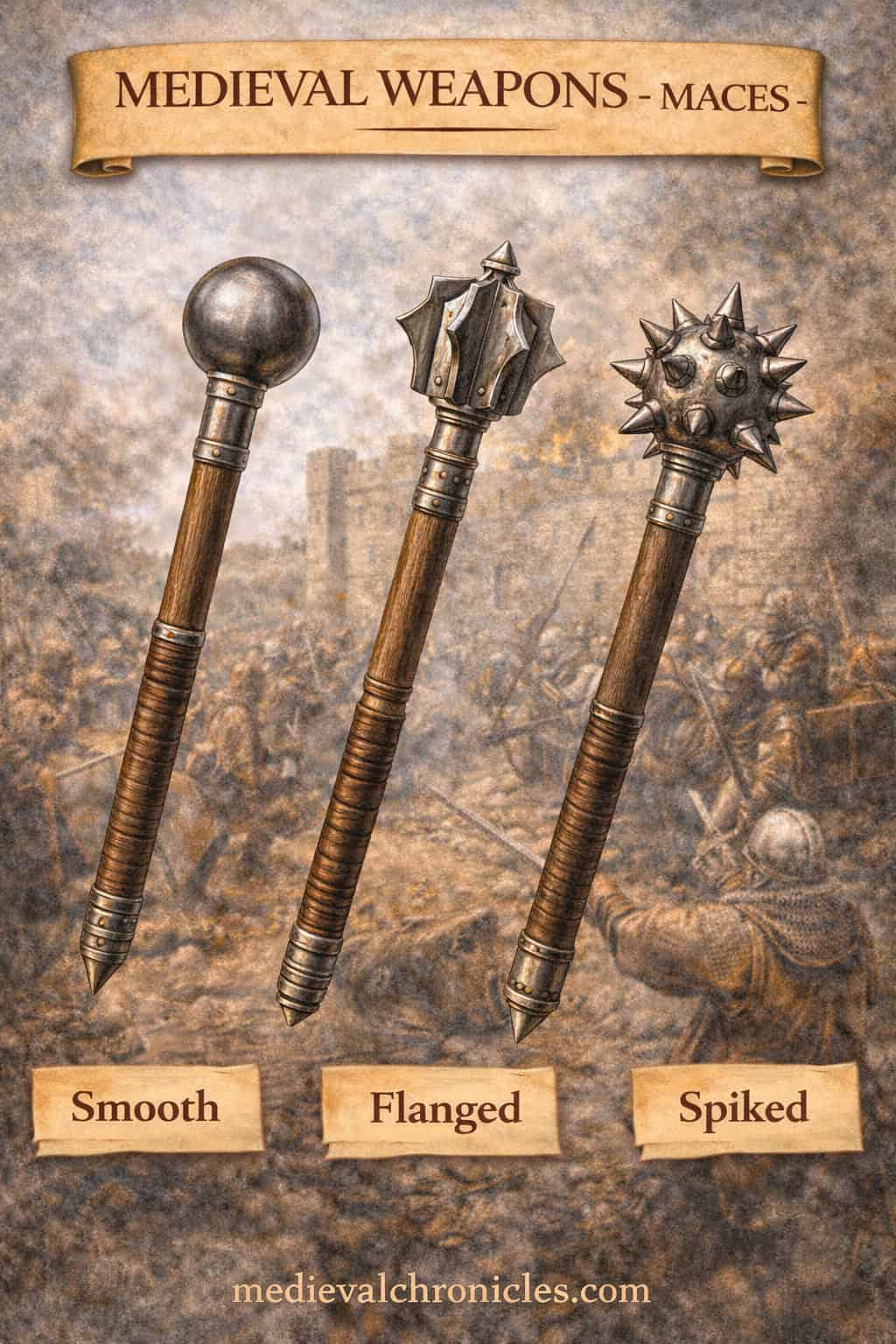
Blunt weapons filled a crucial role in medieval combat by delivering concussive force capable of defeating armor. Instead of cutting, these weapons focused on crushing, stunning, or breaking bones beneath protective gear, making them especially effective against heavily armored opponents.
Maces designed to crush armor and bone
Warhammers combining blunt force with armor-piercing spikes
Simple clubs used by militia and infantry
Effective in close-quarters fighting
Key tools for dismounting knights
Projectile Weapons: Bows, Crossbows, and Throwing Axes
Ranged weapons transformed medieval warfare by allowing armies to strike from a distance. Archers and crossbowmen weakened enemy formations, defended castles, and reshaped battlefield tactics. The longbow, in particular, became legendary for its power and speed.
Longbows with high rate of fire and long range
Crossbows offering strong armor penetration with less training
Throwing axes used to disrupt enemy ranks
Effective tools in sieges and open battles

Shields and Armor
Medieval weapons cannot be understood without considering defense. Shields and armor evolved alongside offensive weapons, creating a continuous arms race. As armor improved, weapons adapted to counter it, influencing how battles were fought across centuries.
Shields ranging from bucklers to kite and heater shields
Chain mail offering flexible protection
Full plate armor providing superior defense
Weapon specialization in response to heavier armor
Ongoing adaptation between attack and defense

The evolution of medieval weapons reflects the dynamic nature of warfare throughout the Middle Ages. Each weapon type emerged in response to specific tactical challenges, technological advances, and social structures. Together, these arms tell the story of a world shaped by conflict, craftsmanship, and the relentless pursuit of battlefield advantage.
Explore the detailed articles linked throughout this hub to discover how individual weapons were made, used, and perfected across medieval Europe.
❓ Medieval Weapons – Frequently Asked Questions
What weapons were most commonly used in the Middle Ages?
The most common medieval weapons included swords, spears, axes, maces, polearms, and bows. Knights typically favored swords and lances, while infantry relied on spears, polearms, and ranged weapons. The choice of weapon depended on social status, battlefield role, and the period in which a soldier lived.
Did medieval weapons change over time?
Yes, medieval weapons evolved significantly as warfare and armor developed. Early weapons emphasized cutting and thrusting, but as chain mail and later plate armor became more widespread, weapons adapted to counter them. This led to the rise of armor-piercing swords, crushing weapons like maces and warhammers, and specialized polearms designed for fighting heavily armored opponents.
What weapons did medieval knights typically use?
Medieval knights commonly used a combination of weapons depending on the situation. The lance was essential for cavalry charges, while the sword served as a versatile sidearm in close combat. Knights also carried maces, warhammers, or daggers to deal with armored foes, especially when fighting on foot.
Why were medieval weapons so closely tied to armor?
Medieval warfare was shaped by a constant arms race between offensive weapons and defensive armor. As armor improved from mail to full plate, weapons were redesigned to pierce gaps, crush metal, or deliver concussive force. This relationship influenced weapon design, battlefield tactics, and the roles of different types of soldiers throughout the Middle Ages.