
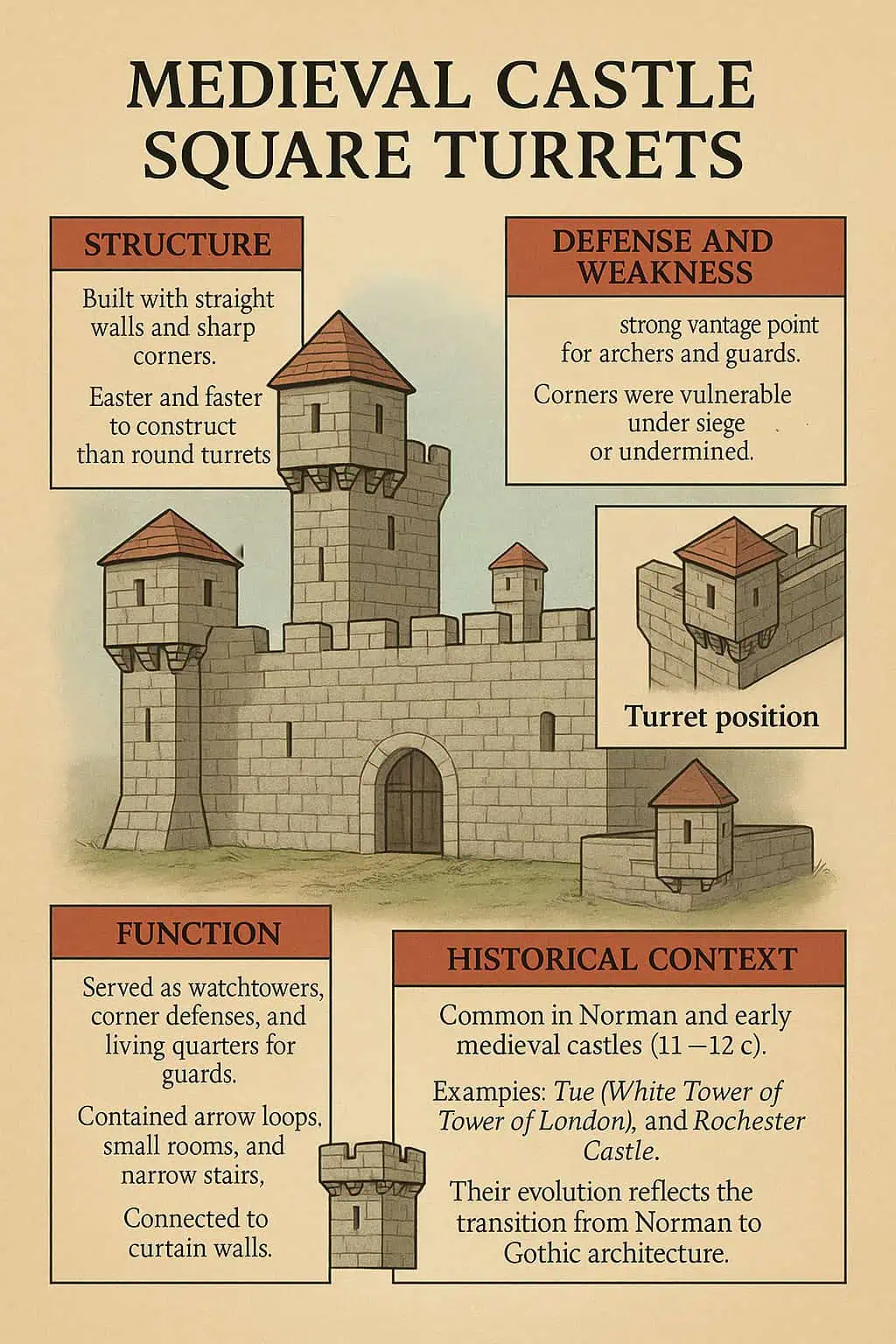
A castle turret is often confused with a tower, but there are key differences. Unlike a freestanding castle tower, a turret is attached to an existing structure, such as a main tower or castle wall. This attachment affects its size, design, and function. Turrets provided additional defensive positions and excellent vantage points without the need to build from the ground up.
Turret vs Tower: Understanding the Difference
- Castle Turret: A small tower projecting from the edge of a castle’s walls or larger towers. Its weight is supported by the existing structure, so turrets are generally smaller than towers.
- Castle Tower: A large, freestanding structure that rises from the ground, often serving as a stronghold, lookout, or central keep.
In essence, while both served defensive purposes, turrets were additions to enhance the castle’s fortifications, whereas towers formed the backbone of a castle’s structure.

Purpose of a Castle Turret
The primary purpose of a medieval castle turret was observation and defense. Positioned high on walls or towers, turrets offered a 360-degree view of the surrounding landscape.
- Early Warning: Guards in turrets could spot approaching enemies from miles away, allowing the castle garrison to prepare for attack or siege.
- Defensive Advantage: Turrets provided positions for archers to cover adjacent walls, improving the castle’s overall defensive capability.
- Storage: Some turrets also doubled as storage spaces for weapons or small supplies.
Design and Structure of Turrets
Turrets were smaller than towers but still thoughtfully designed for function and defense:
- Shapes: Round, square, or polygonal; some featured crenellations for protection.
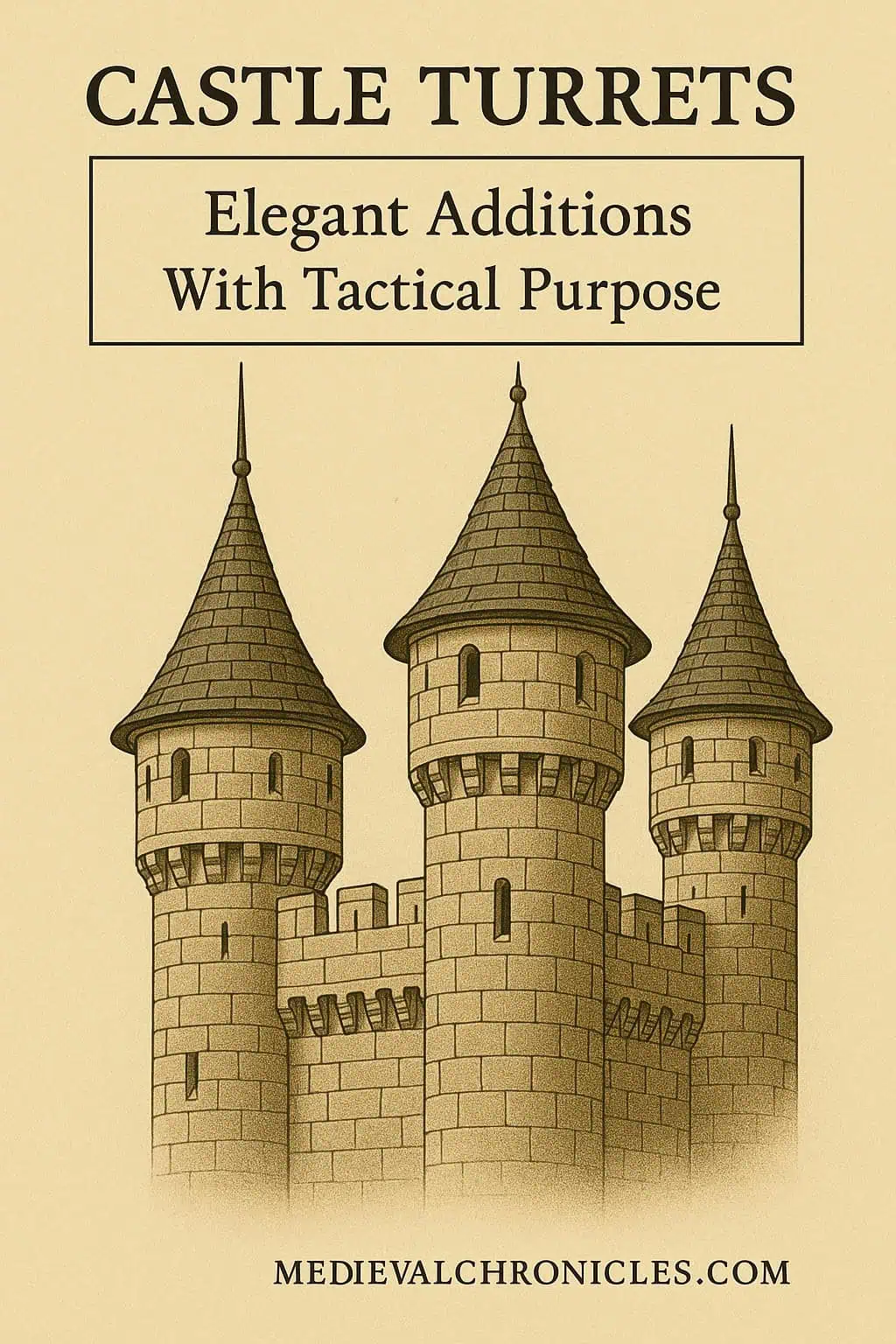
- Roofs: Flat, pointed, or conical, depending on the architectural style.
- Staircases: Larger turrets sometimes contained winding staircases for access to the top. Smaller turrets might be empty shells.
- Materials: Typically constructed from the same stone as the castle walls or towers for structural integrity.
The Italian term for turret is “torretta” (little tower), while the Latin “turris” simply means tower.

Notable Examples of Castle Turrets
Some medieval castles showcase turrets that are both defensive and decorative:
- Caernarfon Castle, Wales: Features the famous triple-turret Eagle Tower, combining functionality with grandeur.
- Château de Chaumont, France: A fine example of a low-level turret integrated into the castle walls.
These examples highlight how turrets varied in size, shape, and strategic importance depending on location and castle design.

Decline and Legacy of Castle Turrets
With the advent of gunpowder and cannons, the military relevance of turrets diminished. However, their aesthetic appeal endured:
- Decorative Turrets: Scottish baronial architecture and later revival styles incorporated turrets purely for visual impact.
- Architectural Symbol: Turrets became a symbol of prestige and heritage rather than a military necessity.
Fast Facts About Castle Turrets:
- Roofs could be flat, pointed, or conical.
- Some turrets had crenellations; others were simple stone projections.
- Turrets were sometimes hollow, sometimes equipped with winding staircases.
- Today, many turrets survive as historical or decorative features.
Conclusion
Castle turrets were more than just architectural ornaments—they were functional extensions of a castle’s defensive capabilities, providing lookout points, protection, and strategic advantages. From the triple-turreted Eagle Tower at Caernarfon to low-level wall turrets in French châteaux, they demonstrate how medieval architects combined form and function. Though their military role faded, turrets remain iconic symbols of medieval castles and their enduring legacy in architecture.
🏰 Frequently Asked Questions: Castle Turrets
What is the difference between a turret and a tower?
A turret is attached to a castle wall or tower, projecting outward, whereas a tower is freestanding and rises from the ground. Turrets are generally smaller and serve as observation or defensive points.
What was the main purpose of a castle turret?
Turrets were primarily used for observation, providing a 360-degree view to spot approaching enemies. They also allowed archers to cover adjacent walls and sometimes served as small storage areas.
Where can I see notable examples of turrets?
Famous examples include the triple-turret Eagle Tower at Caernarfon Castle in Wales and the low-level turrets of Château de Chaumont in France.
Did turrets have a military purpose in later periods?
With the advent of cannons and gunpowder, turrets lost much of their military function. Later turrets were added mainly for decoration and prestige, such as in Scottish baronial architecture.
🏰 Quiz: Castle Turrets
🏰 Castle Turret Glossary
Turret
A small tower attached to a castle wall or larger tower, used for observation and defensive advantage.
Crenellation
Notched parapet at the top of a turret or tower, allowing defenders to fire while being protected.
Observation Point
The elevated position of a turret that provided a wide view of the surrounding land for early warnings.
Eagle Tower
The famous triple-turreted tower at Caernarfon Castle, Wales, illustrating turret design and functionality.


