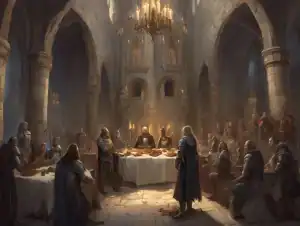
Medieval children lived vastly different lives depending on their social class. Noble children were often groomed for leadership, receiving education in reading, etiquette, and military training, while peasant children began working alongside their families at a young age. Childhood in the Middle Ages was short-lived; by the age of seven, many were expected to take on adult-like responsibilities. Whether serving as pages, apprentices, or farm helpers, children played an essential role in the function of medieval society. This article uncovers the realities of growing up in the medieval world, where survival, family duty, and class shaped every aspect of a child’s life.
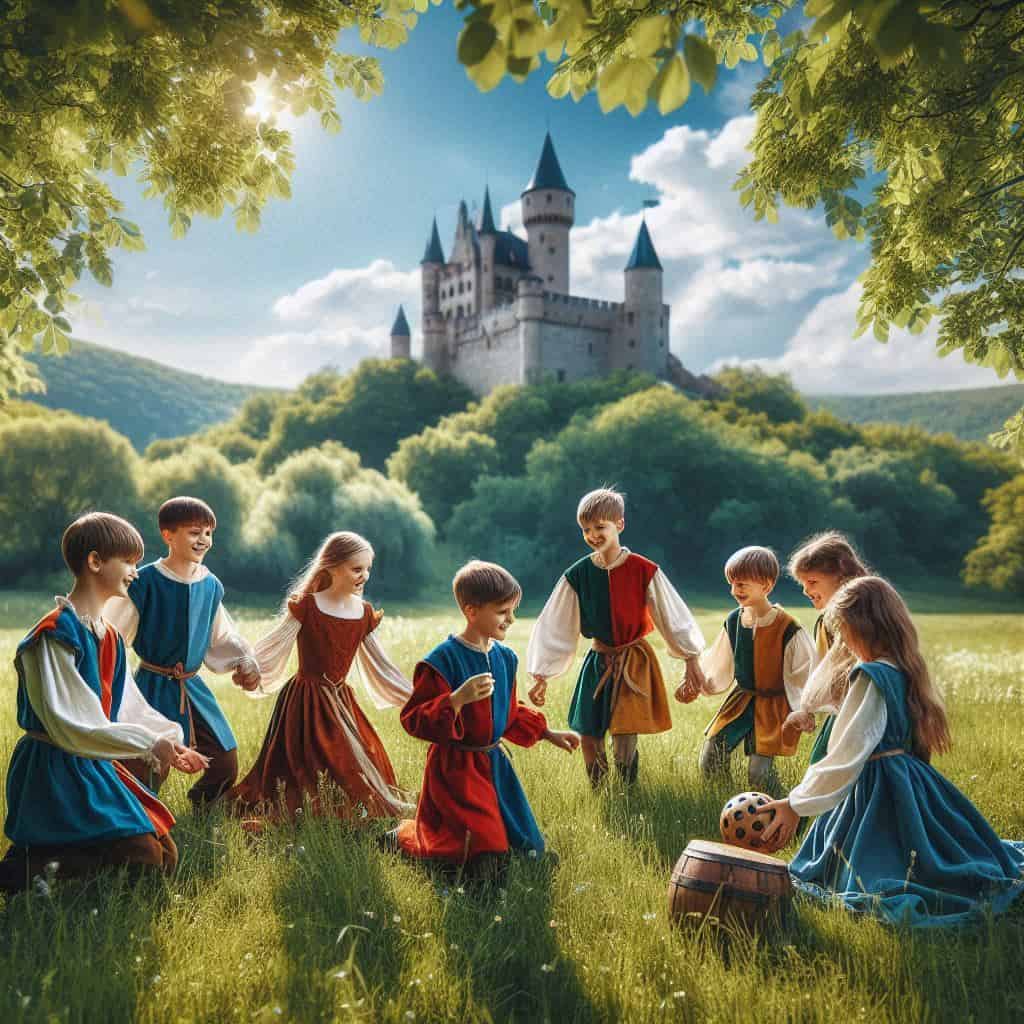
Noble medieval children lived in the castles with their parents and by the age of seven boys were sent to other castles to train to become knights, whereas girls were sent to learn how to manage everyday activities at home.
Medieval Children Education
Medieval peasant children were mostly illiterate and only a few were educated. The Church had a great influence on the education system of the Middle Ages and several cathedral schools were established by Bishops. Noble medieval children were mostly educated during their training to become a knight as it was mandatory for them to be able to read and understand the code of chivalry.
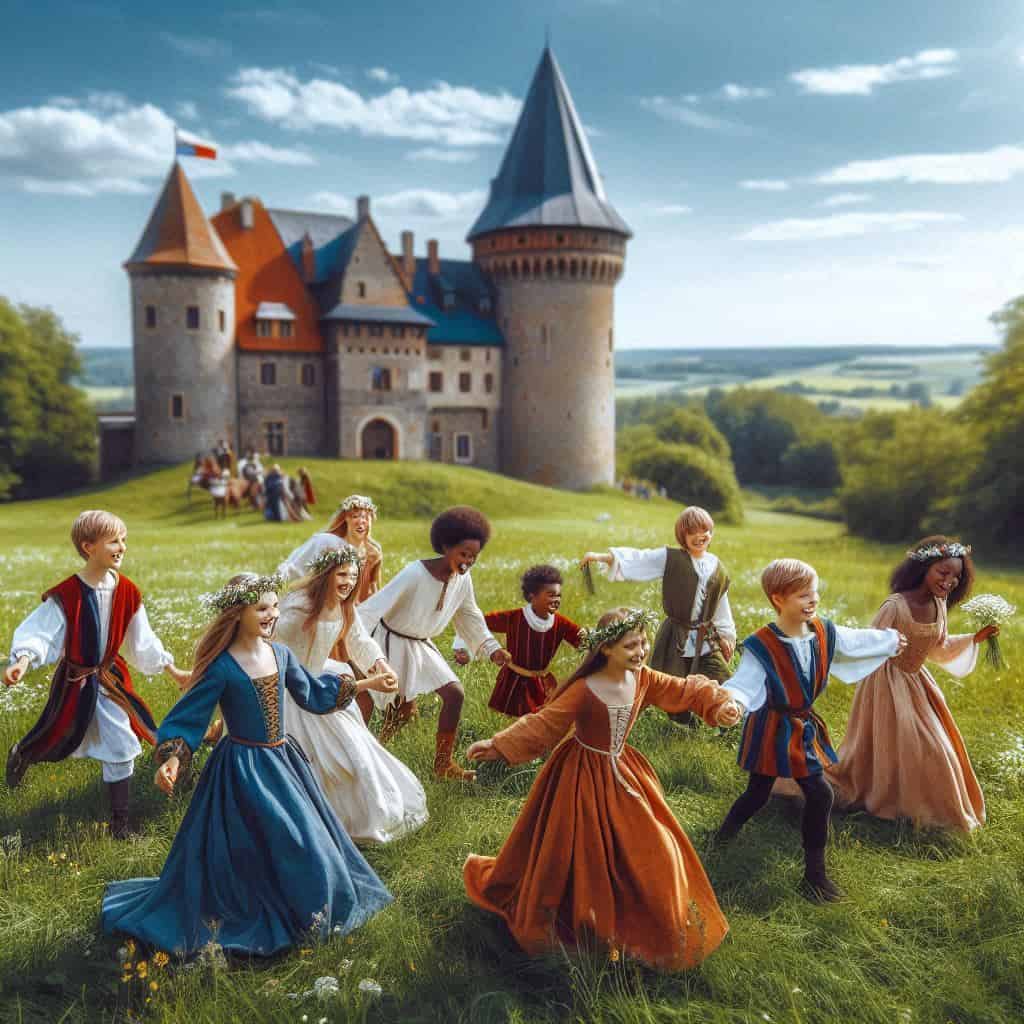
Poor medieval children’s only hope was to be educated by priests who taught them a basic understanding of how to read and write.
Medieval Children Diets
Noble and Peasant children ate different kinds of food. Peasant children mostly ate thick stew made of grains and vegetables, called Pottage was cooked on a fire.

Medieval children were not lucky enough to have meat on a regular basis, however noble children had all sorts of expensive foods, and their diets included white bread, fish, meat, vegetables, and different kinds of fruits.
Children under the age of five usually drank milk but were not allowed to drink wine, whereas the children between the age of 5 and 14 were allowed to drink water wine that was less potent

What Clothes did Medieval Children Wear?
Medieval children wore clothes similar to that of their parents. Boys wore tunics that were loose garments and came down to their knees whereas girls also wore tunics, but the length of garments reached their ankles.

Medieval Children covered their legs with stocks or stockings and apart from the poorest children, most children wore leather shoes.
In the later middle ages, boys from wealthy families started wearing doublets that were hip-length jackets and hoses that covered their legs from their waist down to their toes.

Medieval peasant children wore cloaks, tunics, and woolen socks. Medieval children also wore different kinds of hats, for boys, there were round hats whereas the girls had bonnets.
Medieval Royal Children’s Lives
Medieval Royal Children were usually Prince and Princesses and lived in castles or manors with their families, servants, advisors, knights.

At a younger age, royal children learned manners, reading, writing, and dancing. At the age of seven, noble boys were sent to other noble households to learn how to become Knight. Similarly, noble girls at this age were sent to other noble houses to become a lady.

Medieval Peasants Children’s Lives
Medieval peasant children lived in small cottages that had small windows and were mostly dark. Food was cooked in the main room over an open fire, hence these cottages were also smokey.

Peasant children mostly spent their time helping their parents with day-to-day activities that included activities such as growing food, raising livestock, and doing household tasks.

Medieval Children’s Toys and Games
Medieval children played with toys such as dolls, marbles, sticks, rattles, and spinning tops.

Girls played with “poppets”, dolls made from cloth, wax, wool, wood, or clay. Their dolls were dressed in different kinds of costumes. Peasant girls mostly had them dressed in working clothes whereas noble girls’ dolls were dressed in long robes.

Hobby and rocking horses were popular among the noble children. They were painted with different colors and decorated in such a manner that they looked like real horses.
Hide & Seek, See Saw, walking on stilts, swimming and tag were medieval children’s favorite games. Children from rich families also played board games such as checkers and chess.
Summary of Medieval Children
The lives of medieval children were tough as most children died during the first years of their lives. Medical facilities were not advanced and quality of life was also not that good. Peasant children mostly helped their parents in the fields and with household activities.
Medieval Noble children, mostly stayed at home with their parents and after reaching the age of seven both boys and girls were sent to other castles to continue their education.
There were fewer educational facilities and only a handful of schools were present in medieval times and children were also married at a very young age.