Knights Templar: History, Power, and Fall of the Medieval Military Order
The Knights Templar were one of the most influential and powerful military-religious orders of the medieval period, founded in 1119 during the era of the Crusades. Originally created to protect Christian pilgrims traveling to Jerusalem and the Holy Land, the order evolved into an elite international institution combining monastic discipline, military force, and financial innovation.
At their height in the 12th and 13th centuries, the Templars operated across Europe and the eastern Mediterranean, controlling land, fortresses, and early banking networks. Their dramatic fall in the early 14th century — driven by political pressure, royal debt, and religious conflict — helped cement their reputation as one of history’s most legendary medieval organizations.
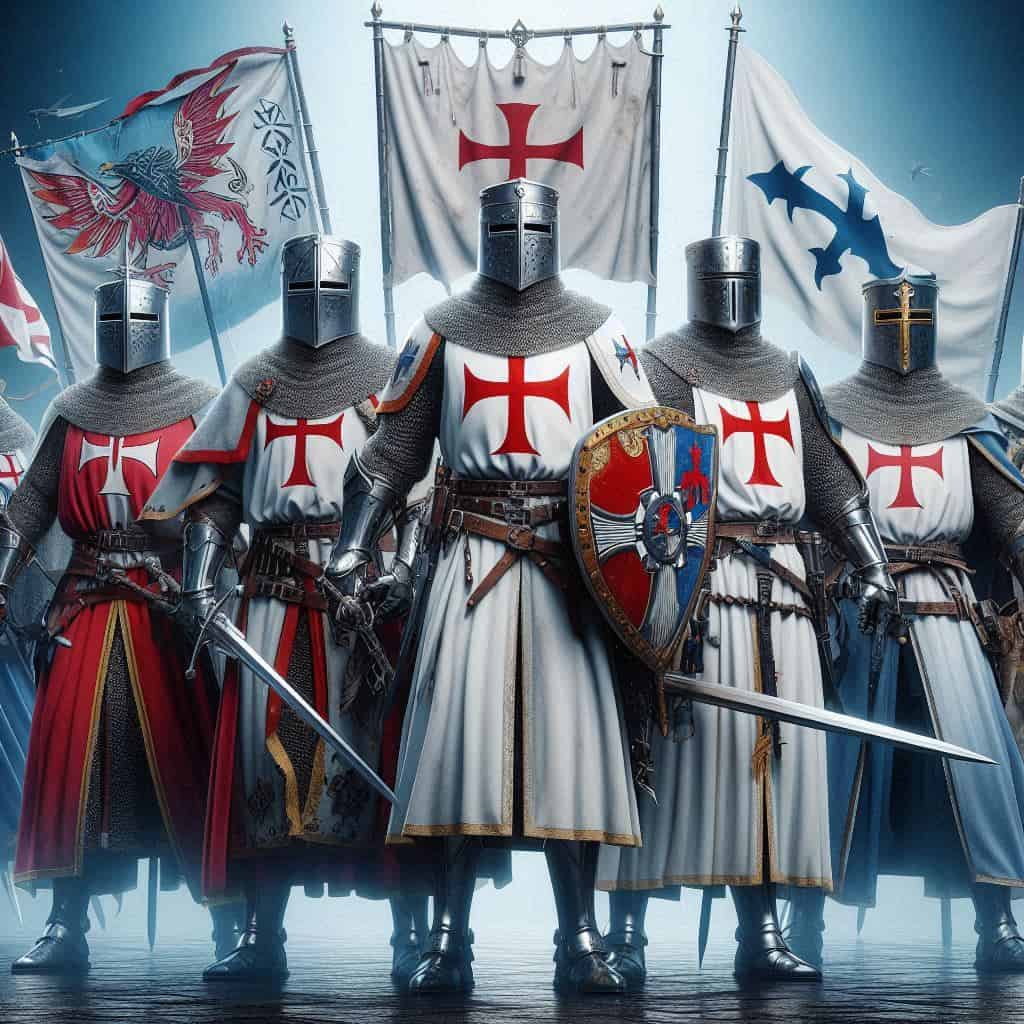
Quick Facts: Knights Templar
- Founded: c. 1119 in Jerusalem
- Purpose: Protect Christian pilgrims traveling to the Holy Land
- Type: Military-religious order of warrior monks
- Symbol: White mantle with a red cross
- Peak Power: 12th–13th centuries across Europe and the Crusader States
- Wealth Sources: Land ownership, donations, and early banking systems
- Major Role: Defending Crusader territories in the Holy Land
- Arrests Begin: 1307 under King Philip IV of France
- Order Dissolved: 1312 by papal decree
- Legacy: Military discipline, financial innovation, and enduring historical myth and legend
Origins of the Knights Templar
The order emerged following the success of the First Crusade (1096–1099), which resulted in the establishment of Crusader states in the eastern Mediterranean. Pilgrimage to Jerusalem increased dramatically, but travel routes remained dangerous due to banditry and regional instability.
A small group of knights offered protection to pilgrims and were soon formally recognized by Church authorities. By the 1120s, the order gained papal approval and official recognition as a religious military brotherhood.
The Templars followed monastic vows of:
- Poverty
- Chastity
- Obedience
Despite these vows, the institution itself became extremely wealthy through donations and land grants.
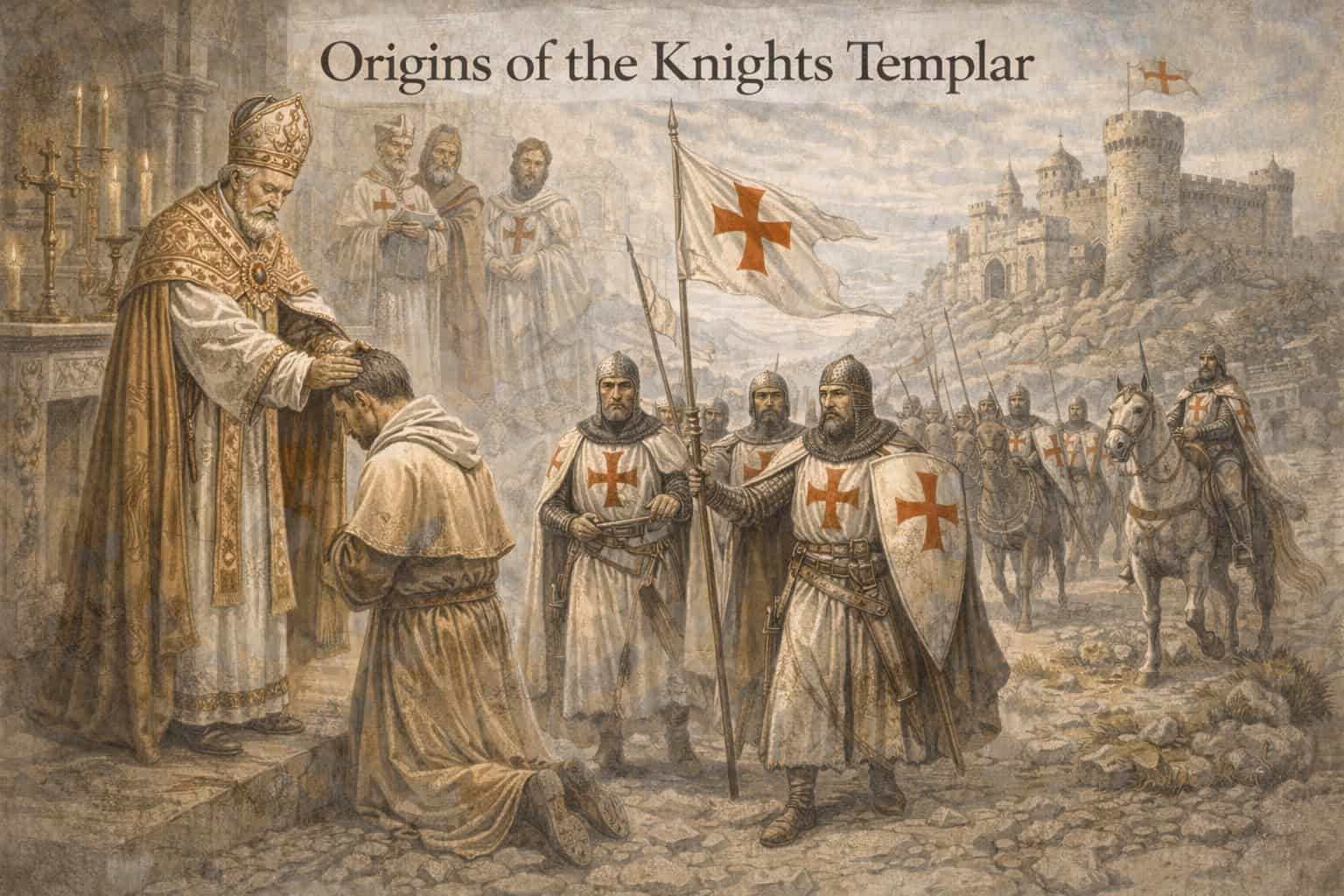
Temple Mount and the Order’s Name
The Templars established their early headquarters on the Temple Mount in Jerusalem, near the Al-Aqsa Mosque. Medieval Christians associated this site with the biblical Temple of Solomon, leading to the order’s full Latin name:
Pauperes commilitones Christi Templique Solomonici
(Poor Fellow-Soldiers of Christ and of the Temple of Solomon)
From this, the shorter name Knights Templar emerged.
Military Role in the Crusades
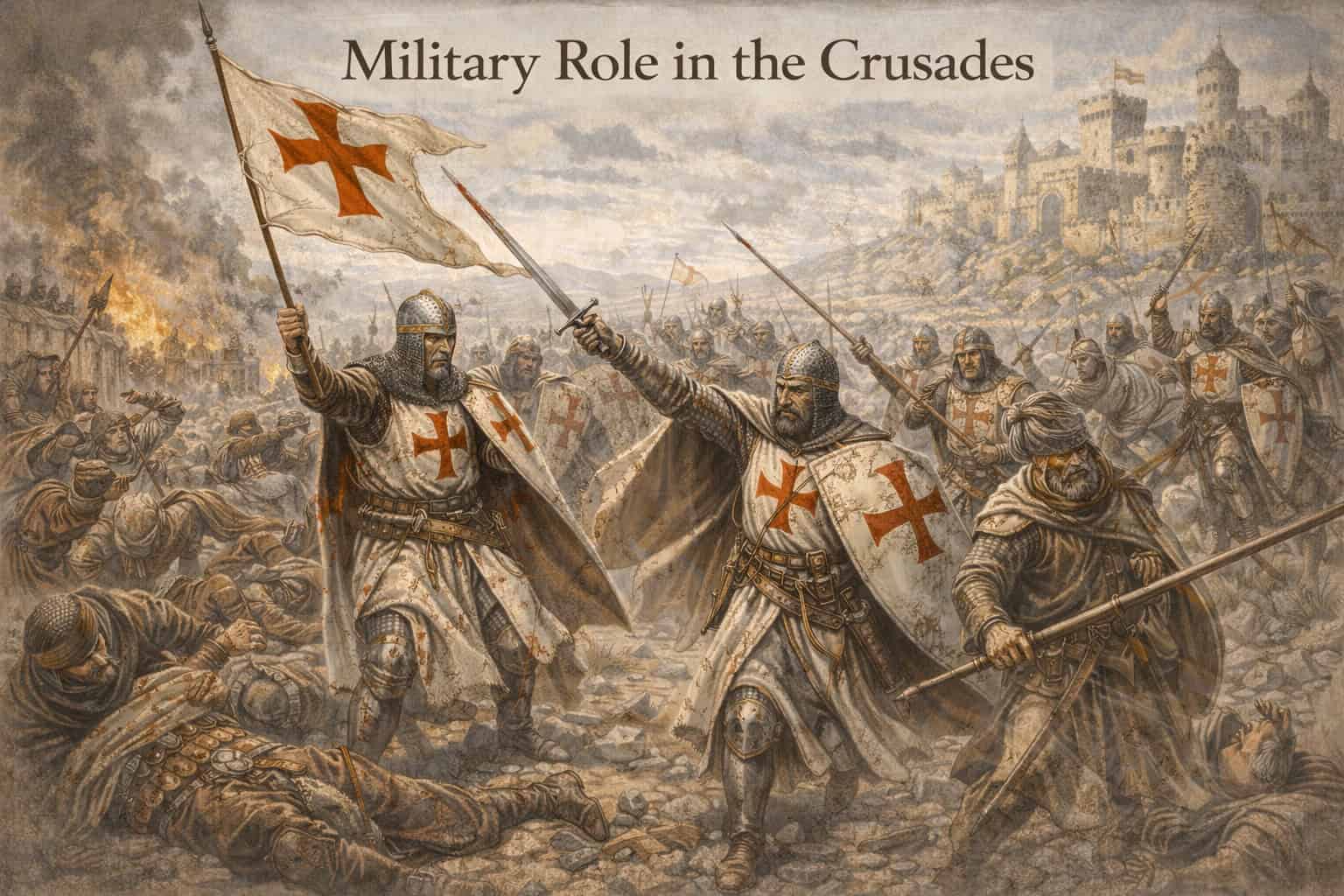
The Knights Templar became one of the most effective and feared military forces of the Crusading era. Unlike most medieval soldiers, they were permanently organized, highly disciplined, and trained specifically for warfare in the Holy Land. Their combination of monastic devotion and battlefield professionalism made them a crucial part of Crusader military strategy.
Templar knights often formed the shock troops of Crusader armies, leading cavalry charges and defending key strongholds across the Crusader States. Their fortresses, supply networks, and logistical coordination allowed Crusader forces to operate across long distances in hostile territory.
Key Military Contributions
- Elite heavy cavalry used in major battles and field engagements
- Defense of strategic castles, roads, and pilgrimage routes
- Permanent garrisons stationed across the Crusader States
- Support for large-scale military campaigns in the eastern Mediterranean
Battlefield Reputation
Templars were known for their strict code of discipline and refusal to retreat unless ordered. This made them extremely reliable in battle but also led to heavy losses in major defeats. Their reputation for courage and religious commitment became legendary among both Christian and Muslim chroniclers.
Decline of Military Power
As Muslim powers unified under strong leaders and Crusader territories gradually fell, the Templars lost many of their military strongholds. The fall of Acre in 1291, the last major Crusader city in the Holy Land, effectively ended their frontline military role.
After the loss of the Crusader States, the order shifted focus back to Europe, where political pressures and accusations of heresy eventually led to their arrest and dissolution in the early 14th century.
Templar Wealth and Financial Power
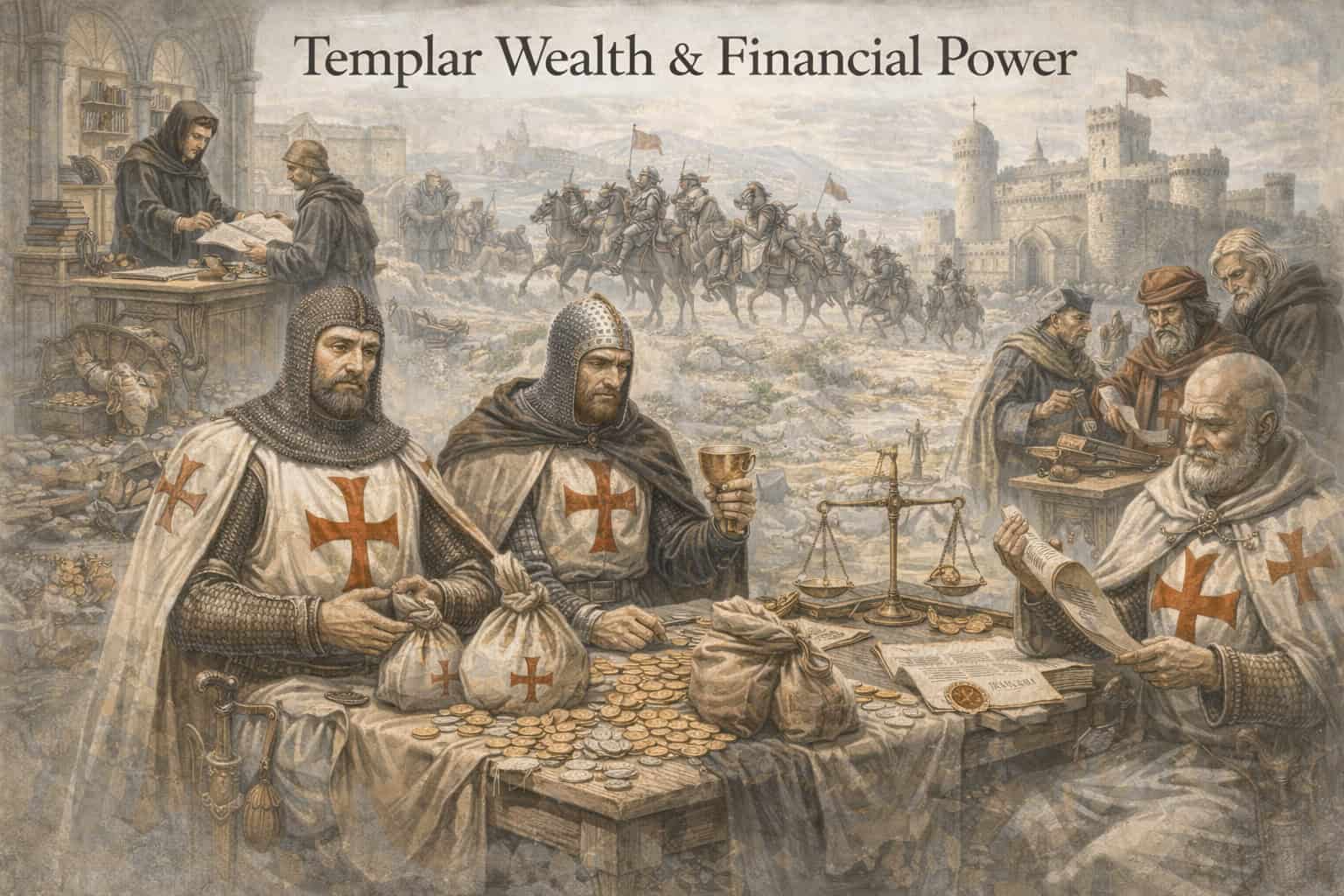
The Knights Templar became one of the wealthiest and most financially influential organizations in medieval Europe. Their wealth did not come primarily from battlefield conquest, but from land ownership, donations, and sophisticated financial management systems that operated across multiple kingdoms.
Sources of Templar Wealth
- Land and Donations
- Large estates across England, France, Iberia, and Italy
- Ongoing noble patronage and church support
- Papal Tax Exemptions which allowed the order to accumulate wealth more efficiently
Early International Banking System
The Templars developed one of Europe’s earliest international financial networks. Pilgrims and nobles could deposit money in one location and withdraw funds elsewhere, greatly reducing the risk of theft during long-distance travel to the Holy Land.
Financial Services and Economic Influence
- Provided large loans to European monarchs and nobles
- Managed estates, farms, and agricultural production
- Acted as financial administrators and treasury managers
This financial power made the Templars extremely influential in medieval politics. However, their wealth and independence also made them vulnerable to rulers who were heavily indebted to them, contributing to the order’s eventual downfall.
Templar Myth vs Historical Reality
Later Legends Claim:
- Discovery of the Holy Grail
- Discovery of the Ark of the Covenant
- Secret knowledge granting wealth and power
- Survival as secret societies
Historical Evidence Shows:
- Wealth derived from land, donations, and banking
- No reliable medieval records confirming treasure discoveries
- No proof of secret society continuation
- Most treasure and hidden knowledge stories are considered later folklore
Relationship with Other Military Orders
The Templars operated alongside other Crusader orders:
Knights Hospitaller
- Focused on medical care and fortress defense
- Later based in Rhodes and Malta
Teutonic Knights
- Originated during the Third Crusade
- Later expanded into Eastern Europe
Together, these orders formed the backbone of Crusader military organization.
Decline and Fall of the Knights Templar
The order’s downfall resulted from political, economic, and religious pressures.
Key Causes
Loss of Crusader Territories
- Fall of Acre in 1291 ended major Crusader presence in the Holy Land
Royal Debt
- King Philip IV of France owed massive sums to the Templars
Political Consolidation
- Monarchs sought to reduce independent Church-backed power groups
Arrests and Dissolution
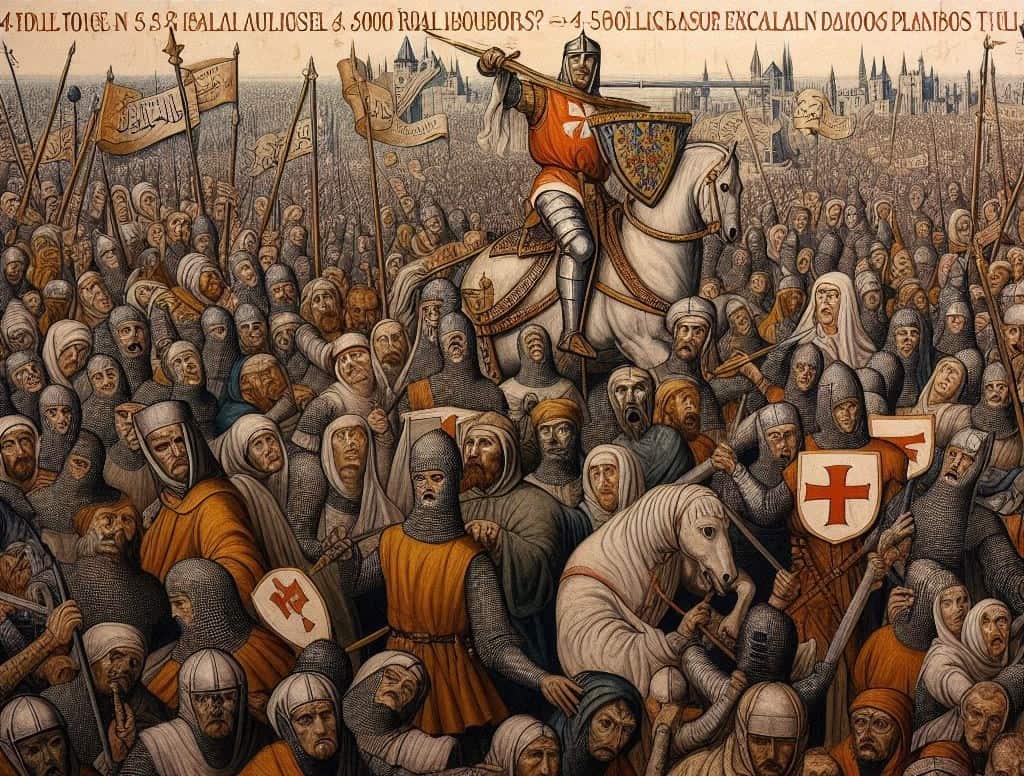
In 1307, King Philip IV ordered mass arrests of Templars in France.
Accusations included:
- Heresy
- Idolatry
- Secret rituals
Many confessions were extracted under torture. The Pope later dissolved the order officially at the Council of Vienne (1312).
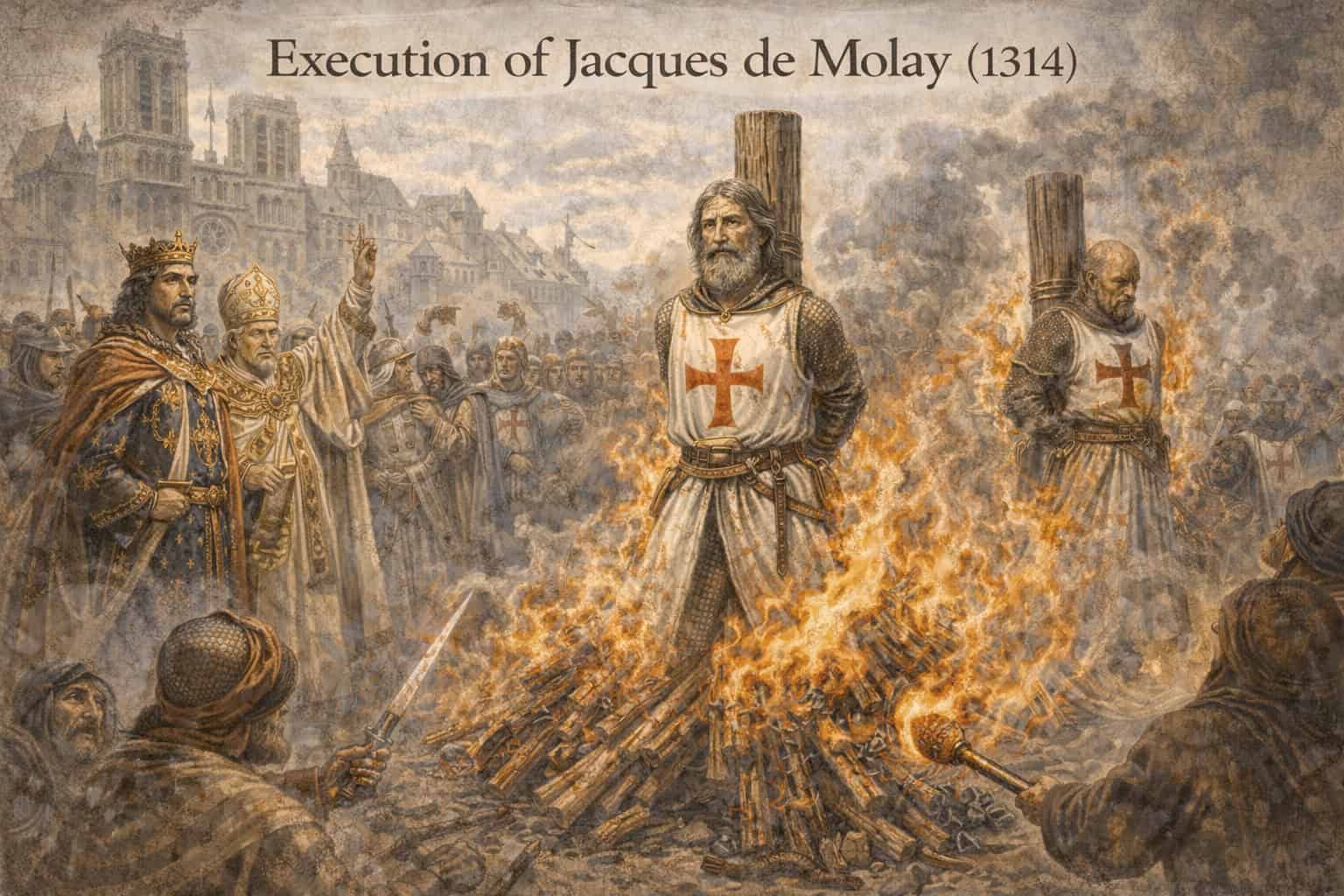
Grand Master Jacques de Molay was executed in 1314.
Legacy of the Knights Templar
The Templars left a lasting mark on medieval history through:
Military Organization
Professional standing religious armies influenced later military structures.
Financial Innovation
Early international banking practices helped shape European finance.
Cultural Legacy
Templars became symbols of:
- Chivalry
- Religious warfare
- Medieval mystery and legend
Why the Knights Templar Still Matter Today
The story of the Knights Templar illustrates how religion, warfare, finance, and politics intersected during the medieval period. Their rise demonstrates the power of international religious institutions, while their fall highlights the dangers of political and financial rivalry.
Their history continues to influence literature, film, and historical debate — though modern scholarship separates documented history from later legend.
Related Topics for Deeper Study
- The Crusades and Crusader States
- Military Orders of the Middle Ages
- Medieval Banking and Finance
- Fall of Acre (1291)
- Medieval Papal Authority
Knights Templar FAQ
Who were the Knights Templar?
The Knights Templar were a medieval Christian military order founded around 1118 to protect pilgrims traveling to the Holy Land. They later became one of Europe’s most powerful religious and financial institutions.
Why were the Knights Templar so wealthy?
Their wealth came from land donations, noble patronage, papal privileges, and an early international banking system that allowed travelers to deposit and withdraw money across Europe and the Near East.
What led to the downfall of the Knights Templar?
King Philip IV of France ordered the arrest of the Templars in 1307, accusing them of heresy. Under political pressure, the papacy dissolved the order in 1312.
Did the Knights Templar really find hidden treasure?
There is no reliable historical evidence that the Templars discovered the Holy Grail or other legendary artifacts. Most treasure stories developed centuries later as part of popular myth.