The Crusades were a series of religiously motivated military campaigns launched during the Middle Ages, primarily between the 11th and 13th centuries. Organized by the Latin Christian Church, these expeditions sought to reclaim or defend territories considered sacred to Christianity—most notably Jerusalem and the Holy Land. Far from being isolated wars, the Crusades reshaped medieval Europe, altered relations between Christian and Islamic worlds, and left a lasting legacy on politics, religion, and culture.
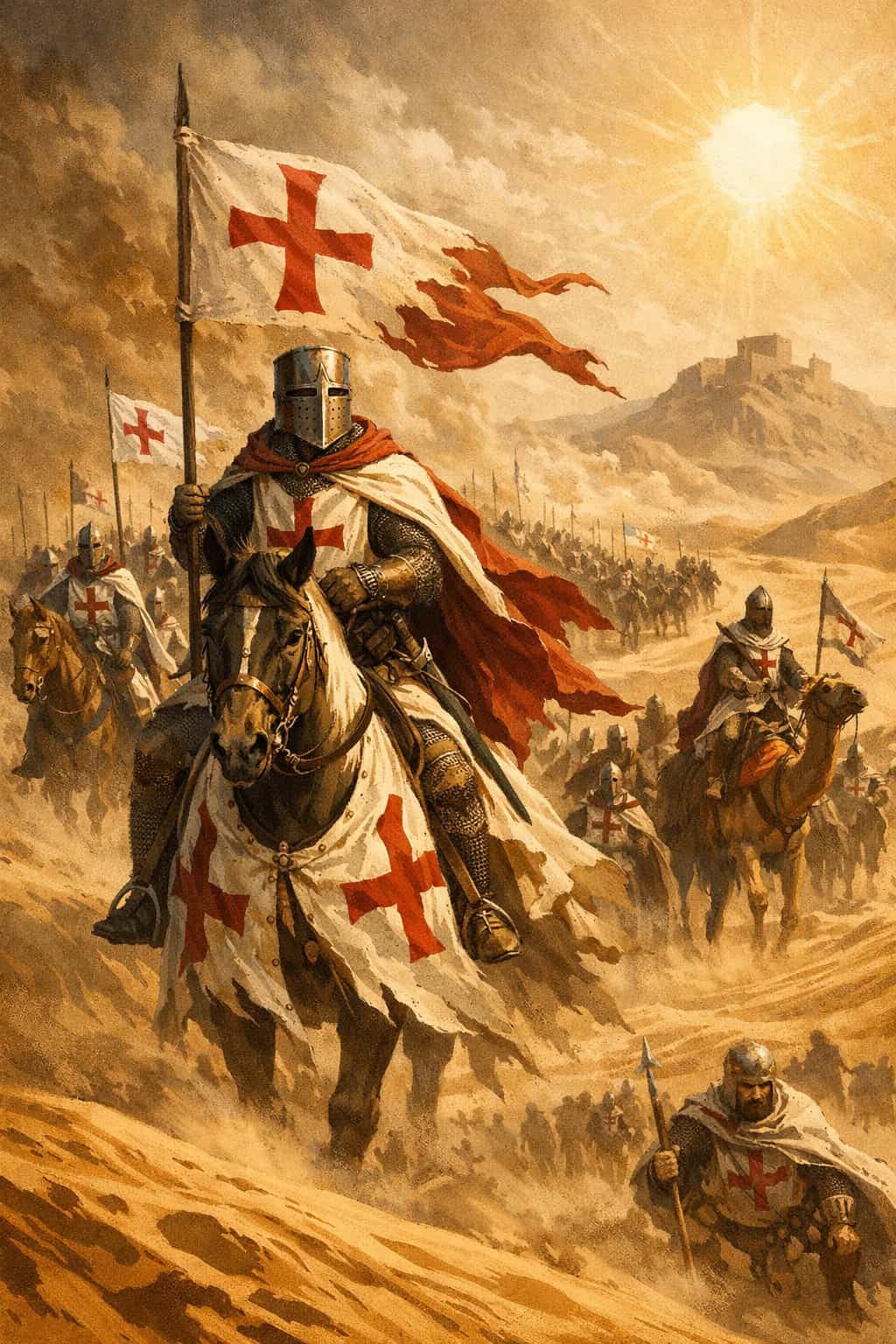
What Were the Crusades?
The Crusades were a series of religiously motivated military campaigns fought between the 11th and 13th centuries. Organized by the Latin Christian Church, they aimed to reclaim or defend territories considered sacred to Christianity—especially Jerusalem and the Holy Land.
- Time Period — Primarily from 1095 to the late 1200s.
- Main Goal — To secure Christian control over Jerusalem and other sacred sites.
- Participants — European knights, nobles, and commoners responding to papal calls.
- Religious Motivation — Framed as holy wars with spiritual rewards promised to participants.
- Long-Term Impact — Reshaped medieval Europe and influenced Christian–Muslim relations for centuries.
Beyond military conflict, the Crusades significantly affected trade, political power, and cultural exchange, leaving a lasting mark on both Europe and the Middle East.
Religious and Political Causes of the Crusades
The idea of holy war developed gradually within medieval Christianity. By the late 11th century, the Church promoted the belief that warfare could be spiritually justified if fought for a sacred cause. Several factors combined to trigger the first crusading movement:
- The Byzantine Empire appealed for military aid after suffering defeats against Turkish Muslim forces
- Christian leaders feared restricted access to pilgrimage routes to Jerusalem
- The papacy sought to unify Western Christendom under its authority
- Knights and nobles looked for land, wealth, and prestige abroad
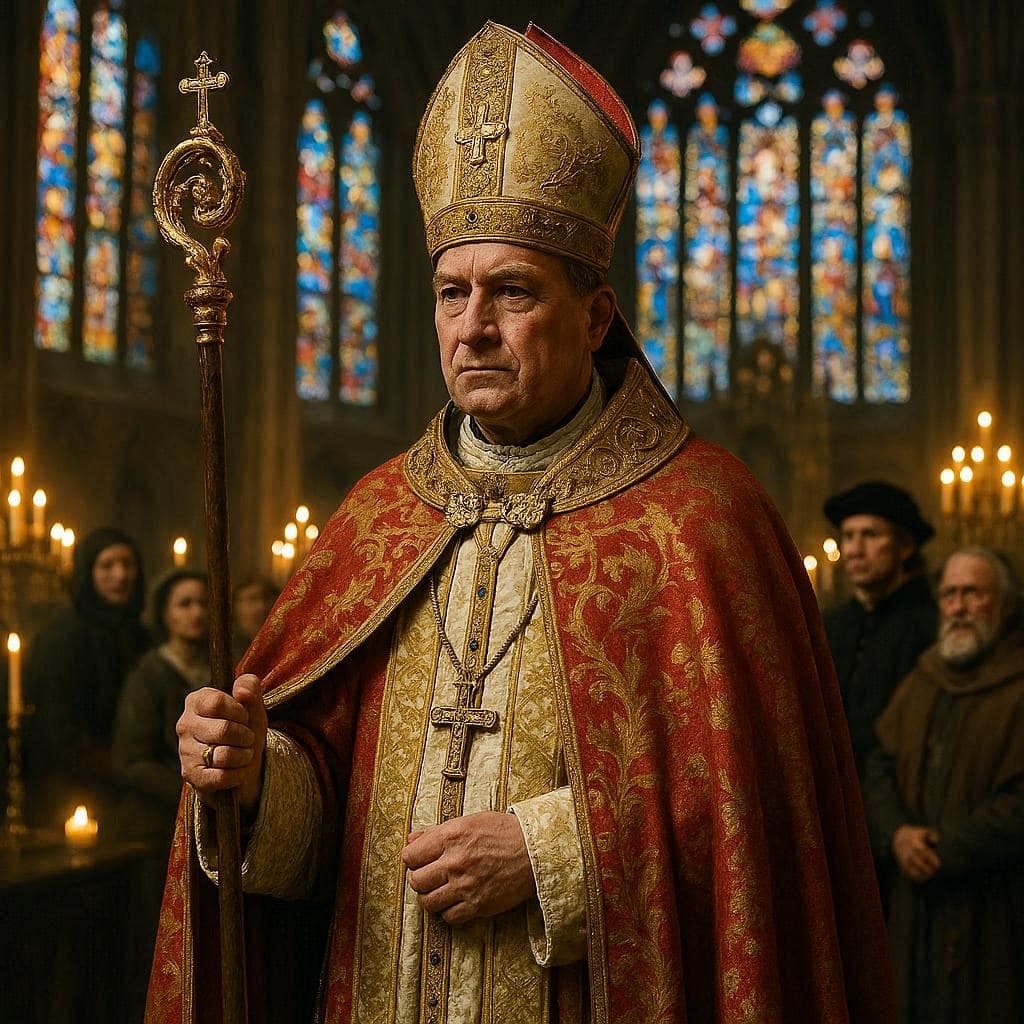
These motivations converged in 1095, when Pope Urban II issued a call to arms at the Council of Clermont, urging Christians to reclaim the Holy Land. His message ignited widespread enthusiasm across Europe.
The Holy Land and Its Significance
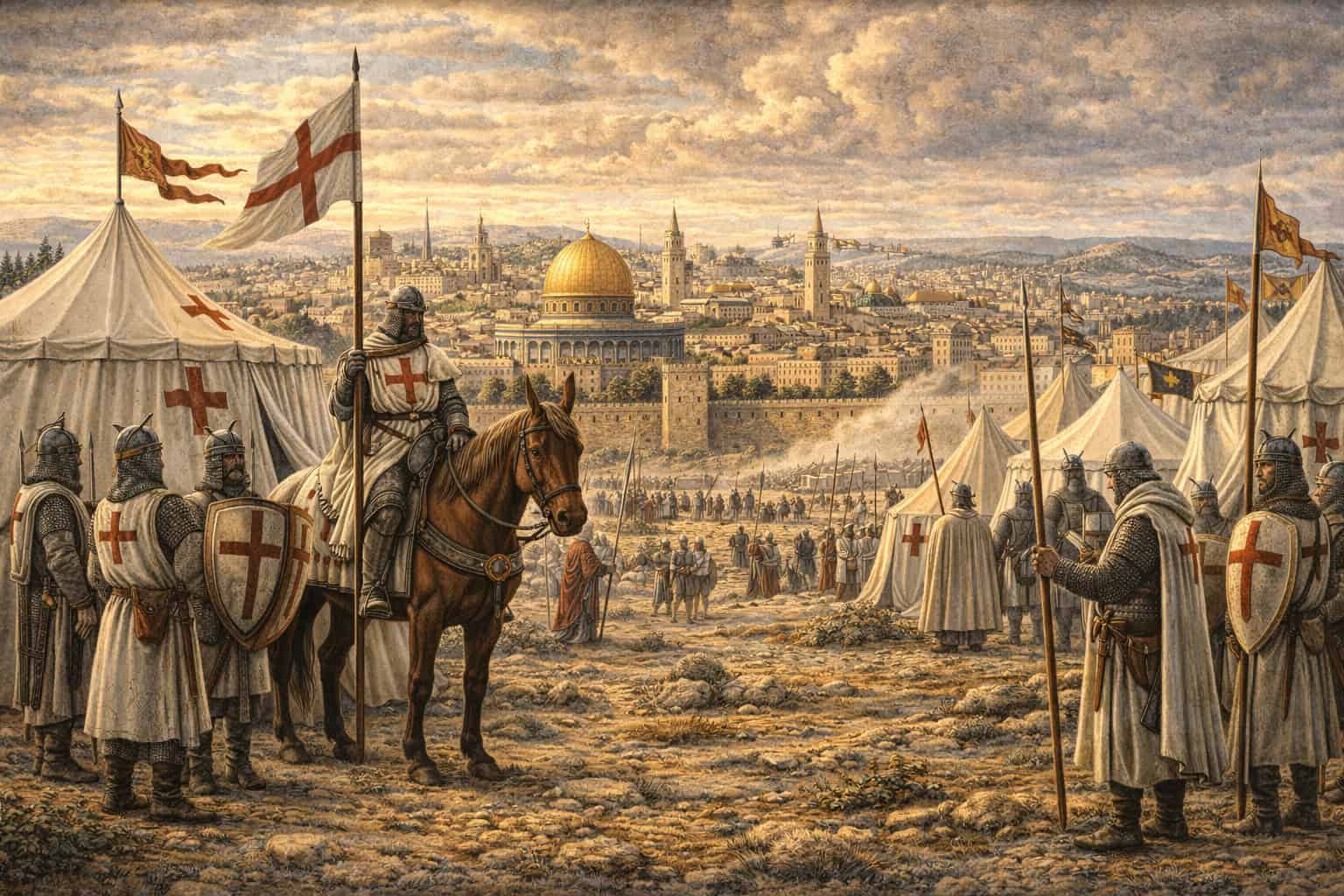
The Holy Land held immense spiritual importance for Christians, Muslims, and Jews alike. Jerusalem, in particular, was revered as the site of key religious events central to all three faiths. Control of the region had shifted between various powers over centuries, and by the 11th century it was under Muslim rule.
For medieval Christians, the idea that sacred sites were governed by non-Christians was deeply unsettling. This belief—combined with exaggerated reports of persecution—strengthened support for crusading expeditions.
Major Events of the Crusades
Several decisive moments shaped the course of the Crusades, influencing control of the Holy Land and altering relations between Christian and Muslim powers for centuries.
- 1095 – Call to Crusade — Pope Urban II urges Christians to reclaim Jerusalem at the Council of Clermont.
- 1099 – Capture of Jerusalem — Crusader forces seize the city and establish the Kingdom of Jerusalem.
- 1144 – Fall of Edessa — The first Crusader state falls, prompting the Second Crusade.
- 1187 – Battle of Hattin — Saladin defeats Crusader armies and retakes Jerusalem.
- 1204 – Sack of Constantinople — The Fourth Crusade diverts and captures the Byzantine capital.
- 1229 – Diplomatic Recovery of Jerusalem — Frederick II negotiates temporary Christian control.
- 1291 – Fall of Acre — The last major Crusader stronghold in the Holy Land collapses.
These events marked turning points in military strategy, political alliances, and religious authority, shaping both European and Middle Eastern history.
Life and Journey of a Crusader
The journey to the Holy Land was long, dangerous, and often fatal. Crusaders faced:
- Starvation and disease
- Harsh climates and unfamiliar terrain
- Attacks from enemy forces and bandits
Many never reached their destination. Despite this, belief in divine purpose sustained participants, including knights, peasants, women, and even children.
Muslim Resistance and the Rise of Saladin
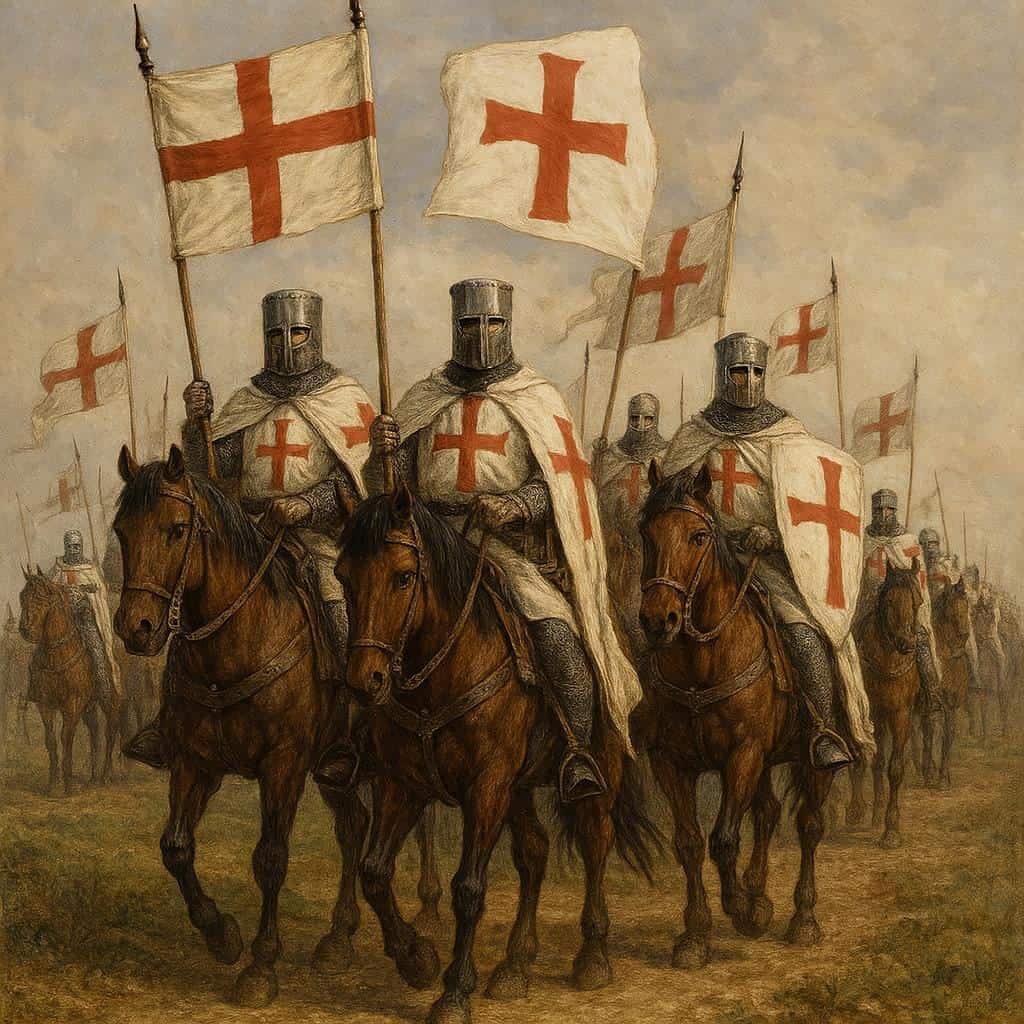
Muslim opposition to the Crusades was initially fragmented, but leaders eventually unified regional forces. The most famous of these was Saladin, a skilled commander known for both military success and diplomatic restraint. His recapture of Jerusalem in 1187 was a defining moment, demonstrating that crusader control was neither permanent nor secure.
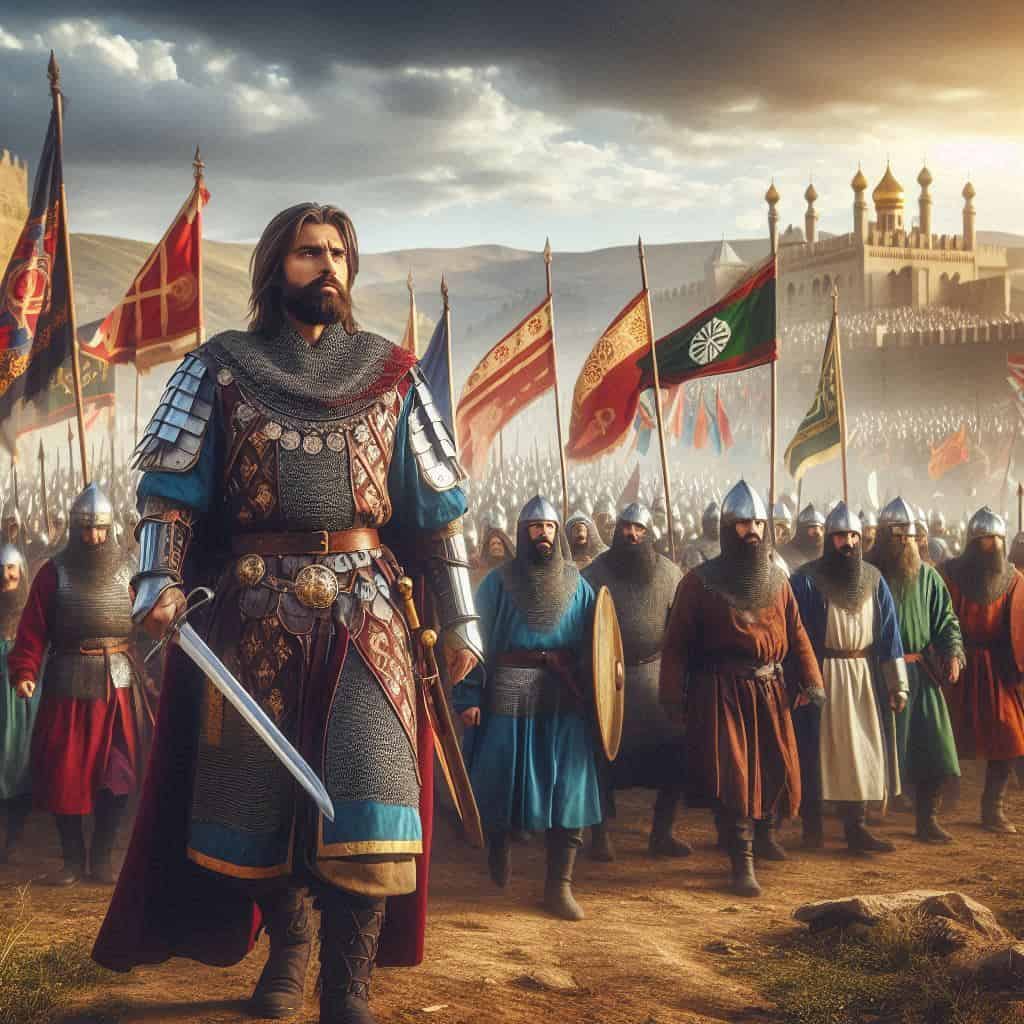
Timeline of the Crusades (1095–1291)
The Crusades were a series of religious wars fought between the late 11th and 13th centuries. Below is a concise timeline highlighting the major campaigns and turning points that shaped the conflict between Christian and Muslim powers in the medieval Mediterranean world.
- 1095 — Pope Urban II calls for the First Crusade at the Council of Clermont.
- 1096–1099 — First Crusade: Crusaders capture Jerusalem and establish Crusader states.
- 1147–1149 — Second Crusade: Launched after the fall of Edessa; ultimately unsuccessful.
- 1187 — Saladin defeats Crusader forces at the Battle of Hattin and recaptures Jerusalem.
- 1189–1192 — Third Crusade: Led by Richard the Lionheart and others; Jerusalem remains under Muslim control.
- 1202–1204 — Fourth Crusade: Diverted to Constantinople, resulting in the sack of the city.
- 1217–1221 — Fifth Crusade: Attempt to capture Egypt fails.
- 1228–1229 — Sixth Crusade: Emperor Frederick II negotiates temporary control of Jerusalem through diplomacy.
- 1248–1254 — Seventh Crusade: Led by Louis IX of France; ends in defeat in Egypt.
- 1270 — Eighth Crusade: Another campaign by Louis IX; ends shortly after his death.
- 1291 — Fall of Acre marks the end of major Crusader strongholds in the Holy Land.
Although smaller crusading efforts continued elsewhere, the fall of Acre in 1291 effectively ended large-scale Crusader rule in the eastern Mediterranean.
The Legacy of the Crusades
The impact of the Crusades extended far beyond the battlefield. They influenced:
- Trade between Europe and the Middle East
- Cultural and scientific exchange
- The power and wealth of the medieval Church
- Long-term Christian–Muslim relations
The Crusades also left a complex historical legacy—remembered as both acts of devotion and episodes of violence, intolerance, and cultural conflict.
Conclusion
The Crusades were among the most transformative events of the medieval world. Born from faith, fear, and ambition, they reshaped continents and belief systems alike. Understanding the Crusades requires acknowledging their religious motivations, political realities, and lasting consequences—both in medieval history and in the modern world
❓ The Crusades – Frequently Asked Questions
What were the Crusades?
The Crusades were a series of religious wars fought between the 11th and 13th centuries, primarily aimed at controlling Jerusalem and other sacred sites in the Holy Land.
When did the Crusades begin?
The Crusades began in 1095, when Pope Urban II called for the First Crusade at the Council of Clermont. Major campaigns continued until the late 13th century.
Who fought in the Crusades?
Participants included European knights, nobles, peasants, and clergy responding to papal calls, as well as Muslim forces defending territories under Islamic rule.
Why was Jerusalem important?
Jerusalem held deep religious significance for Christians, Muslims, and Jews, making it a central focus of conflict during the Crusades.
What were the long-term effects of the Crusades?
The Crusades reshaped political boundaries, expanded trade between Europe and the eastern Mediterranean, intensified Christian–Muslim tensions, and influenced cultural exchange for centuries.
When did the Crusades end?
Large-scale Crusader rule in the Holy Land effectively ended in 1291 with the fall of Acre, the last major Crusader stronghold.
📜 The Crusades Glossary
A religiously motivated military expedition, particularly those launched by Latin Christian forces between the 11th and 13th centuries.
A region in the eastern Mediterranean considered sacred in Christianity, Judaism, and Islam, including Jerusalem and surrounding territories.
One of the Crusader states established after the First Crusade, created to maintain Christian control over Jerusalem and nearby lands.
The Muslim leader who united Islamic forces and recaptured Jerusalem in 1187 following the Battle of Hattin.
A remission of punishment for sins granted by the Church, often promised to those who participated in Crusading campaigns.
A religious journey to a sacred place; Crusading was sometimes presented as an armed pilgrimage to Jerusalem.
The campaign (1202–1204) that diverted from the Holy Land and resulted in the sack of Constantinople.
The capture of the final major Crusader stronghold in the Holy Land, marking the effective end of large-scale Crusader rule in the region.