The medieval world was a vast and interconnected era that shaped societies far beyond Europe and the United Kingdom. Spanning roughly from the 5th to the 15th century, the medieval period witnessed the rise and fall of powerful empires, the spread of major religions, and the expansion of long-distance trade routes that linked Asia, Africa, the Middle East, and Europe. Far from being isolated, medieval civilizations influenced one another through warfare, diplomacy, commerce, and shared knowledge. Understanding the global medieval world reveals how deeply interconnected the Middle Ages truly were.
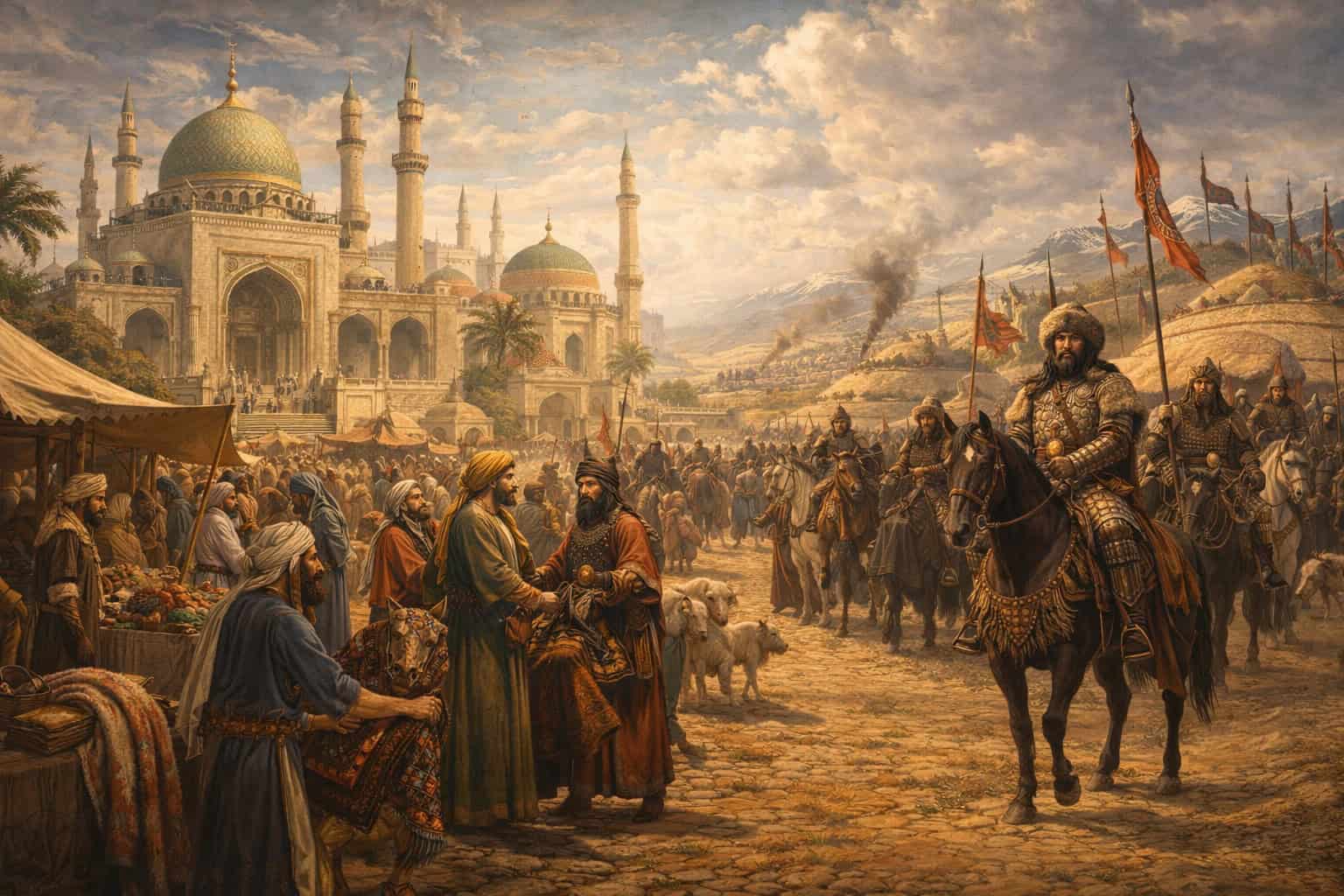
Quick Overview: The Medieval World at a Glance
- Europe: Feudal society, castles, the Church, and emerging kingdoms
- Islamic World: Caliphates, scholarship, trade, and scientific advancement
- Mongol Empire: Vast land empire linking East and West
- Indian Subcontinent: Sultanates, empires, and religious diversity
- East Asia: Dynastic rule, innovation, and economic growth
- Africa & Middle East: Trade networks, learning centers, and cultural exchange
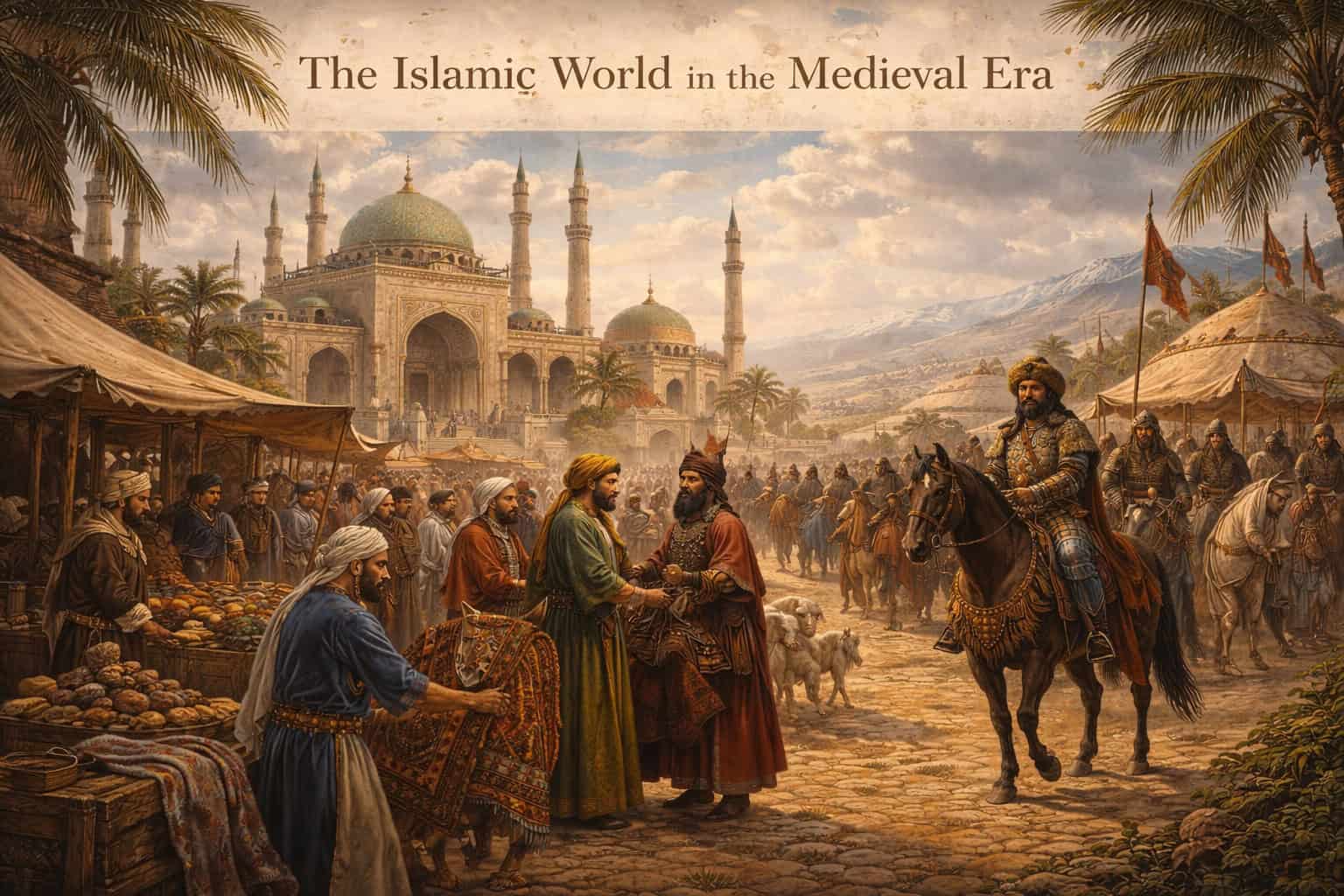
The Islamic World in the Medieval Era
The Islamic world was one of the most influential regions of the medieval world, serving as a bridge between East and West. Following the rapid expansion of Islam in the 7th century, vast territories came under unified rule.
The Umayyad Caliphate, founded in 661 and governed from Damascus, established the first major Islamic empire, stretching from North Africa to Central Asia. This was followed by the Abbasid Caliphate, which ruled from Baghdad and presided over a golden age of scholarship, science, medicine, mathematics, and philosophy.
During the medieval period, Islamic scholars preserved and expanded classical knowledge, while Muslim merchants dominated key medieval trade routes, helping to connect the Mediterranean, Africa, and Asia into a shared economic system.
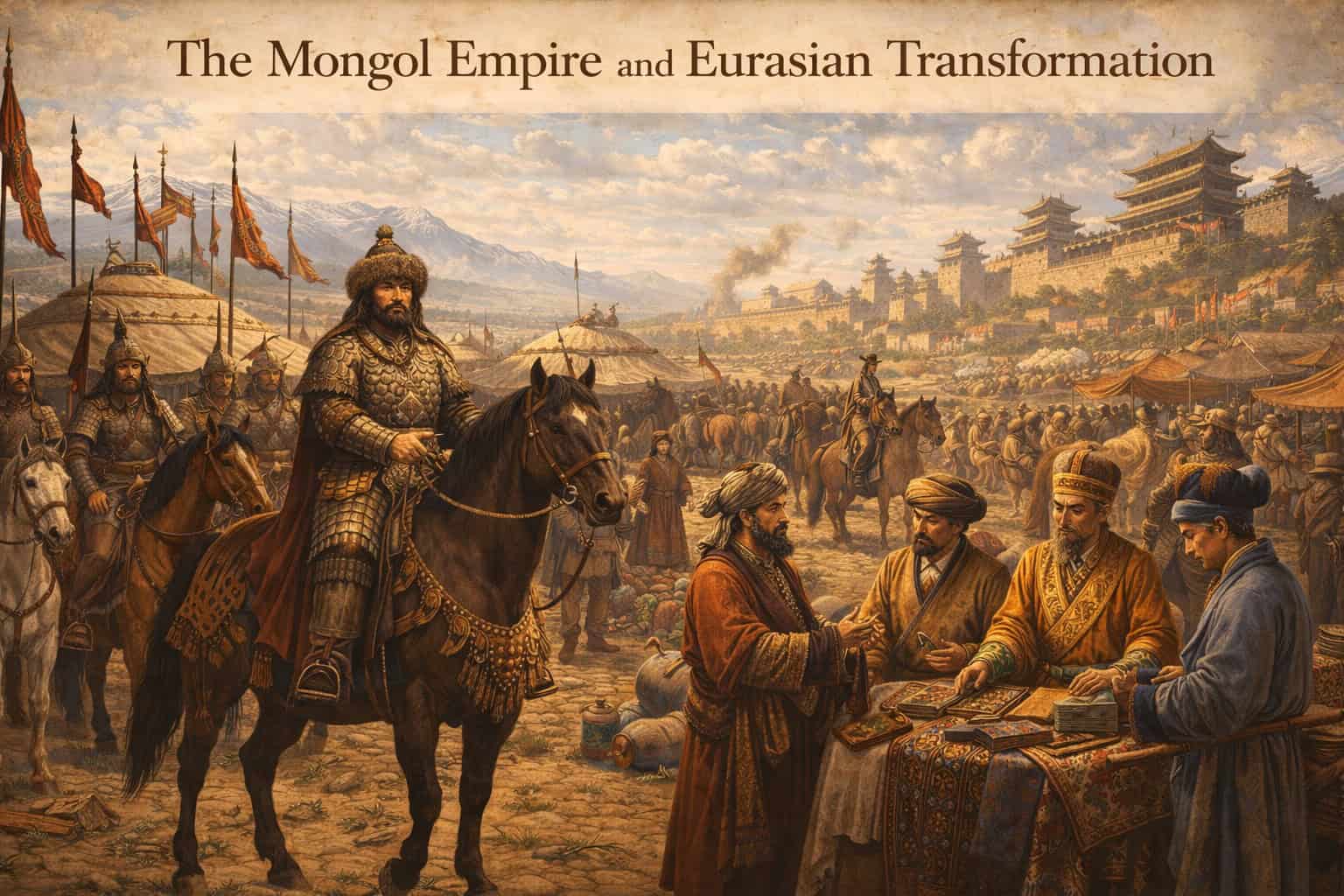
The Mongol Empire and Eurasian Transformation
The Mongol Empire was one of the most transformative forces in global medieval history. Founded in 1206 by Genghis Khan, it became the largest contiguous land empire in history, stretching from China to Eastern Europe.
Although known for its military conquests, the Mongol Empire also brought stability to the Silk Road, enabling unprecedented levels of trade, travel, and cultural exchange. Ideas, technologies, and goods moved freely across Eurasia, reshaping medieval societies and accelerating global interaction.
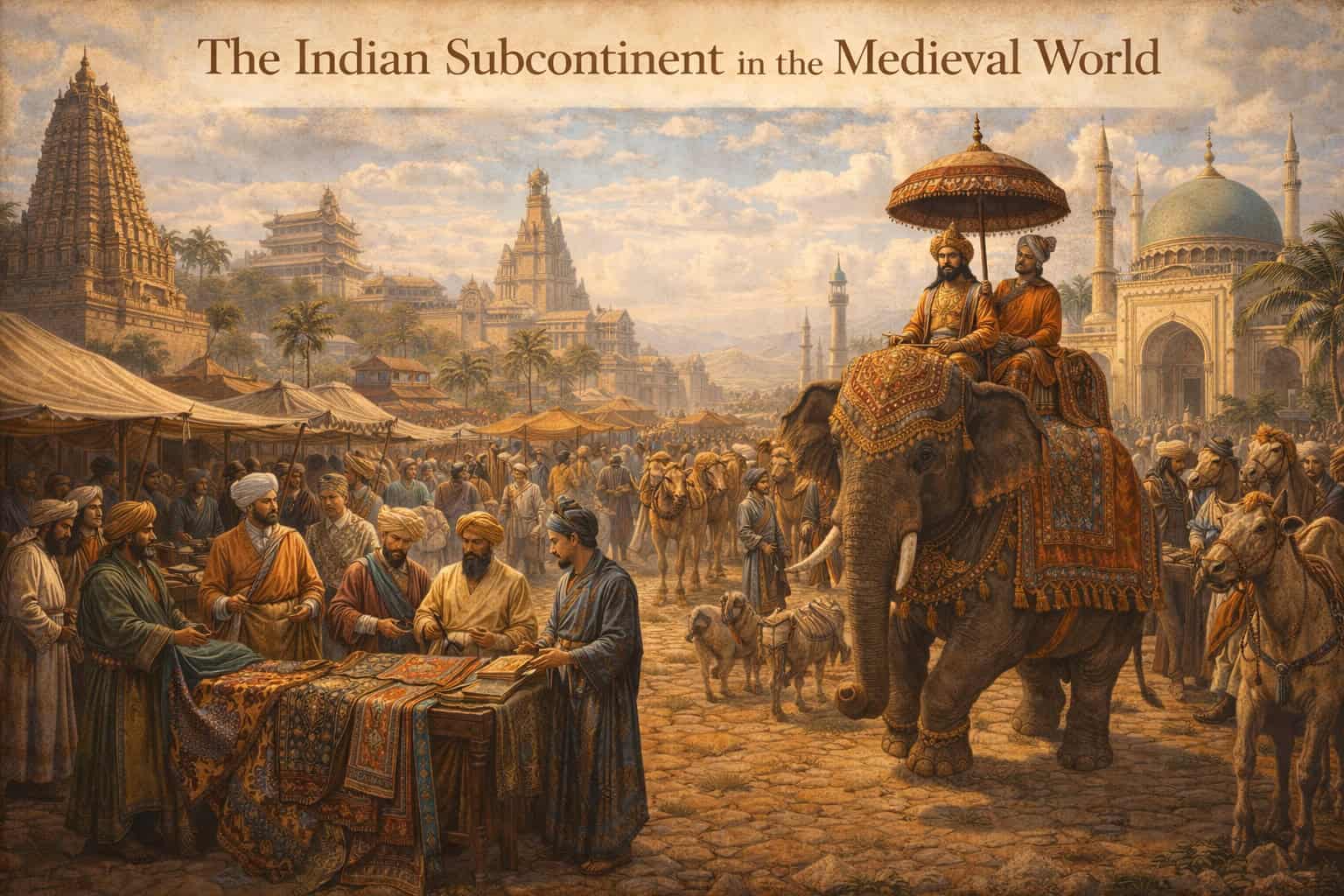
The Indian Subcontinent in the Medieval World
Indian subcontinent played a central role in the medieval world, marked by religious diversity, powerful kingdoms, and extensive trade networks.
The Delhi Sultanate was a dominant medieval power in northern India and played a key role in the spread of Islam across the region. In southern India, the Vijayanagara Empire stood as a major Hindu kingdom, renowned for its wealth, architecture, and resistance to northern expansion.
The Mughal Empire, while technically emerging at the end of the medieval period, was built upon medieval political, military, and cultural foundations, bridging the Middle Ages and the early modern world.
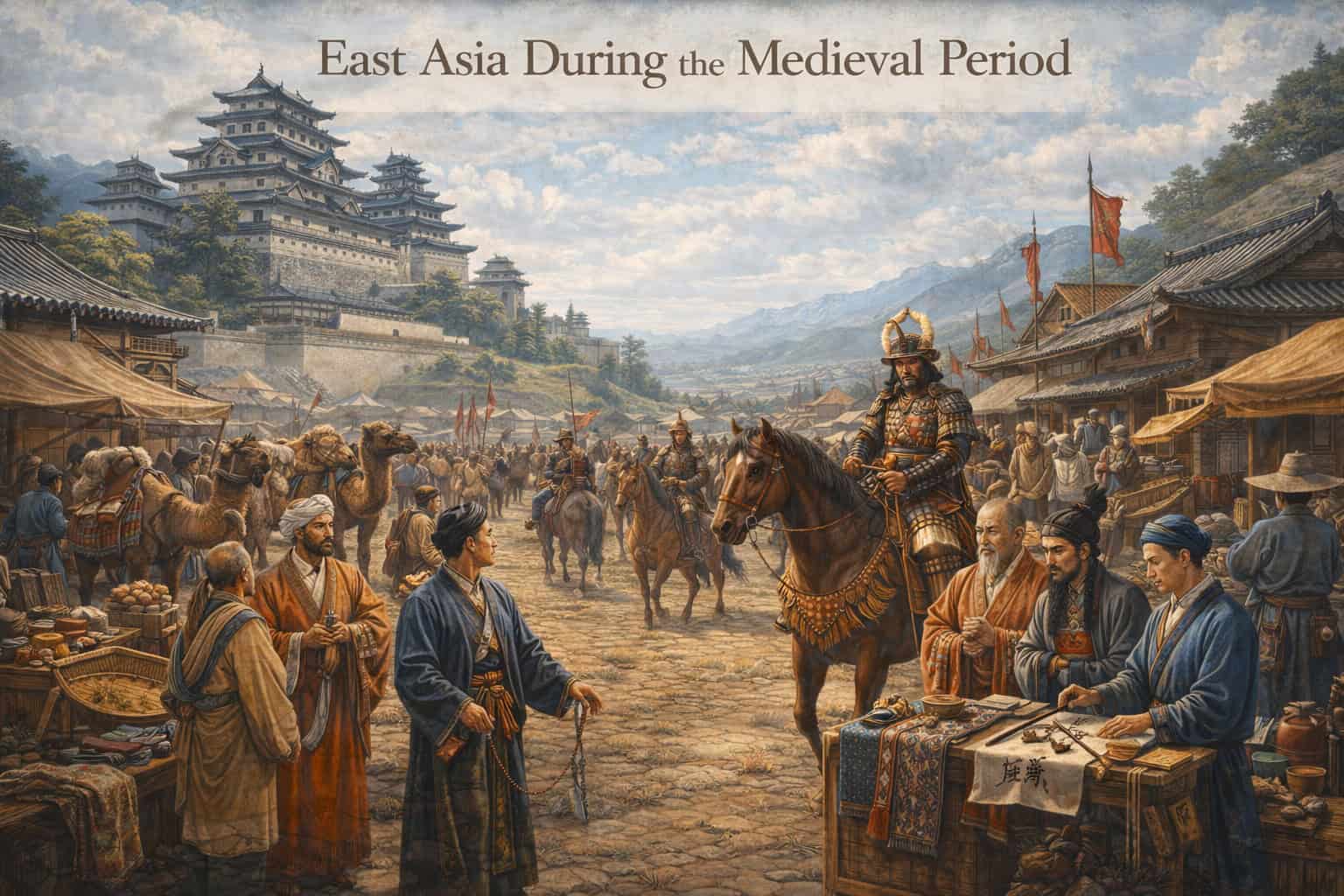
East Asia During the Medieval Period
In East Asia, medieval history was shaped by innovation, governance, and economic growth. The Song Dynasty was one of the most advanced medieval states in the world.
The Song period saw major developments in printing, gunpowder, navigation, and commerce, alongside a thriving urban economy. These advances influenced neighboring regions and contributed to the broader technological progress of the medieval world.
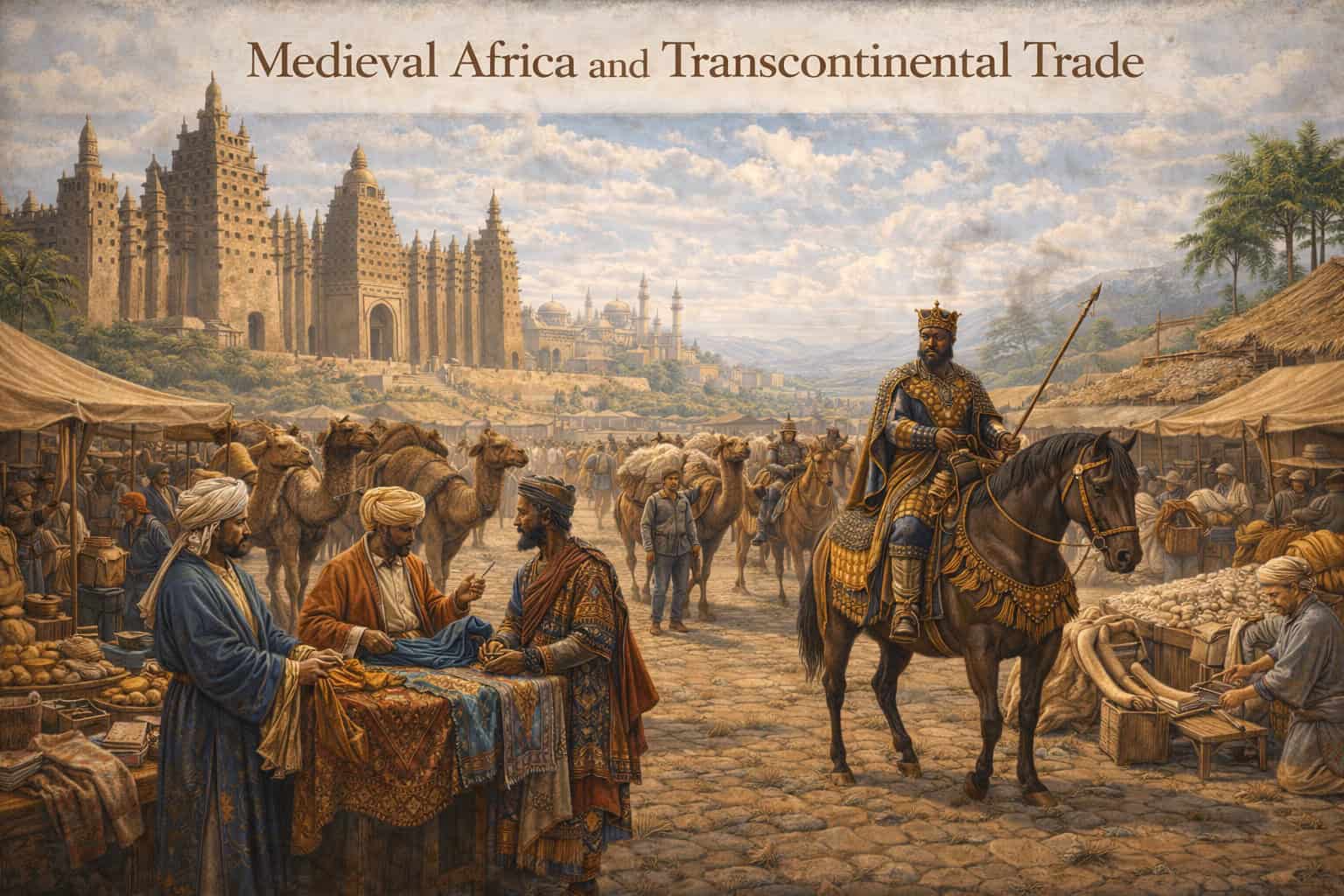
Medieval Africa and Transcontinental Trade
Africa was a vital and often overlooked part of the medieval world. Powerful kingdoms flourished along major trade routes connecting the Mediterranean, Middle East, and sub-Saharan Africa.
The Mali Empire became one of the wealthiest medieval states, controlling gold and salt trade routes. Cities such as Timbuktu emerged as major centers of learning, housing libraries, universities, and scholars whose influence extended far beyond Africa.
African participation in medieval trade networks demonstrates the truly global nature of medieval civilization.
A Connected Medieval World
The medieval world was not defined by isolation but by connection. Trade routes, religious movements, conquests, and diplomacy tied distant regions together, allowing ideas and innovations to travel across continents. From the Islamic Golden Age to Mongol unification, from Indian kingdoms to African empires and East Asian dynasties, the global medieval era laid the foundations of the modern world.
As a parent hub, this page serves as an entry point into the major regions, empires, and civilizations of the medieval world, each of which deserves deeper exploration through dedicated child page.
Frequently Asked Questions About the Medieval World
What was the medieval world?
The medieval world describes the civilizations that developed between the 5th and 15th centuries, including Europe, the Middle East, Africa, and Asia. These societies were linked by trade, religion, warfare, and shared knowledge.
Which regions were part of the medieval world?
Medieval civilization extended beyond Europe to include the Islamic caliphates, the Mongol Empire, the Indian subcontinent, East Asia, and parts of Africa, all of which played major roles in shaping the era.
Why is the Middle Ages considered a global period?
The Middle Ages were global because long-distance trade routes, diplomacy, religious movements, and conquest connected distant regions, allowing ideas, goods, and technologies to spread across continents.
How were medieval societies connected?
Medieval societies were connected through trade networks such as the Silk Roads, military expansion, pilgrimage routes, and centers of learning that preserved and transmitted knowledge.