Medieval swords were among the most important weapons of the Middle Ages, serving not only as tools of war but also as powerful symbols of status, honor, and martial identity. From early Viking blades to the refined longswords of the late medieval period, sword design evolved alongside armor, battlefield tactics, and metallurgy.
Across medieval Europe, swords reflected the social class and role of the warrior who carried them. Knights, nobles, foot soldiers, and mercenaries each favored different sword types depending on their needs in combat. Understanding medieval swords offers valuable insight into medieval warfare, craftsmanship, and society.
This hub provides an overview of the main types of medieval swords, their historical context, and how they were used, with links to detailed articles exploring each blade in depth.
Early Medieval Swords (c. 800–1100)
During the early Middle Ages, swords were expensive and rare, often owned only by elite warriors.
Viking Swords
Viking swords were typically one-handed, double-edged weapons designed for use alongside a shield. High-status Viking warriors decorated their swords with silver, gold, and inscriptions, making them symbols of power and prestige.
Anglo-Saxon Swords
Among the Anglo-Saxons, swords were prized heirlooms. While spears were more common, nobles carried swords as marks of rank. These blades favored cutting power over thrusting and were often richly ornamented.
Knightly and High Medieval Swords (c. 1100–1350)
As knighthood became firmly established, sword design adapted to mounted warfare and armored combat.
Arming Sword (Knightly Sword)
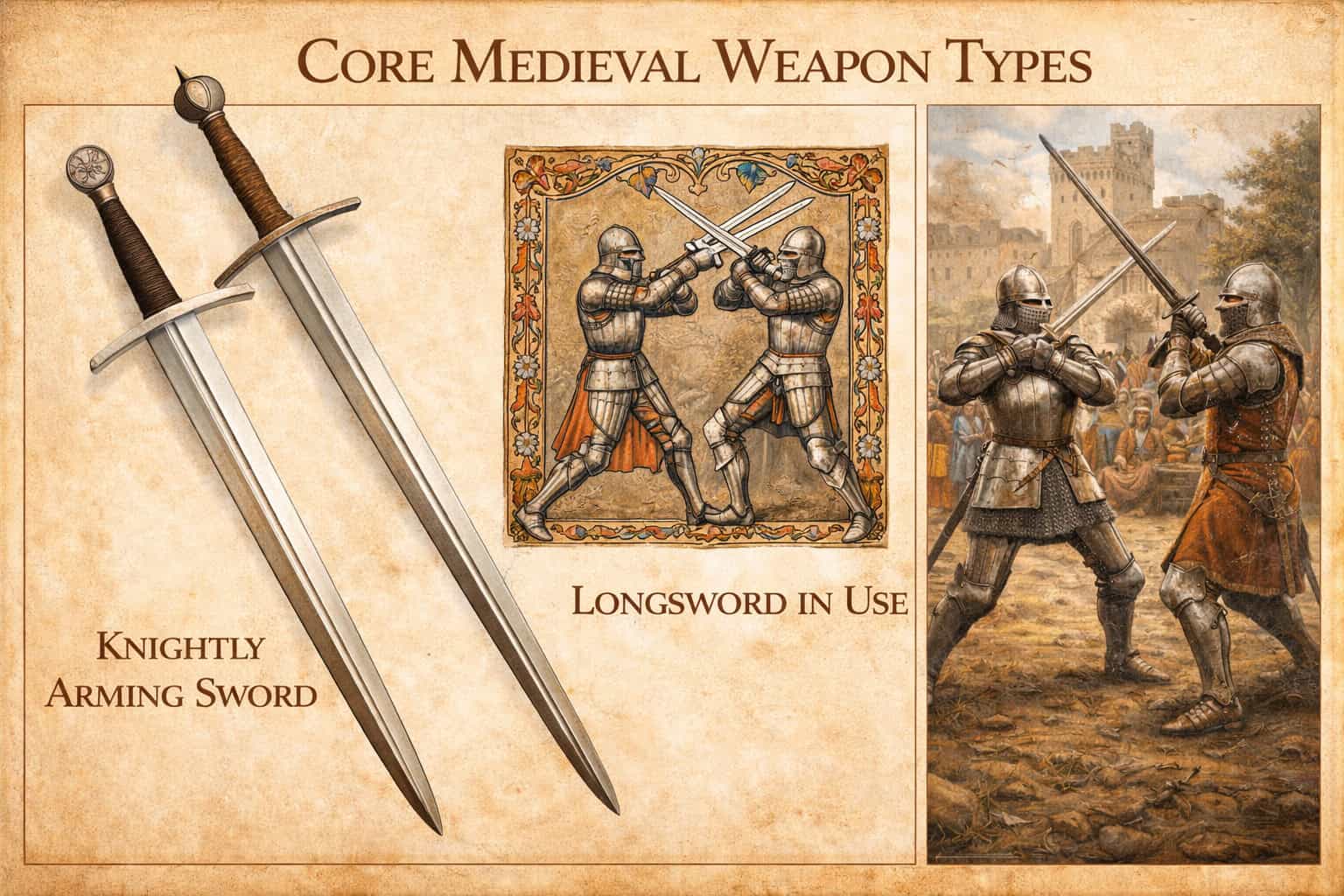
The arming sword was the standard one-handed sword of medieval knights. Used with a shield, it was balanced for cutting and thrusting and became the defining weapon of the knight.
Bastard Sword (Hand-and-a-Half Sword)
The bastard sword, also known as the épée bâtarde, featured a longer grip allowing one or two-handed use. This versatility made it popular with knights fighting both on horseback and on foot.
Large Two-Handed Swords
Longswords and Great Swords
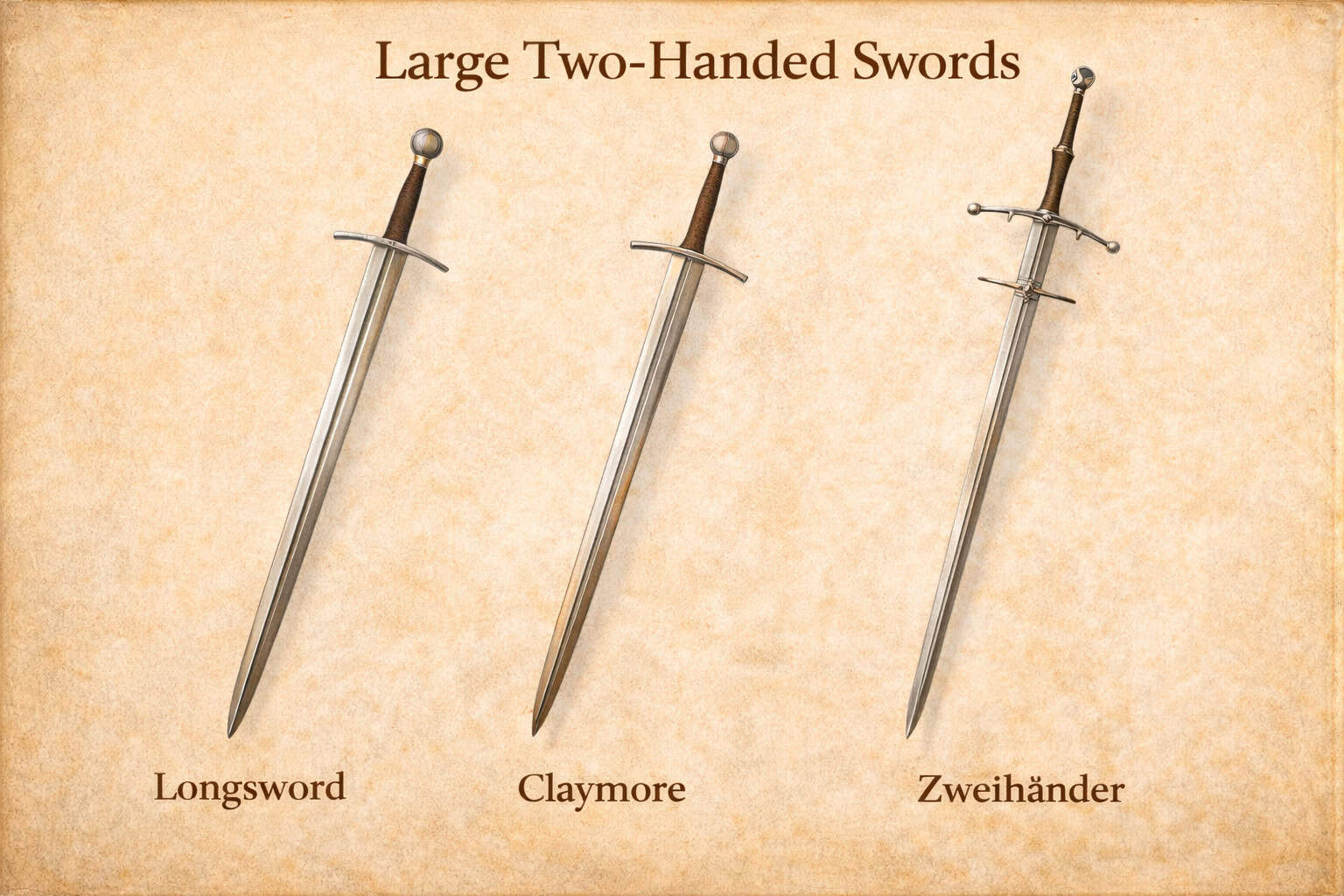
Longswords and great swords were designed for two-handed use and excelled at powerful cuts and precise thrusts. These swords became increasingly common as plate armor developed, requiring weapons capable of exploiting gaps in armor.
Claymore
The Scottish claymore was a large two-handed sword distinguished by its sloping quillons. It was feared for its reach and cutting power on the battlefield.
Zweihänder
The Zweihänder was an enormous two-handed sword used by German mercenaries in the late medieval and early Renaissance periods. Its size reflects the final stage of sword evolution before firearms transformed warfare.
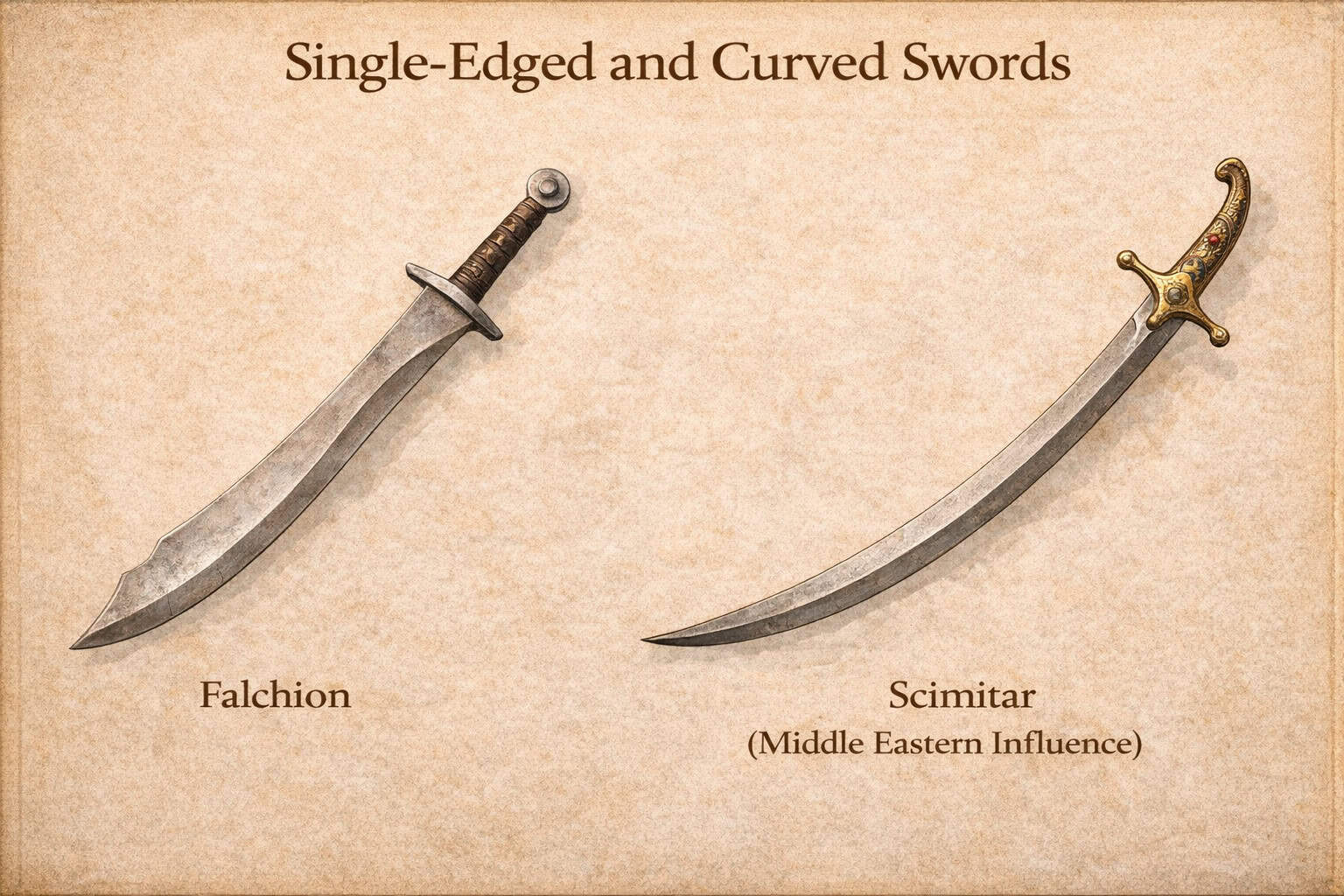
Single-Edged and Curved Swords
Falchion
The falchion was a single-edged sword with a curved or cleaver-like blade. Favored by foot soldiers, it delivered devastating cutting power and was widely used during the Crusades.
Scimitar (Middle Eastern Influence)
The term scimitar refers to curved swords such as the kilij and shamshir, used by Islamic armies during medieval conflicts with Europe. These swords were optimized for slicing attacks, particularly from horseback.
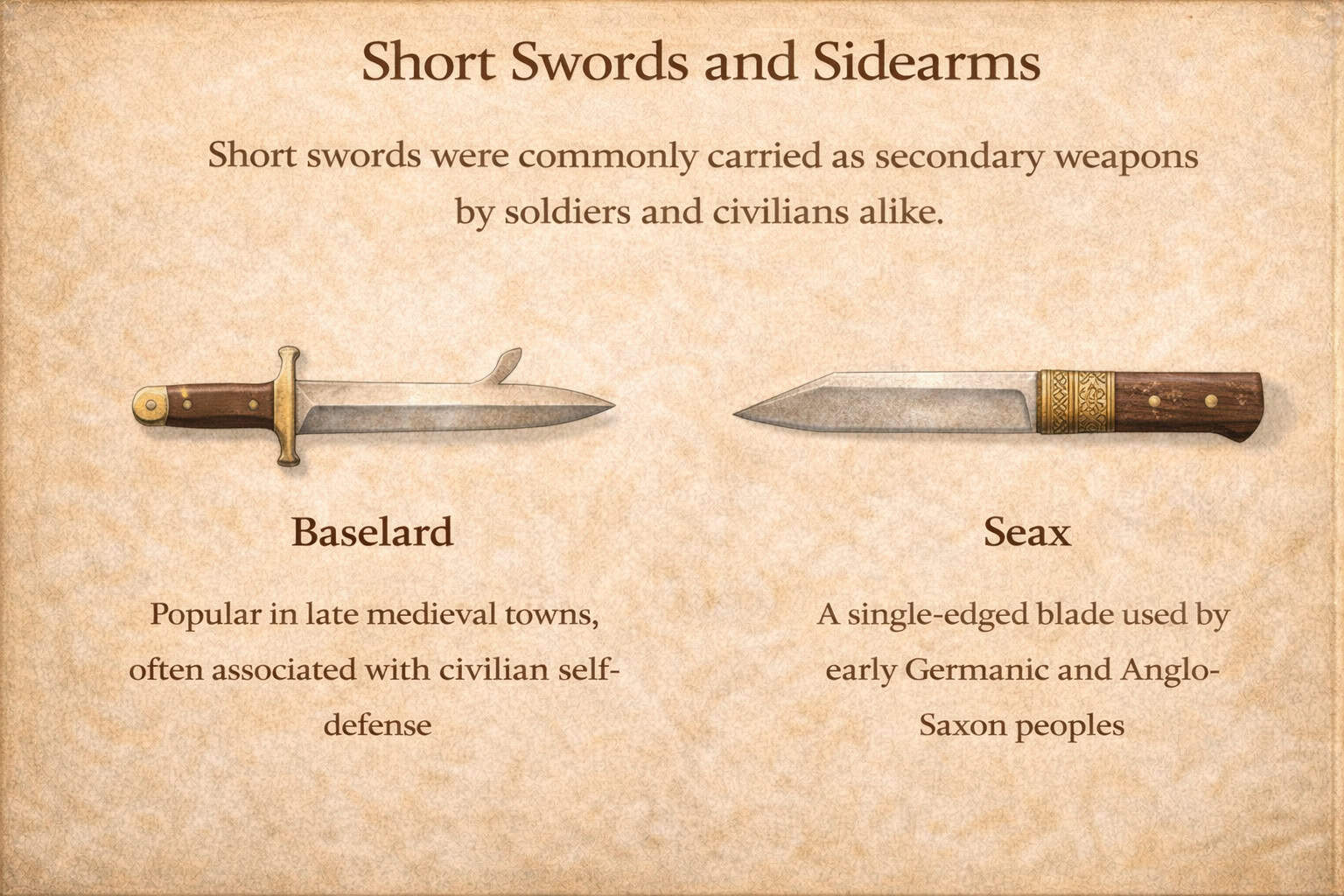
Short Swords and Sidearms
Short swords were commonly carried as secondary weapons by soldiers and civilians alike.
- Baselard – Popular in late medieval towns, often associated with civilian self-defense
- Seax – A single-edged blade used by early Germanic and Anglo-Saxon peoples
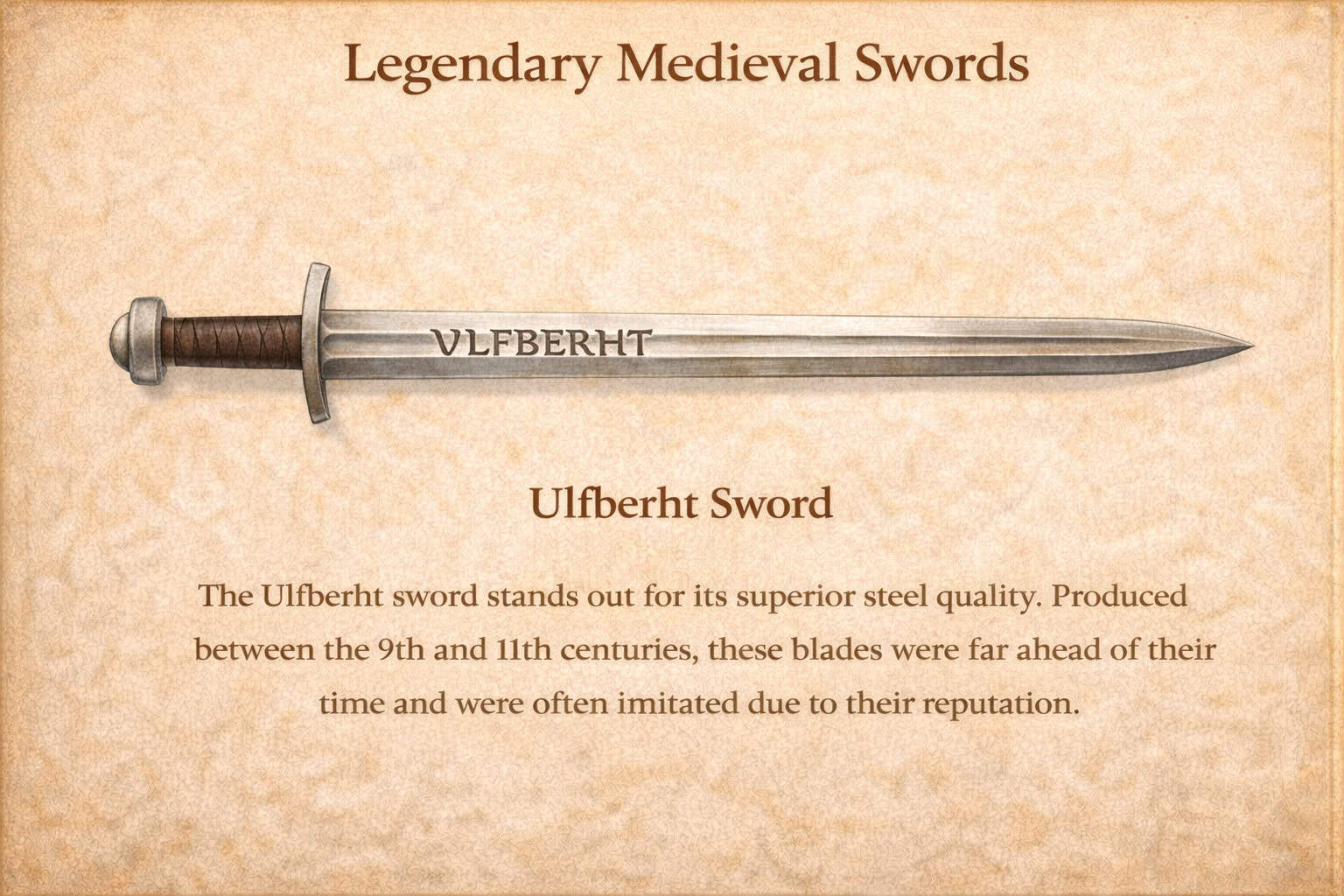
Legendary Medieval Swords
Ulfberht Sword
The Ulfberht sword stands out for its superior steel quality. Produced between the 9th and 11th centuries, these blades were far ahead of their time and were often imitated due to their reputation.
Why Medieval Sword Design Changed
Medieval swords evolved in response to several key forces that reshaped warfare and society:
- Improvements in armor, which required blades capable of thrusting into gaps and joints
- Advances in steel production, allowing stronger, more flexible, and more reliable swords
- Changes in battlefield tactics, including the rise of professional infantry and mixed-arms combat
- The spread of firearms, which gradually reduced the battlefield dominance of bladed weapons
Together, these developments transformed the sword from a universal weapon of war into a more specialized tool. By the late medieval period, swords reflected a balance between tradition, technology, and practicality—marking the final evolution of the medieval sword before gunpowder warfare reshaped combat forever
Frequently Asked Questions About Medieval Swords
What were medieval swords used for?
Medieval swords were primarily used for close combat in warfare, but they also held ceremonial and symbolic importance, representing knighthood, authority, and social status.
What is the most common medieval sword?
The most widespread type was the arming sword, a one-handed weapon used with a shield, later followed by the longsword as armor and fighting techniques evolved.
Did medieval swords change over time?
Yes. Medieval sword design changed in response to improvements in armor, advances in steelmaking, and shifting battlefield tactics, eventually declining with the rise of firearms.
Were medieval swords only used by knights?
No. While knights carried swords, many foot soldiers, mercenaries, and civilians also used various sword types depending on region, wealth, and purpose.