The legends of King Arthur form one of the most captivating and enduring myth cycles in Western culture. Blending history, folklore, mythology, and medieval literature, these tales introduce readers to a world of noble kings, valiant knights, powerful enchantresses, and quests for spiritual perfection. Although the historical Arthur remains uncertain, the mythic Arthur has shaped cultural imagination for centuries.
Origins of Arthurian Legend
The beginnings of the Arthurian tradition lie deep in the early medieval period, where fragments of Celtic myth and heroic lore gradually fused into a coherent narrative.
Key influences include:
Celtic mythology, especially Welsh and Breton oral storytelling
Early Christian elements, blending spiritual symbolism with heroic ideals
Medieval authors, who transformed local folklore into grand romance
The most influential writers were:
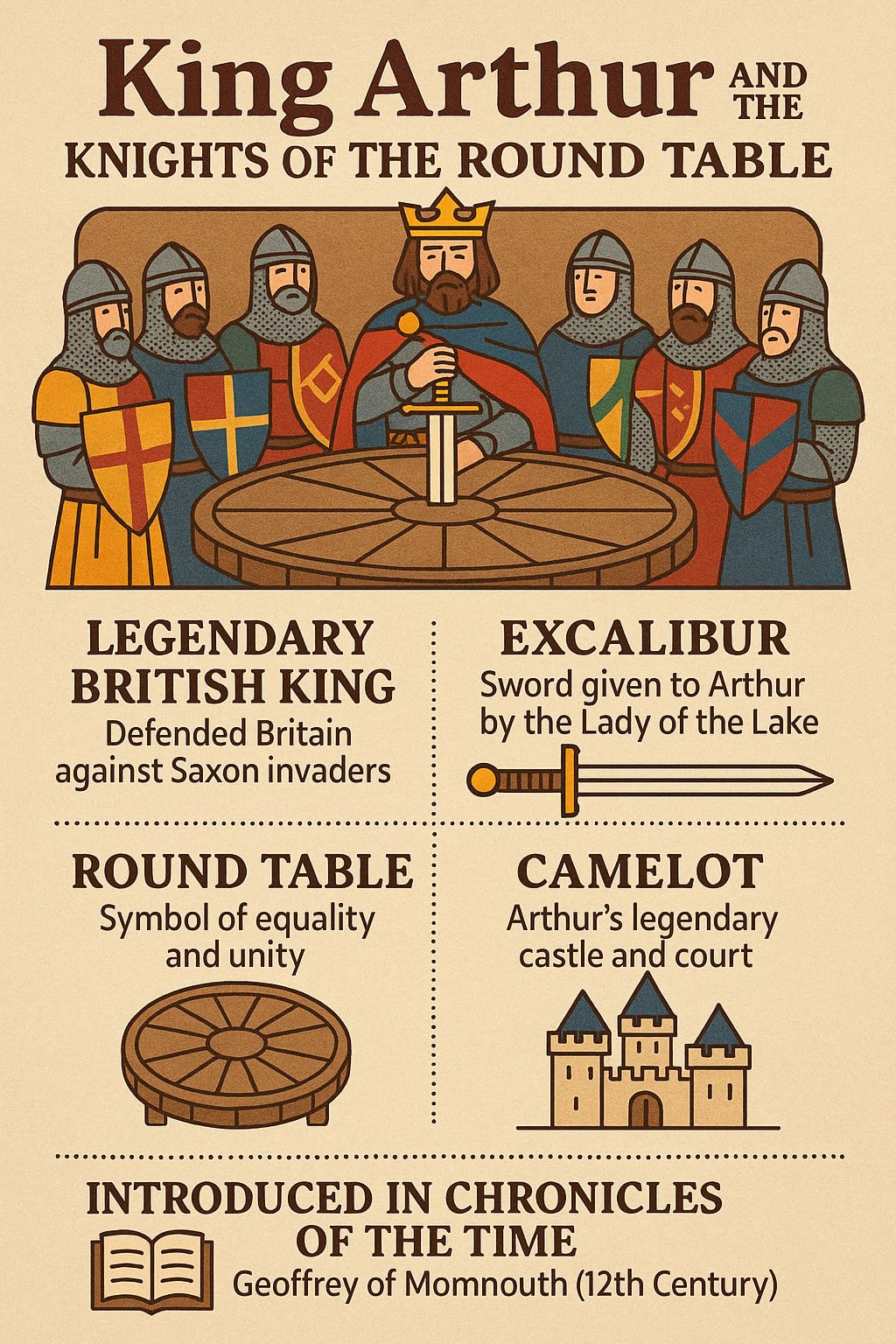
Geoffrey of Monmouth – introduced Arthur as a legendary British king in the 12th century
Chrétien de Troyes – created the foundations of the Grail Quest and courtly love
Sir Thomas Malory – shaped the definitive Arthurian narrative in Le Morte d’Arthur
Together, their works elevated Arthur from a shadowy war leader to a timeless cultural icon.
“The Arthurian legends offer a remarkable fusion of myth and medieval thought, reflecting ideals of chivalry, justice, and the search for a perfect world.” — Medieval Literature Scholar
📜 Click to Reveal: Quick Facts about Arthurian Legend
The legends of King Arthur blend Celtic myth,
medieval romance, and Christian symbolism into one of the most enduring
story-worlds in Western culture.
The Arthurian tradition took shape in the works of writers like
Geoffrey of Monmouth, Chrétien de Troyes, and
Sir Thomas Malory.
King Arthur is portrayed as an ideal king ruling from Camelot,
surrounded by the Knights of the Round Table, who embody chivalry and loyalty.
Famous knights include Lancelot, Gawain, Percival,
and Galahad, many of whom take part in the Quest for the Holy Grail.
Powerful magical figures such as Merlin, Morgan le Fay, and the
Lady of the Lake guide and challenge Arthur and his knights.
Symbols like the Round Table, Excalibur, and the
Holy Grail express themes of equality, rightful kingship, and spiritual purity.
The legends explore timeless themes of honor, love and betrayal,
the rise and fall of Camelot, and the longing for a just and perfect kingdom.
Arthurian stories have inspired countless works, from “Le Morte d’Arthur” to
modern retellings like “The Once and Future King” and “The Mists of Avalon”.
King Arthur and His Legendary Court
At the center of the myth stands King Arthur, the ideal monarch whose reign symbolizes justice, unity, and hope. From his throne in Camelot, he gathers the greatest warriors of the age at the Round Table, a powerful emblem of equality and shared purpose.
The most famous knights include:
Lancelot – unmatched in battle, torn by his love for Guinevere
Gawain – emblem of honor, tested by magical trials
Percival – one of the earliest Grail heroes
Galahad – the pure knight destined to achieve the Grail
These knights vow to uphold:
Chivalry
Courage
Loyalty
Service to the weak
Arthur’s court becomes a metaphor for the highest ideals of a just society.
Quests, Adventures, and Legendary Artifacts
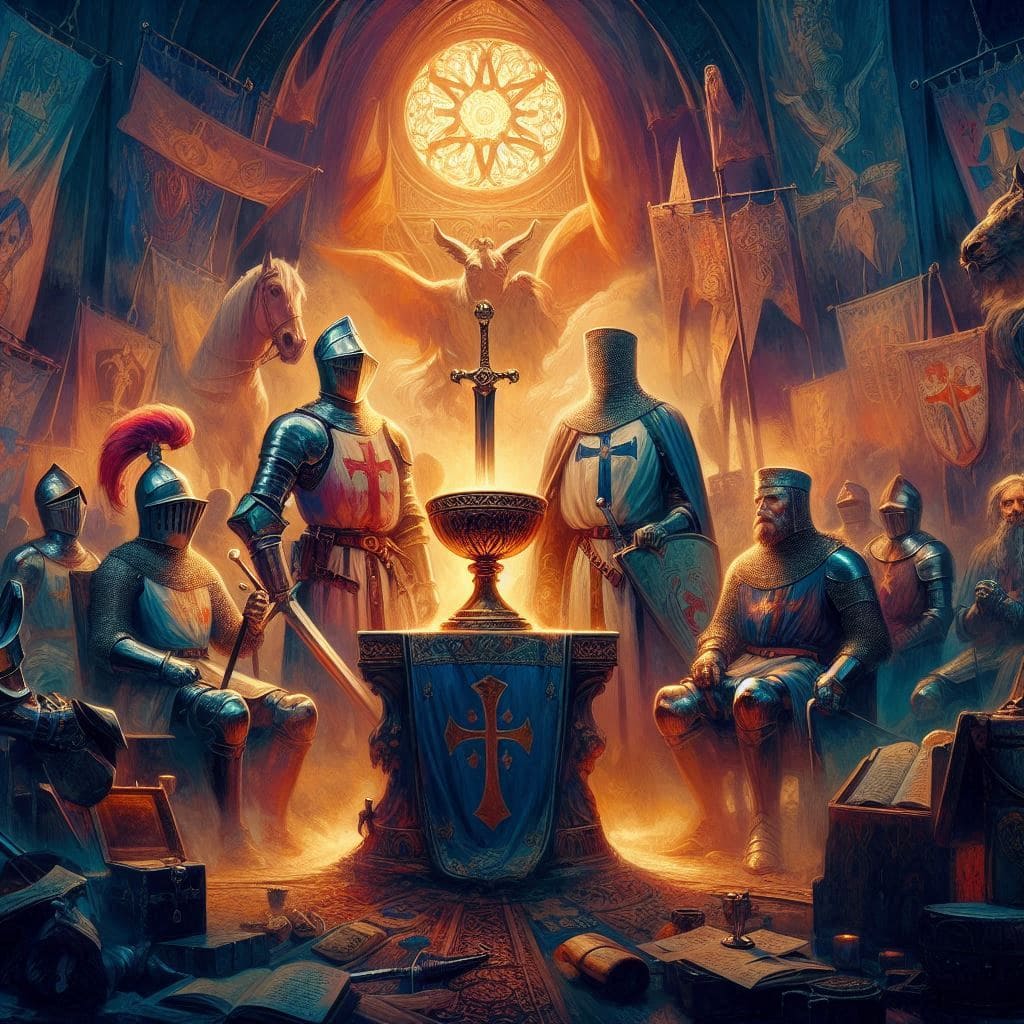
The Arthurian cycle is filled with quests that challenge the virtue and bravery of its heroes. The most famous of these is the Quest for the Holy Grail, a journey representing spiritual enlightenment and moral purity.
Iconic quests include:
The Holy Grail Quest
The search for Excalibur, Arthur’s enchanted sword
Encounters with giants, sorcerers, and otherworldly creatures
Trials of loyalty, temptation, and self-discovery
These adventures mix Christian symbolism with pre-Christian mythic motifs, creating a richly layered narrative world.
Magical Figures and Enchantment
Magic permeates Arthurian storytelling, shaping the destiny of characters and kingdoms alike.
The most important magical figures include:
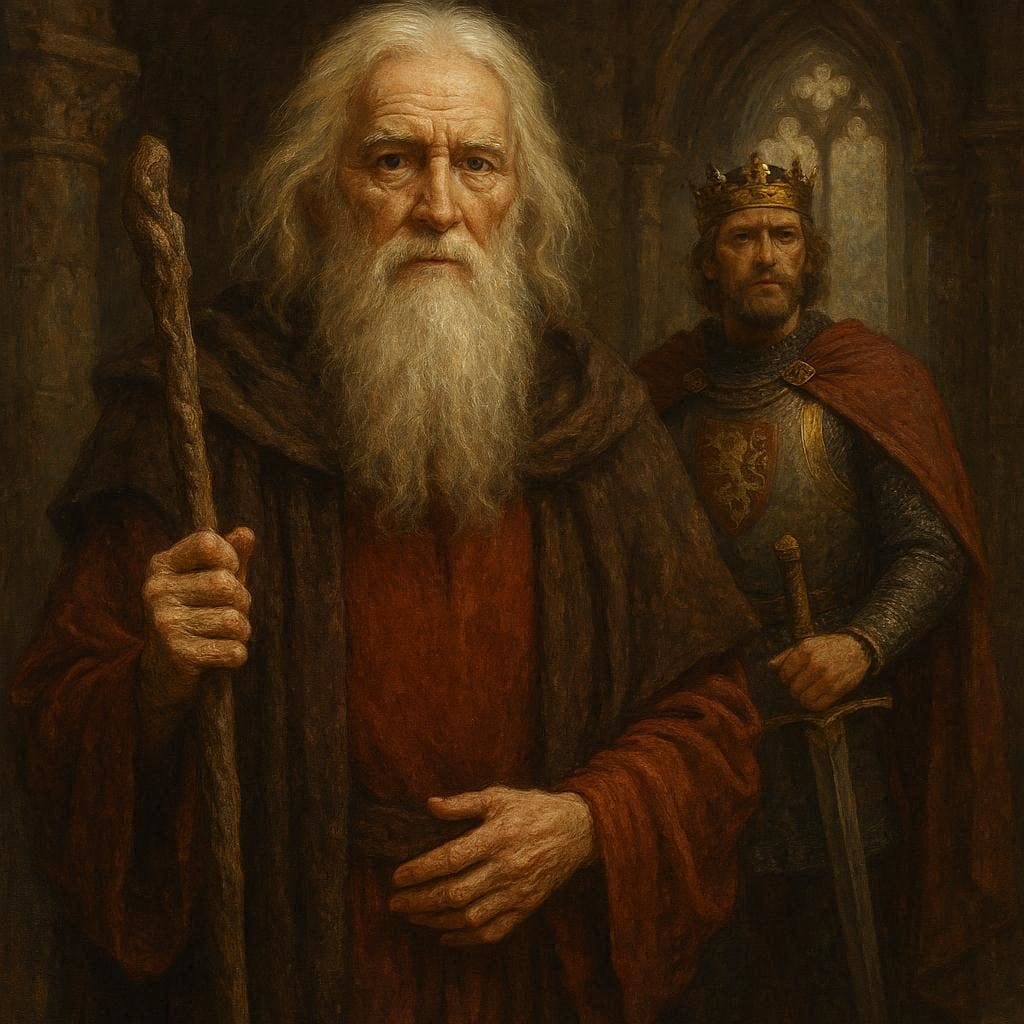
Merlin, Arthur’s prophetic advisor, whose wisdom guides the rise of Camelot
Morgan le Fay, Arthur’s enigmatic half-sister—sometimes healer, sometimes adversary
The Lady of the Lake, guardian of Excalibur and the mystical realm of Avalon
These characters reflect the dual nature of magic in medieval imagination: powerful, mysterious, and morally ambiguous.
“Arthurian magic exists not merely to amaze but to test the deepest qualities of the human spirit—strength, loyalty, and virtue.” — Arthurian Studies Scholar
Symbolism and Enduring Themes
Beyond adventure and enchantment, the Arthurian legends explore universal themes:
Honor and leadership – Arthur as the ideal king
Unity and equality – symbolized by the Round Table
Love and betrayal – the tragic triangle of Arthur, Guinevere, and Lancelot
Rise and fall – Camelot’s downfall as a meditation on human imperfection
The quest for perfection – embodied in the Grail narrative
These themes are timeless, ensuring the legend’s continuing relevance.
💡 Surprising Arthurian Insight
Although the Arthurian legends are filled with magic and heroic quests, their deeper purpose reached far beyond storytelling.
Medieval kings across Europe used Arthur’s image as real political propaganda, invoking his ideals of honor, unity, and divine kingship
to legitimize their own authority. Even the dramatic rise and fall of Camelot was treated as a warning to rulers about the dangers
of betrayal, pride, and moral failure. The tales were more than myths—they were political lessons wrapped in legend.
Influence on Literature and Popular Culture
The impact of Arthurian legend extends across centuries:
Medieval romances inspired courts and poets
Victorian writers revived interest in chivalric ideals
Modern novels, films, and series reimagine the legend for new audiences
Some of the most influential modern works include:
“The Once and Future King” by T. H. White
“The Mists of Avalon” by Marion Zimmer Bradley
The musical “Camelot”, which brought the legend to Broadway
Numerous films, from classic Hollywood epics to contemporary adaptations
The imagery of Arthurian legend—Excalibur, Camelot, the Grail—has become woven into the fabric of Western storytelling.
The legends of King Arthur endure because they offer more than tales of knights and magic. They speak to the human longing for justice, bravery, loyalty, and a world guided by noble ideals. Whether Arthur himself lived or not, his myth continues to inspire and captivate, ensuring his place as the “once and future king.”
❓ Arthurian Legends FAQ
Was King Arthur a real historical figure?
Arthur may have been inspired by a Romano-British war leader from the 5th–6th century, but no definitive evidence confirms his existence. The legends blend fragments of history with mythology.
Where did the idea of the Round Table come from?
The Round Table first appears in medieval literature and symbolizes equality — no knight sits above another, reflecting Arthur’s ideal of a just and unified kingdom.
What is the significance of Excalibur?
Excalibur represents rightful sovereignty and divine kingship. In many versions, it is given to Arthur by the Lady of the Lake rather than pulled from the stone.
Why did Camelot ultimately fall?
Camelot collapses due to betrayal, internal conflict, and the tragic love affair between Lancelot and Guinevere — symbolizing the fragility of even the greatest ideals.
🧠 Arthurian Legends Knowledge Quiz
📜 Glossary of Arthurian Terms & Figures
King Arthur
Legendary British ruler of Camelot, symbolizing justice, unity, and noble kingship.
Camelot
Arthur’s court and kingdom, representing a utopian ideal of harmony and chivalry.
Round Table
A table with no head, symbolizing equality among Arthur’s knights.
Merlin
Powerful magician and prophet who guides Arthur’s rise and predicts Camelot’s fall.
Guinevere
Arthur’s queen, whose tragic affair with Lancelot contributes to Camelot’s collapse.
Lancelot
Arthur’s greatest knight, torn between loyalty and love for Guinevere.
Excalibur
Arthur’s enchanted sword, symbolizing divine kingship and rightful rule.
Holy Grail
A sacred vessel representing spiritual purity, sought by Arthur’s knights.
Morgan le Fay
Arthur’s half-sister and a powerful enchantress, both ally and adversary in various tales.
Avalon
A mystical island of healing where Arthur is taken after his final battle.
Mordred
Arthur’s traitorous nephew or son, whose rebellion brings Camelot to ruin.