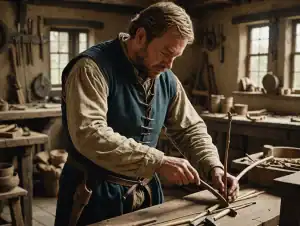
Medieval bowyers were essential artisans in the Middle Ages, responsible for crafting the powerful longbows and short bows used in battle, hunting, and sport. These highly skilled craftsmen used woods like yew and ash to create weapons that could decide the outcome of a war. A bowyer’s craft required not only woodworking talent but also a deep understanding of balance, tension, and draw strength. Whether supplying archers for great battles like Agincourt, or working in guild-backed workshops, the medieval bowyer stood as a crucial figure in the military and economic landscape of medieval Europe.
The Life of a Medieval Bowyer
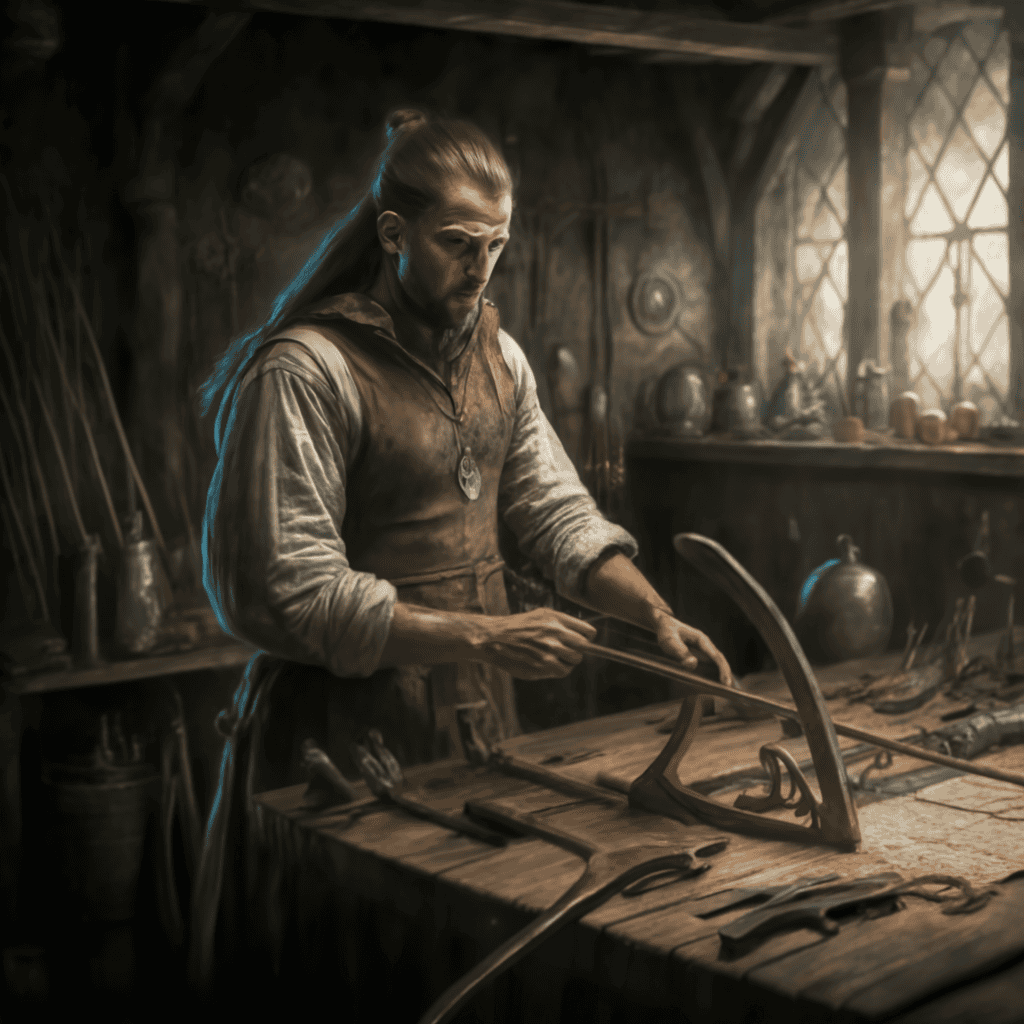
A bowyer spent most of his time in a workshop, crafting bows from various woods, including:
- Yew – preferred for its elasticity and strength
- Ash – strong and durable for smaller bows
- Hickory – used occasionally for practice bows
- Poplar – for cheaper or less critical bows
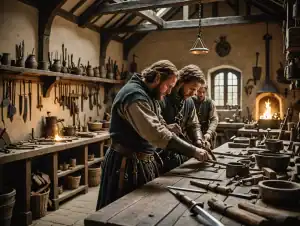
Bowyers used specialized tools, such as:
- Axes and draw knives to shape the wood
- Chisels and scrapers for smoothing
- Toothing planes to thin parts of the bow
- Bending racks to curve the bow
- Materials like sinew, hemp, or leather for bowstrings
Guilds and Apprenticeships
Bowyers were organized into guilds, which regulated:
- Training and apprenticeships
- Standards for bow quality
- Trade secrets and techniques
Apprenticeships often lasted 7–10 years, and the master bowyer oversaw every stage of production to ensure bows met military standards. Guilds helped maintain the bowyer’s reputation and guaranteed quality for customers, especially the army.

Bowyer Workshop and Tools
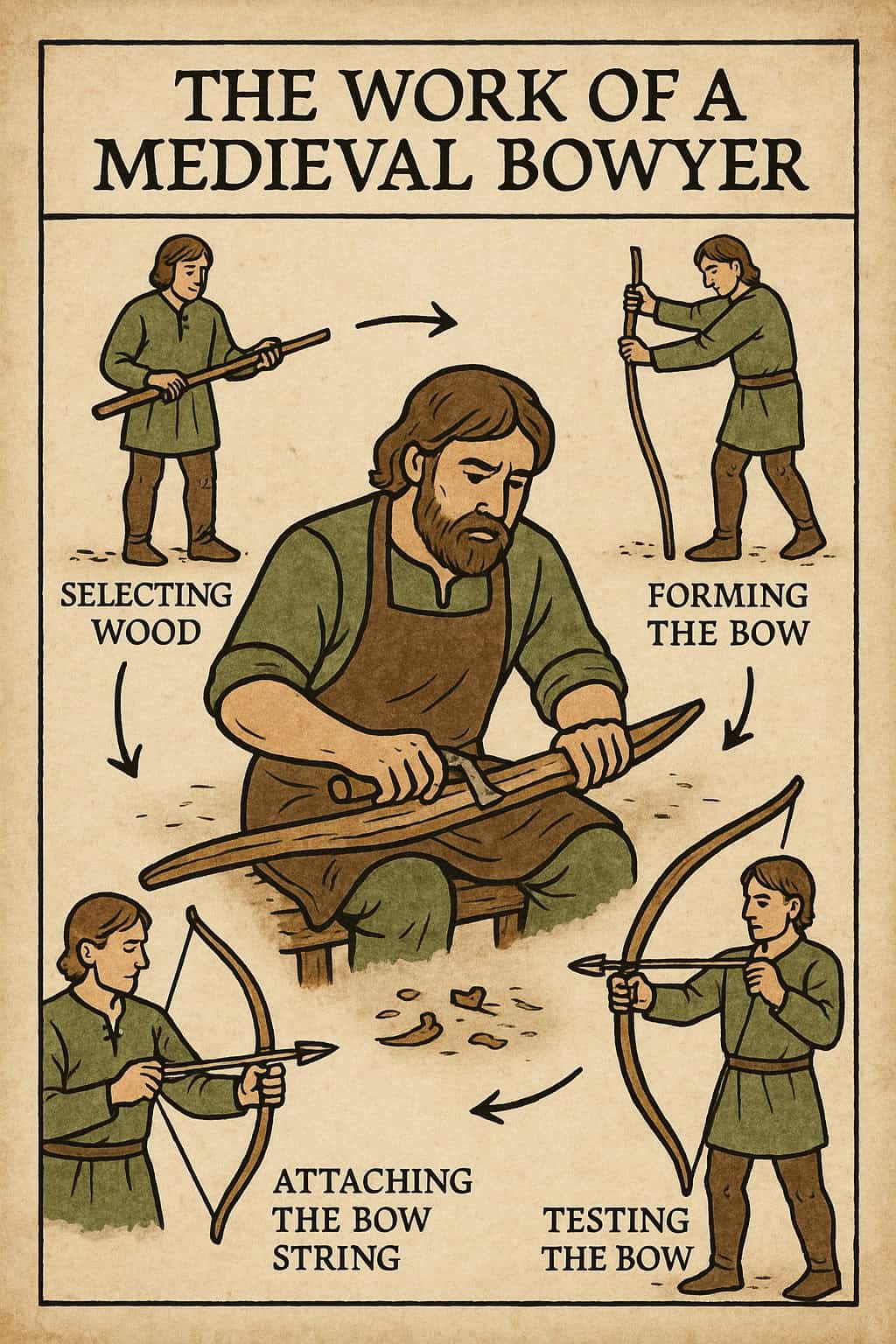
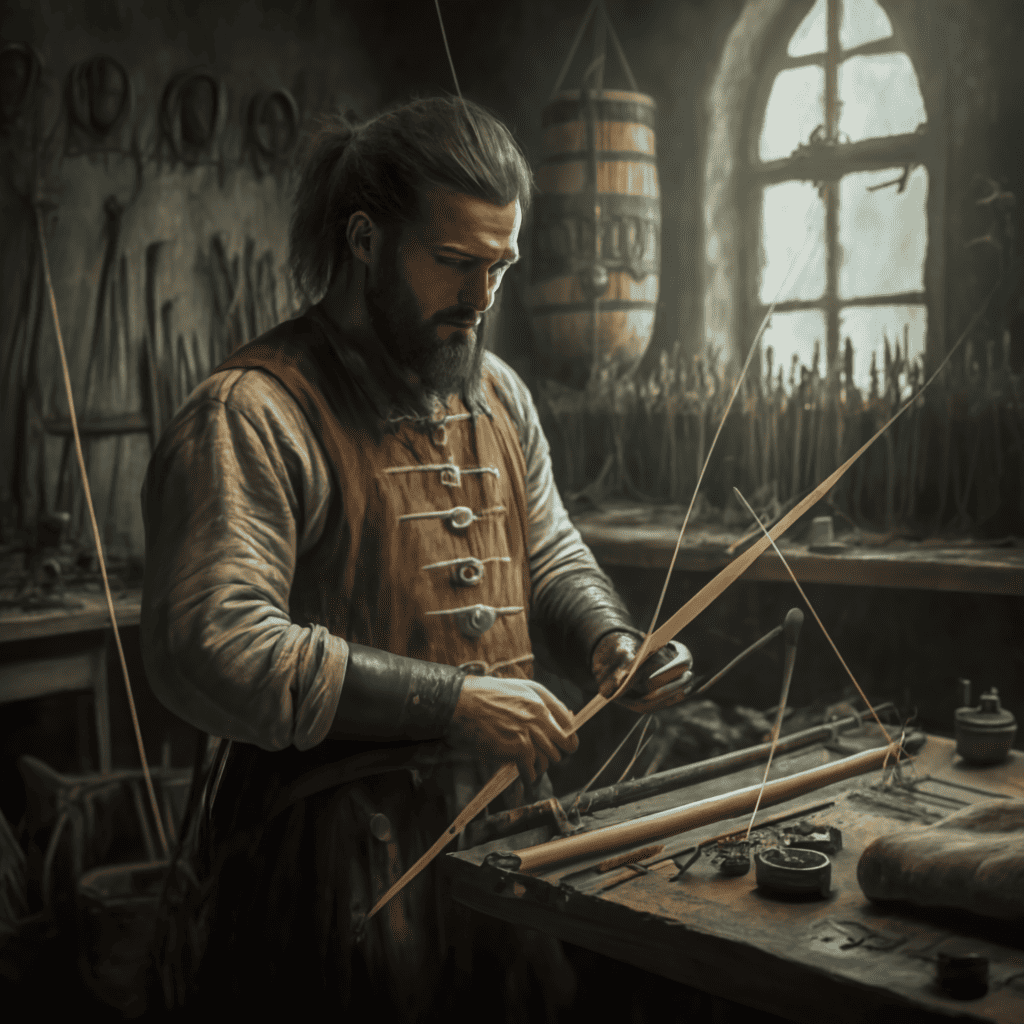
Bowyers required dedicated workshops to craft bows efficiently. The process involved:
- Selecting the right wood
- Shaping it with axes and draw knives
- Smoothing and thinning with planes and scrapers
- Treating the bow with steam or warm water to curve it
- Adding bowstrings made from plant fibers, sinew, or leather
Bowyers also sold bows to military clients, nobility, and sometimes townspeople, ensuring armies had enough weaponry for campaigns.
Medieval Bowyer in Warfare
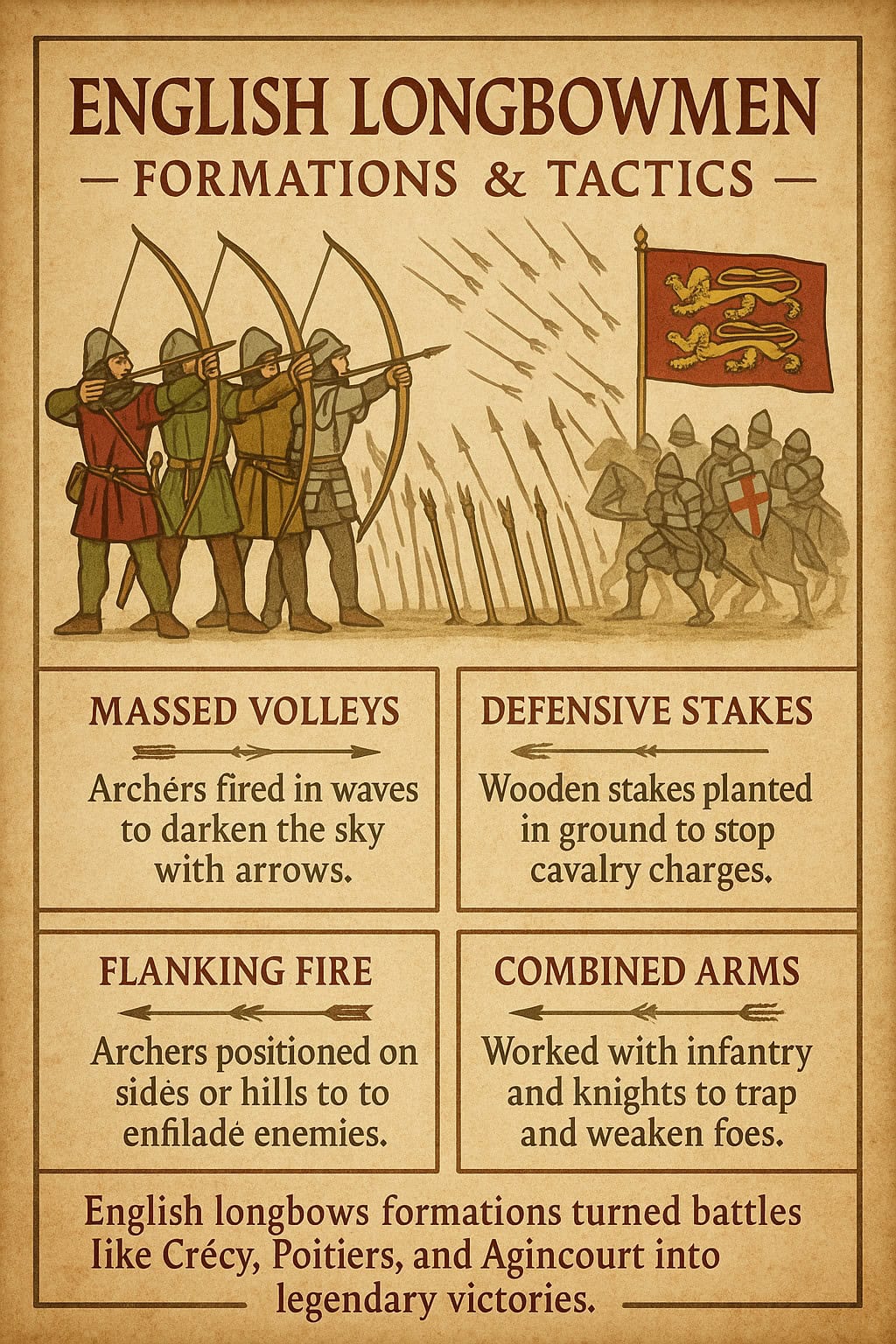
The longbow was a dominant weapon for English forces during the Hundred Years’ War, including:
- Battle of Crécy (1346)
- Battle of Poitiers (1356)
- Battle of Agincourt (1415)
Longbowmen fired thousands of bodkin-tipped arrows simultaneously, capable of piercing armor and devastating enemy formations.
The Bowyer’s Role in Towns and Villages
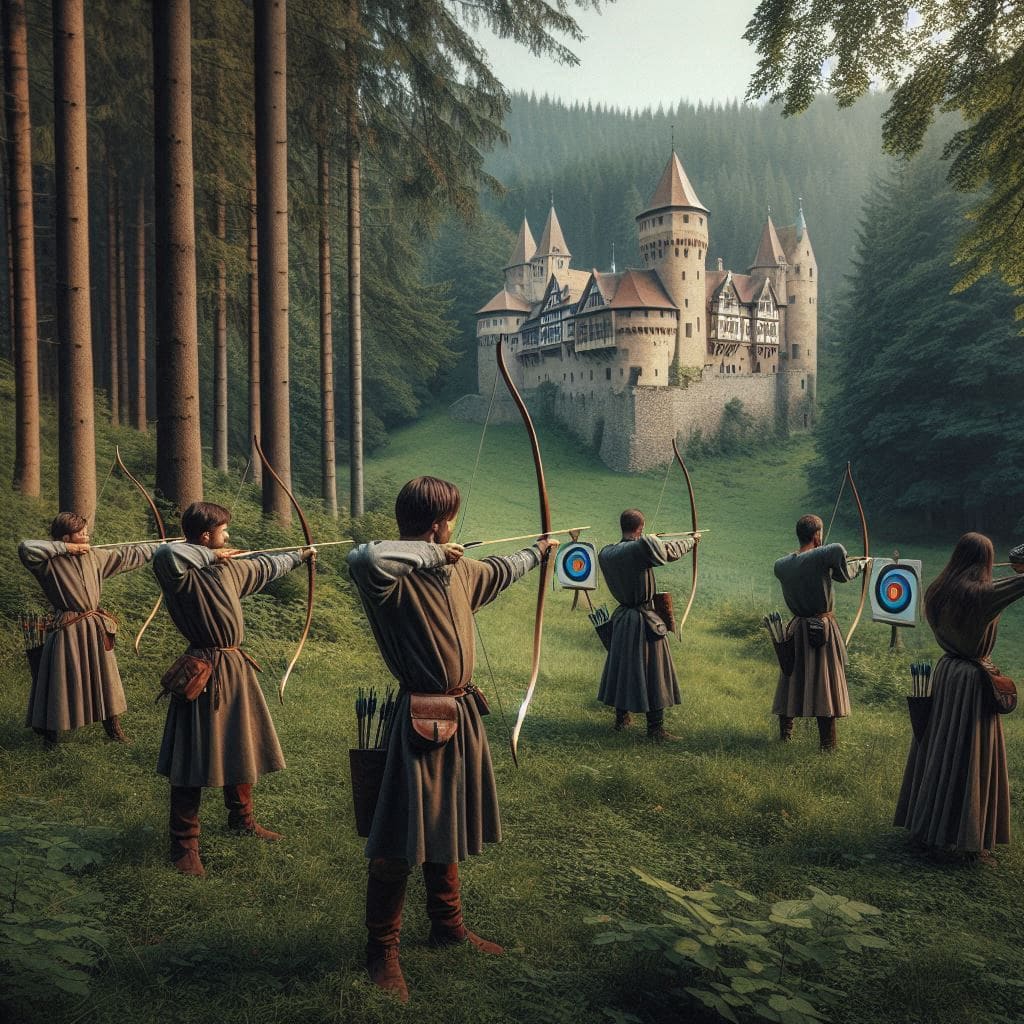
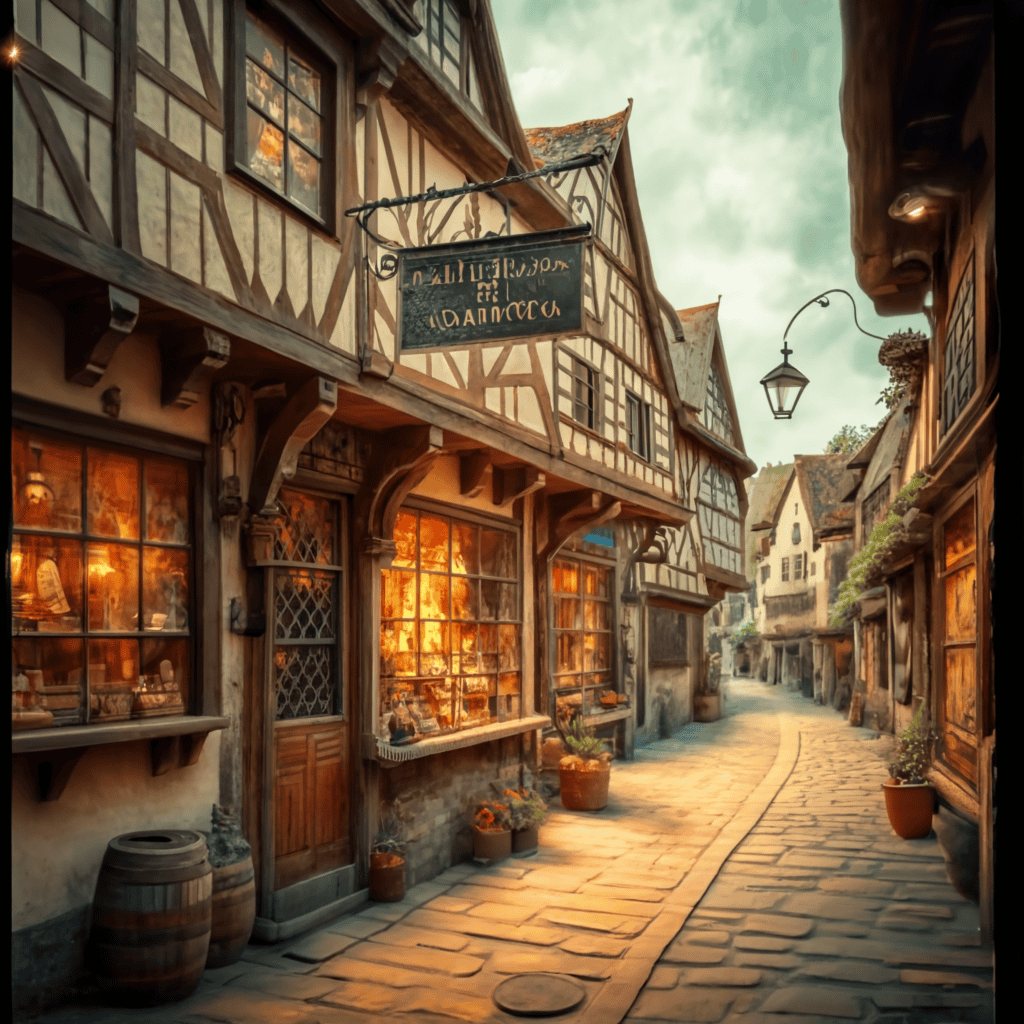
Bowyers were not only military suppliers; they were respected craftsmen within medieval towns and villages. Their workshops were vital hubs for trade and employment, often located near markets or guild halls. Bowyers interacted with soldiers, nobility, and townspeople, providing bows for hunting, training, and defense.
Their work was demanding and precise: creating a bow that was strong, flexible, and matched the user’s size required both skill and patience. During peaceful periods, bowyers still produced bows for hunting or ceremonial purposes, ensuring their craft remained relevant.
Apprenticeship and Guild Life
Becoming a bowyer required years of training under an experienced master. Apprentices learned to:
- Select and season the right types of wood
- Shape and bend bows accurately
- Make durable bowstrings from plant fibers or animal sinew
- Maintain high-quality standards demanded by guilds
Guild membership protected trade secrets, regulated pricing, and maintained the bowyer’s prestige in the community.
The Bowyer’s Legacy
The bowyer’s craft was crucial in medieval warfare, particularly in England where the longbow was a strategic advantage. Bowyers contributed not only to military success but also to the economy and culture of towns. Their skills laid the groundwork for later innovations in archery and woodworking.
Even today, historical reenactors and craftsmen study medieval bowyers to recreate authentic longbows, honoring the skill and precision of these medieval artisans.
Conclusion
In medieval society, bowyers were among the most skilled and respected craftsmen, providing weapons critical for both defense and warfare. Through guilds and apprenticeships, the craft was preserved and passed down for generations. The legacy of the medieval bowyer remains a testament to craftsmanship, precision, and the essential role of artisans in historical societies.
🏹 Frequently Asked Questions: Medieval Bowyers
What is a medieval bowyer?
A medieval bowyer was a skilled craftsman who made bows, particularly the English longbow, from carefully selected woods like yew, and shaped them for use in hunting and warfare.
What is tillering in bow making?
Tillering is the process of shaping and testing a bow so that both limbs bend evenly, ensuring the bow has proper tension, balance, and shooting power.
Which wood was preferred by medieval bowyers?
Yew was the preferred wood for longbows due to its combination of strength, flexibility, and durability. Other hardwoods were also used depending on availability.
Why were bowyers important in medieval warfare?
Bowyers were crucial because the longbow was a primary weapon for English armies. Well-crafted bows could determine the outcome of battles, such as at Agincourt.
What tools did bowyers use?
Bowyers used tools like drawknives, rasps, and knives to shape the bow stave, as well as tillering benches to test and refine the bow’s curvature and strength.
Was the bowyer part of a guild?
Yes, in London, bowyers were part of the Worshipful Company of Bowyers, a trade guild that oversaw standards, training, and apprenticeships for bow-making craftsmen.
What is a war bow?
A war bow was a powerful longbow designed specifically for military use, often with a draw weight exceeding 100 pounds, capable of penetrating armor at long range.
🏹 Perfect Quiz: The Medieval Bowyer’s Craft
📜 References & Historical Sources
The following references and scholarly resources were consulted to ensure the historical accuracy of this article on medieval bowyers, longbow craftsmanship, and archery traditions:
- Heritage Crafts Association – Bowyery
- Worshipful Company of Bowyers – London Livery Guild
- British Museum – Medieval Archery & Weaponry Collections
Sources have been verified for factual accuracy and cross-referenced with museum collections and historical archives to maintain the credibility of content published on Medieval Chronicles.
🏹 Medieval Bowyer Glossary
Bowyer
A skilled craftsman who made bows, particularly longbows, using yew and other hardwoods.
Stave
The raw, unstrung piece of wood from which a bow is shaped and tillered into its final form.
Tillering
The process of carefully shaping and testing a bow so both limbs bend evenly under draw tension.
Drawknife
A hand tool used to shave and shape the wood while crafting a bow stave.
Yew
The preferred wood for English longbows due to its balance of strength, elasticity, and durability.
War Bow
A powerful longbow designed for military use, often exceeding 100 pounds in draw weight.
Nock
The groove at the end of a bow limb where the bowstring is attached.