Medieval royalty sat at the very top of society during the Middle Ages, shaping politics, warfare, religion, and daily life across Europe. Kings, queens, princes, and royal families ruled vast territories, commanded armies, enforced laws, and upheld systems such as feudalism that structured medieval society. Their power was both political and symbolic, rooted in land ownership, military strength, and the belief that royal authority was granted by God.
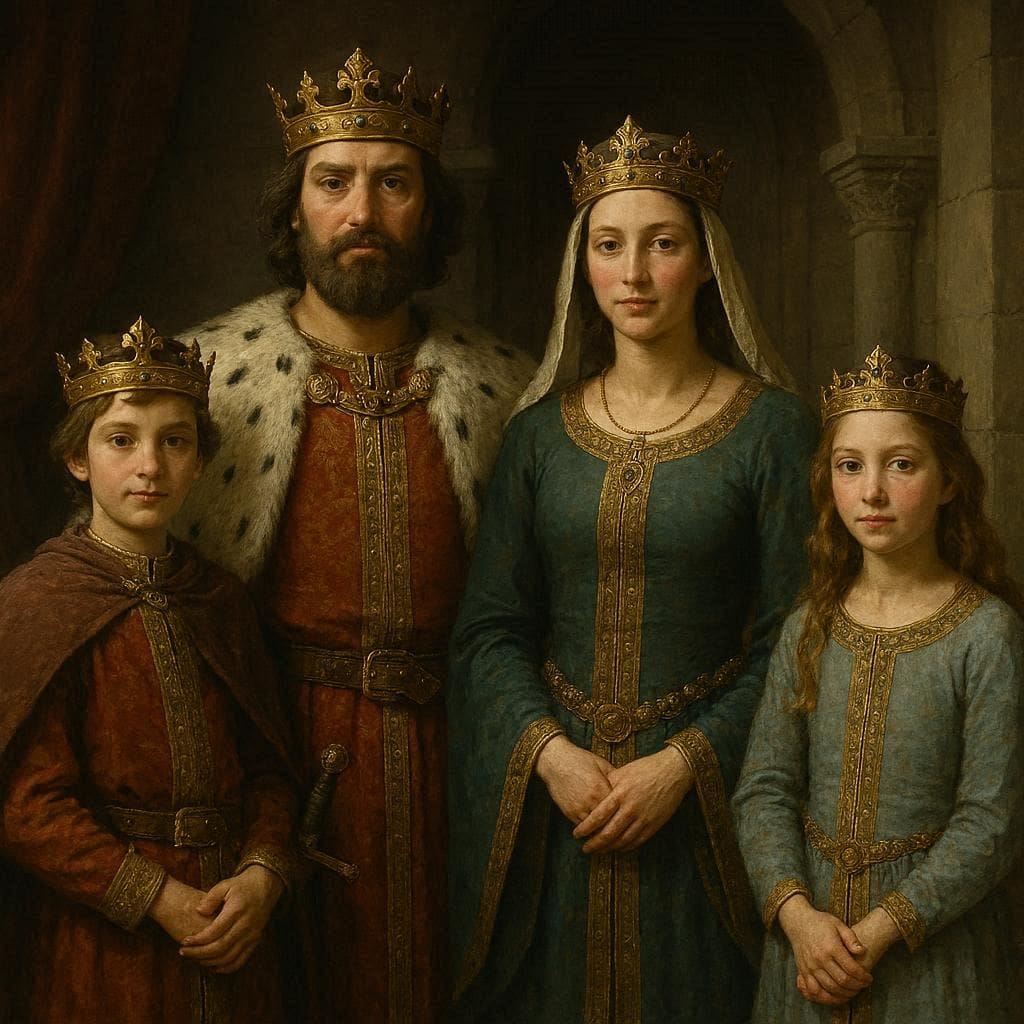
This page provides a clear overview of medieval royalty, explaining how royal power worked and how different members of the royal household fulfilled distinct roles. From ruling kings and influential queens to heirs, regents, and royal advisers, each played a vital part in governing medieval kingdoms. Use this guide as a starting point to explore the lives, duties, and influence of medieval rulers through the detailed pages linked below.
👑 Click to Reveal: Medieval Kings & Royalty
What powers did a medieval king have?
A medieval king ruled through military leadership, land ownership, law-making, and feudal loyalty. However, royal power was limited by the Church and powerful nobles.
Where did medieval kings live?
Kings lived in castles, usually within the keep, the strongest and most secure part of the fortress.
Did queens have real power?
Some medieval queens ruled as regents, governed kingdoms, influenced politics, and arranged diplomacy and alliances.
How did princes prepare to rule?
A medieval prince was trained in warfare, governance, estate management, and leadership to prepare for kingship.
The Role of a Medieval King
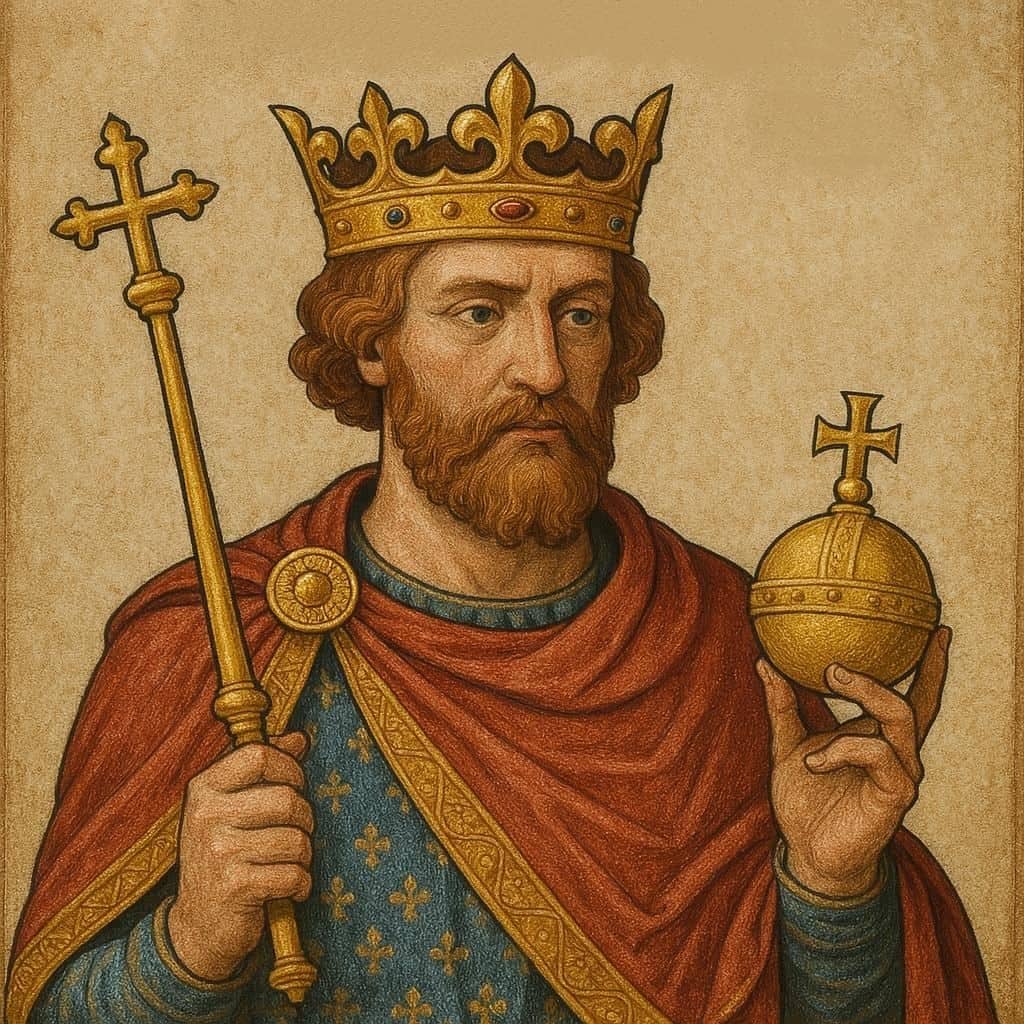
A medieval king was the supreme ruler of a kingdom and was expected to protect his lands, wealth, and people from both foreign invasion and internal rebellion. Kings were military leaders, lawmakers, judges, and symbols of authority.
Key responsibilities of a medieval king included:
- Leading armies in war
- Defending the kingdom
- Granting land and titles
- Upholding justice
- Maintaining order through feudal loyalty
Kings were often crowned in elaborate religious ceremonies, reinforcing the belief that royal authority was granted by God, a concept known as the Divine Right of Kings.
🏰 Medieval Kings and Castles
Medieval kings usually lived in castles, which served as both royal residences and military strongholds. Within a castle, the king often resided in the keep, the strongest and most secure part of the fortification.
Castles allowed kings to:
- Control surrounding lands
- Project authority
- Defend against attack
- House royal courts and officials
After the Norman Conquest of England (1066), William the Conqueror rapidly built motte-and-bailey castles to secure his rule and suppress rebellion.
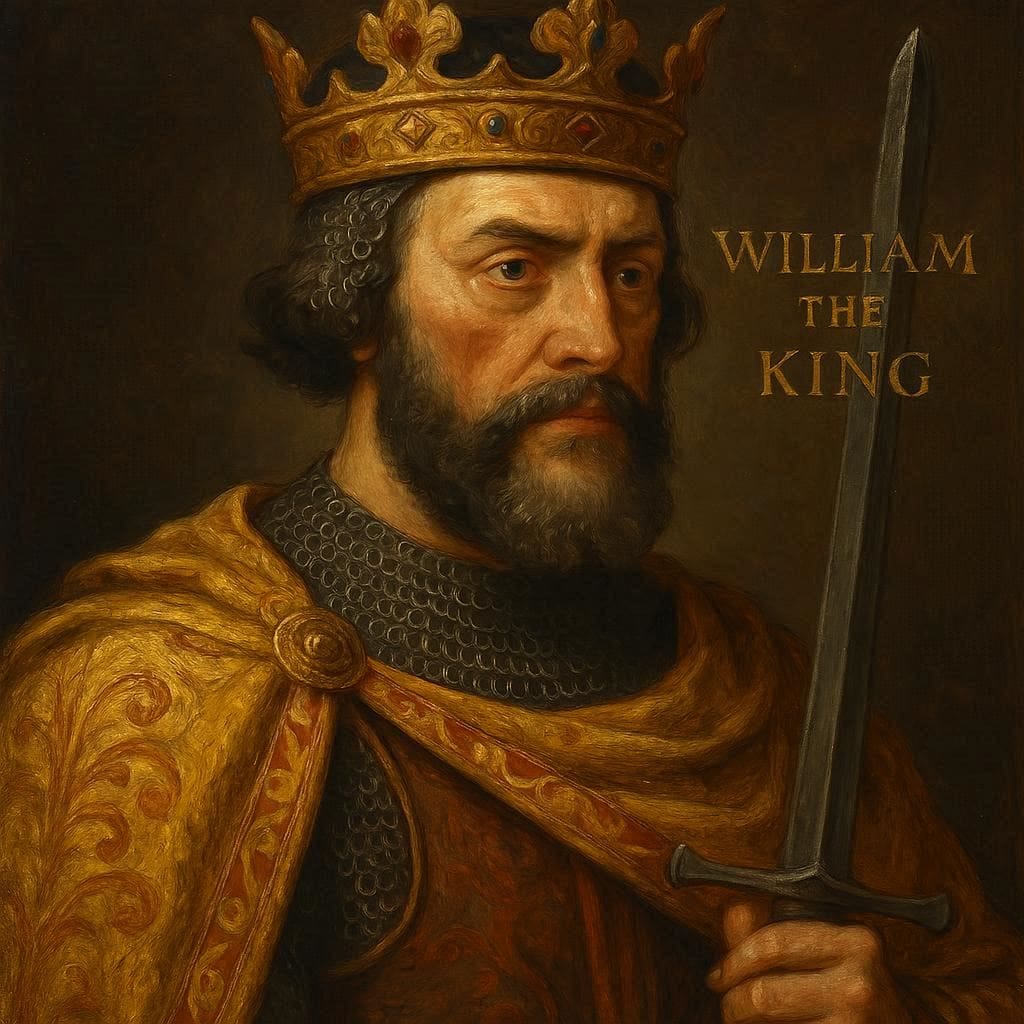
William the Conqueror and Royal Power
William the Conqueror was crowned King of England on Christmas Day 1066, following his victory over King Harold Godwinson at the Battle of Hastings.
To consolidate his power, William:
- Introduced Norman rule
- Built a network of castles
- Reorganised land ownership
- Strengthened royal authority through feudal control
His reign marked a turning point in English medieval history.
Feudalism and the Power of Kings
The Norman Conquest strengthened the feudal system, which structured medieval society.
Under feudalism:
- The king was the ultimate lord of the land
- Land was granted to nobles in return for loyalty and service
- Nobles provided knights and soldiers
- Military service was often limited in duration and governed by feudal contracts
While kings held great authority, their power was not absolute. The Church, powerful nobles, and long-standing legal customs all limited royal control.

Medieval Queens
A medieval queen was most commonly the wife of the king, but queens could hold significant influence and authority.
Queens as Consorts
Queens were expected to:
- Produce heirs
- Support the king
- Promote religious devotion
- Patronise charities and churches
Queens as Regents
Some queens ruled as regents when:
- The king was absent (often during war)
- The heir was too young
- The king was ill or incapacitated
Notable queens governed kingdoms, commanded councils, and in rare cases, led military efforts.

Medieval Prince
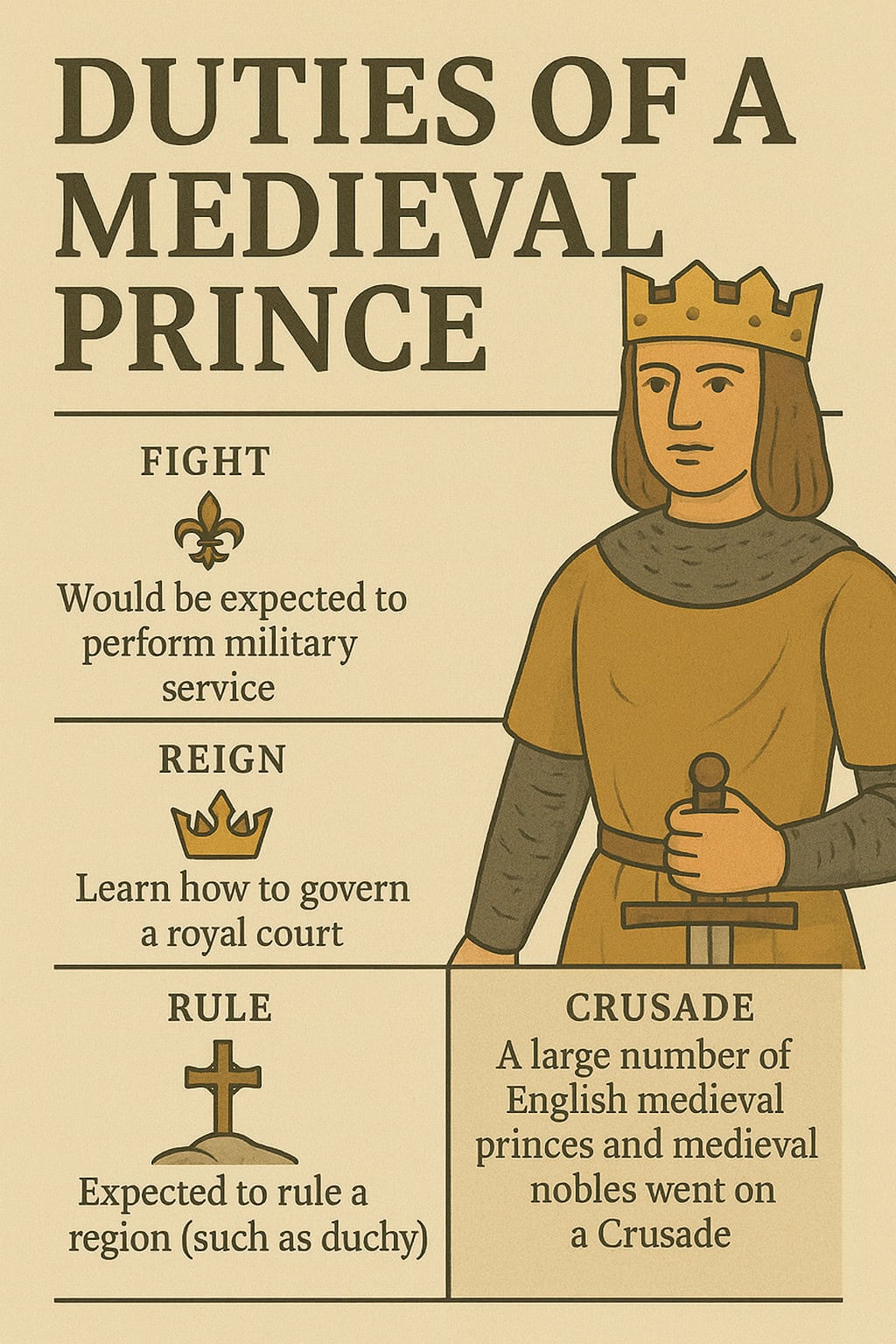
A medieval prince was usually the king’s son and potential heir to the throne. The firstborn legitimate male typically held priority in succession.
Princes were trained from a young age to:
- Govern estates
- Lead troops
- Understand law and diplomacy
- Master warfare and chivalry
Many princes managed their own castles and lands, preparing them for future kingship.
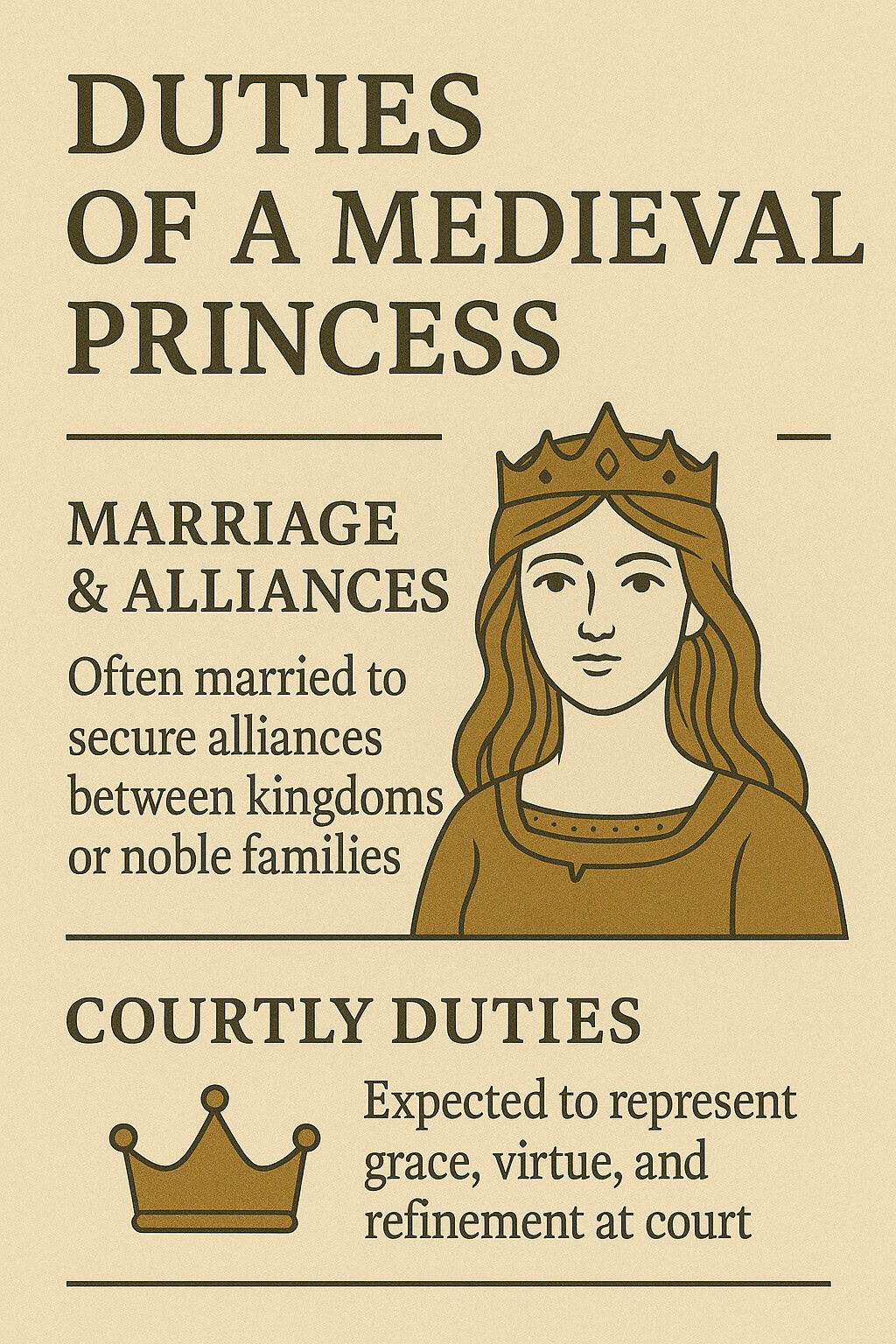
Medieval Princesses
A medieval princess played a vital role in strengthening royal alliances through dynastic marriage.
Princesses were educated in:
- Religion
- Courtly behaviour
- Household management
- Literacy and languages (in noble households)
Marriage to foreign princes or powerful nobles helped secure peace, alliances, and political stability.
👑 The Queen Mother
A Queen Mother was the mother of the reigning monarch and often served as a trusted adviser at court. While her formal authority was usually limited, her experience and status gave her considerable influence.
Although rarely ruling directly, a Queen Mother could:
- Offer political counsel to the king or queen
- Provide continuity between reigns
- Influence court decisions and royal policy
In some cases, powerful medieval queen mothers exercised significant behind-the-scenes influence, shaping diplomacy, succession, and governance—especially when the monarch was young or inexperienced.
Strengths and Limits of Medieval Royal Power
Medieval royalty governed through hierarchy, loyalty, and military strength, but their power faced limits.
Royal authority was constrained by:
- Powerful nobles
- Church law
- Financial limitations
- Rebellions and civil wars
While some kings ruled wisely and strengthened their realms, others mismanaged resources, provoked unrest, or lost control entirely.
⚖️ Was Medieval Royalty Good or Bad?
Medieval royalty played a central role in shaping medieval society. Kings and queens brought order, stability, and administration, but also enforced rigid class systems and heavy taxation.
✔️ Benefits of Royal Rule
- Promoted law and unity across kingdoms
- Funded castles, roads, and defences
- Encouraged cultural and religious development
⚠️ Drawbacks of Royal Power
- Exploited common people through taxation and labour
- Waged destructive wars for land and prestige
- Concentrated wealth and power among elites
Like all systems of rule, medieval monarchy had both significant benefits and serious flaws, shaping medieval life in complex and often contradictory ways.
The Legacy of Medieval Kings and Royalty
The influence of medieval kings and queens can still be seen today in:
- Modern monarchies
- Legal traditions
- National borders
- Royal ceremonies and symbols
Their reigns shaped the political and cultural foundations of Europe and influenced later systems of government.
✅ Summary
Medieval royalty dominated political life in the Middle Ages, ruling through castles, feudal loyalty, and military force. Kings, queens, princes, and princesses all played essential roles in maintaining dynasties and governing kingdoms. Though powerful, royal authority was never unlimited and was shaped by religion, law, and social structure.
❓ Medieval Royalty – Frequently Asked Questions
What was the role of a medieval king?
A medieval king was responsible for governing the realm, enforcing laws, defending the kingdom, granting land to nobles, and acting as the highest authority within the feudal system.
Did medieval queens have real power?
Some medieval queens ruled in their own right, while others exercised influence as consorts, regents, or advisers—particularly during a king’s absence or when an heir was underage.
What was a Queen Mother?
A Queen Mother was the mother of the reigning monarch. Although she rarely held formal authority, she often provided political guidance, continuity, and behind-the-scenes influence at court.
Where did medieval kings live?
Medieval kings usually lived in castles, residing in the keep, the strongest and most secure part of the fortress, which also served as a political and administrative centre.
How did princes prepare to rule?
A medieval prince was educated in governance, religion, and warfare, often managing estates and leading troops to prepare for kingship.
What was feudalism?
Feudalism was a system in which the king granted land to nobles in return for military service and loyalty, forming the foundation of medieval political and social order.
Could a queen act as regent?
Yes. A queen regent could rule on behalf of a king who was absent, ill, or underage, effectively exercising royal authority during that period.
🧠 Medieval Kings & Royalty Quiz
📜 Medieval Royalty Glossary
Medieval King
The supreme ruler of a medieval kingdom, responsible for governance, warfare, and justice.
Feudalism
A hierarchical system where land was exchanged for loyalty and military service.
Queen Regent
A queen who ruled temporarily on behalf of a king or underage heir.
Castle Keep
The strongest and most secure part of a medieval castle.
Prince
The son of a king, often trained to inherit the throne.
Divine Right of Kings
The belief that a king’s authority came directly from God.