Medieval peasants made up over 90 percent of the population during the Middle Ages and formed the backbone of the feudal system. From roughly the 9th to the 15th century, peasants were responsible for producing food, maintaining land, and supporting both the nobility and the Church. Although their lives were often harsh and heavily regulated, peasants sustained medieval society through their labour. Whether free or unfree, their daily routines, seasonal work, homes, diets, and legal obligations reveal much about everyday life in medieval Europe.

Who Were Medieval Peasants?
The term peasant refers to the lower classes who lived and worked in rural areas. Most peasants were farmers, though others worked as herdsmen, craftsmen, or household servants. Their social status varied, and not all peasants lived under the same conditions.
Historians generally divide medieval peasants into three broad groups:
- Freemen
- Serfs (villeins)
- Other unfree labourers
While slavery existed in early medieval Europe, especially before the Norman Conquest, true chattel slavery was rare in later medieval England. Most unfree workers were serfs bound by law and custom rather than outright ownership.
🌾 Click-to-Reveal: Medieval Peasants Facts
Who were medieval peasants?
Medieval peasants were rural workers who made up over 90% of the population. They produced food, maintained land, and supported both the nobility and the Church.
Were all peasants serfs?
No. Some peasants were freemen who paid rent but were free to move. Others were serfs, legally bound to the land and required to work their lord’s fields.
What work did peasants do?
Most peasants farmed the land—ploughing, sowing, harvesting crops, and caring for livestock. Others worked as herdsmen, craftsmen, or household servants.
What were peasant homes like?
Peasant homes were small, built from wood with wattle and daub walls and thatched roofs. Most had a single room with a hearth and dirt floor.
What did medieval peasants eat?
Their diet was simple, based on bread, pottage made from grains and vegetables, cheese, and milk. Meat was rare and usually eaten only on feast days.
Could peasants improve their lives?
Although difficult, some peasants gained freedom by saving money, escaping serfdom, or moving to towns where they could become craftsmen or traders.
Peasants and the Feudal System
Peasants lived within the feudal system, a hierarchical structure that organised medieval society. Land was owned by kings and nobles, who granted estates (manors) to lords. In return, peasants worked the land.
Peasants were legally bound by customary obligations to their lord, which included:
- Labour services on the lord’s fields
- Rent payments (in labour, produce, or money)
- Obedience to manor courts
While knights swore formal oaths of fealty, peasants were typically bound through custom, law, and tenancy agreements, sometimes reinforced by oaths of loyalty.

Where Did Medieval Peasants Work?
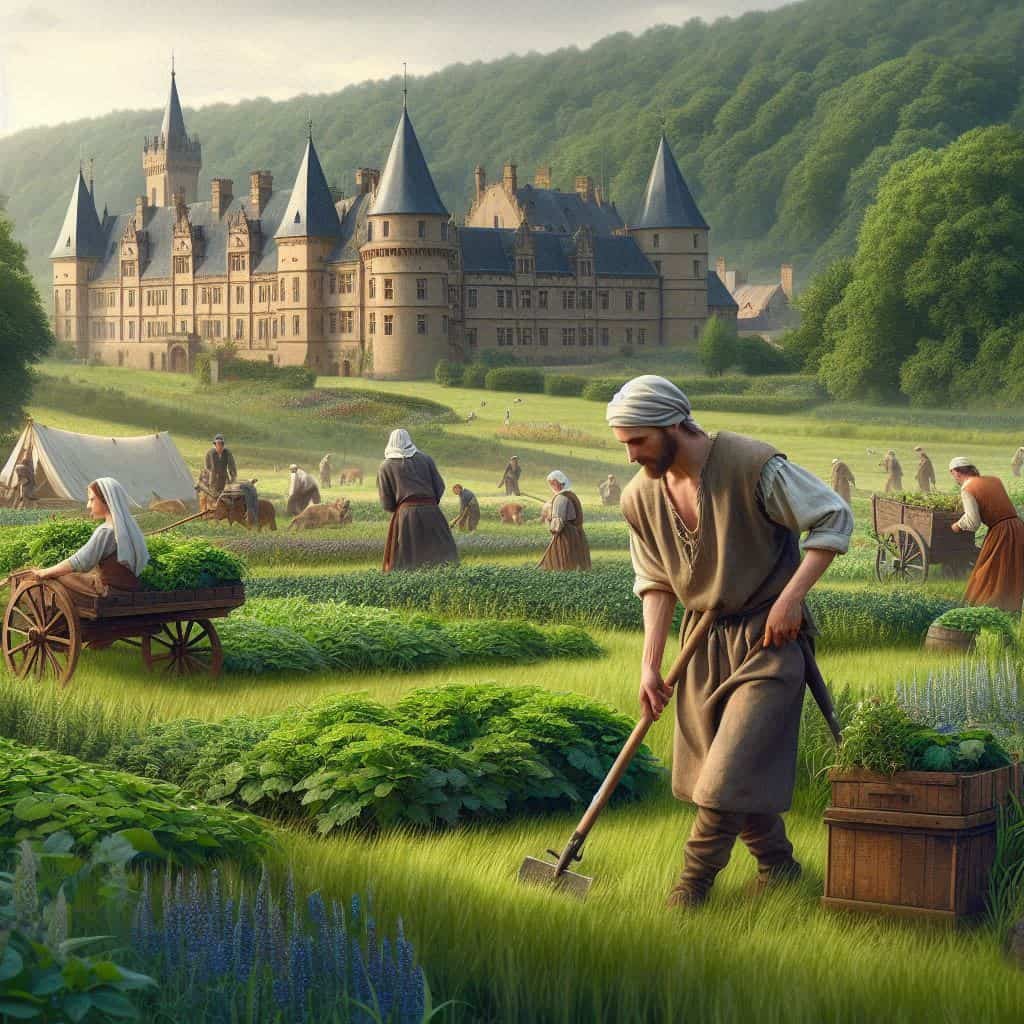
Most peasants worked on manor estates located in the countryside. These estates included farmland, pasture, woodland, and a village clustered around a manor house or castle.
Typical peasant work included:
- Ploughing and sowing fields
- Harvesting grain such as wheat, barley, and rye
- Caring for livestock
- Repairing roads, fences, and buildings
Serfs usually worked the lord’s land for several days a week, with additional labour required during busy seasons like harvest.
🏘️ Where Did Medieval Peasants Live?
Medieval peasants lived in small rural villages built close to the land they farmed. Most were granted the use of a small plot of land, allowing them to grow food to support their own families.
- A church, which served religious and social roles
- Common fields farmed by villagers
- Shared resources such as mills, ovens, and grazing land
Despite widespread poverty, medieval villages were close-knit communities. Peasants relied on shared labour, local traditions, and mutual support to survive the hardships of everyday life.
What Were Peasant Homes Made Of?
Peasant homes were simple but practical. Most were built using wattle and daub, a method involving wooden frames filled with woven sticks, mud, straw, and animal dung.
Typical features included:
- One or two rooms
- Dirt floors
- A central hearth
- Thatched roofs
As the medieval period progressed, housing quality slowly improved, but most homes remained cramped and smoky.

Daily Life of Medieval Peasants
Peasant life followed the rhythm of the sun and the seasons. Most peasants rose before dawn, often beginning the day with prayer. Daily tasks were organised by officials such as the reeve, who supervised labour on the manor.
Men, Women, and Children
- Men worked mainly in the fields
- Women managed domestic work and assisted with farming
- Children helped from a young age and rarely attended school
Life expectancy was low, and disease, famine, and poor sanitation were constant threats.

What Did Medieval Peasants Eat?
The staple food of medieval peasants was pottage, a thick stew made from grains and vegetables such as peas, beans, onions, cabbage, and herbs. Ingredients varied depending on the season.
Other common foods included:
- Dark bread made from rye or barley
- Cheese and milk (often from goats)
- Occasional fish or meat on feast days
Food shortages were common, especially after poor harvests.

Taxes and the Tithe
Peasants paid many forms of taxation. In addition to rent and labour owed to their lord, they were required to pay the tithe, a tax of one-tenth of their produce to the Church.
The tithe could be paid in:
- Crops
- Livestock products
- Money (where available)
These obligations placed a heavy burden on already poor households.
Social Roles Within the Peasantry
Medieval villages relied on several important roles:
- Reeve – supervised peasants and enforced manor rules
- Bailiff – managed estates and livestock
- Steward – oversaw the manor in the lord’s absence
- Cottagers – landless labourers living in small cottages
Household servants such as maids and scullery maids performed demanding domestic work in manor houses and castles.
Could Peasants Improve Their Lives?
Although social mobility was limited, some peasants improved their status by:
- Buying their freedom
- Escaping serfdom (remaining undetected for a year and a day)
- Moving to towns and becoming craftsmen or traders
Over time, economic changes weakened the feudal system, gradually improving peasant conditions.
Why Medieval Peasants Matter
Despite hardship and limited rights, medieval peasants were essential to the survival of society. They produced food, maintained the economy, and shaped village life across Europe. Their experiences provide invaluable insight into the realities of medieval life beyond castles and kings.
❓ Medieval Peasants: Frequently Asked Questions
Who were medieval peasants?
Medieval peasants were rural workers who made up most of the population. They farmed the land and produced food for society, including the nobility and the Church.
Were all peasants poor?
Most peasants lived modest lives, but conditions varied. Some freemen owned small plots of land, while serfs had fewer rights and heavier obligations.
What is serfdom?
Serfdom was a system in which peasants were legally tied to the land they worked and owed labour and rent to their lord.
What work did peasants do?
Peasants mainly farmed crops and cared for animals, but also repaired roads, gathered firewood, and performed seasonal labour such as harvesting.
What did medieval peasants eat?
Their diet was simple, based on bread, pottage made from grains and vegetables, dairy products, and occasional fish or meat.
Could peasants gain freedom?
Some peasants improved their status by buying freedom, escaping serfdom, or moving to towns where they could become craftsmen or traders.
🧠 Medieval Peasants Quiz
📜 Glossary of Medieval Peasant Terms
Peasant
A rural worker who farmed land and formed the majority of medieval society.
Serf
An unfree peasant legally bound to the land and obligated to work for a lord.
Freeman
A peasant who was not bound to the land and could move freely.
Manor
A landed estate controlled by a lord, including villages and farmland.
Pottage
A thick stew made from grains and vegetables, a staple peasant food.
Tithe
A tax requiring peasants to give one-tenth of their produce to the Church.